 SKU CH-8849
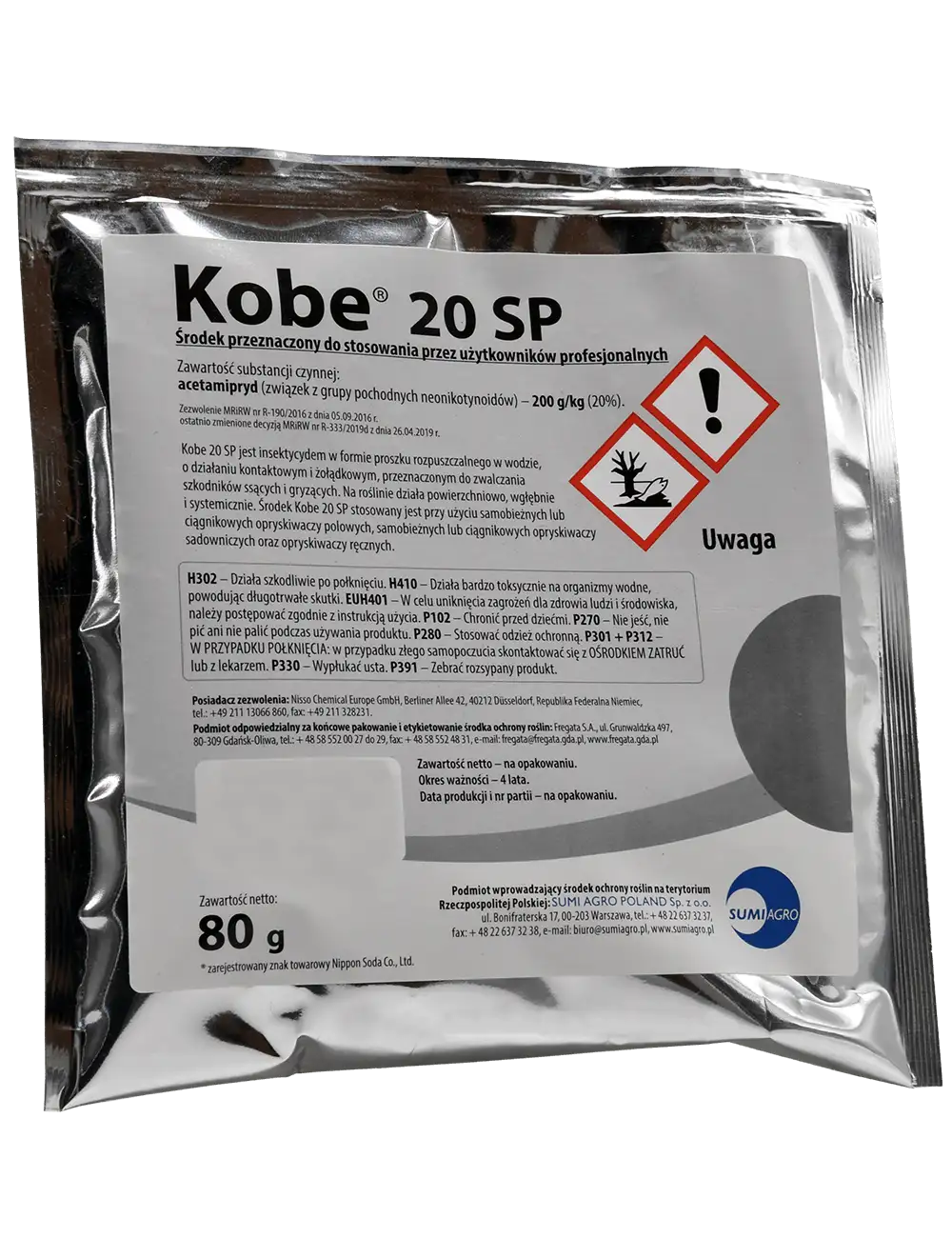
Apis 200 SE
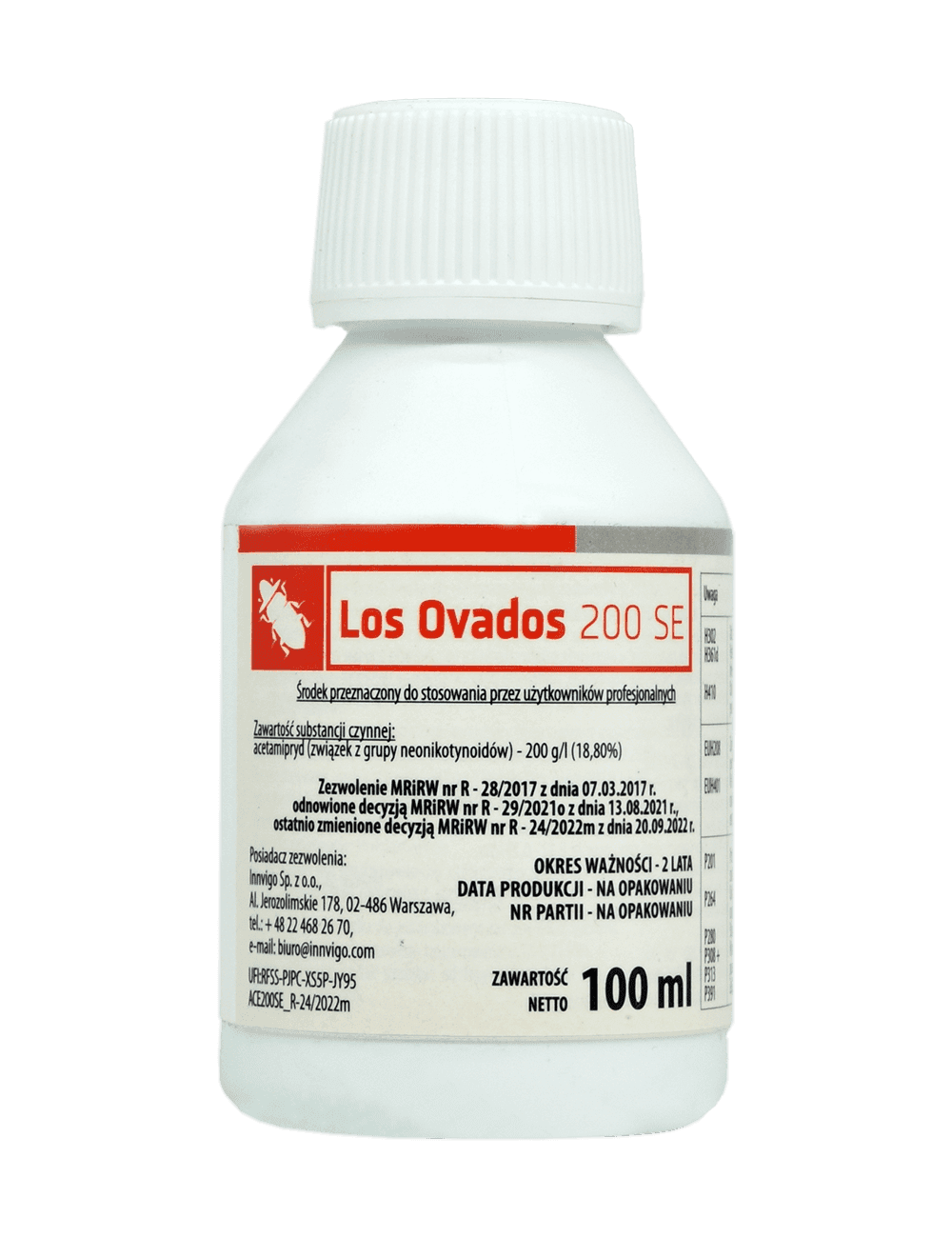
Apis 200 SE is an insecticide in suspension-emulsion form, controlling chewing and sucking pests through contact and stomach action. It provides long-lasting plant protection, acting on the surface, internally, and systemically.
Description
MODE OF ACTION OF APIS 200 SE:
Apis 200 SE is an insecticide in a convenient suspension-emulsion (SE) form. The product acts by contact and stomach action and is intended for the control of chewing and sucking pests. It acts on the plant surface, internally, and systemically.
Advantages of using Apis 200 SE:
- provides long-lasting protection, also protecting the crop against subsequent pest infestations,
- completely safe for cultivated plants,
- effective over a wide temperature range,
- the product is safe for bees and other pollinating insects, so when used during the flowering period of oilseed rape, it poses no risk to beneficial insects.
ACTIVE SUBSTANCE CONTENT IN APIS 200 SE:
acetamiprid (a compound from the neonicotinoid group) - 200 g/l (18.80%)
APIS 200 SE SCOPE OF USE, TIMING AND DOSES:
The product is intended for use with self-propelled or tractor-mounted field or orchard sprayers.
How to use Apis 200 SE:
Potato
Larvae and beetles of Colorado potato beetle
Maximum dose for single application: 0.15 l/ha
Recommended dose for single application: 0.1 - 0.15 l/ha
Application timing: Perform treatment at the time of egg laying and mass larval hatching, from the stage of 50% row closure to full flowering stage (50% of flowers on the first inflorescence are open) (BBCH 35-65). Use the higher recommended dose in case of heavy pest infestation.
Maximum number of treatments per growing season: 1
Recommended water volume: 200 - 300 l/ha
Recommended spraying: medium droplet size.
Winter oilseed rape
Pollen beetle
Maximum dose for single application: 0.25 l/ha
Recommended dose for single application: 0.12 - 0.25 l/ha
Application timing: Spray at the time of pest flight onto the crop from the compact flower cluster stage to full flowering of oilseed rape (BBCH 55-65). Use the higher recommended dose in case of heavy pest flight onto the crop.
Maximum number of treatments per growing season: 1
Recommended water volume: 200-300 l/ha
Recommended spraying: medium droplet size.
Cabbage seed weevil, cabbage blossom weevil
Maximum dose for single application: 0.25 l/ha
Recommended dose for single application: 0.12 - 0.25 l/ha
Application timing: Apply the product during flowering, from the moment when 20% of flowers on the main inflorescence are open until the end of flowering (BBCH 62-69). Use the higher recommended dose in case of heavy pest flight onto the crop.
Number of treatments: 1
Recommended water volume: 200 - 300 l/ha
Recommended spraying: medium droplet size.
Maximum number of treatments per growing season: 1
Apple tree
Aphids
Maximum/recommended dose for single application: 0.125 l/ha
Application timing: Apply the product at the appearance of the first aphid colonies. Perform treatment from the end of flowering to the beginning of fruit setting, when fruits reach up to 10 mm in size (BBCH 69-71).
Number of treatments: 1
Recommended water volume: 700-750 l/ha
Recommended spraying: medium droplet size.
Codling moth
Maximum/recommended dose for single application: 0.2 l/ha
Application timing: Use the product at the beginning of moth flight and mass egg laying, from the end of flowering to the stage when fruit diameter reaches 40 mm and fruit lifts (BBCH 69-74).
Number of treatments: 1-2
Interval between treatments: at least 30 days.
Recommended water volume: 700-750 l/ha
Recommended spraying: medium droplet size.
Maximum number of treatments per growing season: 2
Winter wheat
Aphids
Maximum/recommended dose for single application: 0.2 l/ha.
The product can also be used alternatively in a mixture with the adjuvant Asystent+ at the following doses:
Apis 200 SE 0.2 l/ha + Asystent+ 0.1 l/ha.
Application timing: Use the product in autumn, perform treatment at the time of pest flight onto the crop or upon pest appearance, from the third leaf stage to the beginning of tillering (visible first tillers) (BBCH 13-21).
Number of treatments: 1.
Recommended water volume: 250 - 300 l/ha.
Recommended spraying: medium droplet size.
Cereal aphid, cereal leafhopper
Maximum/recommended dose for single application: 0.2 l/ha.
The product can also be used alternatively in a mixture with the adjuvant Asystent+ at the following doses:
Apis 200 SE 0.2 l/ha + Asystent+ 0.1 l/ha.
Application timing: Use the product in spring, perform treatment at the time of pest flight onto the crop or upon pest appearance, according to monitoring, from the beginning of heading to the late milk maturity stage of kernels (BBCH 51-77).
Number of treatments: 1
Recommended water volume: 200 - 300 l/ha.
Recommended spraying: medium droplet size.
Maximum number of treatments per growing season: 1 (one treatment in autumn or one treatment in spring).
USE OF THE PLANT PROTECTION PRODUCT IN SMALL-AREA CROPS AND APPLICATIONS
The user alone is responsible for the effectiveness and phytotoxicity of the plant protection product used in small-area crops.
Spring oilseed rape
Cabbage seed weevil, four-toothed cabbage weevil, cabbage blossom weevil, pollen beetle, rape blossom beetle, aphids.
Maximum dose for single application: 0.25 l/ha
Recommended dose for single application: 0.12 - 0.25 l/ha
Application timing: Apply the product according to monitoring, from the beginning of main shoot growth (start of stem elongation) to the stage when 20% of pods have reached final size (BBCH 30-72).
Maximum number of treatments per growing season: 1
Recommended water volume: 200 - 300 l/ha
Recommended spraying: medium droplet size.
Sour cherry, sweet cherry
Cherry fruit fly
Maximum/recommended dose for single application: 0.125 l/ha
Application timing: Apply the product at the time of numerous fly appearance and mass egg laying. Perform treatment from the moment the fruit reaches 90% of typical size to the beginning of ripening and colouring of fruits (BBCH 79-81).
Number of treatments: 1
Recommended water volume: 750 l/ha
Recommended spraying: medium droplet size.
Aphids
Maximum/recommended dose for single application: 0.125 l/ha
Application timing: Apply the product at the appearance of the first aphid colonies. Perform treatment from the moment the fruit reaches 90% of typical size to the beginning of ripening and colouring of fruits (BBCH 79-81).
Number of treatments: 1
Recommended water volume: 750 l/ha
Recommended spraying: medium droplet size.
Maximum number of treatments per growing season: 1
Spring rye
Aphids, leafhoppers
Maximum/recommended dose for single application: 0.2 l/ha.
The product can also be used alternatively in a mixture with the adjuvant Asystent+ at the following doses:
Maximum/recommended dose for single application: 0.2 l/ha + Asystent+ 0.1 l/ha.
Application timing: Use the product in spring, spraying at the time of pest flight onto the crop from the beginning of heading to the milk maturity stage of grain (BBCH 51 - 77).
Recommended water volume: 200-300 l/ha.
Recommended spraying: medium droplet size.
Maximum number of treatments per growing season: 1.
Common pea for grain, common pea for forage
Pea weevil, soil fly, seedling fly, pea thrips, tobacco thrips, aphids
Broad bean, field bean, lentil
Soil fly, seedling fly, broad bean weevil, aphids
Bean
Soil fly, seedling fly, pea thrips, tobacco thrips, bean weevil, leaf miners, aphids
White lupin, narrow-leaved lupin, yellow lupin
Leaf rollers, aphids, thrips, alfalfa leaf miner, pea stem gall midge
Maximum/recommended dose for single application: 0.2 l/ha.
Application timing:
– common pea for grain, common pea for forage - apply the product during pest appearance, from the stage of all leaves unfolded to the stage of 9 or more visible internodes (BBCH 20 – 39) or from the stage when first petals are visible and many individual flower buds are still closed to the stage when all pods are dry and brown with typical colouring and seeds are dry and hard (dry maturity) (BBCH 50 – 89);
– broad bean – apply the product during pest appearance, from the stage of no side shoots to the stage of 9 or more visible internodes (BBCH 20 – 39) or from the beginning of inflorescence development to the stage when almost all pods are dark (BBCH 50 - 89);
– lentil - apply the product during pest appearance, from the stage of no side shoots to the stage of 9 or more visible internodes (BBCH 20 – 39) or from the stage when first petals are visible and many individual flower buds are still closed to the stage when almost all pods are dark and seeds are dry and hard (BBCH 50 – 89);
– field bean - apply the product during pest appearance, from the stage of no side shoots to the stage of 9 or more visible internodes (BBCH 20 – 39) or from the stage when first petals are visible and many individual flower buds are still closed to the stage when almost all pods are dark and seeds are dry and hard (BBCH 50 – 89);
– bean - apply the product during pest appearance, from the initial stage of side shoot development to the stage of 9 or more visible internodes (BBCH 20 – 39) or from the stage when first petals are visible and many individual flower buds are still closed to the stage when pods are mature (seeds hard) (BBCH 50 – 89);
– white lupin, narrow-leaved lupin, yellow lupin - apply the product during pest appearance, from the beginning of rosette development to the end of shoot elongation phase (BBCH 20 – 39) or from the beginning of inflorescence development to the stage when 75% of pods have reached typical length (BBCH 50– 79).
Recommended water volume: 200-300 l/ha.
Recommended spraying: medium droplet size.
Maximum number of treatments per growing season: 1.
Sour cherry, sweet cherry
Cherry fruit fly, aphids
Maximum/recommended dose for single application: 0.125 l/ha.
Application timing: BBCH 79-81
– cherry fruit fly - apply the product at the time of numerous fly appearance and mass egg laying. Perform treatment from the moment the fruit reaches 90% of typical size to the beginning of ripening and colouring of fruits;
– aphids - apply the product at the appearance of the first aphid colonies. Perform treatment from the moment the fruit reaches 90% of typical size to the beginning of ripening and colouring of fruits.
Maximum number of treatments per growing season: 1.
Recommended water volume: 750 l/ha.
Recommended spraying: medium droplet size.
Pear tree
Apple aphid, apple-grass aphid
Maximum dose for single application: 0.2 l/ha.
Recommended dose for single application: 0.125 - 0.2 l/ha.
Application timing: Apply the product according to monitoring, at the appearance of the first aphid colonies, from the end of flowering to fruit maturity for harvest (BBCH 69 – 87).
Maximum number of treatments per growing season: 2.
Interval between treatments: at least 30 days.
Recommended water volume: 750 l/ha.
Recommended spraying: medium droplet size.
Plum tree
Aphids, plum fruit moth, plum fruitworm, plum leaf roller.
Maximum dose for single application: 0.2 l/ha.
Recommended dose for single application: 0.125 - 0.2 l/ha.
Application timing: Spray according to monitoring, from the end of flowering to consumption maturity of fruits (BBCH 69 – 89).
Maximum number of treatments per growing season: 2.
Interval between treatments: at least 30 days.
Recommended water volume: 600 - 1000 l/ha.
Recommended spraying: medium droplet size.
Wild apple
Apple aphid, apple-grass aphid, aphids, codling moth
Maximum/recommended dose for single application: 0.2 l/ha.
Application timing: Apply the product from the end of flowering to the stage when fruits reach up to 40 mm in size (BBCH 69 - 74).
Maximum number of treatments per growing season: 2.
Interval between treatments: at least 30-40 days.
Recommended water volume: 750 l/ha.
Recommended spraying: medium droplet size.
Grapevine
Light brown apple moth, netted leafroller, European grapevine moth and other leafrollers and other young leaf-eating caterpillars, aphids, leafroller
Maximum/recommended dose for single application: 0.2 l/ha.
Maximum/recommended dose for single application: Apis 200 SE 0.2 l/ha + Asystent+ 0.2 l/ha.
Application timing: Apply the product from the beginning of inflorescence development to full flowering when at least 50% of caps have fallen (BBCH 51 – 65).
Recommended water volume: 200-750 l/ha.
Recommended spraying: medium droplet size.
Maximum number of treatments per growing season 1.
Raspberry, blackberry, raspberry-blackberry
Netted leafroller, European grapevine moth and other leafrollers and other young leaf-eating caterpillars, aphids, raspberry beetle, raspberry blossom beetle, raspberry cane midge
Maximum/recommended dose for single application: 0.2 l/ha.
Maximum/recommended dose for single application: Apis 200 SE 0.2 l/ha + Asystent+ 0.2 l/ha.
Application timing: Apply the product from the stage when flower buds are closed in light brown scales to full flowering when at least 50% of flowers have opened and first petals fall (BBCH 51 – 65).
Recommended water volume: 200-750 l/ha.
Recommended spraying: medium droplet size.
Maximum number of treatments per growing season for blackberry and raspberry-blackberry: 1.
Maximum number of treatments per growing season for raspberry: 1.
Highbush blueberry
Light brown apple moth, netted leafroller, European grapevine moth and other leafrollers and other young leaf-eating caterpillars, aphids, leafroller, blueberry gall midge
Maximum/recommended dose for single application: 0.15 l/ha.
Maximum/recommended dose for single application: Apis 200 SE 0.15 l/ha + Asystent+ 0.2 l/ha.
Application timing: Apply the product from the stage when flower buds are closed in light brown scales to the end of flowering when all petals have fallen (BBCH 51 – 69).
Recommended water volume: 200-750 l/ha.
Recommended spraying: medium droplet size.
Maximum number of treatments per growing season 1.
Black currant, red currant, white currant
Netted leafroller, European grapevine moth and other leafrollers and other young leaf-eating caterpillars, aphids, currant leaf beetle, currant leaf gall midge, currant fruit moth, currant clearwing moth
Maximum/recommended dose for single application: 0.2 l/ha.
Maximum/recommended dose for single application: Apis 200 SE 0.2 l/ha + Asystent+ 0.2 l/ha.
Application timing: Apply the product from the stage when flower buds are closed in light brown scales to the end of flowering when all petals have fallen (BBCH 51 – 69).
Recommended water volume: 200-750 l/ha.
Recommended spraying: medium droplet size.
Maximum number of treatments per growing season 1.
Gooseberry, currant-gooseberry
Netted leafroller, European grapevine moth and other leafrollers and other young leaf-eating caterpillars, aphids, currant clearwing moth
Maximum/recommended dose for single application: 0.2 l/ha.
Maximum/recommended dose for single application: Apis 200 SE 0.2 l/ha + Asystent+ 0.2 l/ha.
Application timing: Apply the product from the stage when flower buds are closed in light brown scales to the end of flowering when all petals have fallen (BBCH 51 – 69).
Recommended water volume: 200-750 l/ha.
Recommended spraying: medium droplet size.
Maximum number of treatments per growing season 1.
Strawberry, wild strawberry
Strawberry aphid, raspberry blossom beetle, leaf miners, leafroller, light brown apple moth, netted leafroller, strawberry leafroller
Maximum/recommended dose for single application: 0.15 l/ha.
Maximum/recommended dose for single application: Apis 200 SE 0.15 l/ha + Asystent+ 0.2 l/ha.
Application timing: Apply the product from the beginning of inflorescence development to the end of flowering (BBCH 51 – 69).
Recommended water volume: 200-750 l/ha.
Recommended spraying: medium droplet size.
Maximum number of treatments per growing season for wild strawberry: 1.
Maximum number of treatments per growing season for strawberry: 1.
Raspberry
Raspberry leaf miner
Maximum/recommended dose for single application: 0.2 l/ha.
Application timing: Perform treatment after fruit harvest by spraying plants and soil beneath them (BBCH > 89).
Recommended water volume: 200-750 l/ha.
Recommended spraying: medium droplet size.
Maximum number of treatments per growing season for raspberry: 1.
Onion, garlic, shallot
Onion fly, young larvae of leek miner, thrips, seedling fly, soil fly, onion fly, aphids
Maximum/recommended dose for single application: 0.2 l/ha.
Maximum/recommended dose for single application: Apis 200 SE 0.2 l/ha + Asystent+ 0.2 l/ha.
Application timing: Apply the product from the initial leaf development stage, no later than reaching half of the target vegetable mass (BBCH 10 – 39).
Recommended water volume: 200-300 l/ha.
Recommended spraying: medium droplet size.
Maximum number of treatments per growing season 1.
White head cabbage
Flea beetles, four-toothed cabbage weevil, cabbage seed weevil, rape blossom beetle, thrips, cabbage root fly, aphids
Maximum/recommended dose for single application: 0.2 l/ha.
Maximum/recommended dose for single application: Apis 200 SE 0.2 l/ha + Asystent+ 0.2 l/ha.
Application timing: Apply the product from the final leaf development stage to the time when heads begin to form (BBCH 20 – 39).
Maximum number of treatments per growing season: 2.
Interval between treatments: at least 7 days.
Recommended water volume: 200-300 l/ha.
Recommended spraying: medium droplet size.
Sugar beet, fodder beet
Beet leafhopper
Maximum/recommended dose for single application: 0.25 l/ha.
Application timing: Apply the product from the 2-leaf stage to the 9-leaf stage (BBCH 12 - 19).
Maximum number of treatments per growing season: 1.
Recommended water volume: 300-400 l/ha.
Recommended spraying: medium droplet size.
Beetroot
Beet flea beetle, beet flea beetle larvae, aphids
Maximum/recommended dose for single application: 0.25 l/ha.
Application timing: Apply the product from the 2-leaf stage to the 9-leaf stage (BBCH 12 - 19).
Maximum number of treatments per growing season: 1.
Recommended water volume: 300-400 l/ha.
Recommended spraying: medium droplet size.
Celeriac
Cabbage white caterpillars, cabbage white butterfly, vegetable leaf beetle, diamondback moth, cabbage moth, and other leaf-damaging caterpillars, celery leaf miner, carrot fly, leaf miners, cutworms, Egyptian cotton leafworm, aphids
Maximum/recommended dose for single application: 0.25 l/ha.
Application timing: Apply the product from the 2-leaf stage to the 9-leaf stage (BBCH 12 - 19).
Maximum number of treatments per growing season: 1.
Recommended water volume: 300-400 l/ha.
Recommended spraying: medium droplet size.
Common horseradish
Cabbage white caterpillars, cabbage white butterfly, vegetable leaf beetle, diamondback moth, cabbage moth, and other leaf-damaging caterpillars, horseradish flea beetle, striped flea beetle, wavy-striped flea beetle, black flea beetle, black-legged flea beetle and other flea beetles, aphids
Maximum/recommended dose for single application: 0.25 l/ha.
Application timing: Apply the product from the 2-leaf stage to the 9-leaf stage (BBCH 12 - 19).
Maximum number of treatments per growing season: 1.
Recommended water volume: 300-400 l/ha.
Recommended spraying: medium droplet size.
Rutabaga, turnip
Cabbage white caterpillars, cabbage white butterfly, vegetable leaf beetle, diamondback moth, cabbage moth, and other leaf-damaging caterpillars, flea beetles, aphids
Maximum/recommended dose for single application: 0.25 l/ha.
Application timing: Apply the product from the 2-leaf stage to the 9-leaf stage (BBCH 12 - 19).
Maximum number of treatments per growing season: 1.
Recommended water volume: 300-400 l/ha.
Recommended spraying: medium droplet size.
Root chicory
Vegetable leaf beetle caterpillars, cabbage moth, and other leaf-damaging caterpillars, aphids
Maximum/recommended dose for single application: 0.25 l/ha.
Application timing: Apply the product from the 2-leaf stage to the 9-leaf stage (BBCH 12 - 19).
Maximum number of treatments per growing season: 1.
Recommended water volume: 300-400 l/ha
Recommended spraying: medium droplet size
Tomato, sweet pepper, eggplant grown in greenhouse
The product is approved for use only in greenhouses with permanent structures isolated from the ground.
Greenhouse whitefly, tobacco thrips, western flower thrips, leafminers, aphids, leaf miners, flea beetles.
Maximum dose for single application:
0.3 l/ha - single use per season
0.2 l/ha - two uses per season
Recommended dose for single use: 0.24 - 0.3 l/ha.
Recommended dose for two uses: 0.12 - 0.2 l/ha.
Application timing: Use the product according to monitoring, from the first leaf stage to full fruit colouring (BBCH 11 – 89).
Maximum number of treatments per growing season: 2.
Interval between treatments: at least 20 days.
Recommended water volume:
Single use per season: 600 - 750 l/ha.
Two uses per season: 300 - 500 l/ha.
Recommended spraying: medium droplet size.
Pre-harvest interval for Apis 200 SE:
potato – 7 days
oilseed rape – 39 days
apple tree – 14 days
sour cherry – 14 days
sweet cherry – 14 days
walnut – 14 days
hazel – 14 days
pear tree – 14 days
plum tree – 14 days
greenhouse tomato – 3 days
greenhouse sweet pepper – 3 days
greenhouse eggplant – 3 days
forest nursery plants, regeneration, afforestation and seed plantations of forest trees – not applicable
ornamental nursery plants – not applicable
energy willow – not applicable
purple willow (wicker) – not applicable