 SKU 34381-c
First Aid Fertiliser for Lawns in the Fight Against Drought Twój Ogród
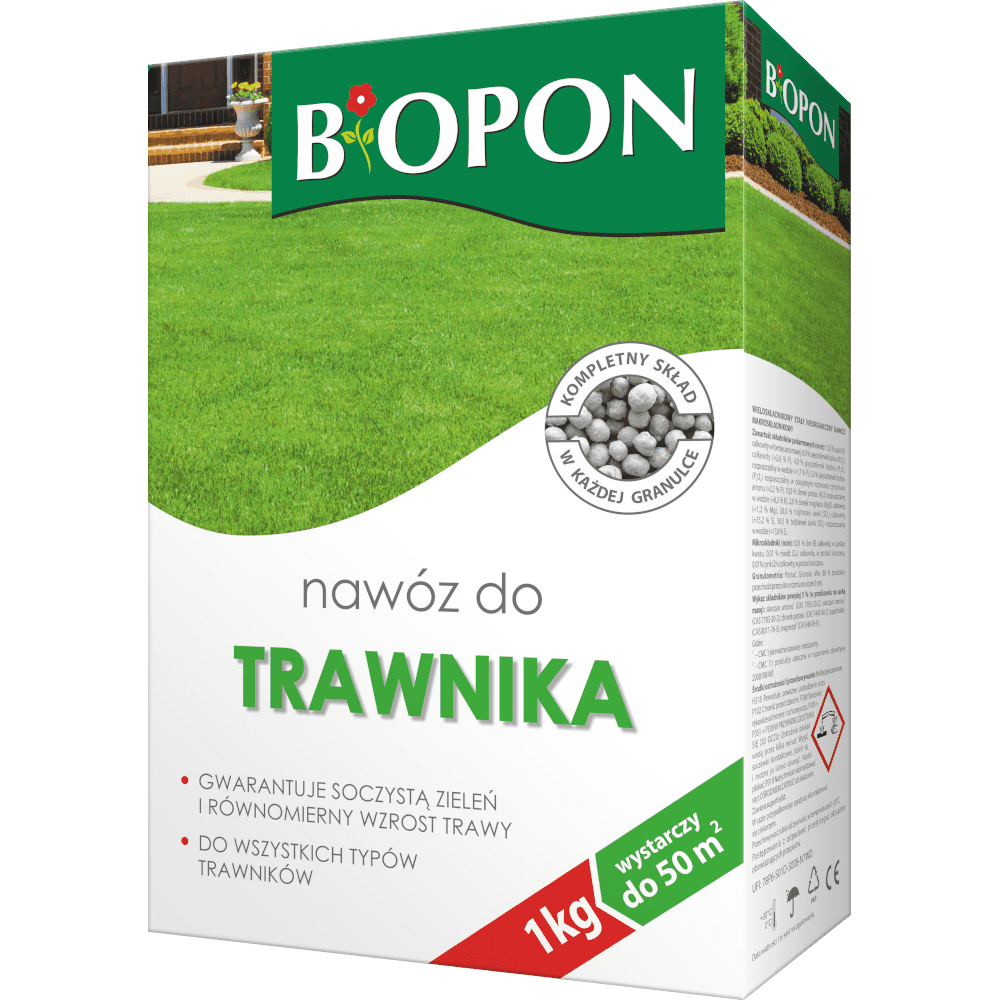
First Aid Fertiliser for Lawns in the Fight Against Drought Twój Ogród is a compound mineral granular fertiliser NPK 14-14-21, dedicated to grassland, especially during drought periods.
Description
First Aid Fertiliser for Lawns Twój Ogród - in the Fight Against Drought
- Long-lasting effect,
- Efficient - 1kg of product is enough to fertilise about 50m2 of lawn,
- Ensures root system development and stronger tillering,
- Guarantees a juicy green colour of the grass throughout the summer,
- Chloride-free fertiliser,
- Contains micro and macroelements,
- The grass becomes resistant to drought and yellowing,
- Popular among professionals.
First Aid Fertiliser for Lawns in the Fight Against Drought Twój Ogród is a compound mineral granular NPK fertiliser with potassium, phosphorus and nitrogen intended for top dressing of grassland. Dedicated to supporting plants during drought, especially in the summer period. The high nitrogen content accelerates root system development, ensures stronger tillering and gives the grass a juicy green colour. Lawns are more resistant to drought and yellowing, allowing you to enjoy a beautiful green turf throughout the spring and summer period.
First Aid Fertiliser for Lawns in the Fight Against Drought Twój Ogród - information and composition:
Fertiliser information:
- Fertiliser NPK 14-14-21
- YaraMila
- EU/EC FERTILIZER
Composition:
- Total nitrogen (N) 14%, ammonium nitrogen (N) 8%, nitrate nitrogen (N) 6%,
- Phosphorus pentoxide (P2O5) soluble in neutral ammonium citrate and water 14%,
- Phosphorus pentoxide (P2O5) soluble in water 10%,
- Potassium oxide (K2O) soluble in water 21%,
- Total boron (B) 0.02%
Lawn fertilisation with First Aid Fertiliser in the Fight Against Drought Twój Ogród - step-by-step instructions:
1. Mow the grass at least 1 day before the treatment.
2. Loosen the soil before applying the fertiliser.
3. Apply the fertiliser to the lawn using a cross pattern.
4. Water the grass after fertilisation.
5. Reapply after a period of 4 weeks.
Recommended lawn fertilisation period with First Aid Fertiliser for Lawns in the Fight Against Drought Twój Ogród:
Lawn care during drought:
Drought and lack of water can irreversibly damage our home lawn. With the right irrigation and fertilisation techniques, we can do a lot to prevent this.
Fertilisation during drought - if we have not ensured that our lawn received an adequate dose of nutrients and water before the drought, fertilising a dried-out lawn should be avoided.
So when to use First Aid Fertiliser in Drought Twój Ogród? Fertilisation is best started in early spring when vegetation begins and weather conditions allow. Regular fertilisation combined with proper irrigation and mowing techniques prepares the lawn for difficult conditions during drought.
First Aid Fertiliser in Drought Twój Ogród has a high potassium content which positively affects grass growth and tillering. Potassium increases resistance to drought and frost. The fertiliser is also rich in phosphorus, which benefits root system development, enabling greater water and mineral uptake. It contains an appropriate amount of nitrogen, necessary for plant biomass building, influencing the juicy colouring of leaves and being a component of chlorophyll.
Mowing grass during drought:
Remember not to cut the grass too short during drought. In summer, when temperatures are highest, short cutting weakens the plant and causes excessive drying. Grass cut too short lacks the strength to regenerate and recover. The cutting height is shown in the attached table. When mowing, ensure mower blades are sharp. Dull blades cause tearing and damage to the leaf blade, which plants must additionally cope with. During drought, grass lacks sufficient vigour for recovery and regeneration, leading to poor condition.
Watering the lawn during drought:
During drought, the grass must be watered without fail. A serious mistake is frequent but light, superficial watering. Water from such treatment evaporates quickly without reaching the roots. The desired effect is achieved by systematic and abundant watering. This should be done every two to three days, so that water penetrates deep into the soil reaching the roots. Watering should be done early in the morning before the scorching sun and temperature cause evaporation and prevent water from reaching the roots. Watering the lawn while the sun is strong causes droplets to act like lenses, dangerously burning and damaging plants. Evening watering is not recommended. Moisture lingering near roots favours fungal growth and rotting processes.
First Aid Fertiliser for Lawns in the Fight Against Drought Twój Ogród - safe use guidelines:
- Store fertiliser in closed original packaging and dry rooms, away from food and feed, in a place inaccessible to children. Protect from heat, direct sunlight, moisture and mechanical damage during storage and transport.
- In case of accidental ingestion, seek medical advice immediately. Rinse areas contaminated with fertiliser thoroughly with water.
- Maximum number of layers for transport – 1 and storage – 2.
- The fertiliser may be harmful if swallowed.
- During prolonged manual work with fertiliser, use protective gloves, and in case of dust, use respiratory and eye protection.
- Keep out of reach of children.
- Use fertiliser in a balanced way; fertilisation should be based on plant needs and growing medium fertility.
- Prevent fertiliser from reaching surfaces not intended for fertilisation.
- Shelf life - if storage conditions are met - unlimited.
Application and dosage
|
Crop |
How to apply? Dosage |
When to apply? |
|---|---|---|
|
Lawns |
Apply the fertiliser evenly by broadcasting over the entire area to be fertilised. Use a dose of 1kg / 50m2. |
Apply fertiliser from the start of vegetation until the end of July, once a month after mowing the grass. |