 SKU 24392-c
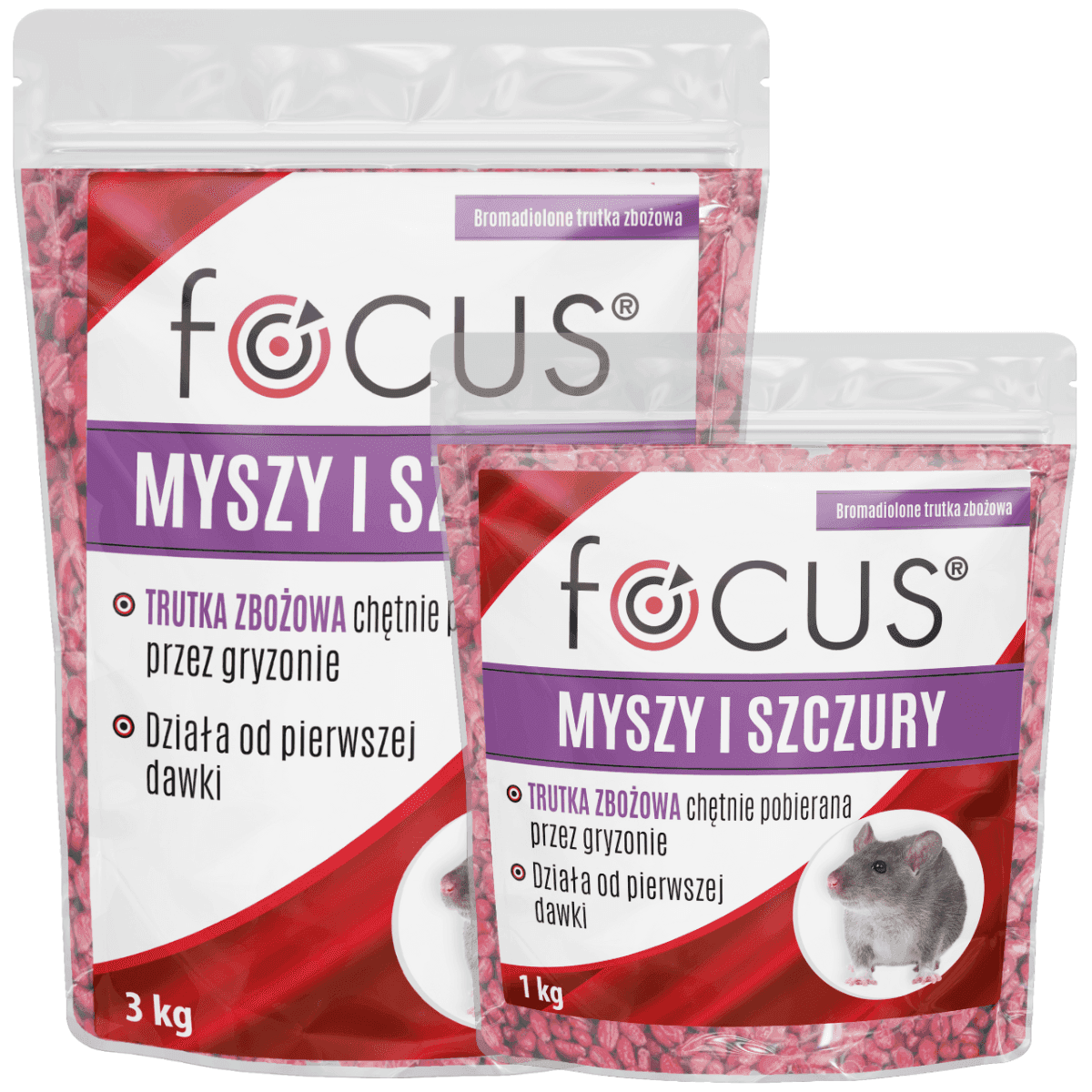
Focus Mouse and Rat Bait - Paste
Focus Paste is a modern deratization product designed for the control of rats and mice inside and around buildings as well as in sewage channels.
Description
Focus paste - bait for rats, mice and other rodents
- Effective against rats, mice and other rodents - you will get rid of the troublesome problem,
- The paste form is the fastest consumed by rodents,
- Effective from the first dose,
- Readily consumed by rodents,
- For the control of rats and mice inside and around buildings as well as in sewage channels,
- The most attractive bait form for rodents,
- Recommended for use where there is high food attractiveness (waste dumps, animal houses, feed stores, catering facilities, etc.).
Focus paste is a modern product, a bait in paste form, for deratization. Ready to use. Intended for the control of rats and mice inside and around buildings as well as in sewage channels. The paste is the most attractive bait form for rodents. It is consumed by them the fastest, therefore it is recommended for use where there is high food attractiveness (waste dumps, animal houses, feed stores, catering facilities, etc.).
Focus Mouse and Rat Bait in paste form - active substance:
- Bromadiolone 0.005%.
Which pests does Focus paste bait control?
Inside and around buildings:
- house mouse (Mus musculus),
- brown rat (Rattus norvegicus).
Focus Mouse and Rat Bait in paste form - instructions for use:
Control of mice indoors:
- Low infestation (low number of pests):
- Up to 40 g of bait per deratization station.
- If more than one deratization station is required, the minimum distance between stations should be 5 m. - High infestation (high number of pests):
- Up to 40 g of bait per deratization station.
- If more than one deratization station is required, the minimum distance between stations should be 2 m. - Regular inspections of deratization stations should be conducted (at least every 2-3 days at the beginning of the rodent control period, and later at least once a week) to: determine product effectiveness, assess the condition of deratization stations, and remove dead rodents.
- Bait consumed by rodents should be replenished.
Control of rats indoors:
- Low infestation (low number of pests):
- Up to 200 g of bait per deratization station.
- If more than one deratization station is required, the minimum distance between stations should be 10 m. - High infestation (high number of pests):
- Up to 200 g of bait per deratization station.
- If more than one deratization station is required, the minimum distance between stations should be 5 m. - Regular inspections of deratization stations should be conducted (at least every 5-7 days at the beginning of the rodent control period, and later at least once a week) to: determine product effectiveness, assess the condition of deratization stations, and remove dead rodents. Bait consumed by rodents should be replenished.
Control of mice around buildings:
- Low infestation (low number of pests):
- Up to 40 g of bait per deratization station.
- If more than one deratization station is required, the minimum distance between stations should be 5 m. - High infestation (high number of pests):
- Up to 40 g of bait per deratization station.
- If more than one deratization station is required, the minimum distance between stations should be 2 m.
Control of rats around buildings:
- Low infestation (low number of pests):
- Up to 200 g of bait per deratization station.
- If more than one deratization station is required, the minimum distance between stations should be 10 m. - High infestation (high number of pests):
- Up to 200 g of bait per deratization station.
- If more than one deratization station is required, the minimum distance between stations should be 5 m.
General rules for using block bait around buildings:
- Deratization stations should protect the bait from weather conditions (rain, snow, etc.).
- Deratization stations should be placed in locations protected from flooding.
- Regular inspections of deratization stations should be conducted (at the beginning of mouse control at least every 2–3 days, for rats at least every 5–7 days, and later at least once a week) to: determine product effectiveness, assess the condition of deratization stations, and remove dead rodents.
- Bait consumed by rodents should be replenished.
- Replace any bait damaged by water or contaminated.
- Follow the principles described in the guidelines for integrated pest management (IPM).
- Do not apply the product directly into rodent burrows.
- If placing deratization stations near surface waters (e.g. rivers, ponds, watercourses, embankments, irrigation ditches) or drainage systems, ensure the bait does not come into contact with water.
Focus Paste for mice and rats - usage tips:
- Before using the product, read and follow the recommendations provided in the informational materials included with the product or information given at the point of sale, and conduct a preliminary survey of the area where rodents are present to properly identify the rodent species, activity sites, and determine the probable cause and degree of infestation.
- Before starting treatment, remove other potential food sources for rodents (e.g. spilled grain or food residues).
- Do not disturb the rodents' habitat before applying the product as it may affect their behaviour and bait consumption.
- The product should be used according to the principles described in the integrated pest management (IPM) guidelines, good hygiene practices, and where possible, using non-chemical control methods.
- To increase bait consumption and reduce the likelihood of reinfestation, apply appropriate preventive measures (e.g. sealing holes, removing potential food sources for rodents).
- Deratization stations should be placed directly adjacent to areas where rodent activity has been observed (e.g. paths, nesting sites, livestock feeding areas, holes, burrows, etc.). Where possible, stations should be fixed to the ground or other structures. Stations should be clearly marked to indicate they contain rodenticides and that handling is prohibited.
- Public places where the product is used should be appropriately marked. Near bait placement points, information should be provided that contact with the product or dead rodents is hazardous to health and instructions for first aid in case of poisoning.
- Where possible, secure the bait so it cannot be removed.
- Deratization stations should be placed out of reach of children, birds, pets, livestock, and non-target animals.
- Stations should be placed away from food, drinks, animal feed, kitchen utensils, and surfaces in contact with them.
- Labels on deratization stations must include the following information: "Do not move or open"; "Contains rodenticide"; "Product name or registration number"; "Active substance(s)"; and "In case of accident contact poison control centre (Gdańsk, Kraków, Poznań, Warsaw)".
- Wear appropriate protective gloves (EN 374).
- Do not eat, drink or smoke while using the product.
- After use, wash hands and any skin exposed to direct contact with the product.
- If bait consumption is too low compared to the estimated infestation level, consider relocating deratization stations or changing the product form. If after 35 days from the start of rodent control the bait is still being consumed and rodent activity persists, determine the cause of treatment failure.
- If resistance to bromadiolone is detected or suspected, use a product containing a different active substance from the rodenticide group. Also consider non-chemical control methods (e.g. traps).
- After completing deratization, remove deratization stations and bait found outside stations.
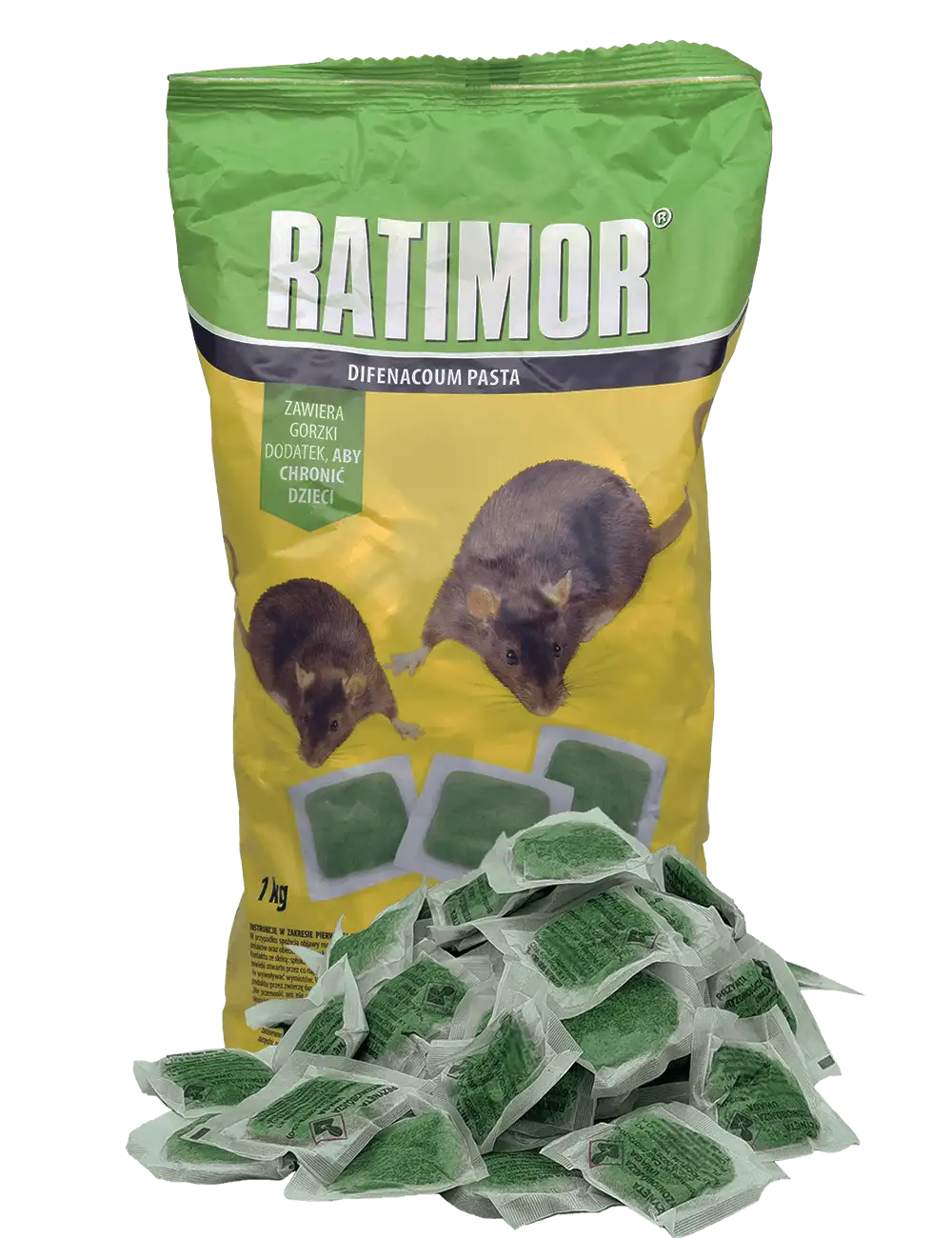
- Do not remove bait from sachets. To reduce hand contact with the product, apply and remove paste using a spatula; do not touch the contents with hands. Clean the spatula with a dry or damp paper towel.
- If possible, inform any bystanders (e.g. users of the rodent control area and its immediate surroundings) about the start of deratization (according to the principles described in the integrated pest management (IPM) guidelines) before beginning rodent control.
- To reduce the risk of secondary poisoning, frequently and regularly search for and remove dead rodents throughout the deratization period (e.g. at least twice a week or more often if necessary).
- Do not use the product for more than 35 days without prior assessment of infestation level and control effectiveness.
- Do not use the product in continuous baiting treatments (e.g. to prevent rodent infestation or detect their activity).
- This product should eliminate rodents within 35 days. If product ineffectiveness is suspected at the end of the rodent control period (e.g. continued rodent activity), consult the supplier/vendor or contact a professional deratization company.
- Do not wash deratization stations with water during treatment.
- Remove dead rodents safely and hand them over to a company authorised for hazardous waste recovery and disposal (e.g. incinerator).
- Do not mix with municipal waste streams.
- The product contains an anticoagulant group substance. Symptoms of poisoning may be delayed and include nosebleeds and bleeding gums. In severe cases, bruising and blood in stool and urine may occur. Antidote: Vitamin K1 administered only by medical/veterinary personnel.
- First aid in case of:
- Skin contact: rinse skin with water, then wash with soap and water.
- Eye contact: rinse eyes with eye wash solution or water, keeping eyelids open for at least 10 minutes;
- Oral contact: carefully rinse mouth with water. Never give anything by mouth to an unconscious person. Do not induce vomiting. In case of ingestion, seek medical advice immediately and show the product packaging or label. If ingested by a pet, contact a veterinarian. - Environmental protection measures:
- In case of accidental release into the environment, collect mechanically avoiding direct skin contact and hand over to a company authorised for hazardous waste recovery and disposal (e.g. incinerator).
- Product is hazardous to wildlife.
- Due to the mode of action of anticoagulant substances, effects of rodenticides containing them may be observed 4-10 days after bait consumption.
- Rodents can transmit diseases.
- Dead rodents and bait should be removed using protective gloves or tools such as tongs.
- The product contains a deterrent agent to prevent accidental ingestion and a dye. - Dispose of product packaging and residues (including bait found outside deratization stations) in a labelled container safely and hand over to a company authorised for hazardous waste recovery and disposal (e.g. incinerator).
- Store the product in its original, labelled, tightly closed packaging in a cool, dry, well-ventilated place, out of reach of children, birds, pets and livestock. Keep away from sunlight.
- For professional users only.
- May be harmful to an unborn child.
- Causes damage to organs (blood) through prolonged or repeated exposure.
- Contains 1,2-benzisothiazol-3(2H)-one. May cause an allergic reaction.
- Read special precautions before use.
- Do not use before reading and understanding all safety measures.
- Wash hands thoroughly after use.
- Do not eat, drink or smoke while using the product.
- Wear protective gloves.
- In case of exposure or contact: seek advice/medical attention. If feeling unwell, seek advice/medical attention.
- Keep locked up.
- Dispose of contents/container at an authorised waste disposal facility.