 SKU 28822-c
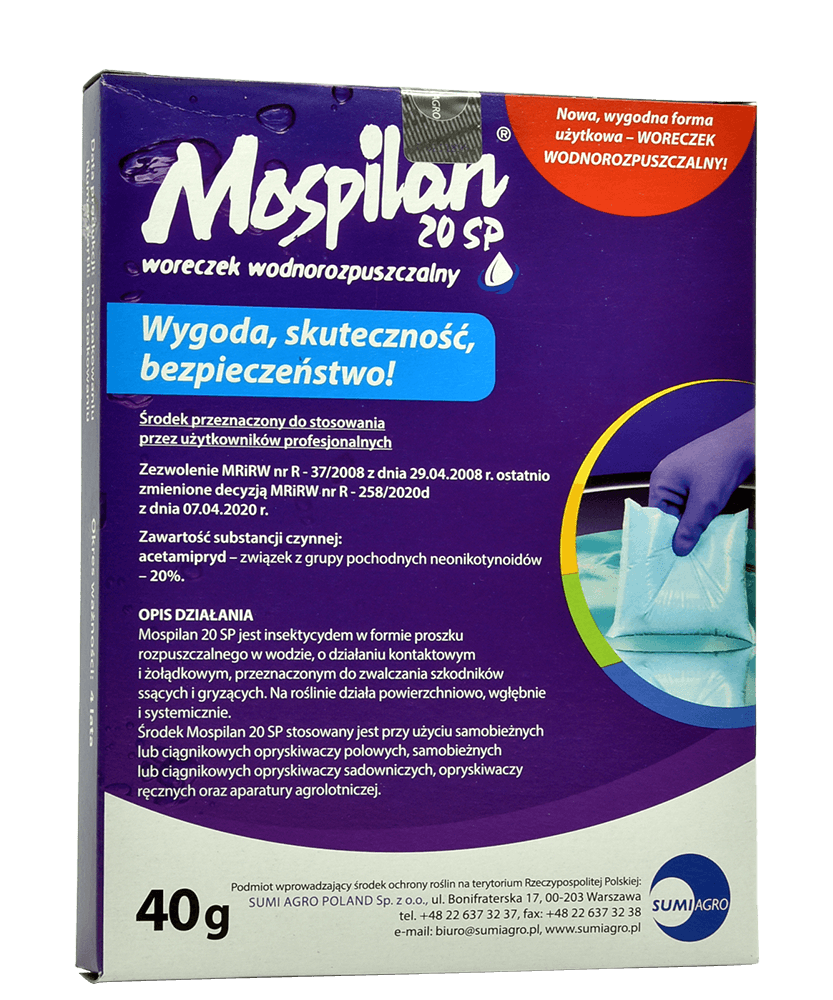
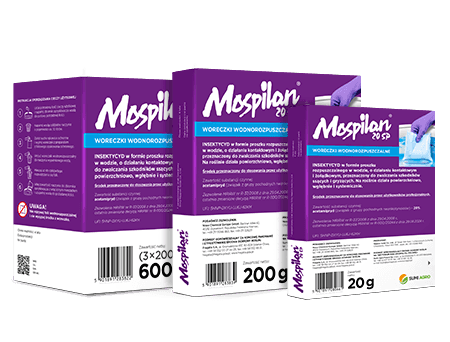
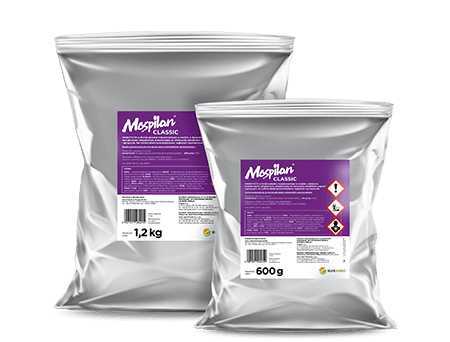
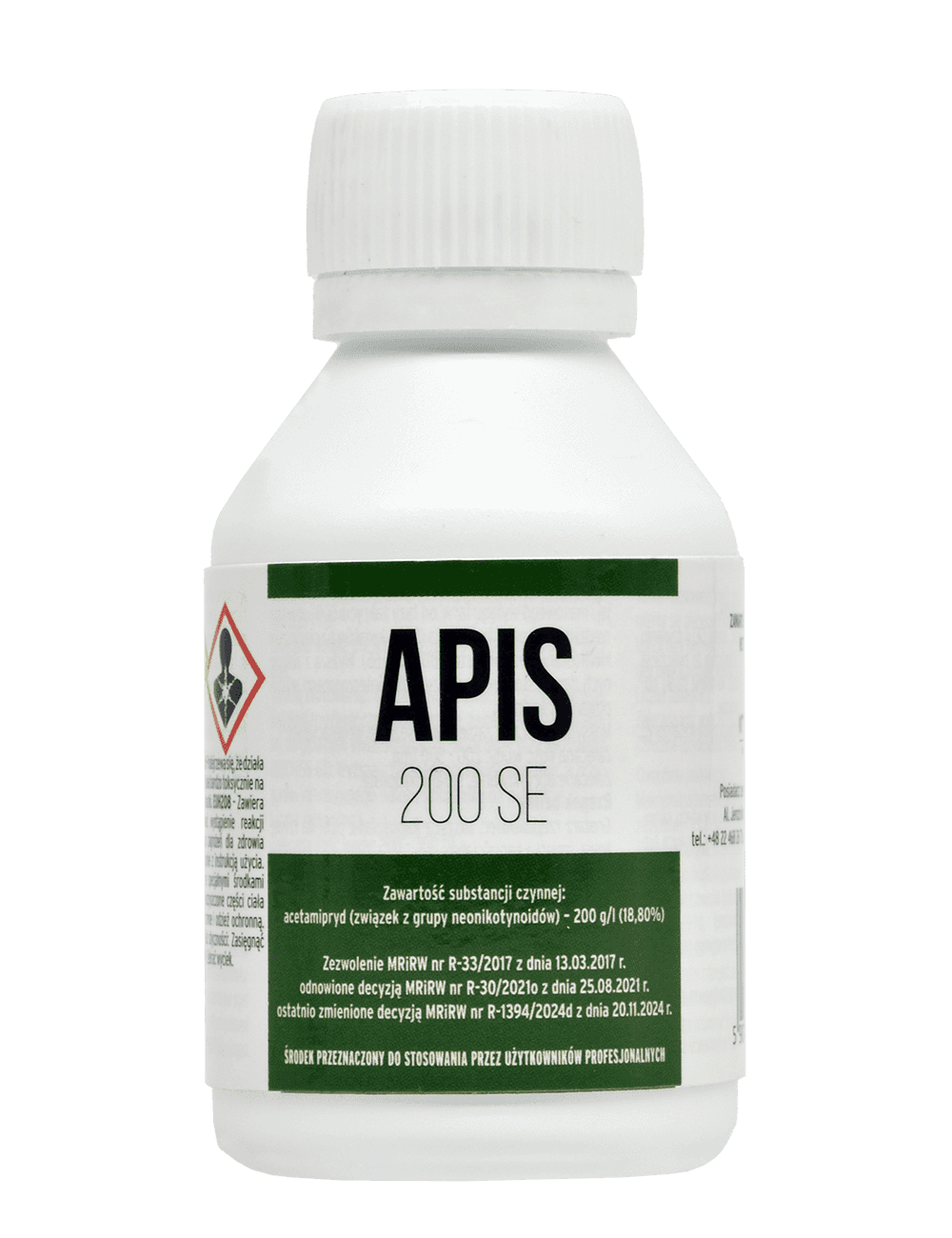
Kobe 20 SP (acetamiprid) - insecticide
Kobe 20 SP is an effective insecticide for the control of sucking and chewing pests, available in a water-soluble powder form. It is applied foliarly using field or orchard sprayers, acting superficially and systemically.
Description
Kobe 20 SP - effective insecticide
What are the benefits of using Kobe?
- For foliar application (convenience),
- Effectiveness.
Kobe 20 SP is an insecticide designed to control sucking and chewing pests.
The product is manufactured as a water-soluble powder. It should be applied using field or orchard sprayers.
It acts on the plant superficially, systemically, and internally.
What is the active substance content in Kobe?
- Active substance content: acetamiprid - a compound from the neonicotinoid group - 200 g/kg (20%).
In which crops is Kobe used?
- Potato,
- Oilseed rape,
- Apple tree,
- Sour cherry,
- Sweet cherry,
- Pear tree,
- Plum tree (spray for plum fruit moth),
- Strawberry.
In small-scale crops:
- Faba bean
- Soya
- Alfalfa
- Yellow lupin, white lupin, narrow-leafed lupin
- Tobacco
- Pear tree
- Plum tree
- Sour cherry, sweet cherry (cherry spray)
- Apricot, peach
- Grapevine
- Blueberry
- Raspberry
- Black currant, red currant, white currant
- Gooseberry
- Strawberry
- Hazel
- Walnut
Vegetable crops grown in the field, such as:
- Sweet pepper,
- Pumpkin, melon, watermelon,
- Cucumber,
- Garlic,
- Lettuce,
- Spinach,
- Broad bean,
- Pea,
- Bean,
- Beetroot,
- Leek,
- Onion,
- Cabbage,
- Brussels sprouts, Chinese cabbage,
- Tomato,
- Celery stalk, leaf celery,
- Cauliflower, broccoli.
Vegetable crops grown under cover, such as:
- Cucumber,
- Tomato,
- Sweet pepper,
- Aubergine,
- Lettuce.
For more information about using the insecticide Kobe, visit the Orchard Advisory, Vegetable Advisory, and Agricultural Advisor pages.
Warning! Plant protection products must be used safely. Before each use, read the information on the label and product details.
The buyer declares that they meet the conditions specified in Article 25 paragraph 3 point 5 of the Act of 8 March 2013 on plant protection products and has training in the use of plant protection products in the case of products for professional users. Before each use, read the information on the label and product details. Pay attention to detailed risk indications. Follow the safety rules contained on the label. Plant protection products may only be purchased by adults and persons who have completed training and have the qualifications required for persons acquiring plant protection products (Article 28 of the Act on plant protection products of 8 March 2013, as amended). Plant protection products must be used in a way that does not pose a threat to human health, animals, or the environment. The buyer of plant protection products must be sober. By using this offer, you declare that you meet the above conditions.
Application and dosage
|
Crop |
Target Pest |
How to apply? Dosage |
When to apply? |
|---|---|---|---|
|
potato |
Colorado potato beetle |
Maximum dose for single application: 0.12 kg/ha. Recommended water volume: 200-400 l/ha. |
Apply at the time of egg laying and mass larval hatching. In case of high pest pressure, use the higher recommended dose. |
|
winter oilseed rape |
pollen beetle |
Maximum dose for single application: 0.12 kg/ha. Recommended water volume: 200-400 l/ha. |
Spray when the pest flies onto the crop from the compact flower cluster stage to the beginning of flowering. |
|
winter oilseed rape |
cabbage seed weevil, cabbage blossom weevil |
Maximum/recommended dose for single application: 0.12 kg/ha. Recommended water volume: 200-400 l/ha. |
Apply at the beginning of petal fall. |
|
winter oilseed rape |
cabbage stem weevil, cabbage stem flea beetle |
Maximum dose for single application: 0.25 kg/ha. Recommended water volume: 200-400 l/ha. |
Spray before beetles lay eggs, according to monitoring, from the beginning of stem elongation to the stage when flower buds are enclosed in leaves (BBCH 30-50). |
|
apple tree |
aphids, pear psylla, codling moth |
Maximum/recommended dose for single application: 0.125 kg/ha. Recommended water volume: 500-900 l/ha. |
Aphids: spray from green bud stage when first aphid colonies appear. Pear psylla: apply from pink bud stage to end of petal fall. Codling moth: apply at the beginning of larval hatching, during petal fall. |
|
apple tree |
codling moth, apple leaf curling midge, summer fruit tortrix, apple clearwing moth |
Maximum/recommended dose for single application: 0.2 kg/ha. Recommended water volume: 500-900 l/ha. |
Codling moth: apply at the beginning of moth flight and mass egg laying. Apple leaf curling midge: apply from end of flowering to beginning of fruit drop (June drop) (BBCH 59-73). Summer fruit tortrix: apply from end of flowering to beginning of fruit drop (June drop) (BBCH 59-73). Apple clearwing moth: spray from green bud stage when first aphid colonies appear (above BBCH 56). |
|
sour cherry, sweet cherry |
cherry fruit fly |
Maximum/recommended dose for single application: 0.125 kg/ha. Recommended water volume: 500-900 l/ha. |
Apply during mass appearance of flies and egg laying. If fly flight is extended, 2-3 treatments with products from different chemical groups may be applied. |
|
sour cherry, sweet cherry |
aphids |
Maximum/recommended dose for single application: 0.125 kg/ha. Recommended water volume: 500-900 l/ha. |
Apply after first aphid colonies appear. In case of high pest pressure, Kobe 20 SP can be used together with the adjuvant Slippa. |
|
pear tree |
codling moth |
Maximum/recommended dose for single application: 0.2 kg/ha. Recommended water volume: 500-900 l/ha. |
Apply at the beginning of moth flight and mass egg laying or at the egg development stage "black head". |
|
pear tree |
aphids |
Maximum/recommended dose for single application: 0.125 kg/ha. Recommended water volume: 500-900 l/ha. |
Apply after first aphid colonies appear. |
|
plum tree |
aphids |
Maximum/recommended dose for single application: 0.125 kg/ha. Recommended water volume: 500-900 l/ha. |
Apply after first aphid colonies appear. In case of high pest pressure, Kobe 20 SP can be used together with the adjuvant Slippa. |
|
plum tree |
plum fruit moths |
Maximum/recommended dose for single application: 0.125 kg/ha. Recommended water volume: 500-900 l/ha. |
Apply at the beginning of larval hatching, but not before the end of petal fall. |
|
plum tree |
plum fruit moth |
Maximum/recommended dose for single application: 0.2 kg/ha. Recommended water volume: 500-900 l/ha. |
Apply during intense moth flight and mass egg laying for each emerging pest generation. |
|
strawberry |
cockchafers |
Maximum/recommended dose for single application: 0.3 kg/ha. Recommended water volume: 500-900 l/ha. |
Apply after fruit harvest by spraying plants and soil beneath. |
|
faba bean |
spider mites |
Maximum/recommended dose for single application: 0.2 kg/ha. Recommended water volume: 200 - 500 l/ha. |
Apply during pest appearance, from first to ninth true leaf stage (BBCH 11-19). |
|
faba bean |
aphids, thrips |
Use Kobe 20 SP together with adjuvant Slippa: Recommended water volume: 200 - 500 l/ha. |
Apply during pest appearance, from beginning of flower cluster formation – flower buds enclosed in leaves to beginning of pod and seed development (BBCH 51-70). |
|
faba bean |
broad bean weevil |
Maximum/recommended dose for single application: 0.2 kg/ha. Recommended water volume: 200 - 500 l/ha. |
Apply during pest appearance, from beginning of flowering (about 10% open flowers) to beginning of pod and seed development with pre-harvest interval observed (first pod reached typical length) (BBCH 61-70). |
|
soya |
spider mites |
Maximum/recommended dose for single application: 0.2 kg/ha. Recommended water volume: 200 - 500 l/ha. |
Apply during pest appearance, from first to ninth true leaf stage (BBCH 11-19). |
|
soya |
alfalfa weevil, aphids |
Maximum/recommended dose for single application: 0.2 kg/ha. Recommended water volume: 200 - 500 l/ha. |
Apply during pest appearance, from beginning of flowering (about 10% open flowers) to beginning of pod and seed development with pre-harvest interval observed (first pod reached typical length) (BBCH 61-70). |
|
soya |
broad bean weevil |
Maximum/recommended dose for single application: 0.2 kg/ha. Recommended water volume: 200 - 500 l/ha. |
Apply during pod and seed development with pre-harvest interval observed (first pod reached typical length) (BBCH 70). |
|
alfalfa |
spider mites, aphids, alfalfa weevil, alfalfa leaf tier, alfalfa gall midge |
Maximum/recommended dose for single application: 0.2 kg/ha. Recommended water volume: 200 - 300 l/ha. |
Spider mites: apply during pest appearance, from first to fifth true leaf stage (BBCH 11-15). |
|
yellow lupin, white lupin, narrow-leafed lupin |
spider mites, aphids, thrips, alfalfa weevil, pea moth |
Maximum/recommended dose for single application: 0.2 kg/ha. Recommended water volume: 200 - 300 l/ha. |
Spider mites: apply during pest appearance, from first to fifth true leaf stage (BBCH 11-15). |
|
tobacco |
tobacco thrips, aphids |
Maximum/recommended dose for single application: 0.2 kg/ha. Recommended water volume: 200-750 l/ha. |
Apply from clearly developed first leaf to end of stage when 50% of seeds mature (BBCH 11-85). |
|
pear tree, plum tree, sour cherry, sweet cherry, apricot, peach, grapevine, blueberry |
tortrix moths (beech tortrix, netted tortrix, rose tortrix) and other tortrices and other young leaf-eating caterpillars |
Use Kobe 20 SP together with adjuvant Slippa: Maximum/recommended dose for single application: Kobe 20 SP 0.2 kg/ha + Slippa 0.2 l/ha. Recommended water volume: 200-750 l/ha. |
Apply from young larval hatching, i.e. from first leaf stage to end of fruit maturation (BBCH 11-89). |
|
pear tree |
spotted pear psylla, red pear psylla, yellow pear psylla |
Use Kobe 20 SP together with adjuvant Slippa: Maximum/recommended dose for single application: Kobe 20 SP 0.2 kg/ha + Slippa 0.2 l/ha. Recommended water volume: 200-750 l/ha. |
Apply from developed first leaf to beginning of fruit development (BBCH 11-71). |
|
pear tree |
dark pear slug |
Maximum/recommended dose for single application: 0.2 kg/ha. Recommended water volume: 200-750 l/ha. |
Apply after pest presence is confirmed, from beginning of fruit development to end of fruit maturation (BBCH 71-89). |
|
pear tree |
pear blossom weevil |
Maximum/recommended dose for single application: 0.2 kg/ha. Recommended water volume: 200-750 l/ha. |
Apply from swelling flower buds to end of flower cluster development (BBCH 51-59). |
|
pear tree |
pear psylla |
Maximum/recommended dose for single application: 0.2 kg/ha. Recommended water volume: 200-750 l/ha. |
Apply during fruit development (BBCH 71-79). |
|
plum tree |
plum cup moth |
Maximum/recommended dose for single application: 0.2 kg/ha. Recommended water volume: 200-750 l/ha. |
Apply at the beginning of pest feeding from green bud to white bud stage of plum (BBCH 54-59). |
|
sour cherry, sweet cherry |
dark slug, black cherry fruit fly, cherry blossom weevil |
Maximum/recommended dose for single application: 0.2 kg/ha. Recommended water volume: 200-750 l/ha. |
Dark slug: apply after pest presence is confirmed, from beginning of fruit development to end of fruit maturation (BBCH 71-89). |
|
apricot, peach |
aphids |
Use Kobe 20 SP together with adjuvant Slippa: Maximum/recommended dose for single application: Kobe 20 SP 0.2 kg/ha + Slippa 0.2 l/ha. Recommended water volume: 200-750 l/ha. |
Apply after first aphid colonies appear, from first leaf to end of fruit maturation (BBCH 11-89). |
|
grapevine |
aphids |
Use Kobe 20 SP together with adjuvant Slippa. Maximum/recommended dose for single application: Kobe 20 SP 0.2 kg/ha + Slippa 0.2 l/ha. Recommended water volume: 200-750 l/ha. |
Apply after first aphid colonies appear, from first leaf to end of fruit maturation (BBCH 11-89). |
|
grapevine |
summer fruit tortrix |
Maximum/recommended dose for single application: 0.2 kg/ha. Recommended water volume: 200-750 l/ha. Recommended spraying: medium droplet. |
Apply from full flowering to end of fruit maturation (BBCH 65-89). |
|
blueberry |
aphids |
Use Kobe 20 SP together with adjuvant Slippa. Maximum/recommended dose for single application: Kobe 20 SP 0.2 kg/ha + Slippa 0.2 l/ha. Recommended water volume: 200-750 l/ha. |
Apply after first aphid colonies appear, from first leaf to end of fruit maturation (BBCH 11-89). |
|
blueberry |
summer fruit tortrix, blueberry leaf beetle |
Maximum/recommended dose for single application: 0.2 kg/ha. Recommended water volume: 200-750 l/ha. Recommended spraying: medium droplet. |
Summer fruit tortrix: apply from full flowering to end of fruit maturation (BBCH 65-89). |
|
raspberry, white currant, black currant, red currant, gooseberry, hazel |
aphids, netted tortrix, rose tortrix |
Use Kobe 20 SP together with adjuvant Slippa: Maximum/recommended dose for single application: Kobe 20 SP 0.2 kg/ha + Slippa 0.2 l/ha. Recommended water volume: 200-750 l/ha. |
Apply from young larval hatching, i.e. from first leaf to end of flowering (BBCH 11-69). |
|
raspberry |
raspberry beetle, raspberry tortrix, raspberry cane midge, raspberry cane gall midge, raspberry sawfly |
Maximum/recommended dose for single application: 0.2 kg/ha. Recommended water volume: 200-750 l/ha. Recommended spraying: medium droplet. |
Raspberry beetle: apply during bud break (BBCH 56-59). |
|
white currant, black currant, red currant |
currant beetle, leaf gall midge, currant fruit moth, currant sawfly |
Maximum/recommended dose for single application: 0.2 kg/ha. Recommended water volume: 200-750 l/ha. Recommended spraying: medium droplet. |
Currant beetle: apply during flower cluster development (BBCH 51-59) |
|
gooseberry |
currant sawfly |
Maximum/recommended dose for single application: 0.2 kg/ha. Recommended water volume: 200-750 l/ha. Recommended spraying: medium droplet. |
Apply during intense moth flight, from flower withering to end of flowering when all petals have fallen (BBCH 67-69). |
|
pea, bean |
pea thrips, tobacco thrips |
Use Kobe 20 SP together with adjuvant Slippa: |
Apply during pest appearance, from first well-developed leaf to end of flowering (BBCH 11-69). |
|
bean |
bean weevil |
Maximum/recommended dose for single application: 0.2 kg/ha. Recommended water volume: 200 - 500 l/ha. Recommended spraying: medium droplet. |
Apply from first open flowers to when 60% of pods reach typical length (BBCH 60 – 76). |
|
beetroot |
beet flea beetle, beet leafhopper |
Maximum/recommended dose for single application: 0.2 kg/ha. Recommended water volume: 200 - 500 l/ha. Recommended spraying: medium droplet. |
Apply at first pest appearance, from first pair of undeveloped leaves to ninth true leaf stage (BBCH 11-19). |
|
leek, onion |
onion weevil, young caterpillars of leek moth |
Maximum/recommended dose for single application: 0.2 kg/ha. Recommended water volume: 200 - 500 l/ha. Recommended spraying: medium droplet. |
Apply at pest appearance from first true leaf, no later than when half of the target vegetable mass is reached (BBCH 11-48). |
|
head cabbage, Chinese cabbage, Brussels sprouts |
flea beetles, cabbage stem weevil, cabbage stem flea beetle, cabbage seed weevil |
Maximum/recommended dose for single application: 0.2 kg/ha. Recommended water volume: 200 - 500 l/ha. Recommended spraying: medium droplet |
Apply at pest appearance or after damage is observed, from 3 leaf stage to 80% of target head mass (BBCH 13-48). |
|
Brussels sprouts, Chinese cabbage |
cabbage root fly |
Maximum/recommended dose for single application: 0.2 kg/ha. Recommended water volume: 200 - 500 l/ha. Recommended spraying: medium droplet. |
Apply during pest appearance, from first well-developed leaf to fifth leaf stage (BBCH 11-15). |
|
leaf celery, celery stalk |
celery leaf miner, carrot fly, leaf miners |
Maximum and recommended dose for single application: 0.2 kg/ha. Recommended water volume: 200 - 500 l/ha. Recommended spraying: medium droplet |
Apply from clearly developed first leaf to end of development of harvestable parts (BBCH 11-49). |
|
cauliflower, broccoli |
cabbage root fly, flea beetles, cabbage stem weevil, cabbage stem flea beetle, aphids, cabbage seed weevil |
Maximum/recommended dose for single application: 0.2 kg/ha. Recommended water volume: 200 - 500 l/ha. Recommended spraying: medium droplet |
Apply at pest appearance or after damage is observed, from 3 leaf stage to 80% of target head mass (BBCH 13-48). |
|
cucumber, tomato, sweet pepper, aubergine, lettuce |
greenhouse whitefly, tobacco thrips, western flower thrips, leaf miners, aphids, leaf miners, flea beetles |
Maximum/recommended concentration for single application: 0.04% i.e. 4 g product in 10 litres of water. Use with hand sprayers. Recommended water volume in vegetable crops with hand sprayers: |
Apply after pest occurrence regardless of crop growth stage (BBCH 11-89). |
|
ornamental plants |
greenhouse whitefly, tobacco thrips, western flower thrips, leaf miners, aphids, scale insects, leaf miners |
Maximum/recommended concentration for single application: 0.04% i.e. 4 g product in 10 litres of water. Recommended water volume in ornamental plants with hand sprayers: |
Spray after pest occurrence regardless of crop growth stage. |
|
strawberry |
raspberry tortrix, leaf miners |
Maximum/recommended dose for single application: 0.2 kg/ha. Recommended water volume: 200-750 l/ha. Recommended spraying: medium droplet. |
Apply during pest appearance, during flower cluster development when flower buds loosen (BBCH 51-59). |
|
hazel |
plum cup moth, nut weevil, hazel leaf roller |
Maximum/recommended dose for single application: 0.2 kg/ha. Recommended water volume: 200-750 l/ha. Recommended spraying: medium droplet. |
Plum cup moth: apply at beginning of pest feeding, during flower cluster development (BBCH 54-59). |
|
walnut |
aphids |
Maximum/recommended dose for single application: 0.2 kg/ha. Recommended water volume: 200-750 l/ha. Recommended spraying: medium droplet. |
Apply at pest appearance from beginning of flower cluster development to end of flowering (BBCH 50-69). |
|
sweet pepper, pumpkin, melon, watermelon, cucumber, leek, onion, head cabbage, Chinese cabbage, Brussels sprouts |
thrips |
Use Kobe 20 SP together with adjuvant Slippa: Maximum/recommended dose for single application: Kobe 20 SP 0.2 kg/ha + Slippa 0.2 l/ha. Recommended water volume: 200 - 500 l/ha. Recommended spraying: medium droplet |
Apply at pest appearance. |
|
sweet pepper, lettuce, spinach, Brussels sprouts, Chinese cabbage, tomato |
aphids |
Maximum/recommended dose for single application: 0.2 kg/ha. Recommended water volume: 200 - 500 l/ha. Recommended spraying: medium droplet |
Apply at first aphid colonies appearance. |
|
sweet pepper, pumpkin, melon, watermelon, cucumber, bean |
leaf miners |
Maximum/recommended dose for single application: 0.2 kg/ha. Recommended water volume: 200 - 500 l/ha. |
|
|
cucumber, broad bean, bean, leek, pea |
seedling fly, soil fly |
Maximum/recommended dose for single application: 0.2 kg/ha. |
|
|
garlic, onion |
soil fly, onion fly, seedling fly |
Maximum/recommended dose for single application: 0.2 kg/ha. |
|
|
spinach |
seedling fly, onion fly, cabbage root fly, soil fly |
Maximum/recommended dose for single application: 0.2 kg/ha. |
Apply at pest appearance from clearly developed first leaf to formation of edible parts (BBCH 11-39). |
|
broad bean |
broad bean weevil |
Maximum/recommended dose for single application: 0.2 kg/ha. |
Apply from full flowering to end of stage when 50% of pods reach typical length (BBCH 65-75) |
|
pea |
pea weevil |
Maximum/recommended dose for single application: 0.2 kg/ha. |
Apply from beginning of flowering to end of stage when 50% of pods reach typical length (BBCH 61-75). |