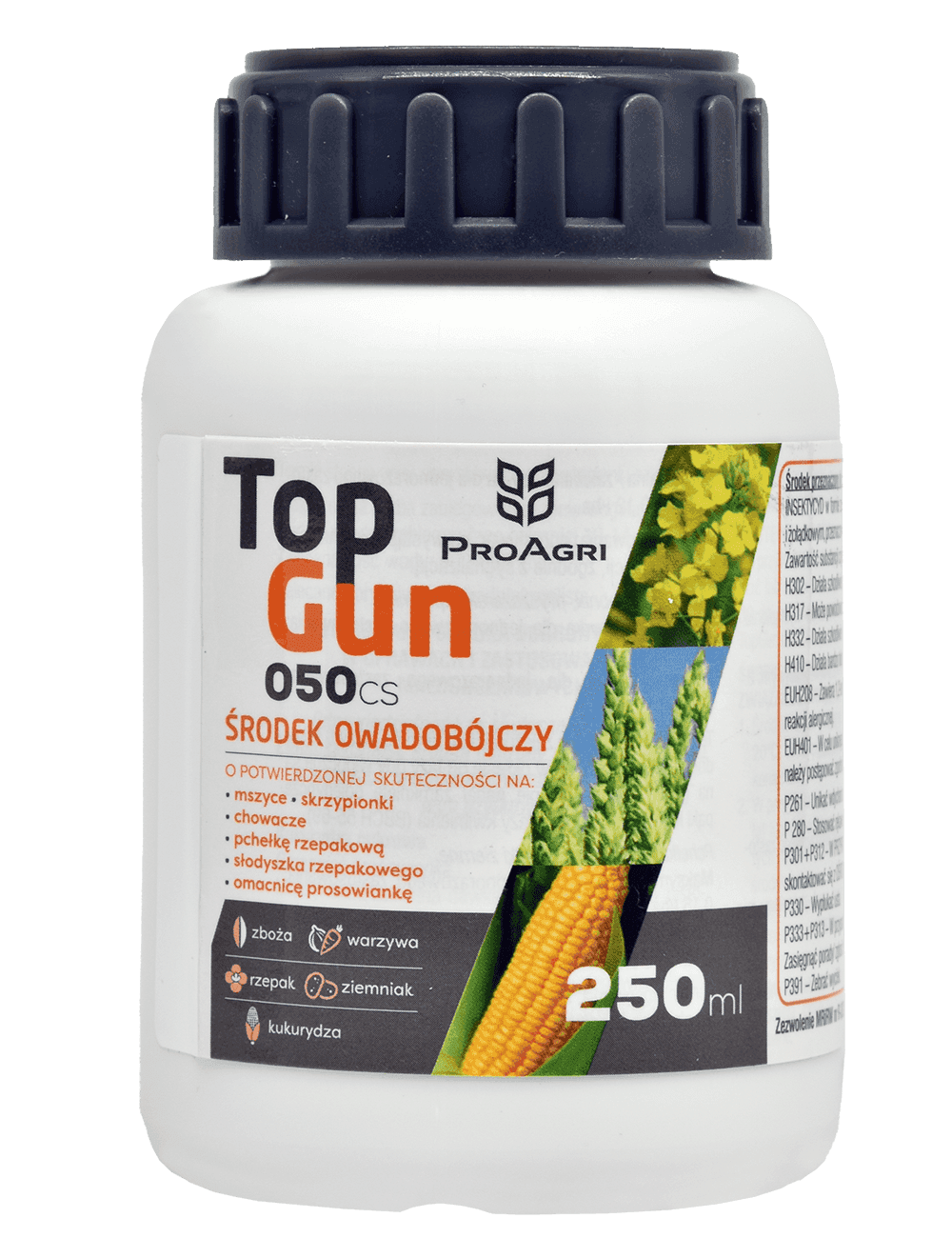
 SKU 33059-c
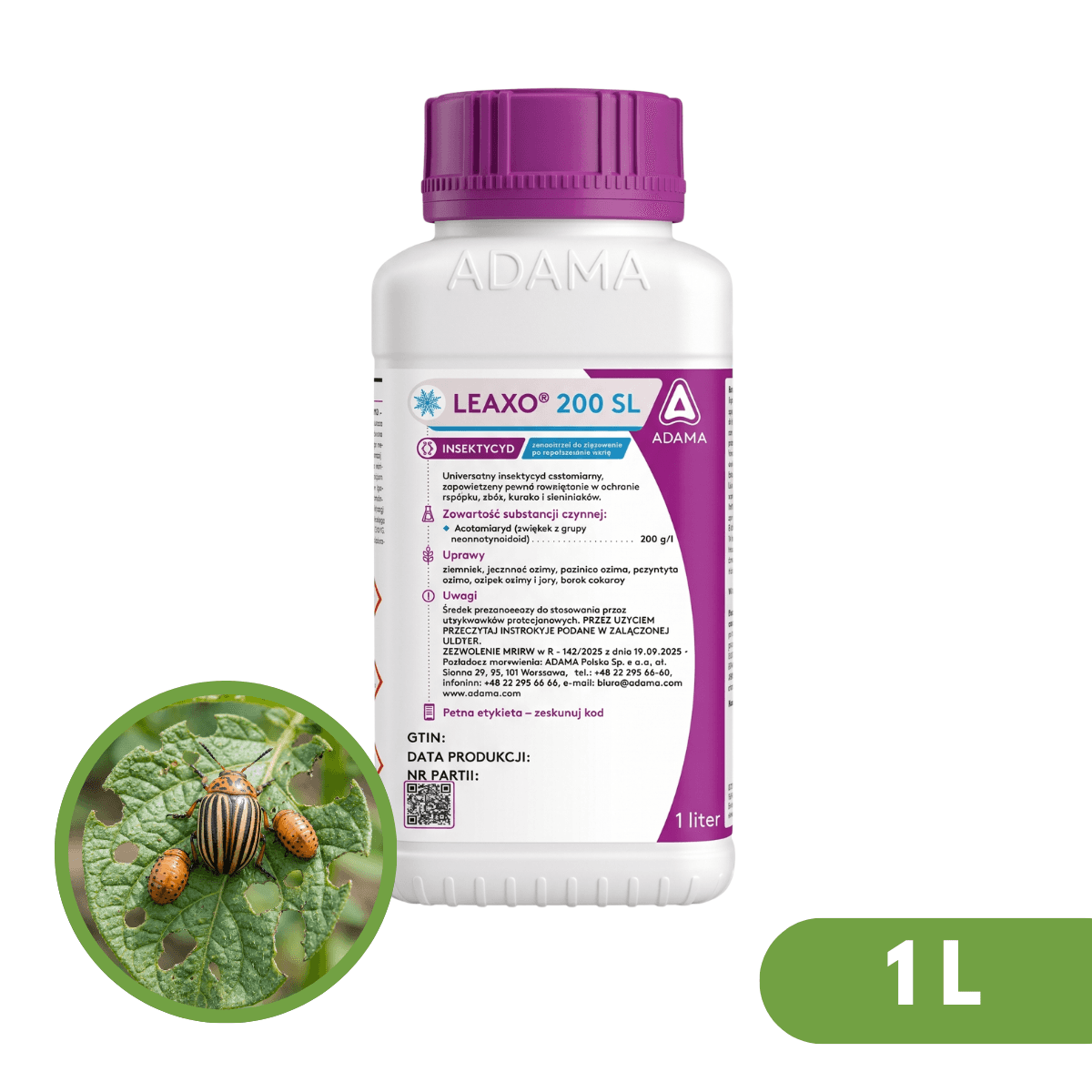
Carnadine 200 SL (acetamiprid) - effective insecticide
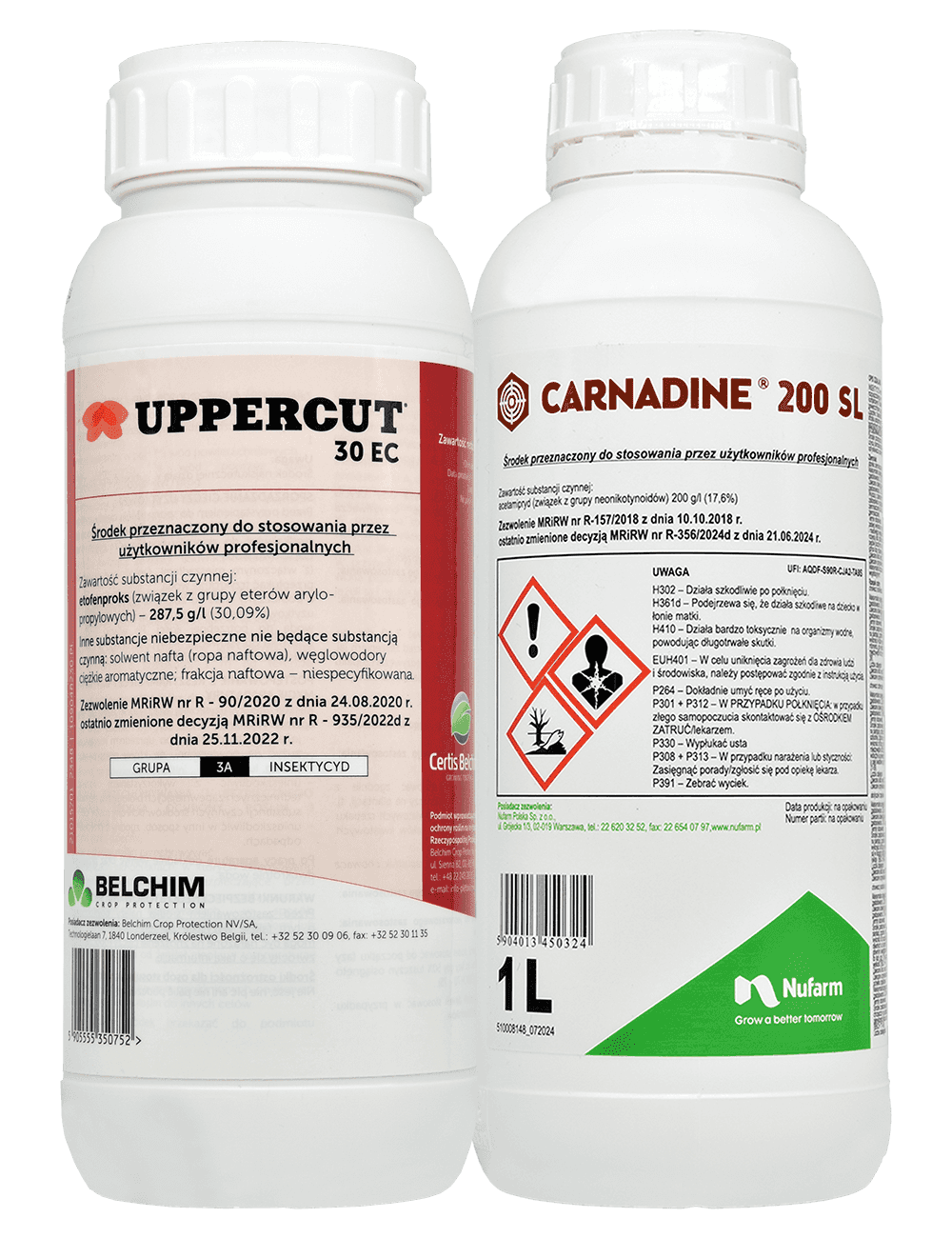
Carnadine 200 SL is an effective insecticide by Nufarm, containing 200 g/l acetamiprid, which controls insects such as Colorado potato beetle, weevils, and codling moth.
Description
Carnadine 200 SL - protects high yields from pests - Colorado potato beetle and others
What are the benefits of using the plant protection product Carnadine 200 SL to combat insects?
- Effectively controls unwanted insects,
- Contains a highly effective active substance: acetamiprid,
- Has a fast action, so you will quickly get rid of the problem,
- Does not restrict the choice of succeeding crops,
- Controls pests at all developmental stages – larvae, adult insects,
- Acts both contact and stomach action, and on the plant surface, locally and systemically - broad spectrum of action,
- Safe for pollinating insects.
The Carnadine 200 SL product is a plant protection product manufactured by Nufarm from the insecticide group. It is available as a water-soluble concentrate (SL).
It is intended for use to control troublesome insects in crop cultivation.
The product is designed for application using self-propelled or tractor-mounted field or orchard sprayers.
What is the content of active substances in the insecticide Carnadine 200 SL?
- Acetamiprid (a compound from the neonicotinoid group) 200 g/l (17.6%)
How does the insecticide Carnadine work?
It has contact and stomach action, meaning it penetrates through the pest’s cuticle and through the digestive tract along with the consumed plant material.
On the plant, it acts on the surface (protects the plant on its surface), locally (acts at the site of application, penetrates into the plant, does not move to new plant growth) and systemically (systemic), meaning it penetrates the plant and circulates with the sap. This ensures that the plant is perfectly protected from insects both inside and out.
Which insects does the plant protection product Carnadine 200 SL control?
- Colorado potato beetle (larvae and beetles),
- cabbage stem weevil,
- cabbage seed weevil,
- pollen beetle,
- cabbage root fly,
- cabbage aphid,
- codling moth,
- apple aphid.
How to apply the insecticide Carnadine?
To protect groundwater, products containing the active substance acetamiprid applied in apple cultivation at a dose of 0.4 l/ha should not be used more often than every second season in the same area.
Detailed information regarding dosing and application of Carnadine can be found in the "Dosage" section and in the plant protection product label attached in the downloadable files.
In which crops can the insecticide Carnadine 200 SL be used?
- Potato,
- Winter oilseed rape,
- Apple tree,
- Spring oilseed rape (small-scale).
What is the pre-harvest interval when using Carnadine for insect control?
The pre-harvest interval, i.e. the period from the last application of the product to the day of crop harvest for Carnadine, is:
- Apple tree - 14 days,
- Potatoes - 7 days,
- Oilseed rape - 28 days.
Can Carnadine be used for insect control without risk to succeeding crops?
The product does not pose a threat to succeeding crops.
What are the recommendations when using spray liquid prepared with Carnadine?
- During application, avoid:
- drift of spray liquid onto neighbouring crops,
- overlapping spray liquid on treatment strip edges and headlands. - To minimise the risk of pest resistance to acetamiprid, if a repeat treatment is necessary, it is recommended to use an insecticide containing an active substance from a different chemical group with a different mode of action according to IRAC classification instead of a product containing acetamiprid (IRAC group 4A).
- Determine the timing of treatment using available pest monitoring methods.
- Spraying against pests (especially sucking insects) should be thorough, covering all parts of the plants with spray liquid.
More information can be found in the attached label in the downloadable files.
We invite you to learn more about the use of the plant protection product Carnadine on the following pages - Vegetable Advisory, Orchard Advisory, Agricultural Advisor:
- Expand your knowledge about insecticides,
- Learn more about insects in crop cultivation.
- Read agricultural bulletins.
Warning! Plant protection products must be used safely. Before each use, read the information on the label and product information.
The buyer declares that they meet the conditions specified in Article 25 paragraph 3 point 5 of the Act of 8 March 2013 on plant protection products and has training in the use of plant protection products in the case of products for professional users. Before each use, read the information on the label and product information. Pay attention to detailed risk indications. Follow the safety rules contained in the label. Plant protection products may only be purchased by adults and persons who have completed training and have the qualifications required for persons purchasing plant protection products (Article 28 of the Act on plant protection products of 8 March 2013 as amended). Plant protection products must be used in a way that does not pose a threat to human health, animals, or the environment. The buyer of plant protection products must be sober. By using this offer, you declare that you meet the above conditions.
Application and dosage
|
Crop |
Pest control |
How to apply? Dosage |
When to apply? |
|---|---|---|---|
|
apple tree |
codling moth |
Recommended/maximum dose for single application: 0.25 l/ha (0.154 l/10,000 m2 LWA – leaf wall area). Recommended water volume: 500-900 l/ha. |
Apply the product at the beginning of moth flight and mass egg laying, according to monitoring, or at the pest egg development stage defined as "black head". Treatment should be performed from the beginning of fruit development (BBCH 71) until the start of the pre-harvest interval, no later than 14 days before fruit harvest. Number of treatments: 1 |
|
apple tree |
apple aphid |
Recommended/maximum dose for single application: 0.125 l/ha (0.077 l/ Recommended water volume: 500-900 l/ha. |
Apply the product after pest appearance or first feeding symptoms, according to monitoring. Treatment should be performed from the beginning of fruit development (BBCH 71) until the start of the pre-harvest interval, i.e. no later than 14 days before fruit harvest. Number of treatments: 1 |
|
potato |
Colorado potato beetle |
Maximum dose for single application: 0.18 l/ha |
Perform treatment at egg laying and mass larval hatching, from the stage when the second true leaf is developed on the main shoot (min. 4 cm) until the end of fruit development (BBCH 12-79). Maximum number of treatments per growing season: 1 |
|
winter oilseed rape |
cabbage stem weevil, cabbage seed weevil, cabbage root fly, cabbage aphid |
Maximum dose for single application: 0.25 l/ha. Recommended water volume: 200-400 l/ha |
Apply the product after beetle appearance in the plantation, according to monitoring. Treatment should be performed during stem elongation, from the appearance of the first internode to the stage of 9 internodes (BBCH 31-39). Number of treatments: 1 |
|
winter oilseed rape |
pollen beetle |
Maximum dose for single application: 0.25 l/ha. |
Apply the product after beetle appearance in the plantation, according to monitoring. Treatment should be performed from the stage when flower buds are enclosed in leaves to the stage when the first flowers open (BBCH 50-60). Number of treatments: 1 |