 SKU CH-11993
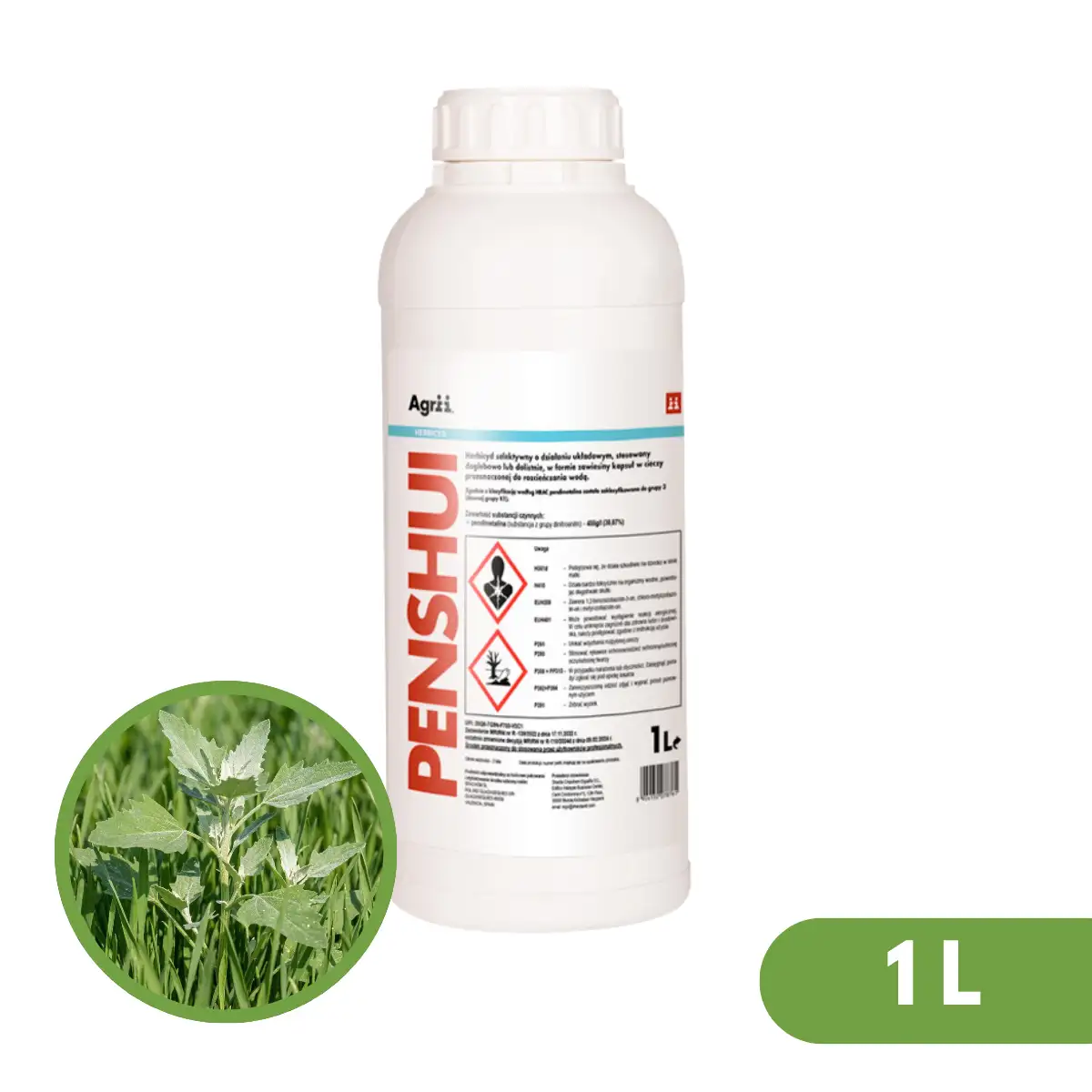
Colzamid 450 SL
Colozamid is a herbicide designed for the control of monocotyledonous and some dicotyledonous weeds in crops including winter oilseed rape, tomatoes, cabbage, and strawberry.
- Pack
- 5 l
Currently unavailable
Description
ACTION OF COLZAMID:
Colzamid is a soil-applied herbicide intended for the control of monocotyledonous and some dicotyledonous weeds. The product is a concentrate for dilution with water. The plant protection product penetrates the plant through the seed coat, roots, or cotyledons. It is most effective in destroying weeds during their germination period. It does not affect weeds in later developmental stages. The product destroys not only weeds emerging in autumn but also those emerging in spring. Weeds emerging during dry weather are destroyed after rainfall occurs.
COLZAMID - CONTENT OF ACTIVE SUBSTANCE:
napropamid (compound from the amide group) - 450 g/l (40.87%).
COLZAMID SCOPE OF USE, TIMINGS AND DOSES:
The product is intended for use with self-propelled or tractor-mounted field or orchard sprayers equipped with a herbicide boom.
Colzamid - effect on weeds:
Weeds sensitive at a dose of 2 l/ha: common chickweed, white goosefoot, scentless mayweed, shepherd's purse, annual meadow-grass
Weeds sensitive at a dose of 2.5-3 l/ha: one-sided grass, field mustard, common chickweed, common knotgrass, white goosefoot, scentless mayweed, nettle-leaved goosefoot, pale persicaria, bindweed, common chamomile (at 3 l/ha), rough amaranth, shepherd's purse.
Weeds sensitive at a dose of 4-6 l/ha: field violet, field mustard, common chickweed, white goosefoot, scentless mayweed, pale persicaria, common groundsel, shepherd's purse, annual meadow-grass, small-flowered yellowcress
Moderately sensitive weeds at a dose of 2 l/ha: field mustard, common groundsel
Moderately sensitive weeds at a dose of 2.5-3 l/ha: red dead-nettle, shepherd's purse
Moderately sensitive weeds at a dose of 3 l/ha: broomrape, cleavers, volunteer cereals (weak control of volunteer cereals germinating from deeper soil layers).
Resistant weeds at a dose of 3 l/ha: fumitory, field violet, purple dead-nettle, couch grass
Note
Perennial monocotyledonous and dicotyledonous weeds with deep roots are resistant to the product.
How to use Colzamid:
Winter oilseed rape
Maximum/recommended dose for single application: 3.0 l/ha.
Apply the product before sowing on moist, well-cultivated (clod-free) soil. Immediately after treatment, mix the product into the soil with a harrow to a depth of up to 3 cm, then sow oilseed rape.
Recommended water volume: 200 – 300 l/ha.
Recommended spraying: medium droplet size.
Maximum number of treatments per growing season: 1.
Tomato from seedlings
Maximum dose for single application: 3.0 l/ha
Recommended dose for single application: 2.5 - 3.0 l/ha
Apply the product before planting tomato plants. Immediately after treatment, mix the product into the soil to a depth of 2-3 cm.
Some plants may show temporary growth retardation and slight chlorosis. These symptoms quickly disappear and do not affect yield or fruit quality.
Recommended water volume: 200 – 300 l/ha.
Recommended spraying: medium droplet size.
Maximum number of treatments per growing season: 1
Head cabbage from seedlings
Maximum/recommended dose for single application: 2.5 l/ha
Apply the product before planting. Immediately after treatment, mix the product into the soil with a harrow to a depth of 2-3 cm.
Temporary growth reduction of young cabbage plants may occur but does not affect yield.
Recommended water volume: 200 – 300 l/ha.
Recommended spraying: medium droplet size.
Maximum number of treatments per growing season: 1.
Strawberry
On newly established plantations, apply the product about 4 months after planting (after fruit harvest) (BBCH 97).
Maximum dose for single application: 6.0 l/ha.
Recommended dose for single application: 4.0-6.0 l/ha.
On one-year-old and older plantations, apply the product in spring after the start of vegetation (BBCH 12-17).
Maximum dose for single application: 4.0 l/ha.
Recommended dose for single application: 2.0 - 4.0 l/ha.
Recommended water volume: 200 – 300 l/ha.
Recommended spraying: medium droplet size.
Maximum number of treatments per growing season: 1.
Note: If maintenance treatments are necessary after spraying, do not loosen the soil deeper than the depth to which the product was incorporated.
USE OF THE PLANT PROTECTION PRODUCT IN SMALL-SCALE CROPS AND APPLICATIONS
The user alone is responsible for the effectiveness and phytotoxicity of the plant protection product used in small-scale crops.
Gooseberry, raspberry, black currant, red currant, white currant.
a) young plantations
Maximum dose for single application: 4.0 l/ha.
Recommended dose for single application: 3.0 - 4.0 l/ha.
b) older plantations
Maximum dose for single application: 6.0 l/ha.
Recommended dose for single application: 4.0 - 6.0 l/ha.
Application timing: Apply the product in early spring before the start of fruit bush vegetation or in late autumn after fruit harvest (BBCH 91-99).
NOTE: On older plantations, the product should be applied no later than 15 October.
Recommended water volume: 200 – 300 l/ha.
Recommended spraying: medium droplet size.
Maximum number of treatments per growing season: 1.