 SKU 46567
Focus mouse bait station
The Focus bait station is a high-quality rodent control station made of polypropylene, designed for placing bait for mice.
Currently unavailable
Description
Focus black small mouse bait station
- High-quality bait station - made of high-quality polypropylene (PP) plastic.
- Deadly effective rodent control station for mice to place bait inside.
- Protects bait from moisture, wind and accidental consumption.
- The device's construction (tunnel) is exceptionally attractive to mice, thanks to the special "deep dark technology".
- Resistant to impacts, crushing and adverse weather conditions.
- Easy to use and convenient to clean.
- Ergonomic shape – takes up minimal space, allowing placement even in hard-to-reach areas.
- Dark colour of the mouse trap – the bait station is unobtrusive, ensuring discretion.
Mouse bait station – a small mouse type rodent control station for placing rodent poison inside the trap. An ideal solution to mouse problems. A very good quality product - resistant to impacts and crushing, as well as to high and low temperatures, rain, snow. No peeling effect. The rodent station is made of high-quality polypropylene with an anti-reflective coating, using unique "deep dark technology". This technology causes light to be absorbed rather than reflected, making mice willingly enter the bait station, which translates into the effectiveness of the rodent control station.
Focus mouse bait station – specifications:
- Colour: black,
- Length of bait station: 13 cm,
- Width of bait station: 9.5 cm,
- Height of bait station: 3.5 cm.
In the sets tab, a bait station with a key is also available, allowing convenient locking of the rodent control bait station.
What bait can be placed in the Focus rodent control bait station?
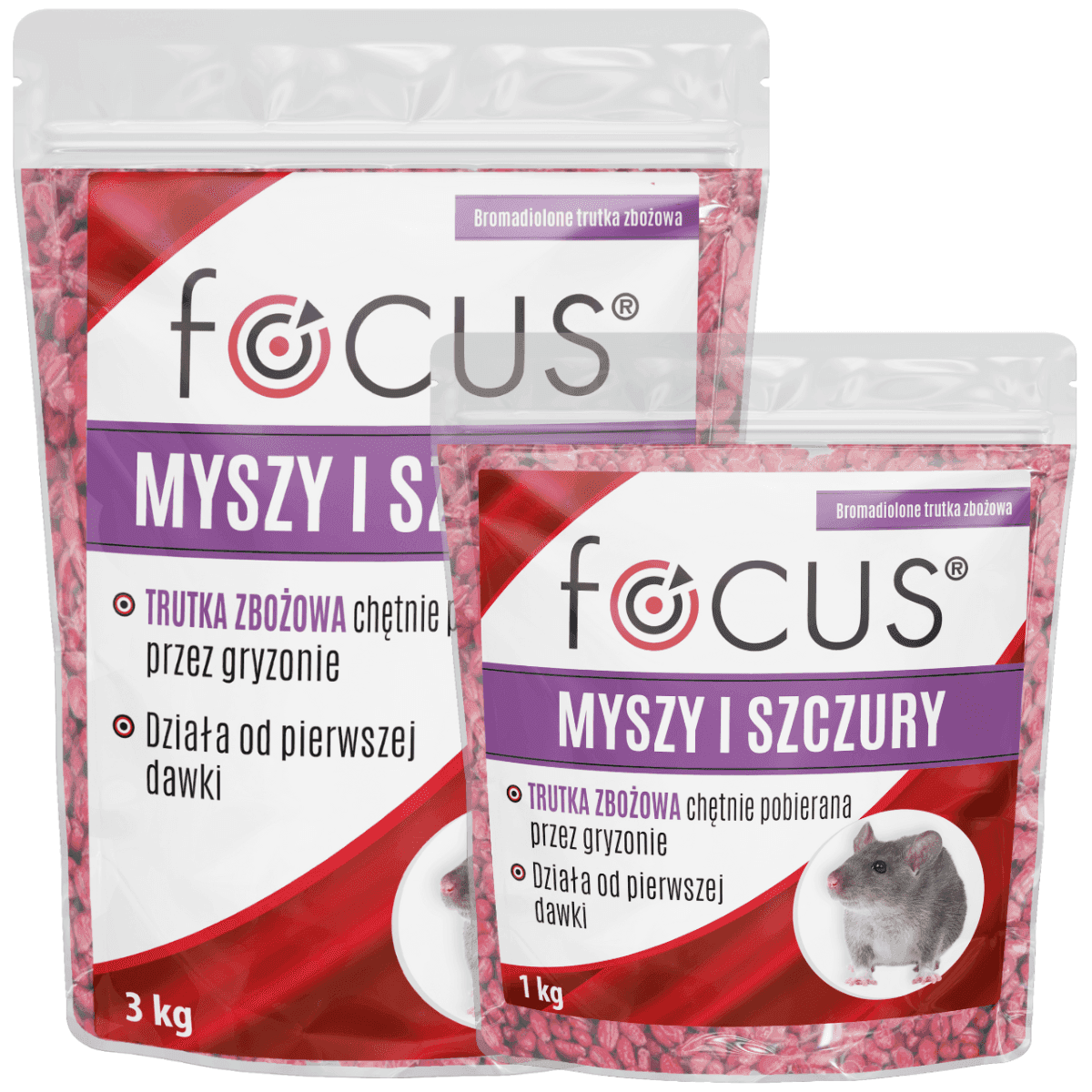
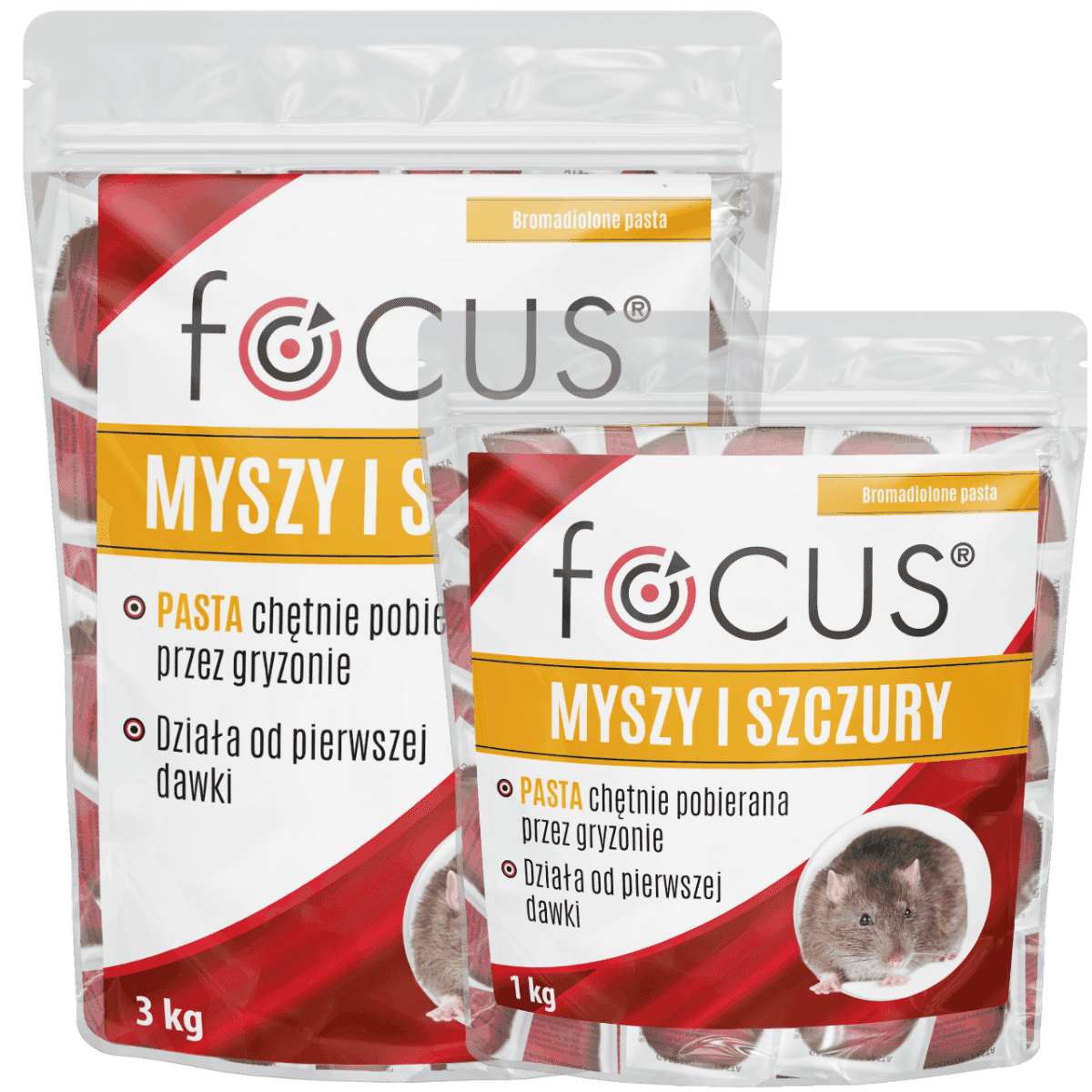
Recommended bait: food bait, paste poison, granules, pheromone traps, rodenticide paste, rodenticide block.
Why is using a small mouse type rodent control station the best possible choice?
An uncontrolled mouse population often damages objects and building structures, causing huge financial losses. Most commonly damaged are water pipes, electrical cables, wood, insulation, furniture, and even building structures threatened by so-called tunnelling and gnawing by rodents. Additionally, these creatures pose a real health risk to humans - they transmit various diseases such as salmonellosis and leptospirosis. Moreover, rodents make noise and disturb the night with their activity. This leads to lack of sleep and stress for residents and animals. Damage caused by mice to food is also a major problem. Rodents contaminate food with droppings, urine and fur. Such food is no longer suitable for consumption.
To avoid these problems, poison bait should be used. However, the bait will only be effective if placed in the right location. This is exactly where the Pestprol mouse rodent control station helps, protecting the poison bait from adverse weather conditions as well as from third parties or other animals that are not the target of control. Additionally, this station is designed to encourage mice to enter – it entices them to consume the poison. The shape of the Pestprol mouse bait station – a small container with a tunnel entrance – is the most preferred place for mice (simulating narrow and long spaces that mice like to move through). Thanks to these properties, the small mouse type rodent control station is the best choice.
Where to place the Focus rodent control bait station?
Bait stations with bait can be placed both indoors and outdoors. The best effect is achieved by placing them along walls, behind furniture and in other narrow and dark places. Rodent control stations should be placed at least 2 metres apart.
Before using the product, do not interfere with the rodents' habitat as it may affect their behaviour and bait consumption. To increase bait consumption and reduce the likelihood of reinfestation, appropriate preventive measures should be taken (e.g. sealing holes, removing potential food sources for rodents). The location of the rodent control stations with poison should be clearly marked, and information about the applied product should be visible and easy to read.
Use the biocidal product with special precautions. Before each use, first read the label and information leaflet on the product packaging. This will minimise risks to humans, animals and the environment.
Dispose of packaging waste as hazardous waste according to local, regional, national or international regulations. It is prohibited to use empty packaging for other purposes (including as secondary raw materials).