 SKU 3070-c
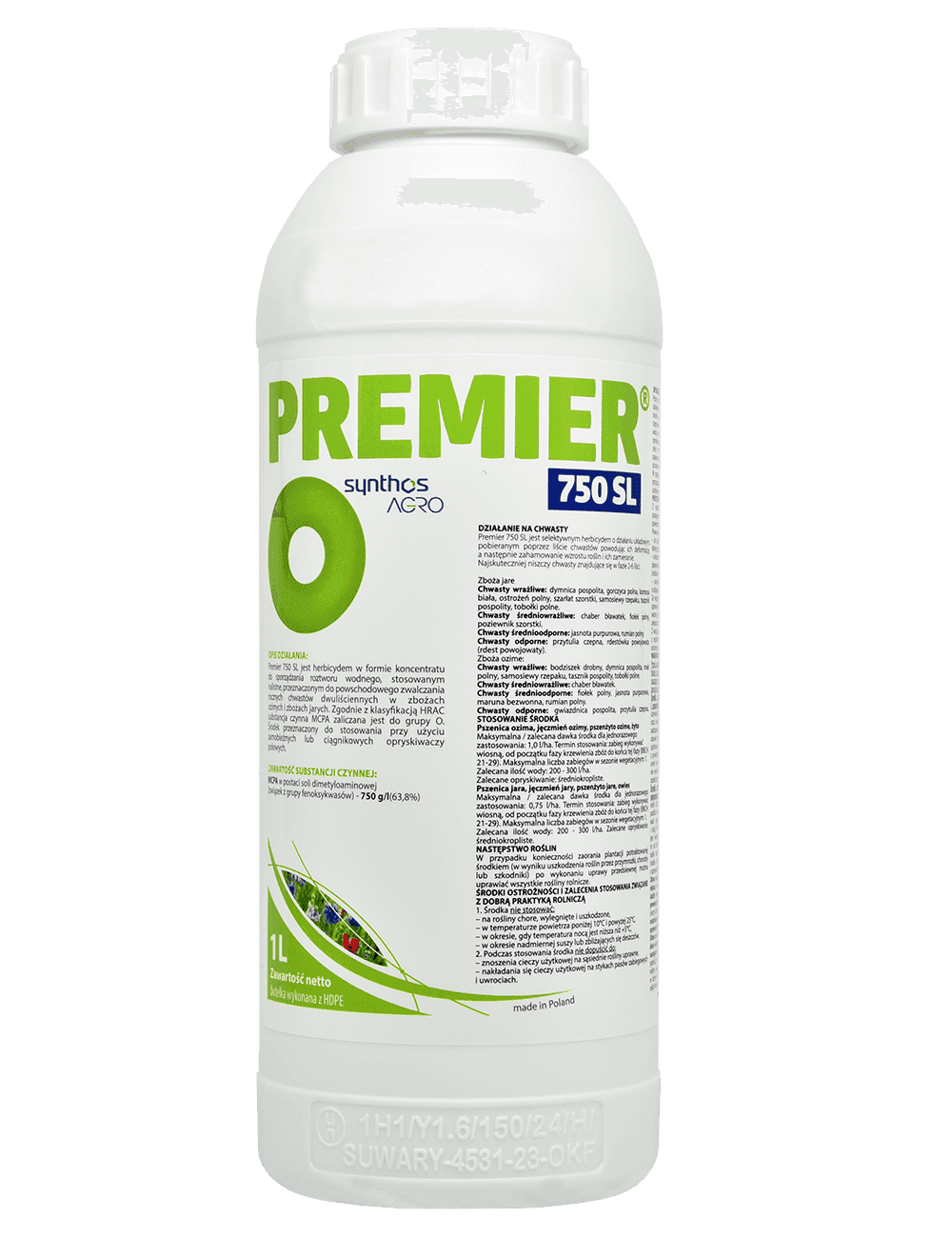
Gold 450 EC
GOLD 450 EC 1L is a herbicide with a concentrate formulation for preparing an aqueous emulsion intended for post-emergence control of annual and perennial dicotyledonous weeds such as common chickweed, cleavers, or scentless mayweed in the cultivation…
Description
GOLD 450 EC 1L is a herbicide in the form of a concentrate for preparing an aqueous emulsion, intended for spring use to control annual and perennial dicotyledonous weeds (including particularly troublesome species such as common chickweed, cleavers, scentless mayweed) in the cultivation of spring wheat, winter wheat, spring barley, winter barley, spring triticale, winter triticale, rye and oats.
The Gold 450 EC product is intended for use with self-propelled or tractor-mounted field sprayers.
GOLD 450 EC 1L - Active substance content:
- 2,4-D - compound from the phenoxy acid group - 360 g/l (33.68%).
- fluroxypyr - compound from the pyridinyloxycarboxylic acid derivatives group - 90 g/l (8.42%).
|
Cultivation |
Pest |
Application timing |
Dose |
|
Spring wheat, spring barley, spring triticale, oats, winter wheat, winter barley, winter triticale, winter rye. |
Sensitive weeds: white goosefoot, cornflower, common chickweed, white goosefoot, field cleavers, field forget-me-not, field thistle (plants young up to 4-leaf stage), cleavers, pale smartweed, field bindweed (syn. field bindweed), scentless mayweed, volunteer oilseed rape, shepherd's purse, common shepherd's purse, field pennycress. Moderately sensitive weeds: field violet, purple dead-nettle, scentless mayweed, Persian speedwell, common chamomile. Moderately resistant weeds: field speedwell. Resistant weeds: knotweed, field horsetail. |
Spray in spring, from the 3-leaf stage to the first stem elongation stage of cereals, i.e. when the stem elongation is at least 1 cm above the tillering node (BBCH 13 – 31). |
1.25 l/ha. |
Warning! Plant protection products must be used safely. Before each use, read the information on the label and product information.
The purchaser declares that they meet the conditions specified in Article 25 paragraph 3 point 5 of the Act of 8 March 2013 on plant protection products and have training in the use of plant protection products in the case of products for professional users. Before each use, read the information on the label and product information. Attention should be paid to detailed risk indications. Safety rules contained in the label must be followed. Plant protection products may only be purchased by adults and persons who have completed training and have the qualifications required for persons purchasing plant protection products (Article 28 of the Act on plant protection products of 8 March 2013 as amended). Plant protection products must be used in a way that does not pose a threat to human health, animals or the environment. The purchaser of plant protection products must be sober. By using the offer, you declare that you meet the above conditions.
Application and dosage
|
Cultivation |
Pest control |
How to apply? Dosage |
When to apply? |
|---|---|---|---|
|
spring wheat, spring barley, spring triticale, oats, winter wheat, winter barley, winter triticale, winter rye |
white goosefoot, cornflower, common chickweed, white goosefoot, field cleavers, field forget-me-not, field thistle (plants young up to 4-leaf stage), cleavers, pale smartweed, field bindweed (syn. field bindweed), scentless mayweed, volunteer oilseed rape, shepherd's purse, common shepherd's purse, field pennycress |
Maximum dose for single application: 1.25 l/ha. Recommended water volume: 200-300 l/ha. |
Apply in spring, from the 3-leaf stage to the first stem elongation stage of cereals, i.e. when the stem elongation is at least 1 cm above the tillering node (BBCH 13 – 31). Maximum number of treatments per growing season: 1. |