 SKU 38365-c
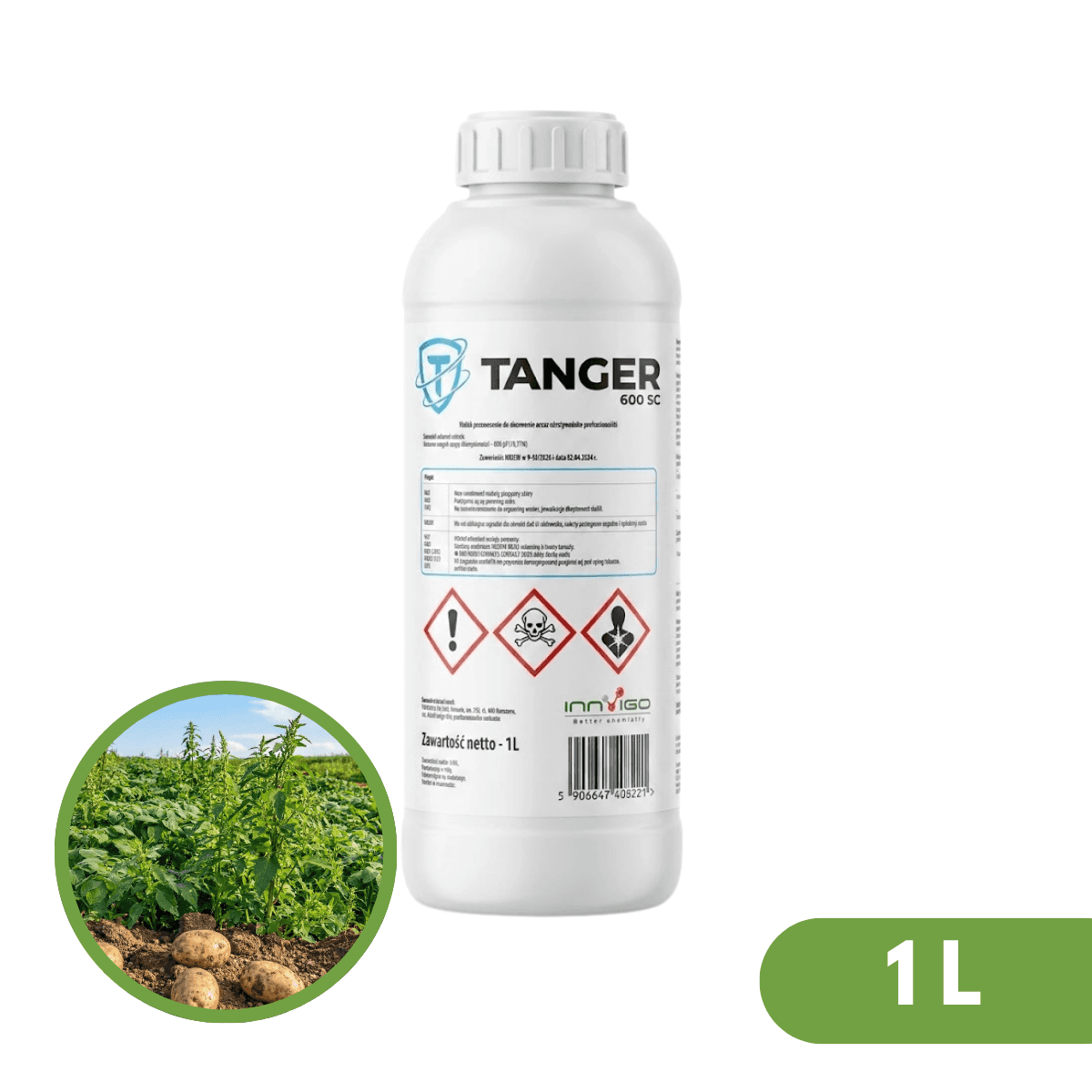
MANDRYL 500 SC (metobromuron)
MANDRYL is a herbicide in the form of a suspension concentrate for dilution with water, used as a soil treatment.
Description
MANDRYL is a herbicide in the form of a suspension concentrate for dilution with water, used as a soil treatment, intended for the control of annual dicotyledonous weeds and some monocotyledonous weeds in the cultivation of potato, soybean, sunflower and broad bean.
The product is intended for use with self-propelled or tractor-mounted field sprayers.
Active substance content: metobromuron (a compound from the phenylurea group) – 500 g/l (41.02%)
EFFECT ON WEEDS
MANDRYL is a herbicide absorbed by the roots and leaves of weeds. It is most effective on weeds from the germination stage to the rosette stage.
Sensitive weeds: blackgrass, field violet, charlock, common chickweed, purple dead-nettle, white goosefoot, field pansy, scentless mayweed, wild oats, rough catchfly, Persian speedwell, knotweed, bird's knotweed, volunteer oilseed rape, common groundsel, rough amaranth, common chickweed (at 4 l/ha dose), shepherd's purse, field pennycress, annual meadow-grass, small-flowered yellowcress.
Moderately sensitive weeds: small cranesbill, one-sided grass, cleavers, black nightshade, climbing knotweed, spotted knotweed, common chickweed (at 3 l/ha dose).
Resistant weeds: perennial weeds, deeply rooted.
Maximum number of treatments per growing season: 1.
CROP ROTATION
The product applied at recommended doses decomposes in the soil during the growing season
and does not pose a risk to succeeding crops.
If it is necessary to terminate the crop treated with MANDRYL herbicide earlier due to damage to the crop by pests, diseases or frost, maize, broad bean, pea, bean and carrot can be grown on the field after the terminated crop, after prior seedbed preparation. Sowing of cruciferous plants (oilseed rape, mustard, turnip) and beet is not recommended.
PRECAUTIONS AND RECOMMENDATIONS RELATED TO GOOD AGRICULTURAL PRACTICE
The product must not be used:
- during wind conditions that may cause drift of the spray liquid onto neighbouring crops,
- on early potatoes,
- on dry and cloddy soils as well as wet and muddy soils,
- before expected heavy rainfall.
PREPARATION OF SPRAY LIQUID
Before preparing the spray liquid, accurately determine the required amount.
Shake the contents of the package well before use. Pour the required amount of the product into the sprayer tank partially filled with water (with the agitator on)
and top up with water to the required volume. Rinse empty containers three times with water, pour the rinsate into the sprayer tank with the spray liquid, top up with water to the required volume and mix thoroughly. If the sprayer tank is not equipped with a hydraulic agitator, mechanically mix the liquid in the tank after adding the product.
In case of interruptions during spraying, mix the spray liquid in the sprayer tank thoroughly before resuming work.
HANDLING OF SPRAY LIQUID RESIDUES AND EQUIPMENT CLEANING
Residues of spray liquid after treatment should be handled in a way that minimises the risk of contamination of surface and groundwater as defined by the Water Law and soil contamination, i.e.:
- after prior dilution, use on the area where the treatment was carried out, if possible, or
- dispose of using technical solutions ensuring biological degradation of the active substances of plant protection products, or
- dispose of in another manner compliant with waste regulations.
After work, wash the equipment thoroughly.
Water used for washing the equipment should be handled as spray liquid residues, using the same personal protective measures.
SAFE USE CONDITIONS
Before using the product, inform all interested parties who may be exposed to spray drift and who have requested such information.
Precautions for persons applying the product:
Do not eat, drink or smoke while using the product.
Wear protective gloves and protective clothing that protects against plant protection products, as well as appropriate footwear (e.g. rubber boots) during preparation of the spray liquid and during application.
Precautions related to environmental protection:
Do not contaminate water with the plant protection product or its packaging.
Do not wash equipment near surface waters.
Avoid contamination of water through drainage ditches from farms and roads.
To protect aquatic organisms, a buffer zone of 10 m from water bodies and watercourses must be established.
To protect plants and non-target arthropods, a buffer zone of 5 m from non-agricultural land must be established.
Interval from application to when people and animals can enter the treated area (prevention period):
Not applicable.
Interval from last application to crop harvest (pre-harvest interval):
Potato, soybean, sunflower, broad bean - not applicable.
Interval from last application to feeding animals with treated crops (feed pre-harvest interval):
Not applicable.
Interval from last application to sowing or planting succeeding crops:
Refer to CROP ROTATION.
Warning! Plant protection products must be used safely. Before each use, read the information on the label and product information.
The buyer declares that they meet the conditions specified in Article 25, paragraph 3, point 5 of the Act of 8 March 2013 on plant protection products and have training in the use of plant protection products in the case of products for professional users. Before each use, read the information on the label and product information. Pay attention to detailed risk indications. Follow the safety rules contained on the label. Plant protection products may only be purchased by adults and persons who have completed training and have the qualifications required for persons purchasing plant protection products (Article 28 of the Act on plant protection products of 8 March 2013, as amended). Plant protection products must be used in a way that does not pose a risk to human health, animals or the environment. The buyer of plant protection products must be sober. By using this offer, you declare that you meet the above conditions.
Application and dosage
Crop | Control of Pest | How to use? Dosage |
|---|---|---|
potato | blackgrass, field violet, charlock, common chickweed, purple dead-nettle, white goosefoot, field pansy, scentless mayweed, wild oats, rough catchfly, Persian speedwell, knotweed, bird's knotweed, volunteer oilseed rape, common groundsel, rough amaranth, annual chickweed, shepherd's purse, field pennycress, annual meadow-grass, small-flowered yellowcress | Maximum dose for single application: 4.0 l/ha
|
soybean, sunflower | blackgrass, field violet, charlock, common chickweed, purple dead-nettle, white goosefoot, field pansy, scentless mayweed, wild oats, rough catchfly, Persian speedwell, knotweed, bird's knotweed, volunteer oilseed rape, common groundsel, rough amaranth, shepherd's purse, field pennycress, annual meadow-grass, small-flowered yellowcress | Maximum dose for single application: 3.0 l/ha.
|
broad bean | blackgrass, field violet, charlock, common chickweed, purple dead-nettle, white goosefoot, field pansy, scentless mayweed, wild oats, rough catchfly, Persian speedwell, knotweed, bird's knotweed, volunteer oilseed rape, common groundsel, rough amaranth, shepherd's purse, field pennycress, annual meadow-grass, small-flowered yellowcress | Maximum/recommended dose for single application: 2.0 l/ha. |