 SKU 303-c
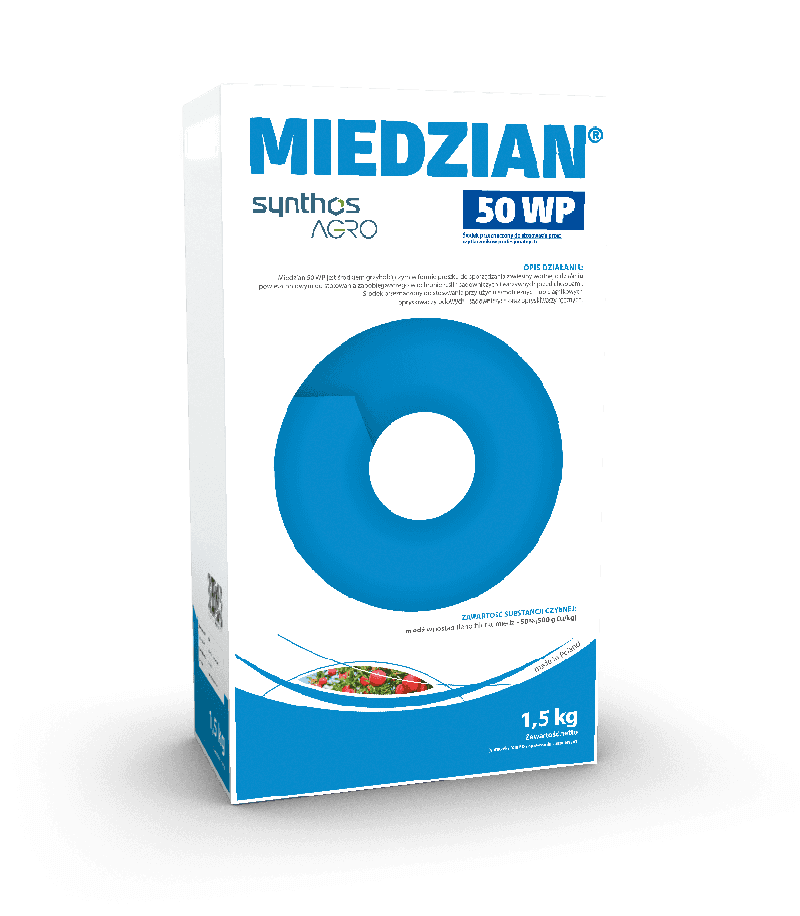
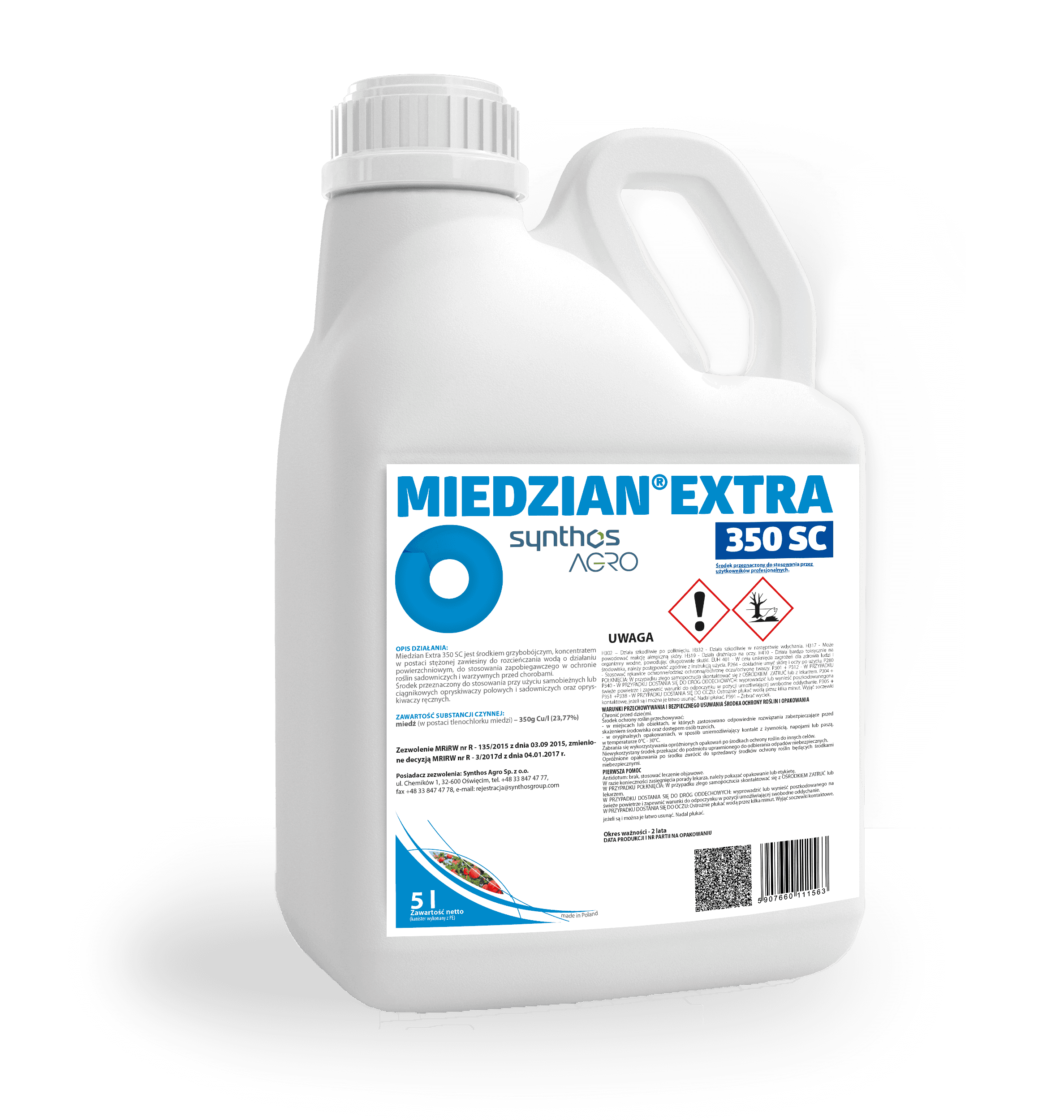
Miedzian 50 WP (copper oxychloride) Twój Ogród - fungicide
Miedzian 50 WP is an ecological fungicide for preventive use in amateur fruit and vegetable crops.
Description
Miedzian 50 WP - product for the control of fungal and bacterial diseases
- Copper-based preparation (oxychloride) with a broad spectrum of activity,
- For use in many vegetable and fruit crops,
- Prevents plant infection by over 10 diseases caused by fungi - forms a protective layer on plants,
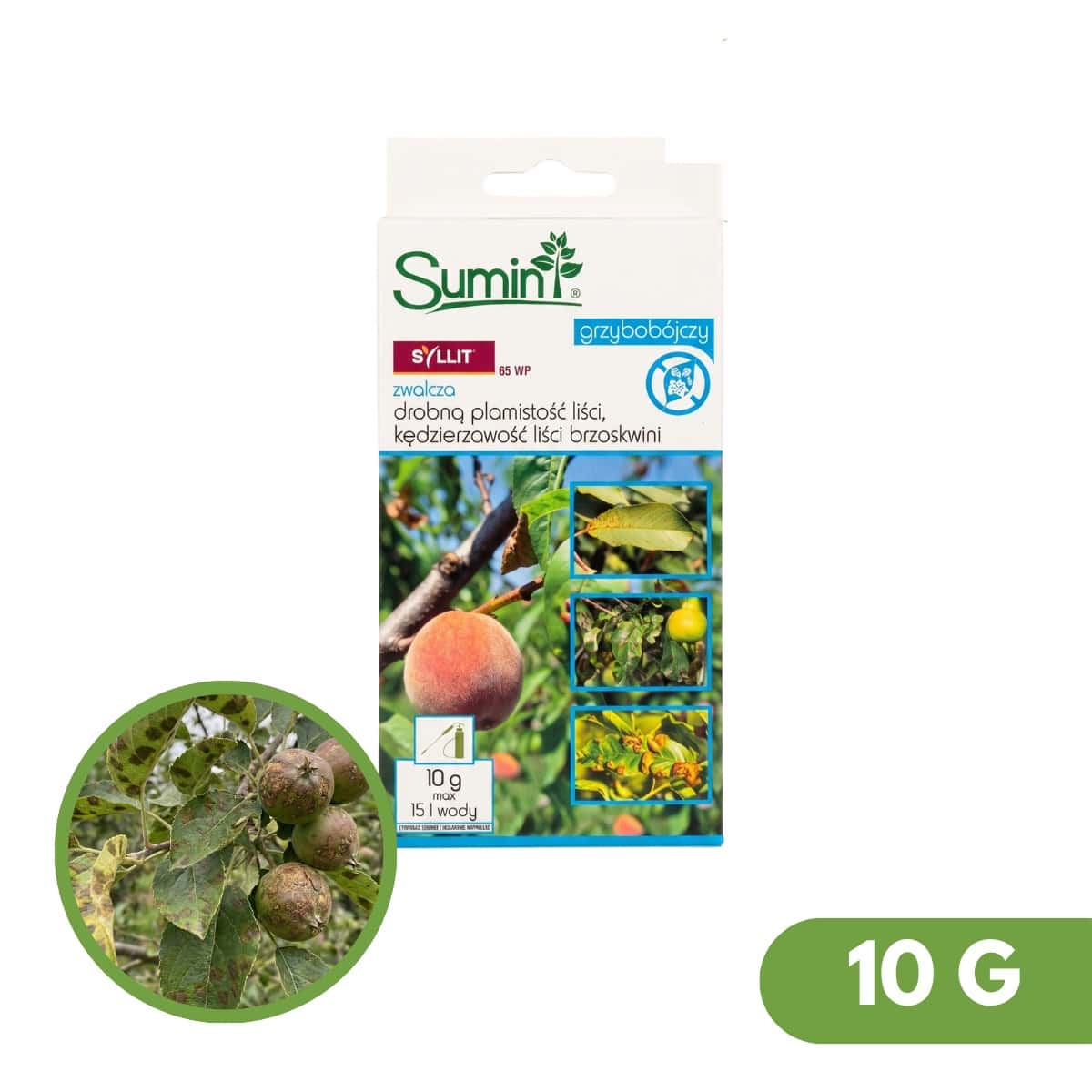
- Controls, among others, leaf curl, scab and fire blight,
- Easy to use - spraying,
- Efficient - 100g of product is enough for 50l of spray liquid,
- Suitable for use in organic farming,
- Safe for plants,
- Effective and fast-acting.
Miedzian 50 WP is a fungicide for preventive use. It protects amateur fruit and vegetable crops against pathogens causing fungal and bacterial diseases. Suitable for allotment and home gardens. Available as a water-dispersible powder (WP). It acts on the surface - working on the surface of sprayed plants, creating a barrier protecting the plants. Ecological product.
The product is intended exclusively for spot application using hand sprayers with a capacity of up to 10 l, excluding sprayers powered by combustion engines or electric motors.
Miedzian 50 WP - active substance:
- copper in the form of copper oxychloride – 50% (500 g/kg).
Miedzian 50 WP fungicide - controlled diseases:
- apple scab,
- pear scab,
- fire blight,
- bacterial canker of stone fruit trees,
- peach leaf curl,
- bacterial spot,
- potato late blight,
- bacterial angular leaf spot,
- downy mildew,
- bacterial canker,
- anthracnose,
- grey mould,
- bacterial rot.
Miedzian 50 WP Twój Ogród - application in crops:
- apple tree,
- pear tree,
- sour cherry,
- sweet cherry,
- peach,
- tomato (field cultivation),
- tomato (under cover),
- cucumber (field cultivation),
- green bean,
- grapevine,
- black currant,
- tatarian aster,
- walnut,
- hazelnut.
Miedzian 50 WP fungicide - pre-harvest interval and re-entry period:
Re-entry period - time from application until people and animals can enter the treated area:
- Do not enter until the spray liquid on the plant surfaces is completely dry.
Pre-harvest interval - time from last application to crop harvest:
- Apple tree, pear tree, sour cherry, sweet cherry, grapevine, black currant, tomato, cucumber, green bean - 7 days.
- Peach, walnut, hazelnut, tatarian aster – not applicable.
Miedzian 50 WP Twój Ogród - preparation of spray liquid:
Prepare the spray liquid immediately before treatment, close the sprayer tightly and mix according to the operating instructions for the sprayer type. Strictly observe recommended safety measures, warnings and contraindications when working with the product. Spraying is best done on a windless day or with very light wind that does not cause drift of the spray liquid to neighbouring crops or the operator. Spray plants spotwise. Protect nearby plants, especially those intended for harvest and consumption, by covering them, e.g., with plastic foil. After the spray liquid dries, fold the foil with the upper side inside so that the clean (unsprayed) side can be placed on the plants during the next use. After finishing the treatment, wash and rinse the equipment used for preparing the spray liquid and the sprayer with water. Use the equipment only for plant protection product treatments.
Miedzian 50 WP Twój Ogród fungicide - usage instructions:
- Spray plants spotwise so that they are thoroughly wetted but no droplets form.
- Prevent spray liquid drift outside the treated area.
- During flowering of crops, use the product outside periods of bee activity.
- Keep out of reach of children.
- Store plant protection product:
- in places or facilities with appropriate measures to prevent environmental contamination and access by unauthorized persons,
- in original packaging, preventing contact with food, drinks or feed,
- at temperatures between 0°C and 30°C.
Warning! Use plant protection products safely. Read the label and product information before each use.
The purchaser declares to meet the conditions specified in Article 25 paragraph 3 point 5 of the Act of 8 March 2013 on plant protection products and has training in the use of plant protection products for professional users. Read the label and product information before each use. Pay attention to detailed risk indications. Follow safety rules on the label. Plant protection products may only be purchased by adults and persons who have completed training and have qualifications required for persons acquiring plant protection products (Article 28 of the Act of 8 March 2013 on plant protection products as amended). Use plant protection products in a way that does not pose a risk to human health, animals or the environment. The purchaser must be sober. By using this offer, you declare that you meet the above conditions.
Application and dosage
|
Crop |
Pest Control |
How to apply? Dosage |
When to apply? |
|---|---|---|---|
|
Apple tree, Pear tree |
apple scab, pear scab |
Maximum / recommended dose for single application: 15 g/100 m2 Recommended water volume: 5-7.5 l/100 m2 |
Apply preventively during bud development phase (BBCH 00-07). Due to risk of burns, use only for the first treatments. |
|
Apple tree, Pear tree |
fire blight |
Maximum / recommended dose for single application: 15 g/100 m2 Recommended water volume: 5-7.5 l/100 m2 |
First treatment at flowering phase (BBCH 60-69), second treatment at early fruit growth phase – fruit size up to 10 mm (BBCH 71). |
|
Sour cherry, Sweet cherry |
bacterial canker of stone fruit trees |
Maximum / recommended dose for single application: 30 g/100 m2 Recommended water volume: 5-7.5 l/100 m2 |
Apply from full flowering phase - at least 50% flowers open to early fruit growth phase – shedding of unpollinated fruitlets (BBCH 65-73). |
|
Common quince, medlar |
pear scab |
Maximum dose for single application: 15 g/100 m² Recommended water volume: 5-7.5 l/100 m² |
Apply preventively during bud development phase (BBCH 00-07). Due to risk of burns, use only for the first treatments. |
|
Common quince, medlar |
fire blight |
Maximum dose for single application: 15 g/100 m² Recommended water volume: 5-7.5 l/100 m² |
Apply at early fruit growth phase – fruit size up to 10 mm (BBCH 71) |
|
Apricot, Plum tree |
bacterial canker of stone fruit trees |
Maximum/recommended dose for single application: 30 g/100 m² Recommended water volume: 5-7.5 l/100 m² |
Apply from swelling of flower buds to early flowering phase - about 10% flowers open (BBCH 51-61). |
|
Peach |
peach leaf curl |
Maximum/recommended dose for single application: 30 g/100 m² Recommended water volume: 7 l/100 m² |
Apply during leafless period, preferably at bud swelling (BBCH 00-03) or in autumn. |
|
Tomato (field cultivation) |
bacterial spot, potato late blight |
Maximum/recommended dose for single application: 25 g/100 m² Recommended water volume: 7 l/100 m² |
Apply preventively or according to warning, during periods of expected disease risk, from beginning of inflorescence development to phase when 50% of fruits have typical colour (BBCH 51–85), 2-3 times per season every 7-10 days. |
|
Tomato (under cover) |
bacterial spot, potato late blight |
Maximum/recommended concentration for single application: 0.25% (2.5 g per 1 litre of water). |
Apply preventively or according to warning, during periods of expected disease risk, from visible sixth inflorescence to phase when 80% of fruits have typical colour (BBCH 56-88), 2-3 times per season every 7-10 days. |
|
Cucumber (field cultivation) |
bacterial angular leaf spot, downy mildew of cucurbits |
Maximum/recommended dose for single application: 25 g/100 m² Recommended water volume: 7 l/100 m² |
Apply preventively or according to warning, during periods of expected disease risk, from phase when 2nd flower on main shoot is open to phase when 8th fruit on main shoot reaches typical shape and harvest size (BBCH 62-78), 2-3 times per season every 7-10 days. |
|
Cucumber (greenhouse and under cover) |
bacterial angular leaf spot of cucumber, downy mildew of cucurbits |
Maximum/recommended concentration for single application: 0.16% (1.6 g per 1 litre of water). |
Apply preventively or according to warning during periods of expected risk of downy mildew or bacterial angular leaf spot. Treatments from cotyledon fully developed to full maturity when all fruits have typical colour (BBCH 10-89). Perform 2-4 treatments at 7-day intervals. |
|
Eggplant (syn. aubergine) (field cultivation) |
bacterial spot of tomato, potato late blight. |
Maximum/recommended dose for single application: 25 g/100 m² Recommended water volume: 7 l/100 m² |
Apply preventively or according to warning, during periods of expected risk of potato late blight or bacterial spot. Use 2-3 times per season every 7-10 days, from beginning of inflorescence development to phase when 50% of fruits have typical colour (BBCH 56-85). |
|
Eggplant (syn. aubergine) (greenhouse and under cover) |
bacterial spot of tomato, potato late blight. |
Maximum/recommended concentration for single application: 0.25% (2.5 g per 1 litre of water). |
Apply preventively or according to warning during periods of expected risk of potato late blight or bacterial spot, 2-3 times per growing season every 7-10 days, from visible 6th inflorescence to phase when 80% of fruits have typical colour (BBCH 56–88). |
|
Courgette (field cultivation) |
bacterial angular leaf spot of cucumber, downy mildew of cucurbits |
Maximum/recommended dose for single application: 25 g/100 m² Recommended water volume: 7 l/100 m² |
Apply preventively or according to warning during periods of expected risk of downy mildew or bacterial angular leaf spot. Treatments from phase when 2nd flower on main shoot is open to phase when 8th fruit on main shoot reaches typical shape and harvest size (BBCH 62–78). Perform 2-3 treatments at 7-10 day intervals. |
|
Green bean |
bacterial canker, anthracnose, grey mould |
Maximum/recommended dose for single application: 30 g/100 m² Recommended water volume: 6-8 l/100 m² |
Apply preventively from full flowering phase (50% flowers open) to end of flowering (90% flowers faded: first pods visible) (BBCH 65-69), performing 2 treatments at 7-day intervals, especially if bacterial disease risk is present. |
|
Melon, pumpkin, watermelon (greenhouse and under cover) |
bacterial angular leaf spot of cucumber, downy mildew of cucurbits, anthracnose of cucurbits, alternaria leaf spot of cucurbits |
Maximum/recommended concentration for single application: 0.25% (2.5 g per 1 litre of water). |
Apply preventively or according to warning during periods of expected disease risk. Treatments from cotyledon fully developed to full maturity when all fruits have typical colour (BBCH 10-89). |
|
Multiflower bean, green sugar pea (field cultivation) |
bacterial canker of bean, anthracnose of bean, grey mould |
Maximum/recommended dose for single application: 30 g/100 m² Recommended water volume: 6-8 l/100 m² |
Apply preventively from full flowering phase (50% flowers open) to end of flowering (90% flowers faded, first pods visible) (BBCH 65-69) |
|
Forest nurseries, regeneration, afforestation and seed plantations |
Larch needle cast |
Maximum/recommended dose for single application: 30 g/100 m² Recommended water volume: 5-7.5 l/100 m² |
Apply preventively from full flowering phase (50% flowers open) to end of flowering (90% flowers faded, first pods visible) (BBCH 65-69) |
|
Forest nurseries, regeneration, afforestation and seed plantations b) Seedlings and saplings of deciduous forest species |
Fire blight, leaf spot |
Maximum/recommended dose for single application: 30 g/100 m² Recommended water volume: 5-7.5 l/100 m² |
|
|
Black currant |
anthracnose (leaf cast) of currant leaves, white pine rust of currant, white leaf spot of currant leaves |
Maximum/recommended dose for single application: 24 g/100 m² Recommended water volume: 7 l/100 m² |
Apply preventively from cluster phase, when all flower buds are separated, until full flowering phase, at least 50% flowers open, first petals falling (BBCH 59-65). |
|
Walnut, hazelnut |
anthracnose of walnut, bacterial rot of walnut, bacterial rot of hazelnut |
Maximum/recommended dose for single application: 30 g/100 m² Recommended water volume: 8-10 l/100 m² |
Apply preventively from bud break before female flower blooming (BBCH 60). |