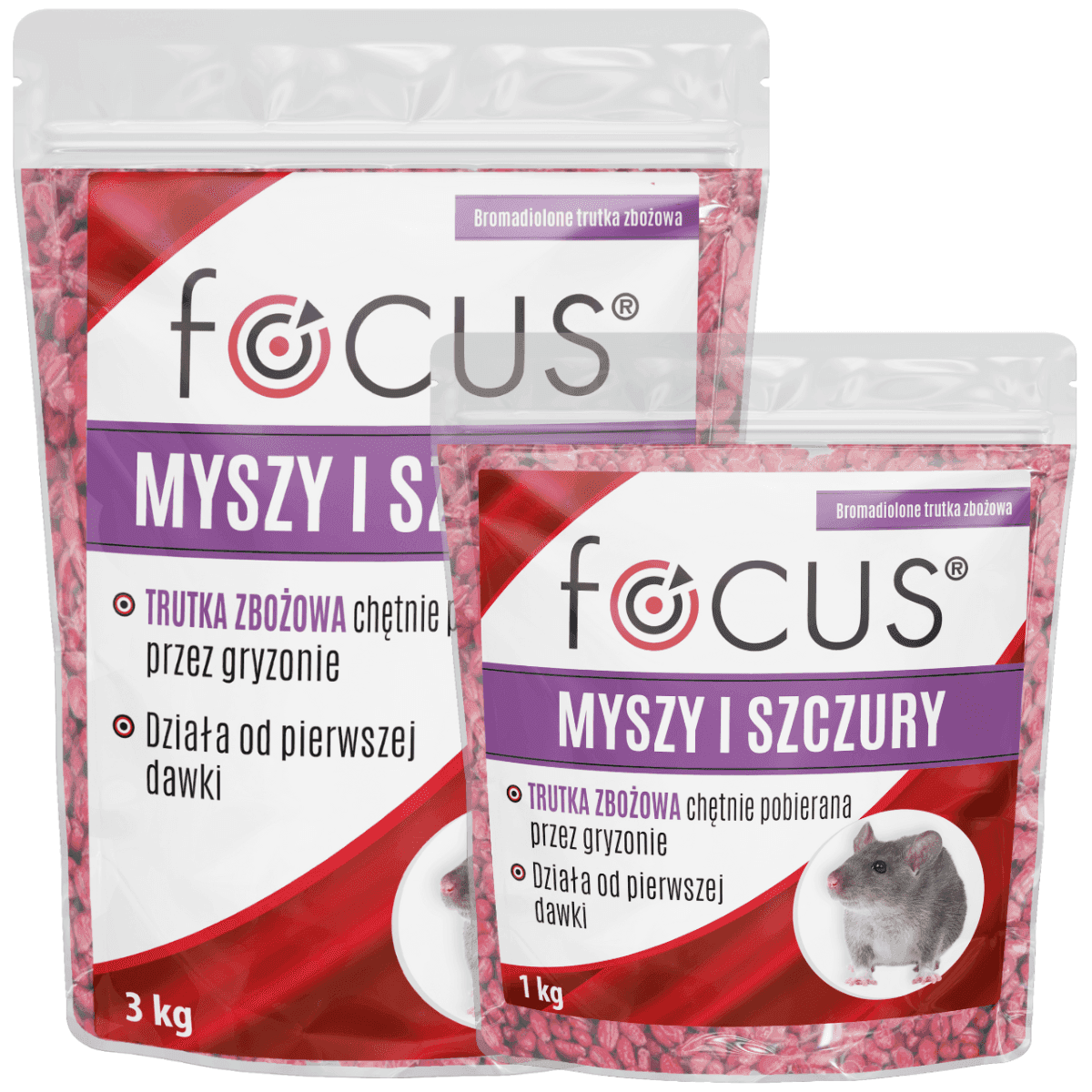
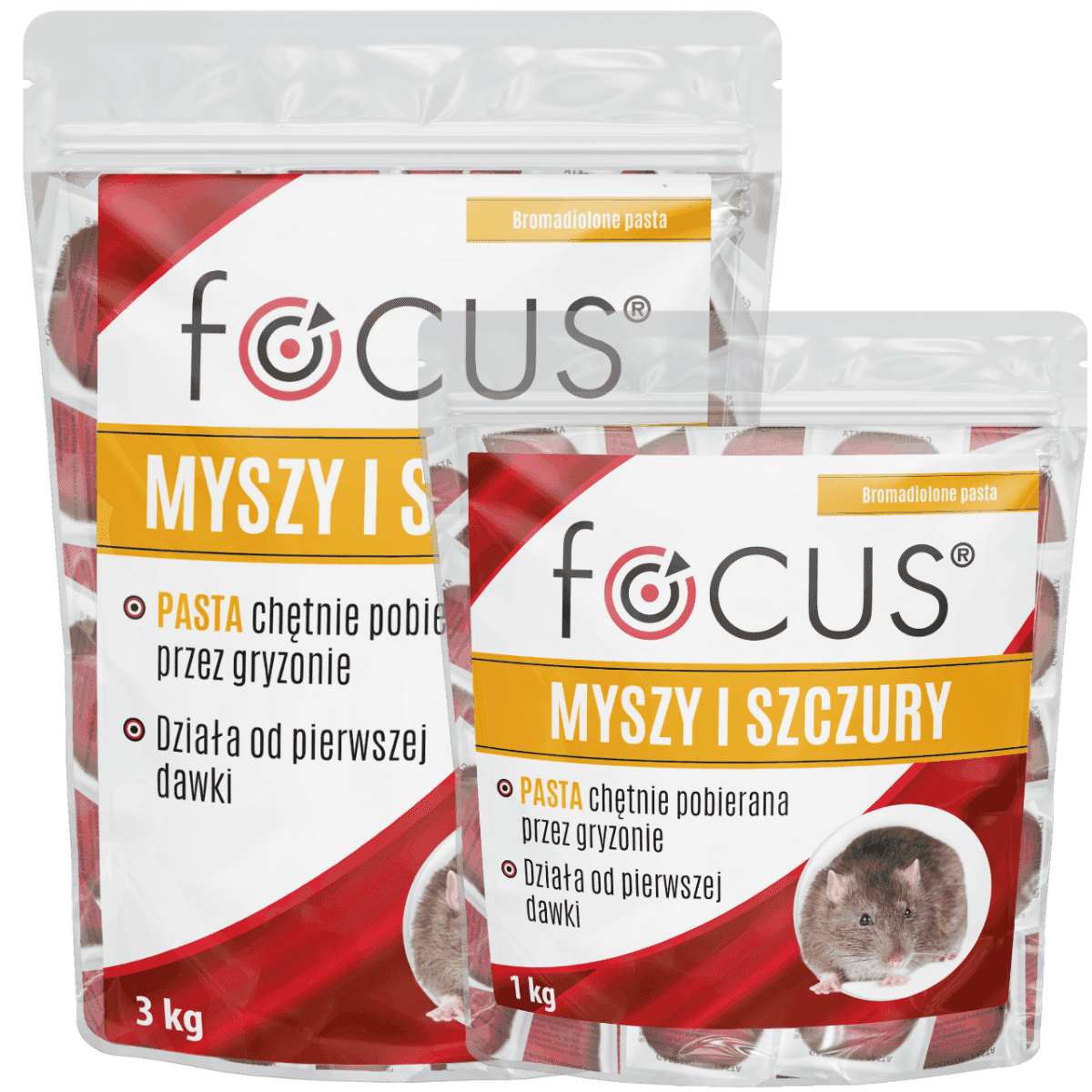
Mumia paste (brodifacoum) - bait for mice and rats
Mumia for rodents Paste is a strong bait for mice and rats containing brodifacoum (0.0029%). Effective from the first dose, it kills rodents within a few days.
- Weight
- 120 g
Currently unavailable
Description
Mumia for rodents Paste - bait for rats and mice
- Strong - contains an exceptionally potent active substance brodifacoum.
- Controls small rodents: mice and rats.
- Effective from the first dose - fast effect. Rodents die after a few days.
- In a convenient paste form - the paste form is the fastest and most willingly consumed by rodents.
- Due to the delayed action, the bait does not arouse suspicion in other, not yet poisoned individuals.
- Contains a deterrent factor to prevent accidental ingestion and a dye to maximise safety during bait use.
Mumia for rodents is a ready-to-use rodenticide preparation. In paste form. This bait form is especially recommended for use where there is high food attractiveness (waste dumps, animal houses, feed stores, catering facilities, etc.). Mumia bait can be used indoors and outdoors, provided it is protected from moisture (e.g. placed in a tamper-resistant bait station): in basements, homes, kitchens, offices, hotels, garages, gardens, allotments, public buildings, etc.
Mumia paste - active substance content:
- Brodifacoum - 0.0029%.
Mumia rodenticide paste - controlled pests:
- house mouse (Mus musculus),
- brown rat (Rattus norvegicus),
- black rat (Rattus rattus).
Why should you get rid of roaming mice and rats as soon as possible?
- Uncontrolled rodent populations often damage objects and building structures, causing huge financial losses. Most commonly damaged are water pipes, electrical wiring, wood, insulation, furniture, and even building structures threatened by so-called tunnelling and gnawing by rodents.
- Additionally, these animals pose a real health risk to humans - they transmit various diseases such as salmonellosis and leptospirosis. Moreover, rodents make noise and disturb nights with their activity. This leads to lack of sleep and stress for residents and animals.
- Rodent damage to food is also a major problem. Rats, mice, and other rodents contaminate food with droppings, urine, and fur. Such food is no longer suitable for consumption.
Mumia paste bait for mice and rats - instructions for use:
1. Conduct preliminary site assessment where rodents occur to properly identify the rodent species, activity locations, and determine the probable cause and level of rodent infestation, then select the appropriate dose.
2. Remove other potential food sources for rodents (e.g. spilled grain or food residues).
3. Place the bait in rodent habitats. These are rooms where fresh droppings or gnawed objects are visible.
4. Nests, burrows, and rodent pathways are the best places to distribute the bait. Mumia bait should be placed along room walls in tamper-resistant feeders, bait stations.
5. After using the product, wash hands and skin exposed to direct contact with the product.
Mumia paste bait for rats and mice - usage guidelines:
- Before using the product, read and follow the recommendations in the informational materials attached to the product or provided at the point of sale, and consider using non-chemical control methods (e.g. traps).
- Do not disturb the rodent environment before applying the product, as this may affect animal behaviour and bait consumption.
- Bait stations should be placed directly adjacent to areas where rodent activity has been observed (e.g. paths, nesting sites, livestock feeding areas, holes, burrows, etc.). Where possible, bait stations should be secured to the ground or other structures. Bait stations must be placed out of reach of children, birds, pets, livestock, and non-target animals. Bait stations should be located away from food, drinks, and animal feed, as well as kitchen utensils and surfaces in contact with them. Do not place bait stations near surface water sources.
- Do not remove bait from sachets.
- Replenish bait consumed by rodents. Replace any bait damaged by water or contaminated.
- Conduct regular inspections of bait stations (at least every 2-3 days at the start of mouse control, and at least every 5-7 days at the start of rat control, then at least once a week) to assess product effectiveness, check bait station condition, and remove dead rodents.
- After completing the deratisation treatment, remove bait stations and bait found outside stations.
- To increase bait consumption and reduce the likelihood of reinfestation, apply appropriate preventive measures (e.g. sealing holes, removing potential rodent food sources).
- Do not use the product in continuous baiting treatments (e.g. to prevent rodent infestation or detect their activity).
- When using rodenticides containing anticoagulants, rodents should be controlled within 35 days. If rodent activity persists after this period, notify the product supplier/seller or consult a professional pest control company.
- During deratisation (at least during each inspection), search for and remove dead rodents. Remove dead rodents safely and hand them over to a company authorised for hazardous waste recovery and disposal (e.g. incinerator). Do not mix with municipal waste streams. Remove dead rodents and bait using protective gloves or tools such as tongs.
- Do not eat, drink, or smoke while using the product.
- Store the product:
- in the original, labelled, tightly closed packaging,
- in a cool, dry, well-ventilated place,
- out of reach of children, birds, pets, and livestock,
- away from sunlight.
Use the biocidal product with particular caution. Before each use, first read the label and information leaflet on the product packaging. This will minimise risks to humans, animals, and the environment.
Dispose of packaging waste as hazardous waste in accordance with local, regional, national, or international regulations. It is prohibited to reuse empty packaging for other purposes (including as secondary raw materials).
Application and dosage
|
Purpose of use |
how to use? Dosage |
|---|---|
|
Elimination of mice indoors - low infestation (low pest population) |
10-20 g of bait per bait station. If more than one bait station is required, the minimum distance between stations should be 5 m. |
|
Elimination of mice indoors - high infestation (high pest population) |
10-20 g of bait per bait station. If more than one bait station is required, the minimum distance between stations should be 2 m. |
|
Elimination of rats indoors/around buildings - low infestation (low pest population) |
10-60 g of bait per bait station. If more than one bait station is required, the minimum distance between stations should be 10 m. |
|
Elimination of rats indoors/around buildings - high infestation (high pest population) |
10-60 g of bait per bait station. If more than one bait station is required, the minimum distance between stations should be 5 m. |