SKU 44552-c
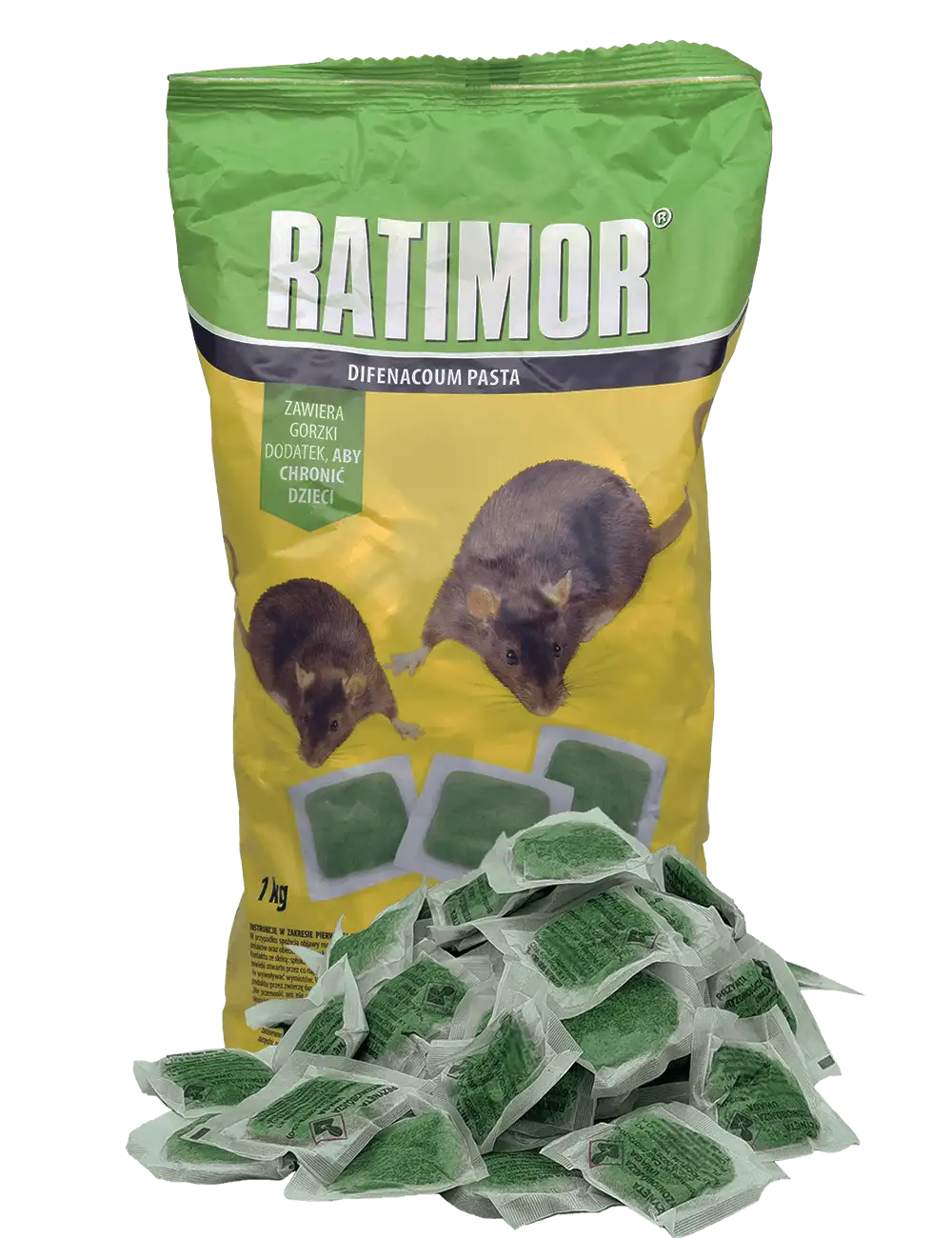
Ratimor Mouse and Rat Bait Paste (brodifacoum, bitrex)
Ratimor mouse and rat bait in paste form is a fast and effective method for the control of rats, mice and other rodents.
Description
Ratimor Mouse and Rat Bait in Paste Form
- Fast and effective method for rats, mice and other rodents.
- Strong bait containing the most potent active substance - saves resources allocated for deratisation.
- Proven rat bait - widely chosen by professionals across Europe.
- Contains carefully selected attractants, increasing the bait's attractiveness to rodents - taste tests showed that Ratimor bait is 50% more palatable than the provocative diet.
- Presence of Bitrex - a bitter substance preventing accidental ingestion by pets and children.
- Acts immediately after ingestion by rodents - causes blood clotting disorders.
- Rodents die within a few days, without arousing suspicion in other rodents and without causing bait aversion.
- Protected against mould, high moisture tolerance - suitable for use indoors and outdoors.
- Retains freshness for a long time thanks to the oily substance content.
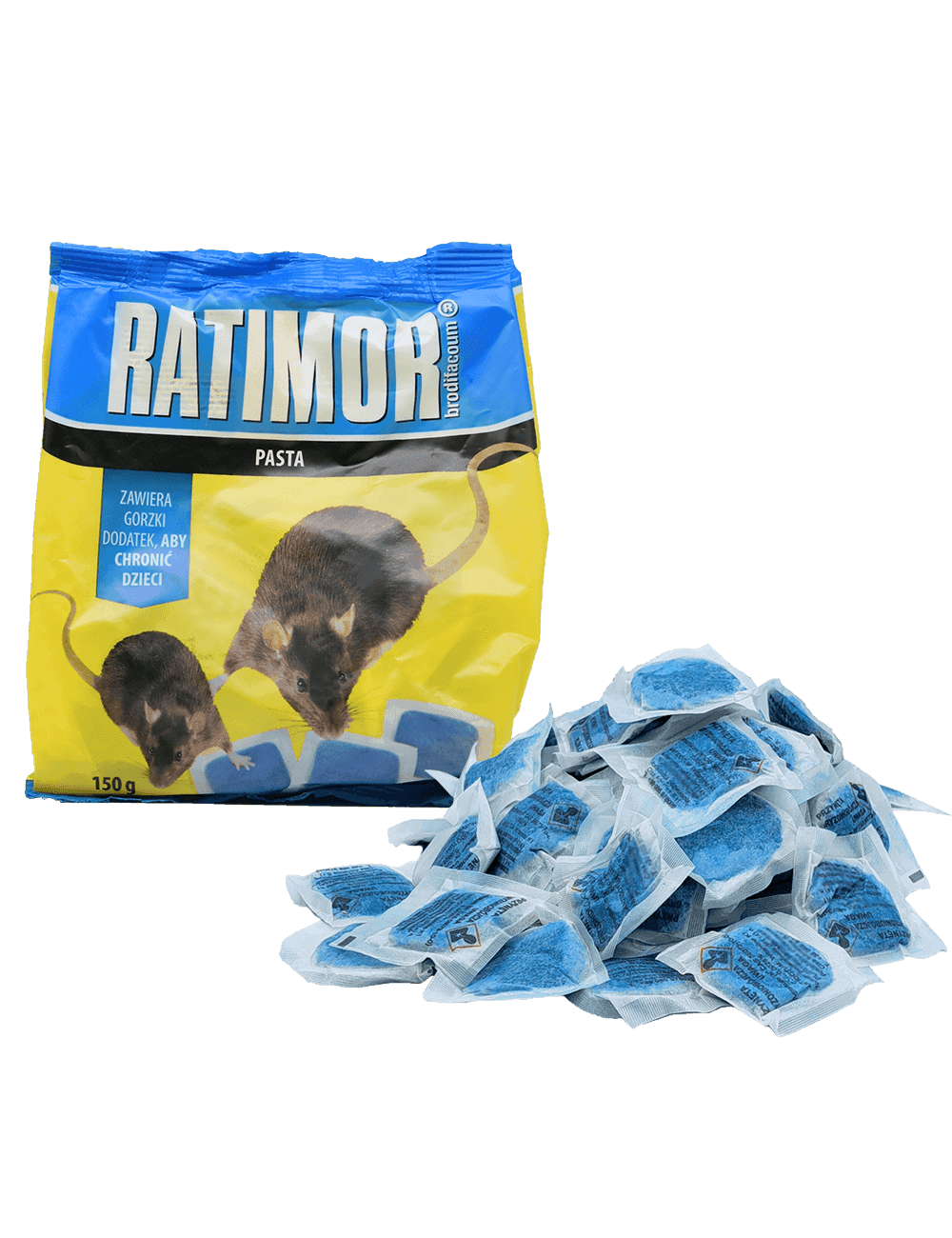
- Economical dosing – packed in 10 g sachets.
- Allows monitoring of rodent presence (gnawed sachets indicate rodent activity).
Ratimor paste bait - a rodenticide valued throughout Europe for mice, rats (black and brown). Also controls other rodents - voles, moles, martens. Available in paste form. Contains the very potent active substance brodifacoum and Bitrex (a bitter-tasting substance whose presence in the bait prevents accidental ingestion by humans and pets), as well as high-quality wheat flour, chopped grain, a mixture of various fats and oils, flavour and aroma adjuvants. It is presented in paste form, packed in small porous sachets which should not be opened.
The paste has been enhanced with scent and flavour enhancers, making the bait attractive to rodents and readily consumed even when natural rodent food is nearby. It is up to 50% more attractive compared to regular food. Thanks to strong luring aromas, it is more effective than other rodenticides and does not arouse suspicion in rodents.
Ratimor rodent bait in paste form is effective against all rodents. It can be used indoors and outdoors, provided it is protected from moisture (e.g. placed in a bait station). Typical application sites include: basements, garages, attics, shopping centres, farms (excluding plant product storage areas), grocery stores, restaurants, warehouses, areas around buildings and other places where unwanted rodents are present.
Soft rodent bait Ratimor - active substance content and parameters:
Active substance:
- brodifacoum 0.029g/kg.
Other product ingredients:
- bitrex - bitter substance preventing accidental ingestion,
- luring aromas.
Parameters:
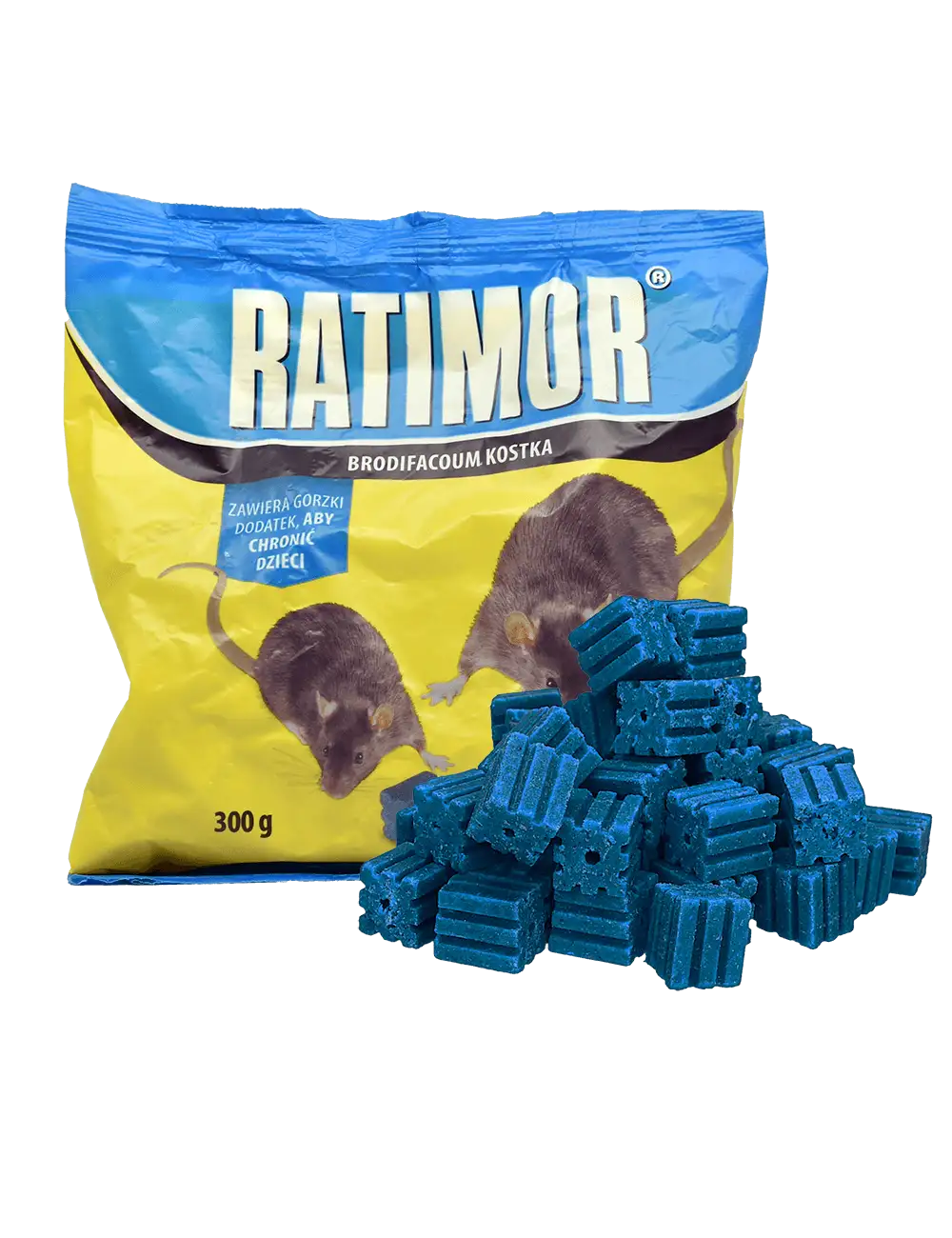
- Colour: blue,
- Bait form: paste packed in small sachets.
Why is using Ratimor rat bait the best possible choice?
Uncontrolled rodent populations often damage objects and structural elements of buildings, causing significant financial losses. Most commonly damaged are water pipes, electrical wiring, wood, insulation, furniture, and even building structures threatened by tunnelling and gnawing by rodents. Additionally, these animals pose a real health risk to humans - they transmit various diseases such as salmonellosis and leptospirosis. Moreover, rodents make noise and disturb nights with their activity, leading to sleep deprivation and stress for residents and animals. Damage to food caused by rodents is also a major problem. Rats, mice and other rodents contaminate food with droppings, urine and fur. Such food is no longer fit for consumption.
To avoid these problems, it is enough to use an effective bait that will be readily consumed by rodents. Ratimor bait is enhanced with scent and flavour aromas, making it more attractive and preferred by rodents over ordinary food. It contains a potent active substance that immediately after ingestion by a rat, mouse or other rodent causes changes in the intruder’s body. Additionally, the bait contains Bitrex - a bitter substance that prevents accidental ingestion by pets and humans, especially children. Thanks to these properties, Ratimor bait is the best way to control unwanted rodents.
How to use soft Ratimor rat and mouse bait?
1. Conduct a preliminary survey of the area where rodents occur to properly identify the rodent species, activity sites and determine the probable cause and degree of rodent infestation, then select the appropriate dose.
2. Remove other potential food sources for rodents (e.g. spilled grain or food residues).
3. Place the bait in rodent habitation areas. These are rooms where fresh droppings or gnawed objects are visible. Do not open the sachets.
4. Nests, burrows and rodent pathways are the best places to distribute the bait. Ratimor bait should be placed along room walls in secured bait stations or deratisation stations protected against unwanted opening.
5. During bait application, regularly check the area and remove dead rodents, as well as monitor the amount of bait in deratisation bait stations. Replenish as needed. Continue replenishing until the problem with unwanted rodents disappears.
Ratimor paste bait for rats and mice - usage guidelines:
- Do not remove the paste from the sachets.
- Do not disturb the rodent environment before applying the product, as this may affect animal behaviour and bait consumption.
- To increase bait consumption and reduce the likelihood of reinfestation, apply appropriate preventive measures (e.g. blocking holes, removing potential food sources for rodents).
- Each bait should be placed in special, properly marked deratisation stations fixed to the ground.
- The bait placement site should be clearly labelled, and information about the applied product should be visible and easy to read.
- In areas frequented by people or animals, cover the bait with old boards or bricks.
- Exercise caution when placing baits to avoid water contamination (place at least 20 m from water).
- Baits must not be accessible to children and warm-blooded animals.
- Do not eat, drink or smoke tobacco while using the product.
- After using the product, wash hands and skin exposed to direct contact with the product.
- The product should be regularly replenished - if completely consumed at a given point, increase the amount.
- If bait consumption is too low compared to the estimated degree of rodent infestation, consider relocating deratisation stations or changing the product form. If after 35 days from the start of rodent control the bait is still being eaten and rodent activity persists, determine the cause of treatment failure. If resistance to bromadiolone is confirmed or suspected, use a product containing a different active substance from the rodenticide group. Also consider non-chemical control methods (e.g. traps).
- After completing deratisation, remove bait stations and bait found outside stations.
- Storage:
- in a closed room where food, drinks and animal feed are not stored,
- in the original packaging,
- in a place inaccessible to children, birds, pets, farm animals and non-target animals. - Protect from high temperature, sunlight and moisture.
- The user should return empty containers, unused product residues or expired plant protection products to authorised collection points or persons responsible for hazardous waste disposal. Act in accordance with environmental regulations governing hazardous waste management and packaging.
- Biocidal products should be used with caution. Before each use, read the label and product information.
Application and dosage
|
Target pests |
Dosage |
|---|---|
|
Black rats (Rattus rattus) and brown rats (Rattus norvegicus) |
Portion of 10-15 sachets, placed every 10 m near rodent nesting and feeding sites and at rodent water sources. |
|
House mice (Mus musculus) |
Portion of 2-3 sachets, placed every 5 m indoors near rodent nesting and feeding sites and at rodent water sources. |