 SKU 4715-c
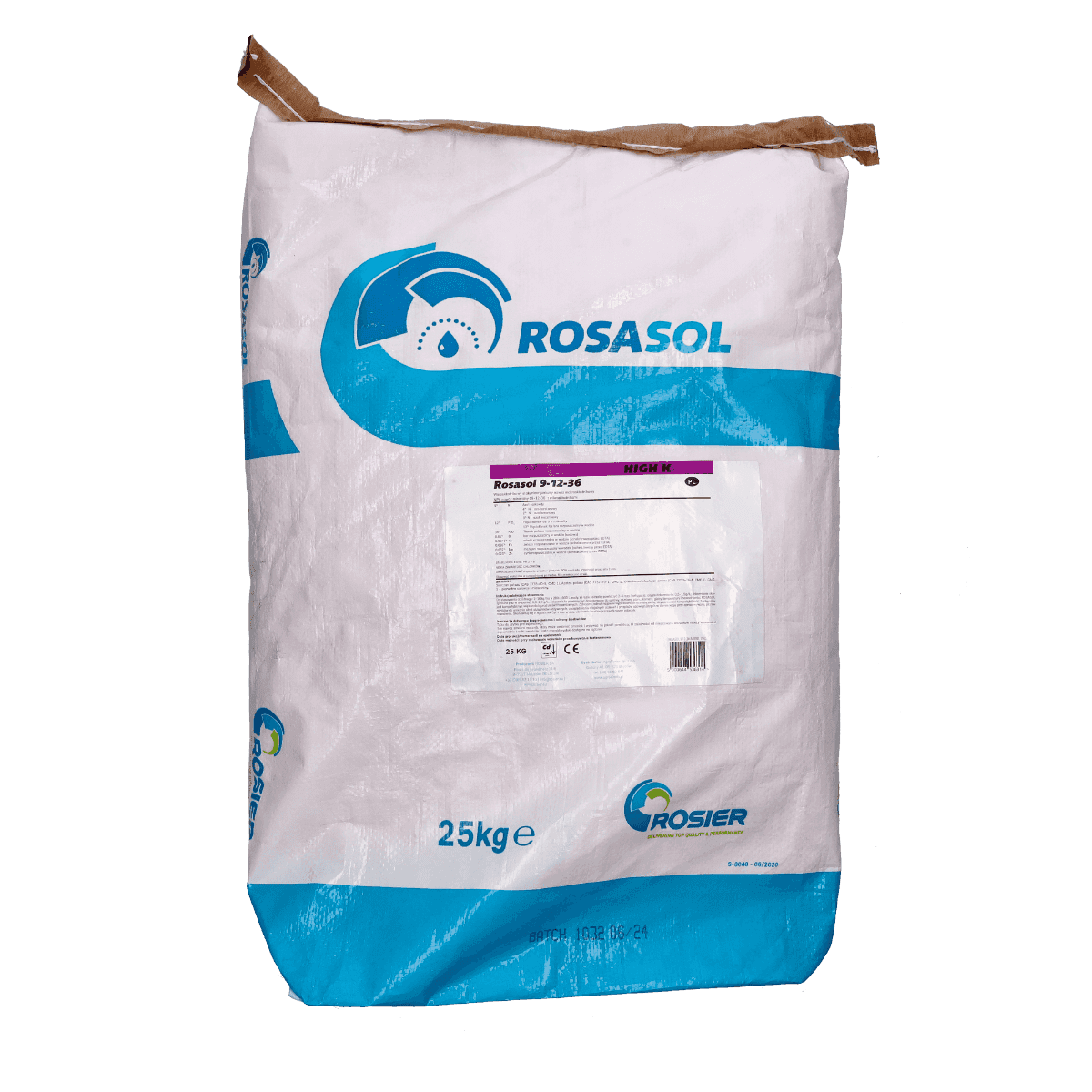
Rosasol 12-03-43 TE Rosier - NPK fertiliser
Rosasol 12-3-43(+6) +micro is a water-soluble fertiliser providing plants with key nutrients. It is used in various crops such as fruit trees, vegetables and arable farming.
Description
Rosasol 12-3-43(+6) +micro is a fully water-soluble fertiliser. It supplies plants with valuable nutrients. It is used in fruit tree, vegetable and arable crops.
Ingredients:
- nitrogen (N), boron (B) (0.01%),
- zinc (Zn) (0.023%),
- manganese (Mn) (0.032%),
- copper (Cu) (0.0075%),
- phosphorus pentoxide - (P2O5) (3%),
- potassium oxide (K2O) (43%),
- sulphur trioxide (SO3) (6%),
- iron (Fe) (0.026%)
Use in crops:
- Cabbage vegetables
- Tomato
- Sweet pepper
- Cucumber
- Potato
- Root vegetables
- Cereals
- Other crops
- Fruit bushes
- Sugar beet
- Oilseed rape
- Vegetable seedlings
- Onion
- Leek
- Ornamental plants
- Pear trees
|
Crop |
Timing |
|
Cabbage vegetables |
Two to four times from leaf contact. |
|
Tomato, sweet pepper, cucumber |
Two to four treatments during fruit growth. |
|
Potato |
One to three treatments from bush formation. |
|
Root vegetables |
One to two treatments from storage root growth. |
|
Cereals |
One to two treatments from tillering phase to end of stem elongation. |
|
Other crops |
To correct potassium deficiencies. |
|
Fruit bushes |
One to two treatments after flowering. |
|
Sugar beet |
One to two treatments from 8-leaf stage to row closure. |
|
Oilseed rape |
One to two treatments after spring growth starts. |
|
Vegetable seedlings |
One to three treatments every 7-10 days. |
|
Onion, leek |
One to two treatments up to 8-leaf stage. |
|
Ornamental plants |
At the beginning of vegetation, after flower bud formation. |
|
Crop |
Application method |
Dose |
Recommended water volume |
|
Vegetables, ornamental plants, orchards |
Fertigation under cover and in the field |
0.5-1.5 kg (concentration: |
1000 l/ha |
|
Vegetables under cover |
Foliar fertilisation |
1-2 kg/ha (concentration: 0.1-0.2%) |
1000 l/ha |
|
Vegetables in the field, orchards, ornamental plants |
Foliar fertilisation |
2-4 kg/ha (concentration: |
500 l/ha |
|
Arable crops |
Foliar fertilisation |
4-5 kg/ha (concentration: 1-2%) |
200-300 l/ha |
Application and dosage
|
Crop |
How to apply? Dosage |
When to apply? |
|---|---|---|
|
Cabbage vegetables |
Fertigation under cover and in the field: 0.5-1.5 kg (concentration: 0.05-0.15%), recommended water volume: 1000 l/ha Foliar fertilisation under cover: 1-2 kg/ha (concentration: 0.1-0.2%), recommended water volume: 1000 l/ha Foliar fertilisation in the field: 2-4 kg/ha (concentration: 0.3-0.6%), recommended water volume: 500 l/ha |
One to three treatments every 10-14 days from 3 weeks after planting. |
|
Tomato, sweet pepper, cucumber |
Fertigation under cover and in the field: 0.5-1.5 kg (concentration: 0.05-0.15%), recommended water volume: 1000 l/ha Foliar fertilisation under cover: 1-2 kg/ha (concentration: 0.1-0.2%), recommended water volume: 1000 l/ha Foliar fertilisation in the field: 2-4 kg/ha (concentration: 0.3-0.6%), recommended water volume: 500 l/ha |
Two to four treatments during fruit growth. |
|
Potato |
Fertigation under cover and in the field: 0.5-1.5 kg (concentration: 0.05-0.15%), recommended water volume: 1000 l/ha Foliar fertilisation under cover: 1-2 kg/ha (concentration: 0.1-0.2%), recommended water volume: 1000 l/ha Foliar fertilisation in the field: 2-4 kg/ha (concentration: 0.3-0.6%), recommended water volume: 500 l/ha |
One to three treatments after flowering. |
|
Root vegetables |
Fertigation under cover and in the field: 0.5-1.5 kg (concentration: 0.05-0.15%), recommended water volume: 1000 l/ha Foliar fertilisation under cover: 1-2 kg/ha (concentration: 0.1-0.2%), recommended water volume: 1000 l/ha Foliar fertilisation in the field: 2-4 kg/ha (concentration: 0.3-0.6%), recommended water volume: 500 l/ha |
One to three treatments every 10-14 days from storage root growth. |
|
Cereals |
Foliar fertilisation: 4-5 kg/ha (concentration: 1-2%), recommended water volume: 200-300 l/ha |
One to two treatments from tillering phase to end of stem elongation. |
|
Other crops |
Fertigation under cover and in the field: 0.5-1.5 kg (concentration: 0.05-0.15%), recommended water volume: 1000 l/ha Foliar fertilisation under cover: 1-2 kg/ha (concentration: 0.1-0.2%), recommended water volume: 1000 l/ha Foliar fertilisation in the field: 2-4 kg/ha (concentration: 0.3-0.6%), recommended water volume: 500 l/ha |
One to two treatments under adverse weather conditions. |
|
Raspberry, strawberry |
Fertigation under cover and in the field: 0.5-1.5 kg (concentration: 0.05-0.15%), recommended water volume: 1000 l/ha Foliar fertilisation in the field: 2-4 kg/ha (concentration: 0.3-0.6%), recommended water volume: 500 l/ha |
After flower bud formation and after harvest. |
|
Currant, gooseberry |
Fertigation under cover and in the field: 0.5-1.5 kg (concentration: 0.05-0.15%), recommended water volume: 1000 l/ha Foliar fertilisation in the field: 2-4 kg/ha (concentration: 0.3-0.6%), recommended water volume: 500 l/ha |
Before and after flowering and after harvest. |
|
Fruit trees |
Fertigation under cover and in the field: 0.5-1.5 kg (concentration: 0.05-0.15%), recommended water volume: 1000 l/ha Foliar fertilisation in the field: 2-4 kg/ha (concentration: 0.3-0.6%), recommended water volume: 500 l/ha |
One to three treatments after flowering. |
|
Sugar beet |
Fertigation under cover and in the field: 0.5-1.5 kg (concentration: 0.05-0.15%), recommended water volume: 1000 l/ha Foliar fertilisation under cover: 1-2 kg/ha (concentration: 0.1-0.2%), recommended water volume: 1000 l/ha Foliar fertilisation in the field: 2-4 kg/ha (concentration: 0.3-0.6%), recommended water volume: 500 l/ha |
One to two treatments from 8-leaf stage to row closure. |
|
Winter oilseed rape |
Foliar fertilisation: 4-5 kg/ha (concentration: 1-2%), recommended water volume: 200-300 l/ha |
One to two treatments after spring growth starts. |
|
Onion, leek |
Fertigation under cover and in the field: 0.5-1.5 kg (concentration: 0.05-0.15%), recommended water volume: 1000 l/ha Foliar fertilisation under cover: 1-2 kg/ha (concentration: 0.1-0.2%), recommended water volume: 1000 l/ha Foliar fertilisation in the field: 2-4 kg/ha (concentration: 0.3-0.6%), recommended water volume: 500 l/ha |
One to two treatments in July. |