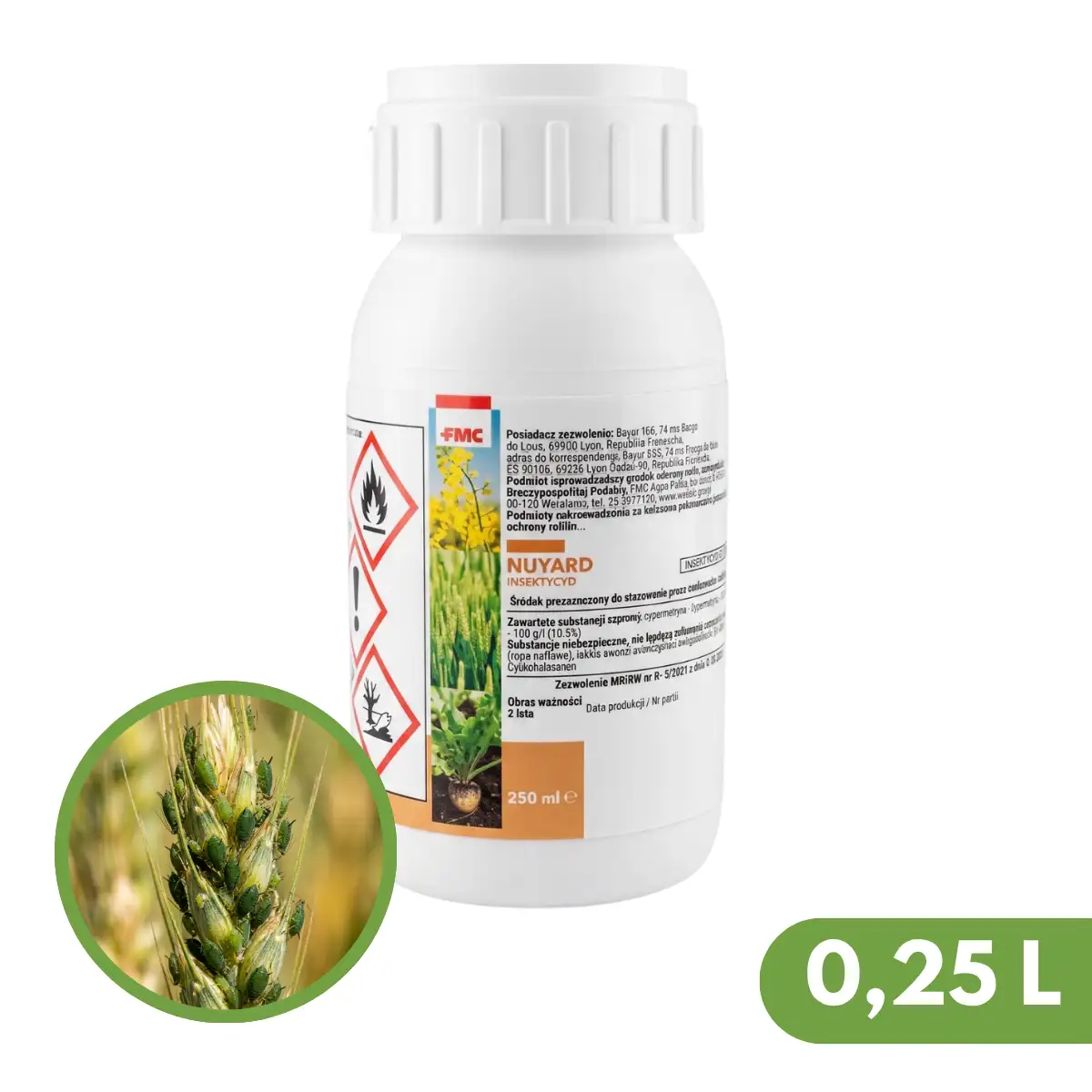
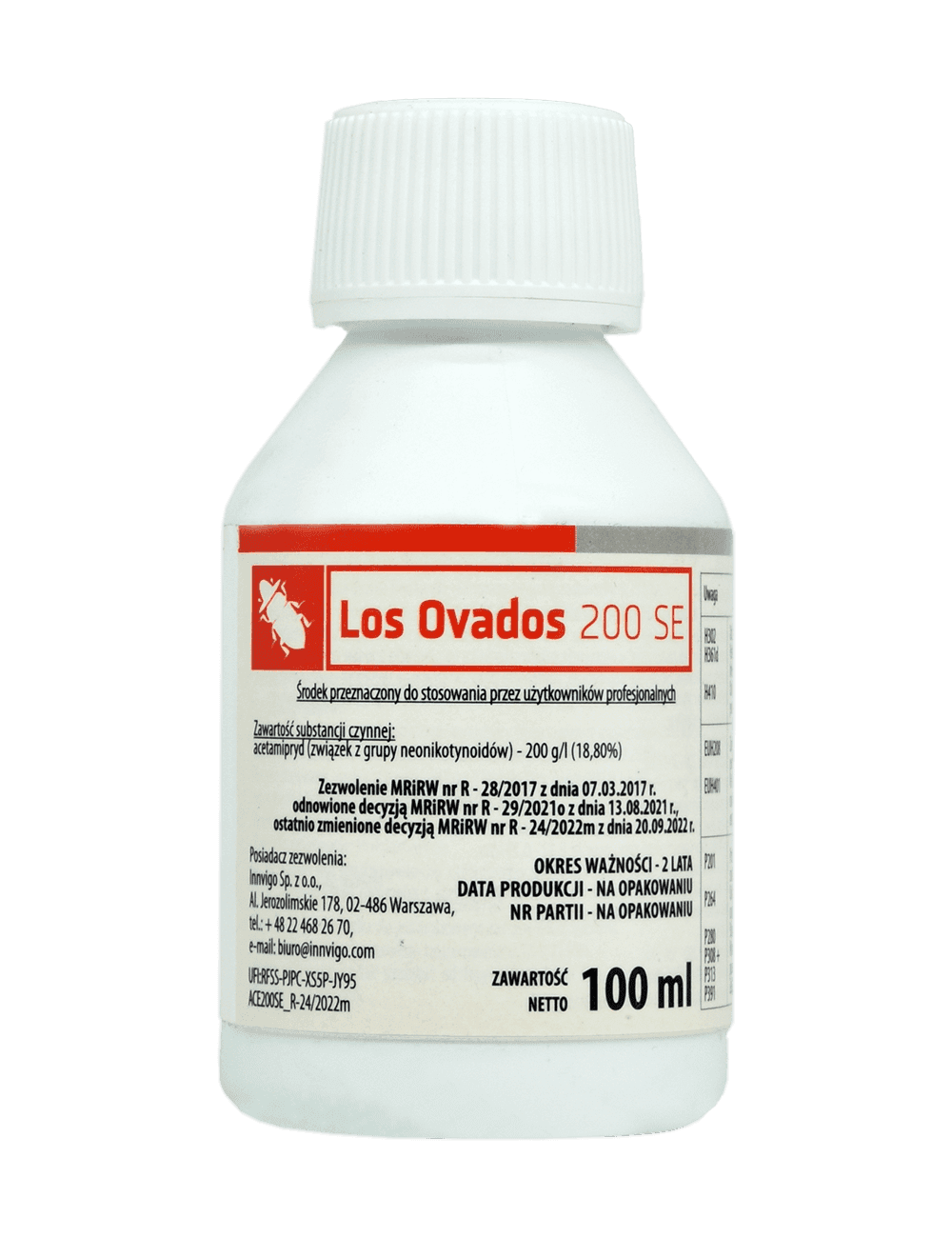
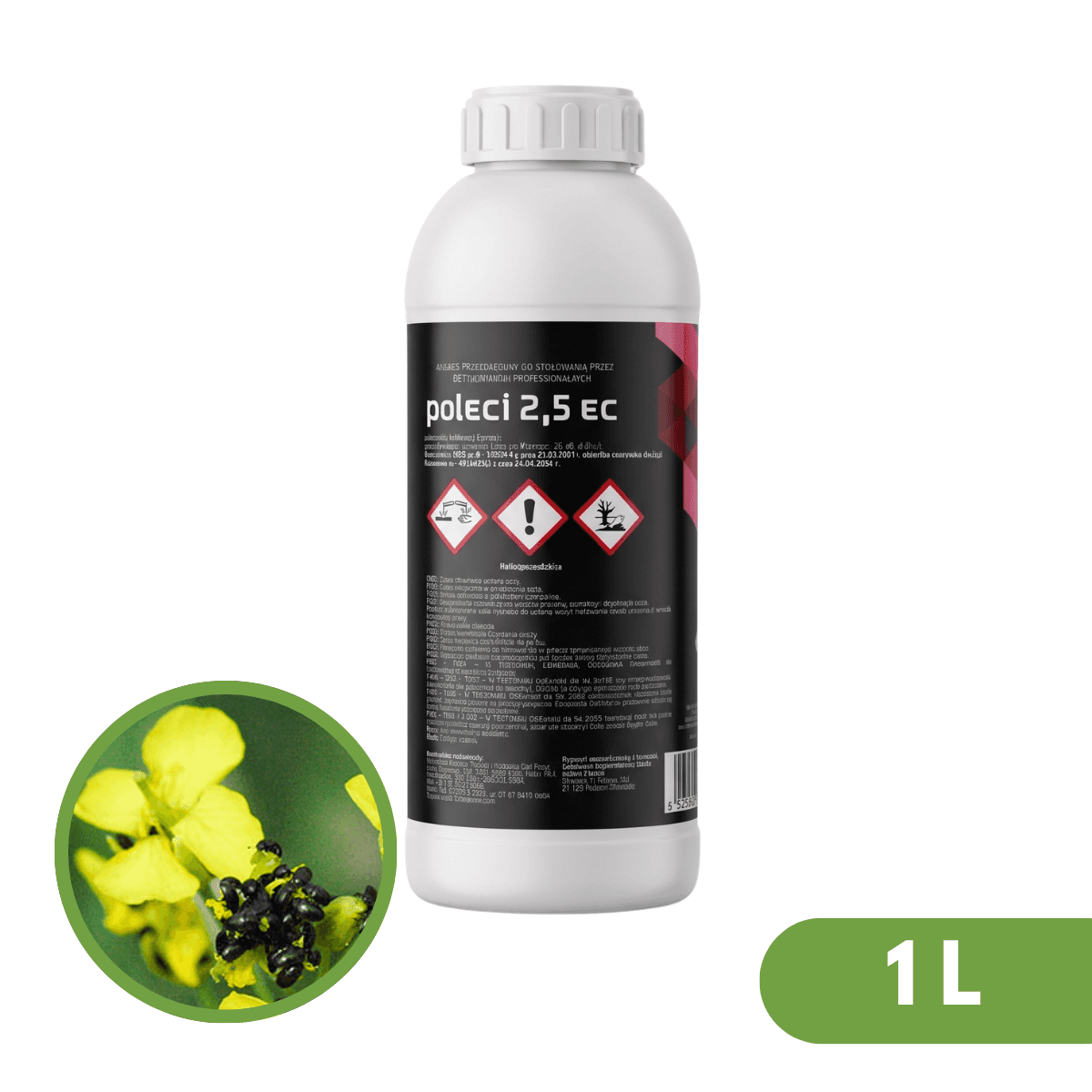
Sherpa 100 EC
Sherpa is an insecticidal product in the form of a concentrate for preparing an aqueous emulsion. The product is intended for the control of chewing and sucking pests in winter oilseed rape, winter wheat, apple trees, white head cabbage, and Scots pine…
Description
Content of active substance:
cypermethrin (compound from the pyrethroid group) - 100 g/l (10.76%)
HOW TO USE SHERPA
FIELD CROPS:
Winter oilseed rape
pollen beetle (treatment against pollen beetle also controls the cabbage stem weevil)
Maximum dose for single application: 0.3 l/ha
Recommended dose for single application: 0.25 - 0.3 l/ha
Application timing: Spray after beetles appear in the crop, according to monitoring, from the beginning of the phase when individual flower buds are still closed (main inflorescence) to the end of the phase when individual flower buds are still closed (side inflorescences) (BBCH 55-57).
Recommended water volume: 300 l/ha.
Recommended spraying: medium droplet size.
Maximum number of treatments per growing season – 1
Winter wheat
cereal leaf beetles
Maximum dose for single application: 0.3 l/ha
Recommended dose for single application: 0.25 - 0.3 l/ha
Application timing: Spray from the beginning of larval hatch, from full heading stage to the end of heading stage (BBCH 55-59)
aphids
Maximum dose for single application: 0.3 l/ha
Recommended dose for single application: 0.25 - 0.3 l/ha
Application timing: Spray after heading, after the first aphid colonies appear, from the beginning of flowering no later than the beginning of milk grain maturity (BBCH 63-73)
Recommended water volume: 300 l/ha.
Recommended spraying: medium droplet size.
Maximum number of treatments per growing season – 1
FRUIT CROPS:
Apple tree
leafrollers
Maximum dose for single application: 0.3 l/ha
Recommended dose for single application: 0.3 l/ha
Application timing: Apply before flowering on overwintering leafroller caterpillars, from the beginning of inflorescence development to the end of the pink bud stage (BBCH 51-57)
apple aphid, woolly apple aphid
Maximum dose for single application: 0.3 l/ha
Recommended dose for single application: 0.3 l/ha
Application timing: Spray after the first aphid colonies appear, from the end of flowering to the end of the phase when the fruit reaches half of its typical size – apple aphid (BBCH 69-75) or to the end of the initial fruit drop phase (BBCH 69-73).
Recommended water volume: 500-750 l/ha.
Maximum number of treatments per growing season – 1
VEGETABLE CROPS:
White head cabbage
caterpillars of the cabbage white butterfly and cabbage moth, cabbage leaf beetle, diamondback moth
Maximum dose for single application: 0.3 l/ha
Recommended dose for single application: 0.3 l/ha
Application timing: Spray during the period of mass caterpillar hatch, when the head reaches 50%-60% of typical size (BBCH 45-46).
cabbage aphid
Maximum dose for single application: 0.3 l/ha
Recommended dose for single application: 0.3 l/ha
Application timing: Spray after the first aphid colonies appear, when the head reaches 20%-30% of typical size (BBCH 42-43).
Recommended water volume: 600 l/ha.
Maximum number of treatments per growing season – 1
FORESTRY:
Scots pine seedlings
pine weevil
Application timing: Use the product for dipping the above-ground parts of seedlings before planting in the permanent site or spray crops with ground equipment using 50-100 l spray liquid/ha.
Maximum concentration: 1.25%
Recommended concentration: 0.5-1.25% (500-1250 ml of product in 100 l of water)
Maximum number of treatments per growing season – 1
Protection of timber raw material and control of secondary pests
bark beetles
Maximum concentration: 0.8%
Recommended concentration: 0.1-0.8% (100-800 ml of product in 100 l of water) Use 5 l of spray liquid per 1 m3 of wood. Use the product at the higher recommended concentrations in case of high pest population
Maximum number of treatments – 1
Pre-harvest interval (period from last application to harvest):
Winter oilseed rape, winter wheat, apples - 14 days
Cabbage - 7 days