MODE OF ACTION OF KRUM 800:
KRUM 800 is a powerful tool in the fight against weeds, which penetrates deeply into the tissues of unwanted plants within an hour of application. Thanks to rapid absorption, the preparation becomes exceptionally resistant to being washed off by rain, ensuring stable effectiveness even in variable weather conditions. As a soil and foliar herbicide, it creates a protective barrier that eliminates weeds at their most vulnerable, early growth stages.
The product ensures long-term crop cleanliness by inhibiting the growth of key pests such as blackgrass and cleavers. Its versatility allows for use both pre-emergence and early post-emergence, giving the farmer flexibility in treatment planning and confidence that the crop develops without competition from weeds.
ACTIVE SUBSTANCE CONTENT:
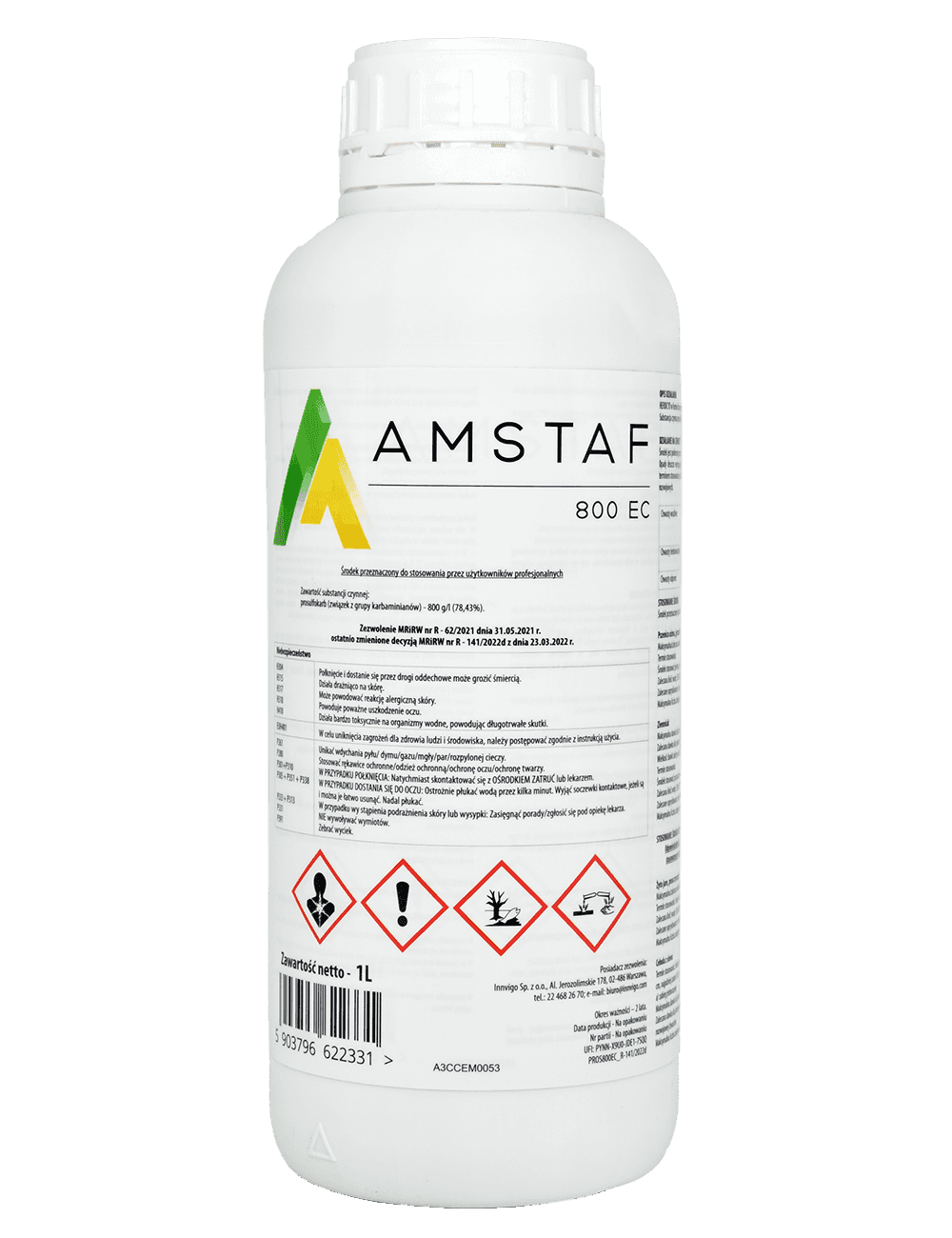
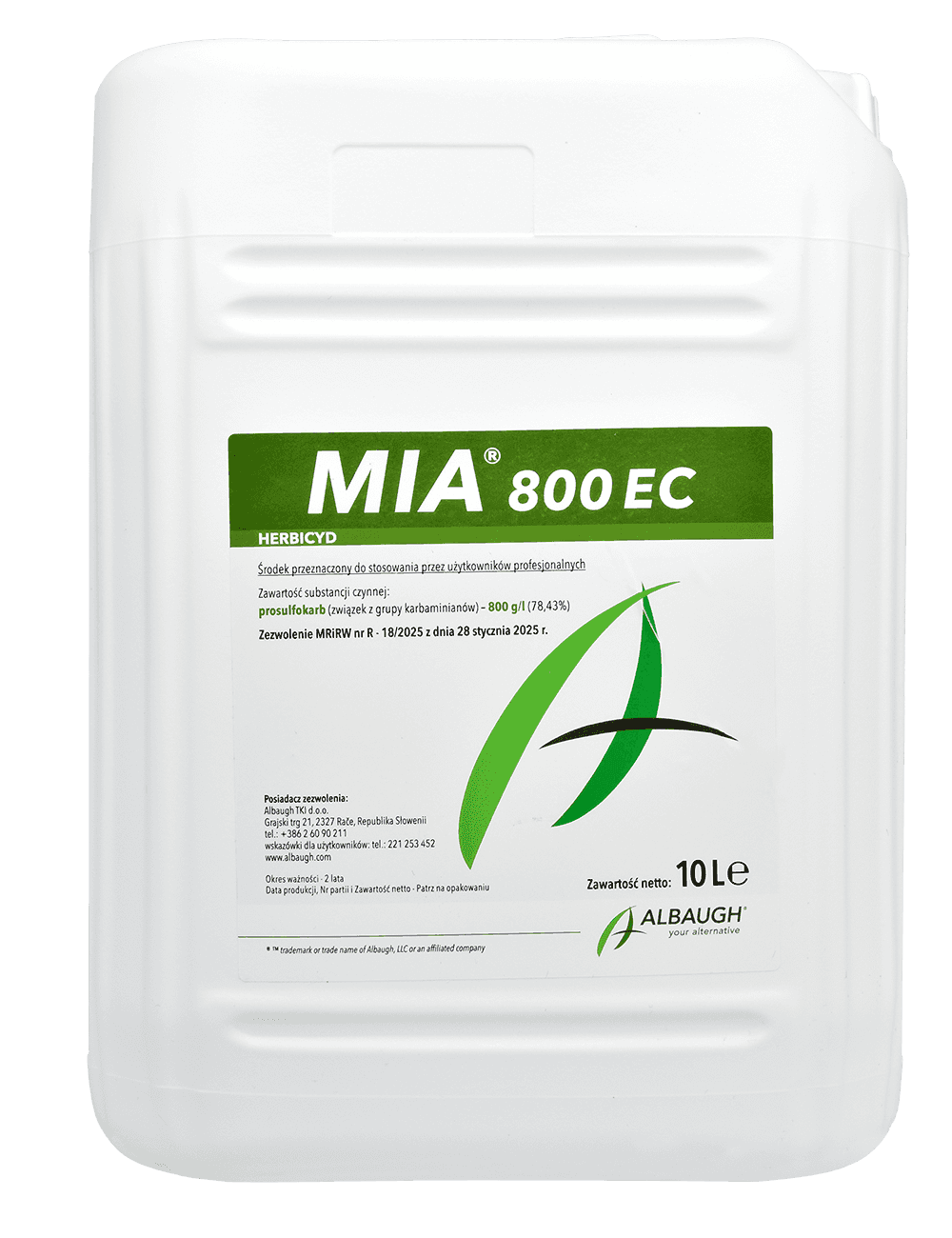
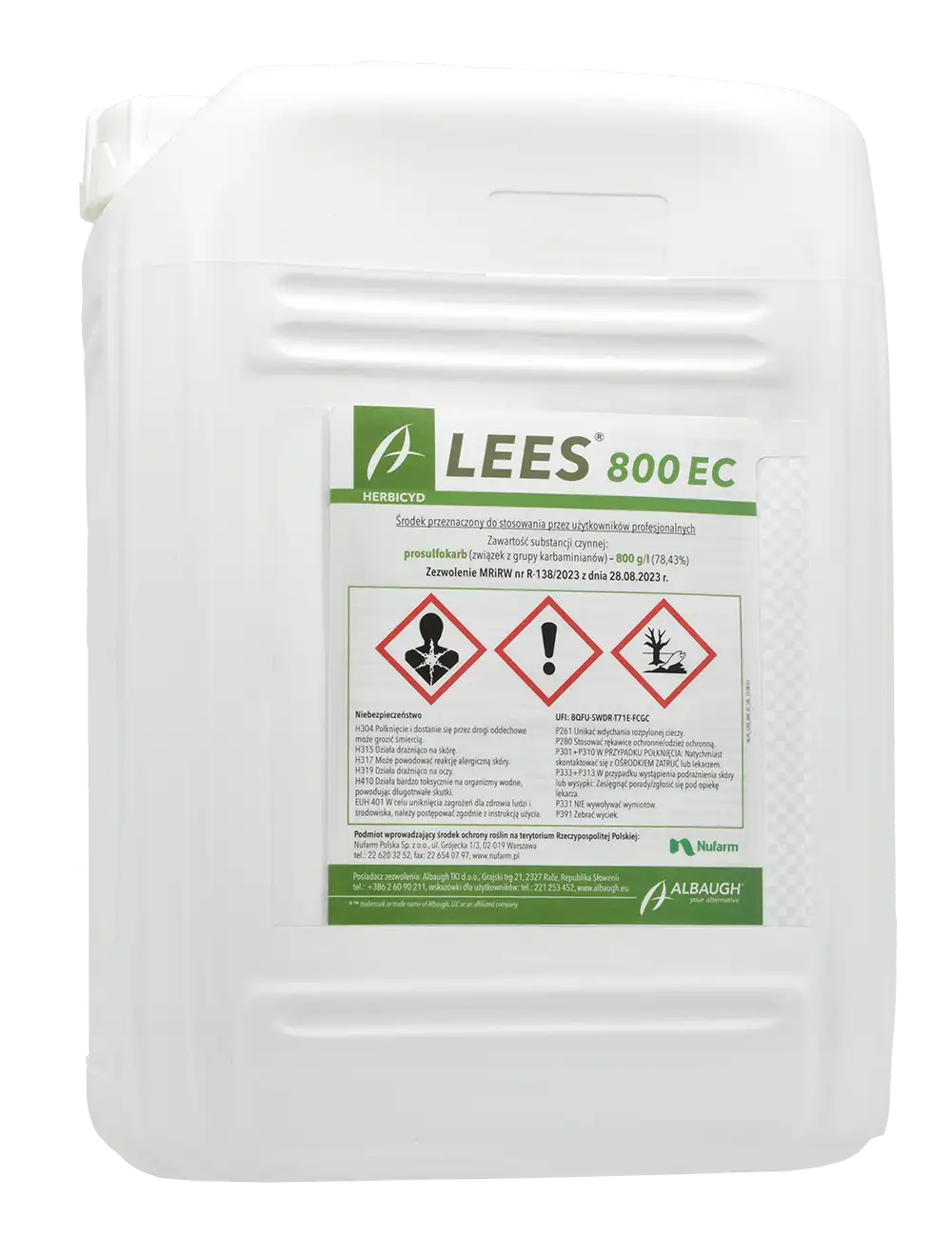
prosulfocarb (a carbamate compound) - 800 g/l (78.43%)
Advantages of using KRUM 800:
- Rapid rainfastness: Full absorption occurs within 60 minutes, minimising the risk of losses during rainfall.
- Wide application window: The possibility of soil and foliar application allows perfect adjustment of the treatment to the weed growth stage.
- Effectiveness in difficult conditions: Excels in controlling persistent weeds such as cleavers and common chickweed.
- Cultivation versatility: Registration covering cereals, potatoes, as well as ornamental plants and small-scale crops.
Pre-harvest interval:
- Onion (direct consumption), celery stalk – 75 days
- Parsnip, horseradish, root parsley, carrot, leek – 80 days
- Root celery – 100 days
- Cereals, potato, garlic, legumes, oilseeds, ornamentals – Not required
KRUM 800 - SCOPE OF USE, TIMING AND DOSES:
Spectrum of controlled weeds:
- Standard dose:
Sensitive weeds: common chickweed, purple dead-nettle, common chickweed, blackgrass, ground ivy, Persian speedwell, cleavers.
Moderately sensitive weeds: field pansy, corn poppy, bindweed knotweed, common chamomile, annual meadow-grass.
Resistant weeds: barren brome.
Winter wheat, winter barley, winter triticale, winter rye
| Controlled pests: |
Blackgrass, dicotyledonous weeds |
| Maximum / recommended dose: |
3.0 l/ha |
| Application timing: |
In autumn, after sowing until the 3-leaf stage (BBCH 00-13) |
| Maximum number of treatments: |
1 |
| Recommended water volume: |
200-300 l/ha |
Potato
| Controlled pests: |
Annual monocotyledonous and dicotyledonous weeds |
| Maximum / recommended dose: |
5.0 l/ha (recommended 3.0 - 5.0 l/ha) |
| Application timing: |
After planting until the 3-leaf stage on the main shoot (BBCH 00-13) |
| Maximum number of treatments: |
1 |
| Recommended water volume: |
200-300 l/ha |
SMALL-SCALE APPLICATIONS:
The responsibility for the effectiveness and phytotoxicity of the plant protection product used in small-scale crops lies solely with its user.
Spring rye, common millet
| Controlled pests: |
Annual monocotyledonous and dicotyledonous weeds |
| Dose: |
3.0 l/ha |
| Timing: |
After sowing until the 3-leaf stage (BBCH 00-13) |
Onion (from seed, seedlings, sets), Garlic, Leek
| Controlled pests: |
Annual monocotyledonous and dicotyledonous weeds |
| Dose: |
4.0 l/ha (or split doses 2x 2.0 l/ha) |
| Timing: |
Leaf stage (BBCH 11-14) according to detailed label recommendations |
Carrot, Root parsley, Parsnip, Celery, Horseradish
| Controlled pests: |
Annual monocotyledonous and dicotyledonous weeds |
| Dose: |
3.0 - 5.0 l/ha (depending on crop and treatment system) |
Legumes, oilseeds and industrial crops (Faba bean, Soybean, Sunflower, Flax, Hemp)
| Controlled pests: |
Annual monocotyledonous and dicotyledonous weeds |
| Dose: |
4.0 l/ha |
| Timing: |
Up to 3-5 days after sowing (BBCH 00-02) |
Ornamental plants (from seed, perennials, shrubs)
| Controlled pests: |
Annual weeds |
| Dose: |
4.0 l/ha |
| Timing: |
Pre-emergence or early post-emergence (BBCH 00-09) |
 SKU CH-15159