SKU 459-c
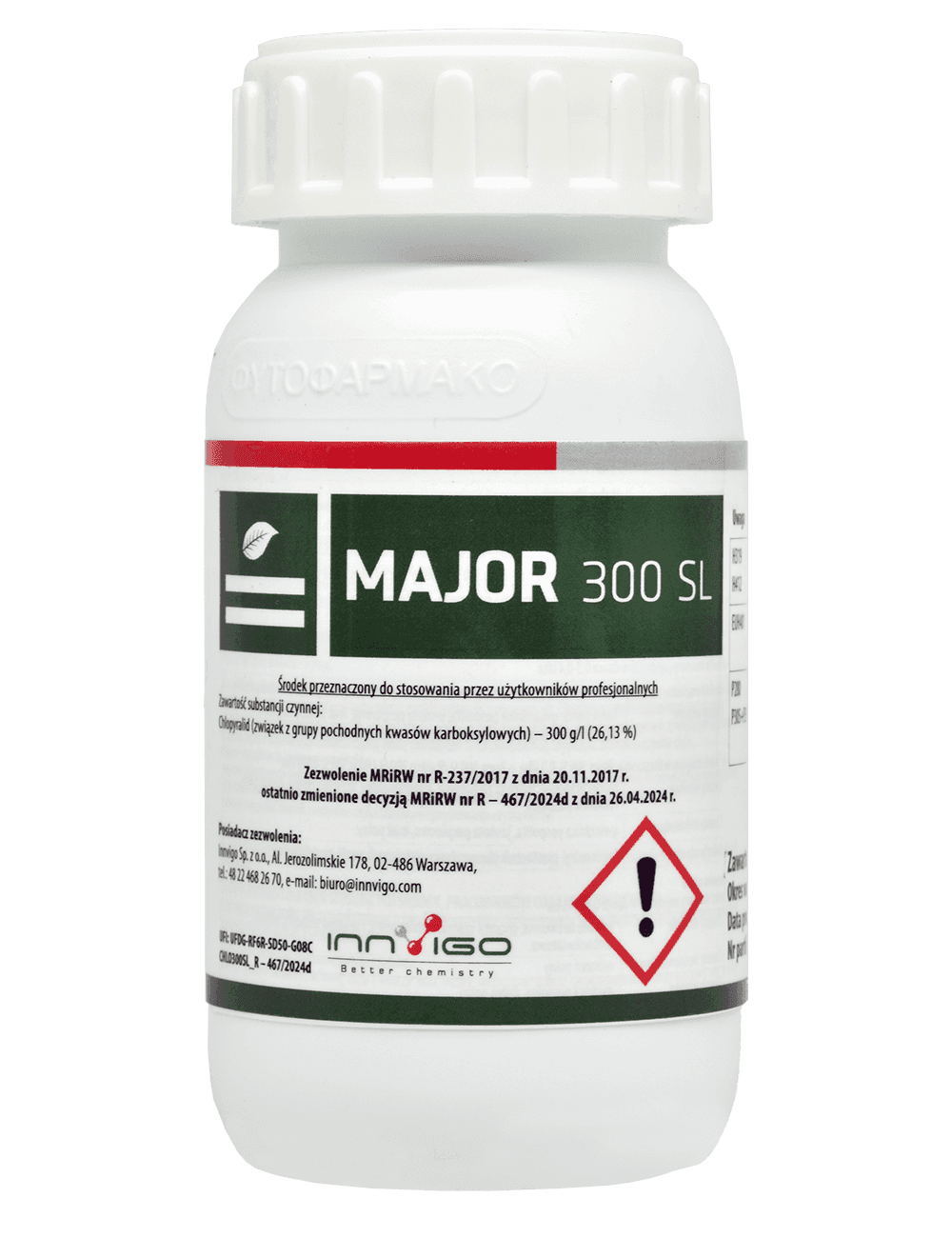
Lontrel 300 SL (chlopyralid) - herbicide for weed control in winter oilseed rape, sugar beet and onion
Lontrel 300 SL is a herbicide for foliar weed control in winter oilseed rape, sugar beet and onion crops.
Description
Lontrel 300 SL - herbicide for weed control in agricultural and vegetable crops
What are the benefits of using the Lontrel herbicide?
- The product has high efficacy in controlling weeds in winter oilseed rape, sugar beet and onion,
- Controls even very troublesome weeds,
- Fast action,
- Applied foliarly,
- In a convenient concentrate form.
Lontrel 300 SL is a plant protection product, specifically a herbicide (weed killer). It is available in concentrate form for preparing an aqueous solution (SL). Intended for foliar application. Controls weeds in winter oilseed rape, sugar beet and onion.
The product is intended for professional users using field sprayers.
How does the Lontrel herbicide from Corteva work?
The product is absorbed through the leaves of weeds. It causes blockage of auxins, i.e. plant hormones responsible for plant growth. Inactivation of growth hormones results in the cessation of amino acid synthesis; additionally, the product disrupts respiration at the cellular level. It most effectively destroys young, vigorously growing weeds, from the 2-3 leaf stage to the rosette stage.
What is the content of the active substance in Lontrel 300 SL?
Active substance content:
- Chlopyralid (a compound from the carboxylic acid derivatives group) - 300 g/l.
Which weeds does the Lontrel herbicide control?
Sensitive weeds: cornflower, scentless mayweed, field thistle, black nightshade, pale persicaria, scentless chamomile, common chamomile, small-flowered yellow bedstraw.
Moderately sensitive weeds: white goosefoot.
Moderately resistant weeds: rough amaranth.
Resistant weeds: small geranium, field violet, common chickweed, field poppy, cleavers, common shepherd's purse, field pennycress and monocotyledonous weeds.
In which crops can weeds be controlled with Lontrel herbicide?
- Winter oilseed rape,
- Sugar beet,
- Onion from seed.
What are the crop rotations following the use of Lontrel herbicide from Corteva?
The product decomposes in the soil during the growing season without posing a threat to succeeding crops. If it is necessary to destroy the treated crop, spring oilseed rape, cereals or other crops recommended for Lontrel 300 SL use can be grown on the same field.
What are the pre-harvest interval and safety periods when using Lontrel herbicide?
Pre-harvest interval, i.e. the period from application until people can enter the treated area and animals can be introduced:
- Do not enter until the spray liquid has completely dried on the plant surfaces.
Pre-harvest interval, i.e. the period from the last application to the day of crop harvest:
- Not applicable.
Pre-harvest interval for fodder, i.e. the period from the last application on plants intended for fodder until animals can be fed with these plants:
- Not applicable.
Period from the last application on plants until sowing or planting of succeeding crops:
- Crop rotation must be taken into account.
How to prepare the spray liquid from Lontrel herbicide?
Before preparing the spray liquid, accurately determine the required amount. Pour the measured amount of product into the sprayer tank partially filled with water (with the agitator on). Rinse empty containers three times with water and pour the rinsate into the sprayer tank with the spray liquid. Fill the sprayer tank with water to the required volume. After adding the product to a sprayer tank without hydraulic agitation, mechanically mix the liquid in the tank. When using the product in mixtures with other products, strictly follow the preparation instructions for those products. In case of interruptions during spraying, thoroughly mix the spray liquid in the sprayer tank before resuming work.
What are the recommendations for weed control with the Lontrel spray liquid (herbicide)?
- On onion, Lontrel 300 SL causes transient phytotoxic symptoms such as slight chlorosis or leaf curling and lodging. These symptoms disappear after about 2 weeks and do not affect onion yield.
- To prevent weed resistance, do not use doses higher or lower than recommended; alternate the product with herbicides having different modes of action.
- During application, avoid:
− drift of spray liquid onto neighbouring crops (especially herbs and some vegetables),
− overlapping spray liquid on treatment strip edges and headlands. - Do not apply the product on wet or disease- or pest-damaged plants, or in mixtures with fertilisers.
- Do not eat, drink or smoke while using the product.
- Wear appropriate protective clothing.
- Do not contaminate water bodies with the plant protection product or its packaging.
- Do not wash equipment near surface waters.
- Avoid contaminating water through drainage ditches from farms and roads.
- To protect aquatic organisms, a buffer zone of 1 m from water bodies and watercourses must be established.
- To protect plants and non-target arthropods, a buffer zone of 1 m from non-agricultural land must be established.
- Keep out of reach of children.
- Store the plant protection product:
− in places or facilities with appropriate measures to prevent environmental contamination and access by unauthorised persons,
− in original packaging, in a way preventing contact with food, beverages or fodder. - Store at temperatures between 0 degrees Celsius and 30 degrees Celsius.
Warning! Plant protection products must be used safely. Before each use, read the information on the label and product details.
The purchaser declares that they meet the conditions specified in Article 25 paragraph 3 point 5 of the Act of 8 March 2013 on plant protection products and have training in the use of plant protection products in the case of products for professional users. Before each use, read the information on the label and product details. Pay attention to detailed risk indications. Follow the safety rules contained on the label. Plant protection products may only be purchased by adults and persons who have completed training and have the qualifications required for persons purchasing plant protection products (Article 28 of the Act on plant protection products of 8 March 2013, as amended). Plant protection products must be used in a way that does not pose a threat to human health, animals or the environment. The purchaser of plant protection products must be sober. By using this offer, you declare that you meet the above conditions.
Application and dosage
|
Crop |
Weed Control |
How to apply? Dosage |
When to apply? |
|---|---|---|---|
|
Winter oilseed rape |
cornflower, scentless mayweed, field thistle, black nightshade, pale persicaria, scentless chamomile, common chamomile, small-flowered yellow bedstraw, white goosefoot |
Maximum dose for single application: 0.4 l/ha |
Application timing: |
|
Sugar beet |
cornflower, scentless mayweed, field thistle, black nightshade, pale persicaria, scentless chamomile, common chamomile, small-flowered yellow bedstraw, white goosefoot |
Maximum dose for single application: 0.4 l/ha |
Application timing: |
|
Onion from seed |
cornflower, scentless mayweed, field thistle, black nightshade, pale persicaria, scentless chamomile, common chamomile, small-flowered yellow bedstraw, white goosefoot |
Maximum dose for single application: 0.4 l/ha |
Application timing: at the clearly visible 3 leaf stage. |