 SKU 29360-c
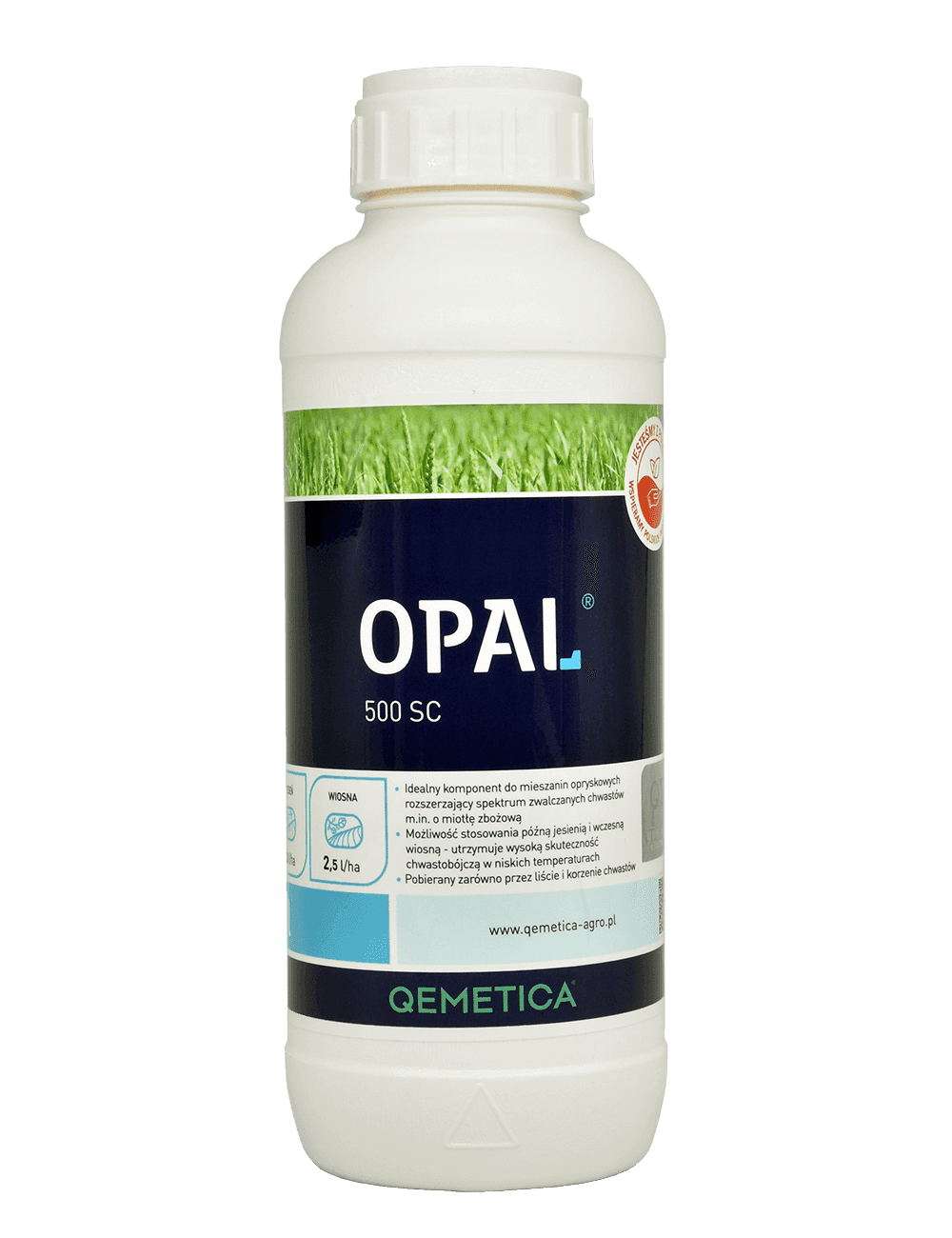
Opal 500 SC (chlorotoluron) - Qemetica
Opal 500 SC is a selective systemic herbicide designed for the control of monocotyledonous and selected dicotyledonous weeds in winter wheat.
Description
Opal 500 SC – effective protection of winter cereals against weeds
Opal 500 SC is a selective systemic herbicide intended for autumn and spring control of monocotyledonous and some dicotyledonous weeds in winter wheat. The product contains chlorotoluron (500 g/l) – an active substance belonging to the urea derivatives group (HRAC C2), acting systemically through leaves and roots.
Advantages of using Opal 500 SC
- High efficacy against autumn and spring weeds
- Systemic action – through leaves and roots
- Possible application in autumn or spring
- Compatibility with other herbicides in cereal protection programmes
Mode of action
Chlorotoluron inhibits the photosynthesis process in weeds, leading to their gradual death. The substance acts both contact and systemically, effectively eliminating weeds at early growth stages. This makes Opal 500 SC an excellent tool for crop protection from the start of the growing season.
Scope of use
The product is intended for use in winter wheat cultivation. It can be applied:
- In autumn – at the 3–9 leaf stage (BBCH 13–29)
- In spring – from tillering to the beginning of stem elongation (BBCH 23–30)
Weeds controlled
Opal 500 SC effectively eliminates a wide range of weeds, including:
- Monocotyledonous weeds: loose silky-bent
- Dicotyledonous weeds: common chickweed, purple dead-nettle, mayweed, volunteer oilseed rape, shepherd's purse, field pansy
Summary
Opal 500 SC is a proven and effective solution for farmers seeking a reliable product to protect winter wheat against troublesome weeds. Thanks to its flexible application timing and broad spectrum of controlled species, it fits perfectly into cereal crop protection strategies in autumn and spring.
Application and dosage
| Crop | Weeds controlled | Application timing | Dose |
|---|---|---|---|
| Winter wheat | Blackgrass, common chickweed, purple dead-nettle, mayweed, volunteer oilseed rape, shepherd's purse, field pansy | Autumn – 3–9 leaf stage (BBCH 13–29) Spring – tillering to beginning of stem elongation (BBCH 23–30) |
2.0 l/ha |