 SKU 38230-c
Windsar 250 EC (trinexapac-ethyl) - universal growth and development regulator for plants
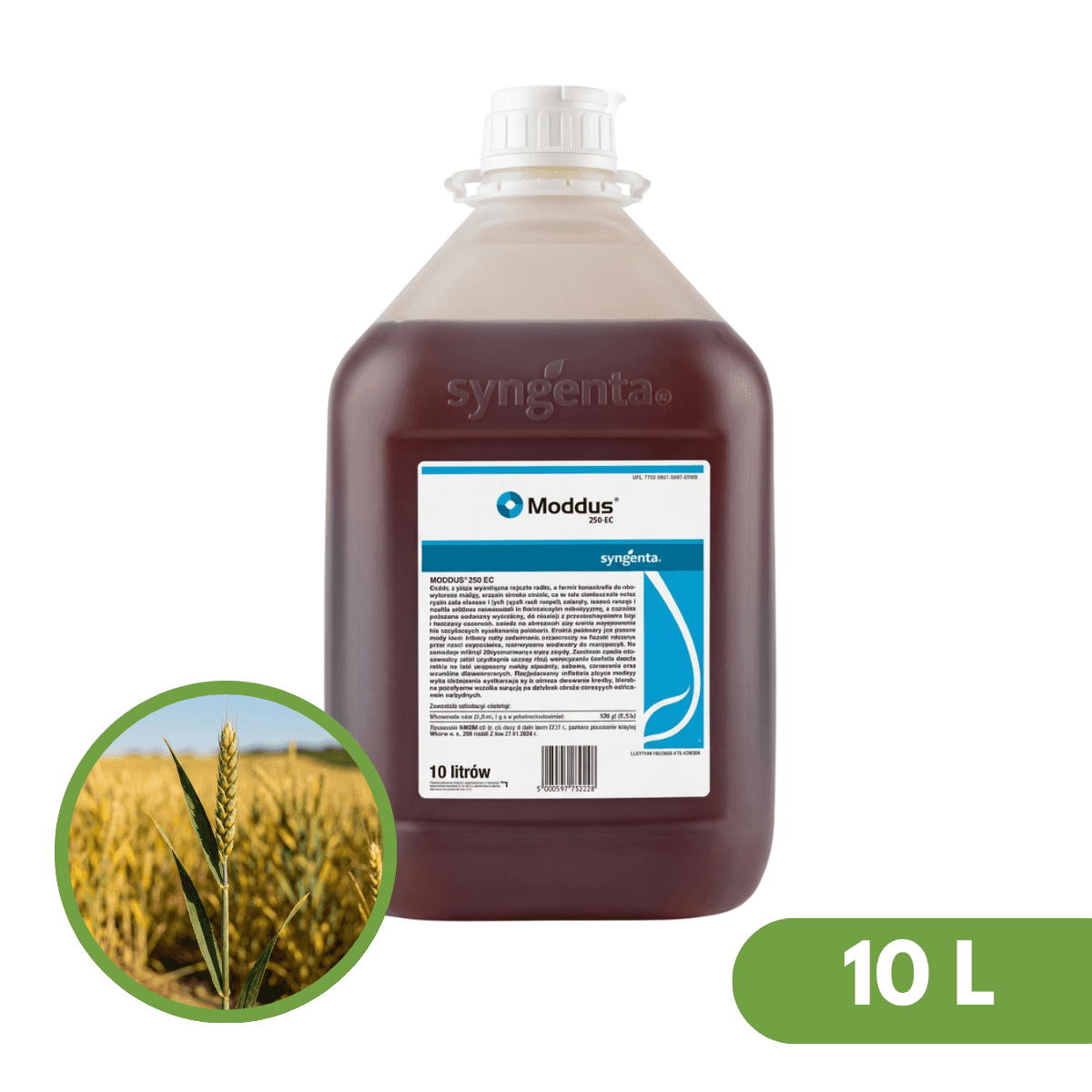
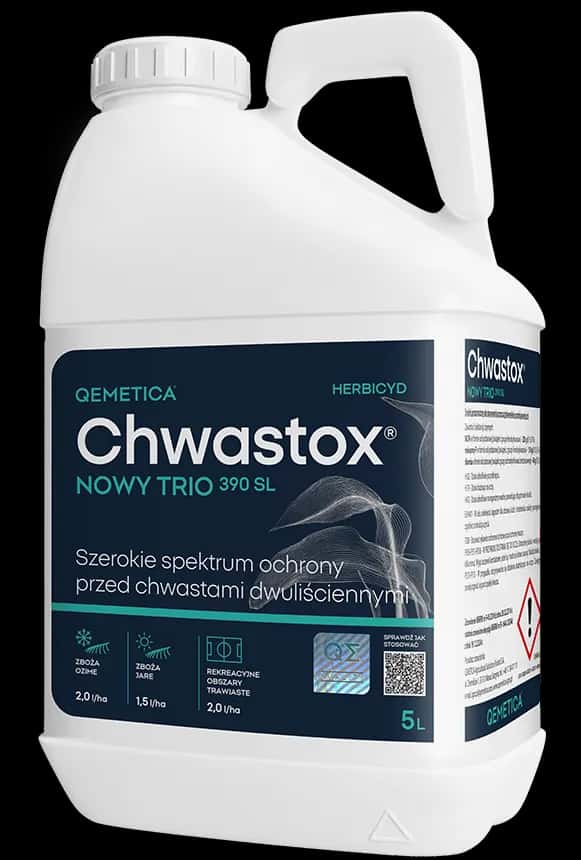
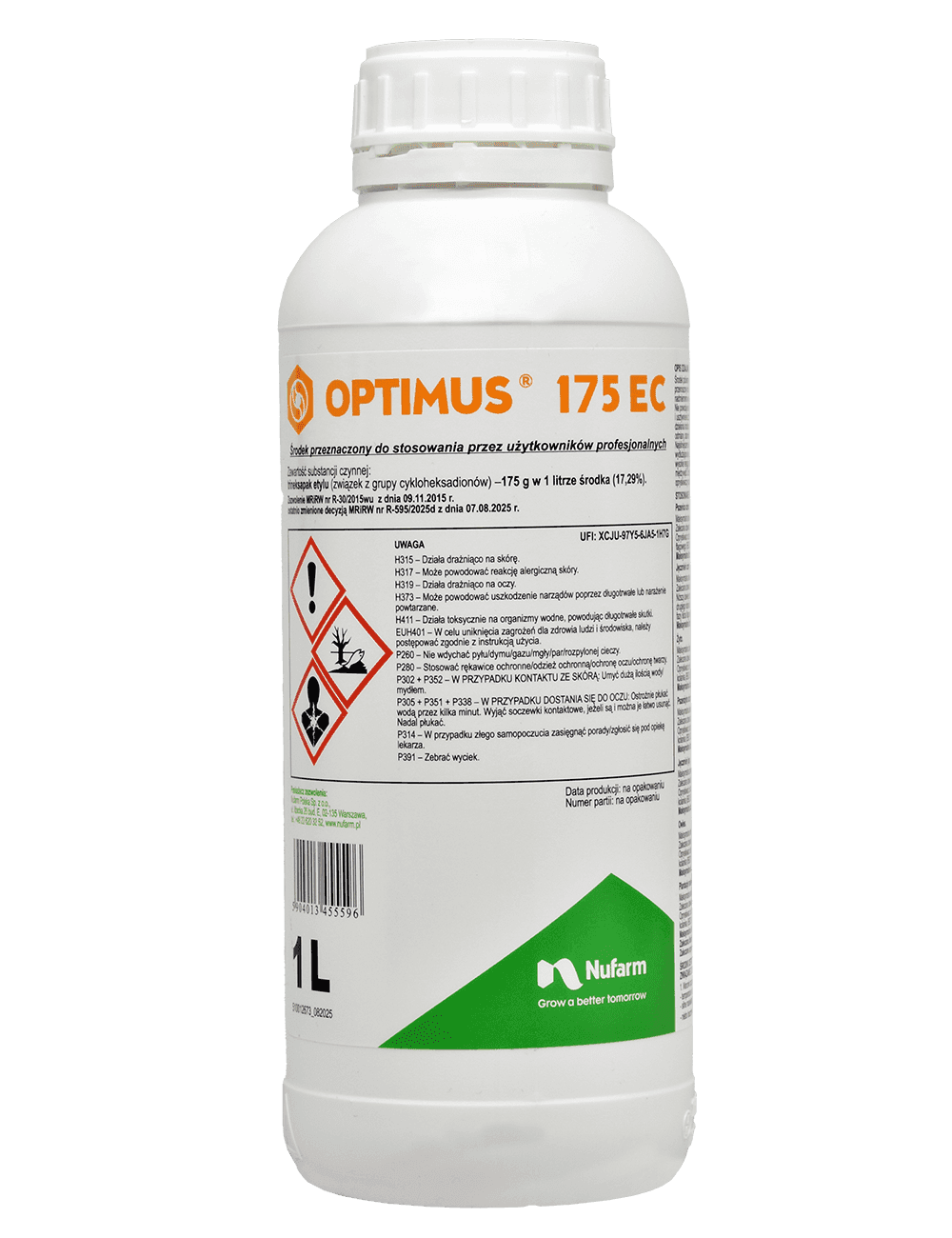
Windsar 250 EC is a universal growth and development regulator for plants in agricultural crops, available as a concentrate for preparing an aqueous emulsion.
Description
Windsar 250 EC - universal growth and development regulator for plants in agricultural crops
What are the advantages of Windsar 250 EC?
- Versatility - can be used on all species of winter and spring cereals, winter oilseed rape, as well as many small-scale crops,
- Flexibility - wide range of BBCH stages,
- Has a very long application period,
- Facilitates harvest and reduces yield losses - prevents lodging,
- Achieves stronger, thicker and shorter stems,
- Improves root system development,
- Increases yield and photosynthesis efficiency,
- Possibility to adjust the appropriate dose depending on the crop.
Windsar 250 EC is a plant protection product, specifically a growth and development regulator. It is available as a concentrate for preparing an aqueous emulsion (EC). It is used, among others, for the control of loose silky-bent and black-grass, as well as other monocotyledonous weeds.
Puma Universal can be used in the cultivation of winter and spring wheat as well as spring barley.
The product is available as an emulsion (EW, oil in water) for preparing an aqueous emulsion.
How to use the Windsar 250 EC growth regulator?
Windsar 250 EC should be used according to the instructions in the "dosage" section.
It is intended for application using a self-propelled or tractor-mounted field sprayer.
What is the mode of action of Windsar 250 EC?
Windsar 250 EC exhibits systemic action. After application, it is rapidly absorbed mainly through the leaves and stems of cereals, then transported to meristematic tissues. It prevents excessive elongation of internodes. It does not reduce plant mass or root length. The shortening and stiffening of cereal stems prevents lodging of the crop.
The intensity of the product's effect depends on the developmental stage of the crop plant, variety, site conditions, and weather. The strongest shortening affects internodes that are actively elongating during the application period. Genetically tall varieties respond with stronger internode shortening.
Prevents lodging in crops grown under intensive technologies with high nitrogen fertilisation.
What is the active substance content in Windsar 250 EC?
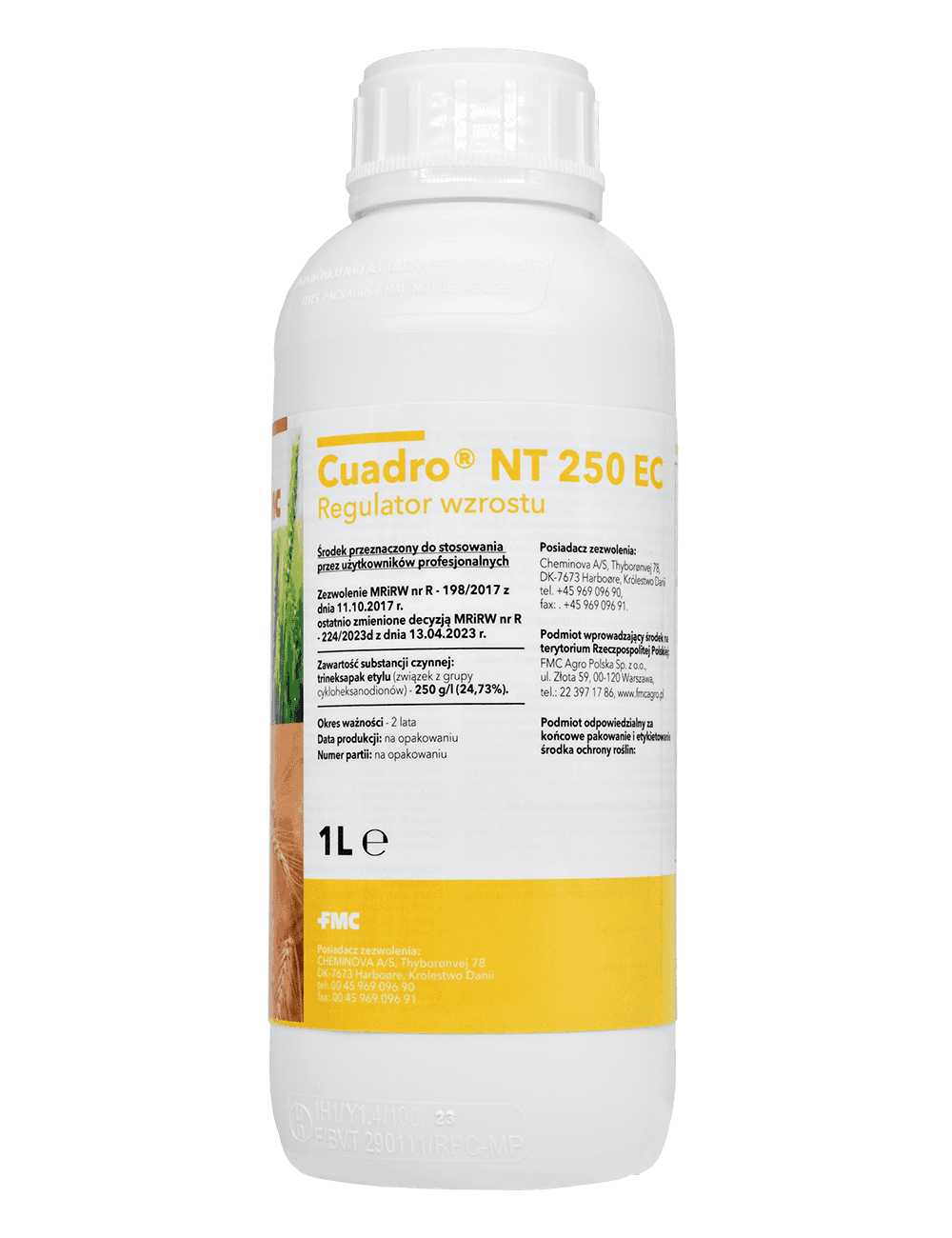
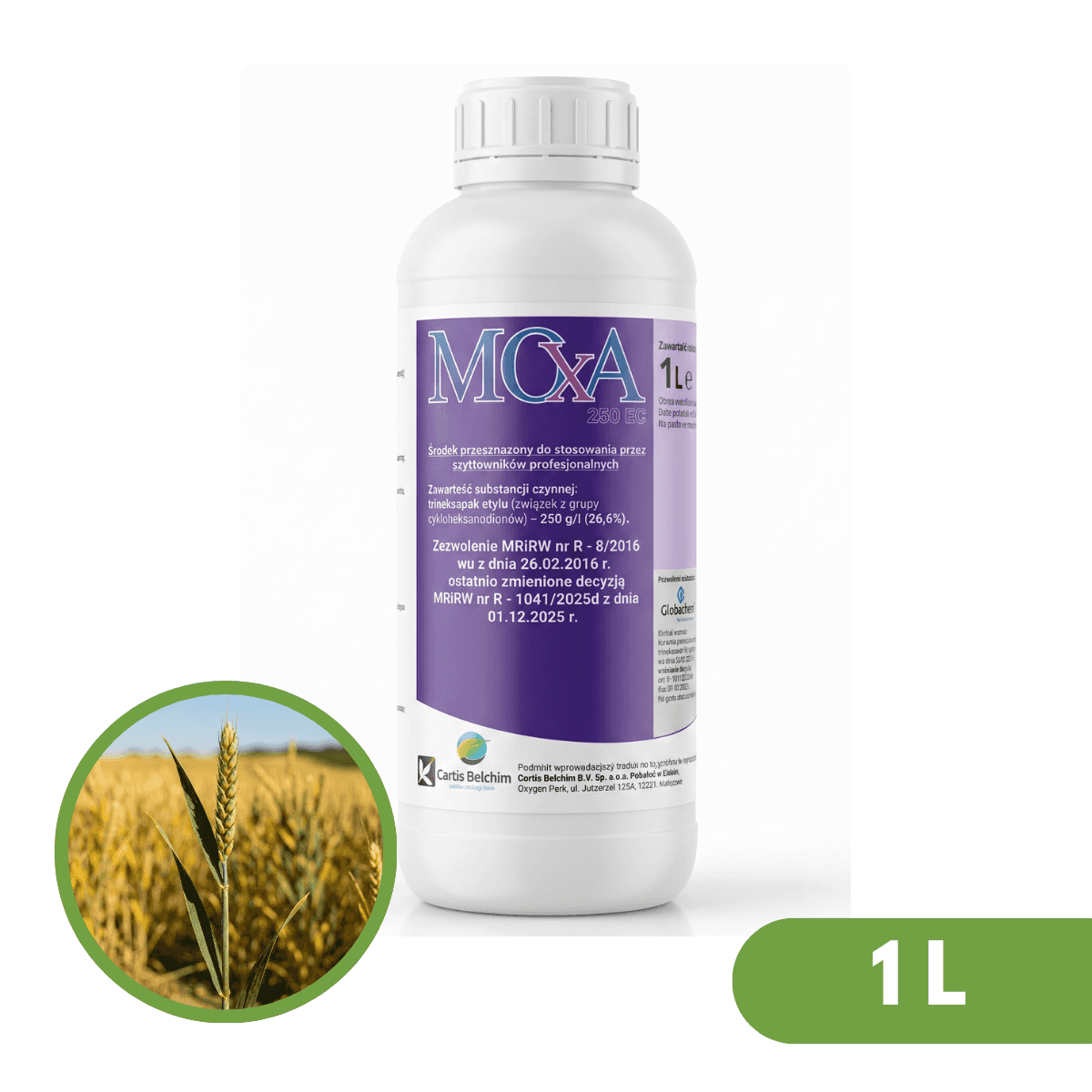
Active substance content - trinexapac-ethyl (a compound from the cyclohexanedione group) – 250 g/l (25.5%).
In which crops can Windsar 250 EC growth regulator be used?
- Winter wheat,
- Winter barley,
- Winter rye,
- Winter triticale,
- Spring barley,
- Spring oats.
What precautions should be taken when using Windsar 250 EC?
- Conditions favourable for product activity:
– temperature around 10-15°C,
– strong sunlight,
– clear or slightly cloudy sky,
– dry, actively growing crop. - Weaker effect can be expected under conditions of:
– heavy cloud cover,
– rainy weather,
– moist crop,
– temperature below 5°C,
– poor plant growth. - Do not apply:
– to plants exposed to adverse environmental factors such as excessive growing medium moisture, frost, drought, diseases or pests;
– to weakly growing plants, e.g. during prolonged drought, heat or insufficient fertilisation,
– during wind conditions that may cause spray drift onto neighbouring crops. - During application, avoid:
– spray drift onto neighbouring crop plantations,
– overlapping spray liquid on treatment strip edges and headlands.
How to prepare the spray liquid using Windsar?
Detailed instructions can be found on the label, available in the "download" section.
What is the pre-harvest interval when using Windsar 250 EC?
Pre-harvest interval:
- Period from the last application of the product to the day of crop harvest (pre-harvest interval).
- Not applicable.
For more information about growth regulators, please visit the Vegetable Advisory, Field Crop Advisory and Agricultural Advisor websites.
Warning! Plant protection products must be used safely. Before each use, read the information on the label and product information.
The purchaser declares that they meet the conditions specified in Article 25, paragraph 3, point 5 of the Act of 8 March 2013 on plant protection products and have training in the use of plant protection products in the case of products for professional users. Before each use, read the information on the label and product information. Pay attention to detailed risk indications. Follow the safety rules contained on the label. Plant protection products may only be purchased by adults and persons who have completed training and have the qualifications required for persons purchasing plant protection products (Article 28 of the Act on plant protection products of 8 March 2013, as amended). Plant protection products must be used in a way that does not pose a threat to human health, animals or the environment. The purchaser of plant protection products must be sober. By using this offer, you declare that you meet the above conditions.
Application and dosage
|
Crop |
How to apply? Dosage |
Application timing |
|---|---|---|
|
winter wheat |
Maximum/recommended dose for single application: 0.4 l/ha. The product can be used in mixture with Antywylegacz Płynny 675 SL at doses: The product can also be used in split doses: |
Single dose Apply from tillering stage to flag leaf stage (BBCH 25–39). Split dose - at the beginning of stem elongation (BBCH 29–31) - dose 0.3 l/ha and |
|
winter barley |
Maximum/recommended dose for single application: 0.6 l/ha. Maximum number of treatments per growing season: 1 |
Apply from 1st node stage to 4th node stage (BBCH 31–34) |
|
winter rye |
Maximum/recommended dose for single application: 0.3 l/ha. Maximum number of treatments per growing season: 1 |
Apply from 1st node stage to flag leaf stage (BBCH 31–39). |
|
winter triticale |
Maximum/recommended dose for single application: 0.6 l/ha. Maximum number of treatments per growing season: 1 |
Apply from 1st node stage to 2nd node stage (BBCH 31–32) |
|
spring wheat |
Maximum/recommended dose for single application: 0.4 l/ha. Maximum number of treatments per growing season: 1 |
Apply from end of tillering to flag leaf stage (BBCH 29–39). |
|
spring barley |
Maximum/recommended dose for single application: 0.4 l/ha. Maximum number of treatments per growing season: 1 |
Apply from 1st node stage to 2nd node stage (BBCH 31–32). |
|
spring oats |
Maximum/recommended dose for single application: 1.5 l/ha. Maximum number of treatments per growing season: 1 Recommended water volume: 200-400 l/ha. |
Apply from end of main shoot growth/elongation (9 or more visible internodes) to end of flower bud development on main inflorescence (visible single flower buds, still closed) (BBCH 39-55). |
|
winter durum wheat, winter spelt wheat, winter emmer wheat, winter einkorn wheat |
Maximum/recommended dose for single application: 0.4 l/ha. Maximum number of treatments per growing season: 1 (single application) or 2 (split dose system). |
Single dose Apply from tillering to flag leaf stage (BBCH 25–39). Split dose – at the beginning of stem elongation (BBCH 29–31) |
|
spring durum wheat, spring spelt wheat, spring emmer wheat, spring einkorn wheat |
Maximum/recommended dose for single application: 0.4 l/ha. |
Apply from end of tillering to flag leaf stage (BBCH 29–39). |
|
spring rye |
Maximum/recommended dose for single application: 0.3 l/ha. |
Application timing: Apply from first node stage to end of stem elongation |
|
spring oilseed rape, winter turnip rape |
Maximum/recommended dose for single application: 1.5 l/ha. |
Apply from end of main shoot growth/elongation (9 or more visible internodes) to end of flower bud development on main inflorescence (visible single flower buds, still closed) (BBCH 39-55). |
|
red clover seed plantations |
Maximum/recommended dose for single application: 1.5 l/ha. |
Apply during main shoot development, from third to ninth visible internode (BBCH 33–39). |
|
grass seed plantations |
Maximum/recommended dose for single application: 0.8 l/ha. Adjust water volume to plant size and density. |
Apply from first node stage to visible flag leaf stage (flag leaf not yet unfolded) (BBCH 31–37). |