 SKU 33534-c
Saroksypyr 250 EC (aloxypyr) Ciech - herbicide
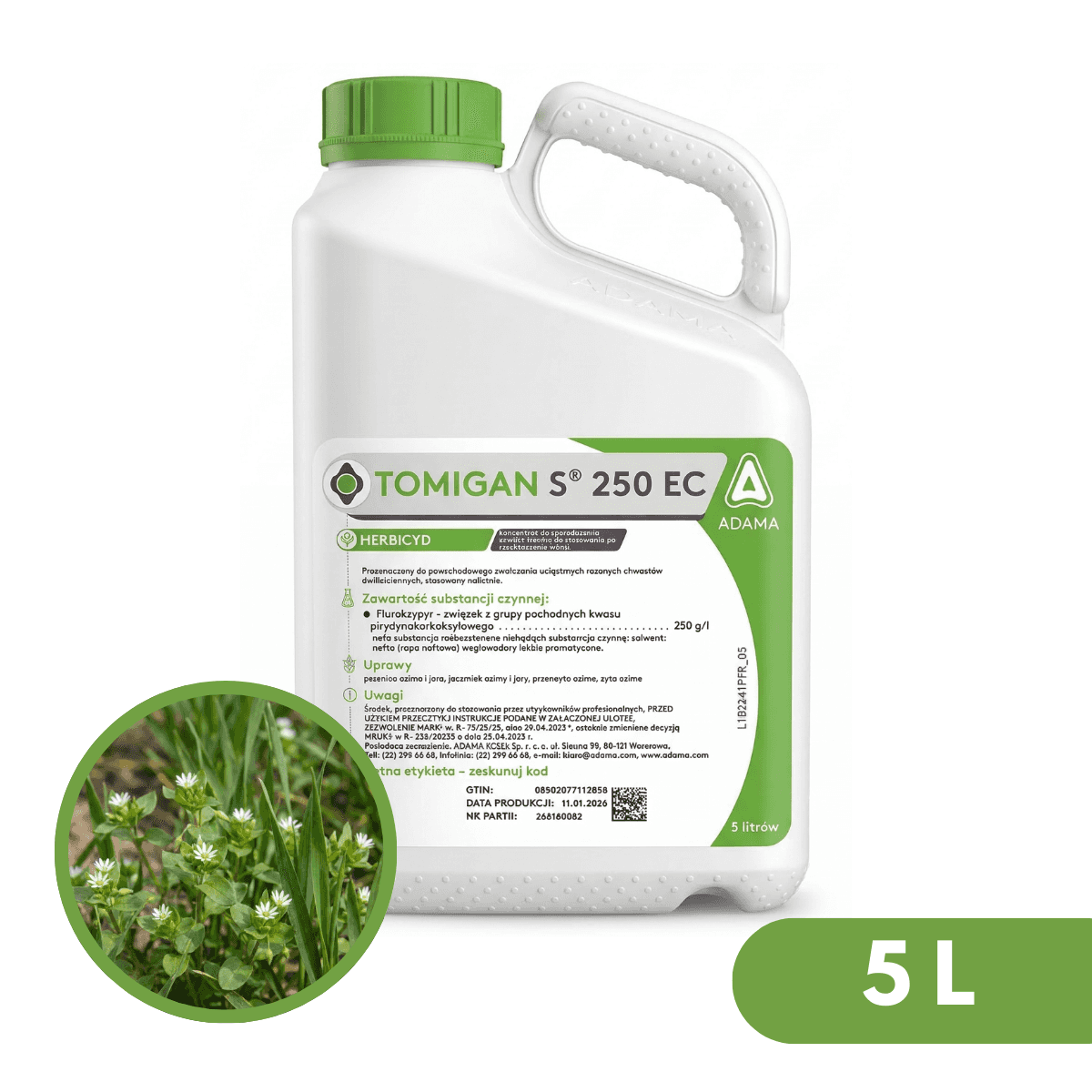
Saroksypyr 250 EC is a herbicide in the form of a concentrate for preparing a water emulsion, used for foliar application in the control of difficult dicotyledonous weeds in winter wheat.
Description
Saroksypyr 250 EC (fluroxypyr) Ciech - herbicide
Benefits of using Saroksypyr 250 EC herbicide, Ciech:
- Provides long-lasting protection of crops against difficult-to-control dicotyledonous weeds,
- Protects against a wide range of dicotyledonous weeds,
- Dedicated action - for use in winter wheat cultivation,
- Plays an important role in managing resistance of difficult-to-control weeds,
- Safe for winter wheat.
Saroksypyr 250 EC is a herbicide in the form of a concentrate for preparing a water emulsion (EC). It is applied foliarly for post-emergence control of troublesome dicotyledonous weeds in winter wheat.
The Sarokrypyr product by Ciech is intended for use by professional users with field sprayers.
Sarokrypyr 250 EC Ciech herbicide - active substance content:
- fluroxypyr (a compound from the pyridinyloxyacetic acid derivatives group) - 250 g per 1 litre of product (25%).
Sarokrypyr 250 EC Ciech - mode of action:
Sarokrypyr 250 EC is absorbed through the leaves of weeds and then translocated to the roots causing their death. The first symptoms of the product's effect on weeds are visible after 2-3 days. Weed death occurs after 5-7 days. It controls cleavers at any stage of its development.
Which weeds does Sarokrypyr herbicide control?
Sensitive weeds:
- common chickweed,
- cleavers,
- field bindweed,
- bird's-foot trefoil.
Moderately sensitive weeds:
- field speedwell,
- volunteer oilseed rape,
- shepherd's purse.
Resistant weeds:
- field violet.
Sarokrypyr 250 EC Ciech herbicide can be used in crops:
- Winter wheat.
Sarokrypyr 250 EC herbicide - crop rotation:
Sarokrypyr decomposes in the soil without posing a threat to succeeding crops. After harvesting crops treated with Saroksypyr 250 EC, all cultivated plants can be sown or planted.
Sarokrypyr 250 EC Ciech herbicide - pre-harvest interval and re-entry period:
Re-entry period - the time from application until people can enter the treated area and animals can be introduced:
- Do not enter until the spray liquid has completely dried on the plant surfaces.
Pre-harvest interval - the time from the last application until crop harvest:
- Not applicable.
Pre-harvest interval for fodder - the time from the last application on plants intended for fodder until animals can be fed with these plants:
- Not applicable.
Time from last application to sowing or planting succeeding crops:
- Not applicable.
Warning! Plant protection products must be used safely. Before each use, read the information on the label and product information.
The buyer declares that they meet the conditions specified in Article 25 paragraph 3 point 5 of the Act of 8 March 2013 on plant protection products and have training in the use of plant protection products in the case of products for professional users. Before each use, read the information on the label and product information. Pay attention to detailed risk indications. Follow the safety rules contained on the label. Plant protection products may only be purchased by adults and persons who have completed training and have the qualifications required for persons purchasing plant protection products (Article 28 of the Act on plant protection products of 8 March 2013 as amended). Plant protection products must be used in a way that does not pose a threat to human health, animals or the environment. The buyer of plant protection products must be sober. By using this offer, you declare that you meet the above conditions.
Application and dosage
|
Crop |
Weed control |
How to apply? Dosage |
When to apply? |
|---|---|---|---|
|
winter wheat |
common chickweed, cleavers, field bindweed, bird's-foot trefoil, field speedwell, volunteer oilseed rape, shepherd's purse |
Maximum dose for single application: 0.8 l/ha Maximum number of treatments per growing season: 1. |
Application timing: |