 SKU 33650-c
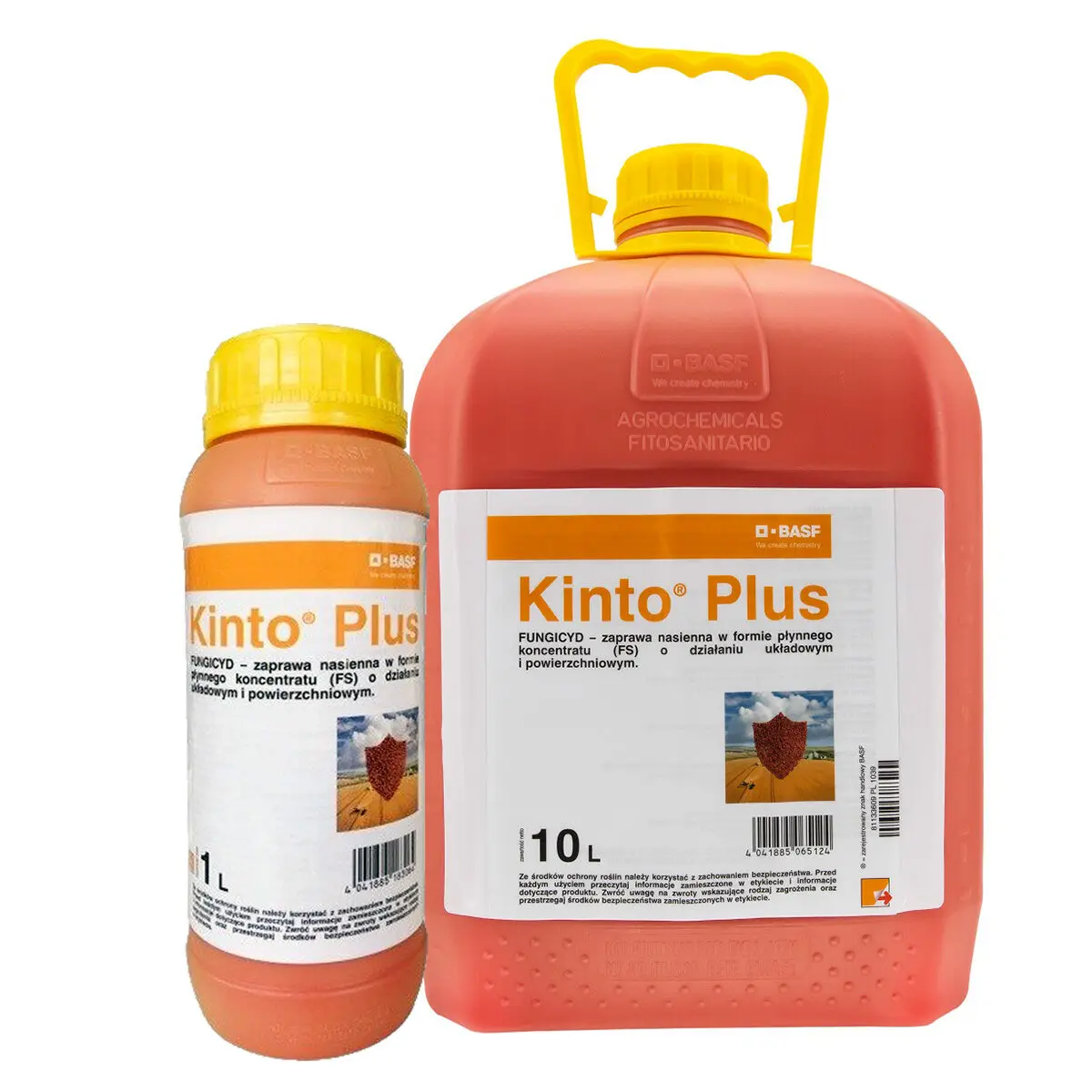
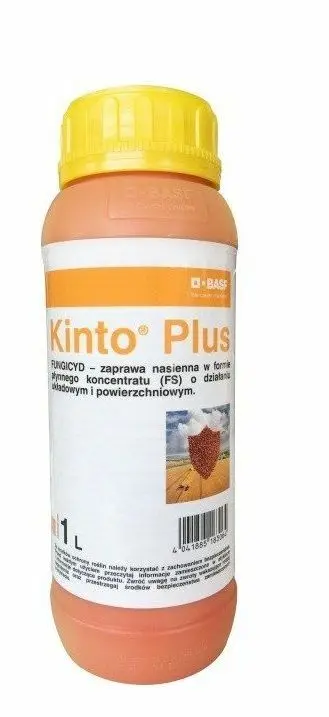
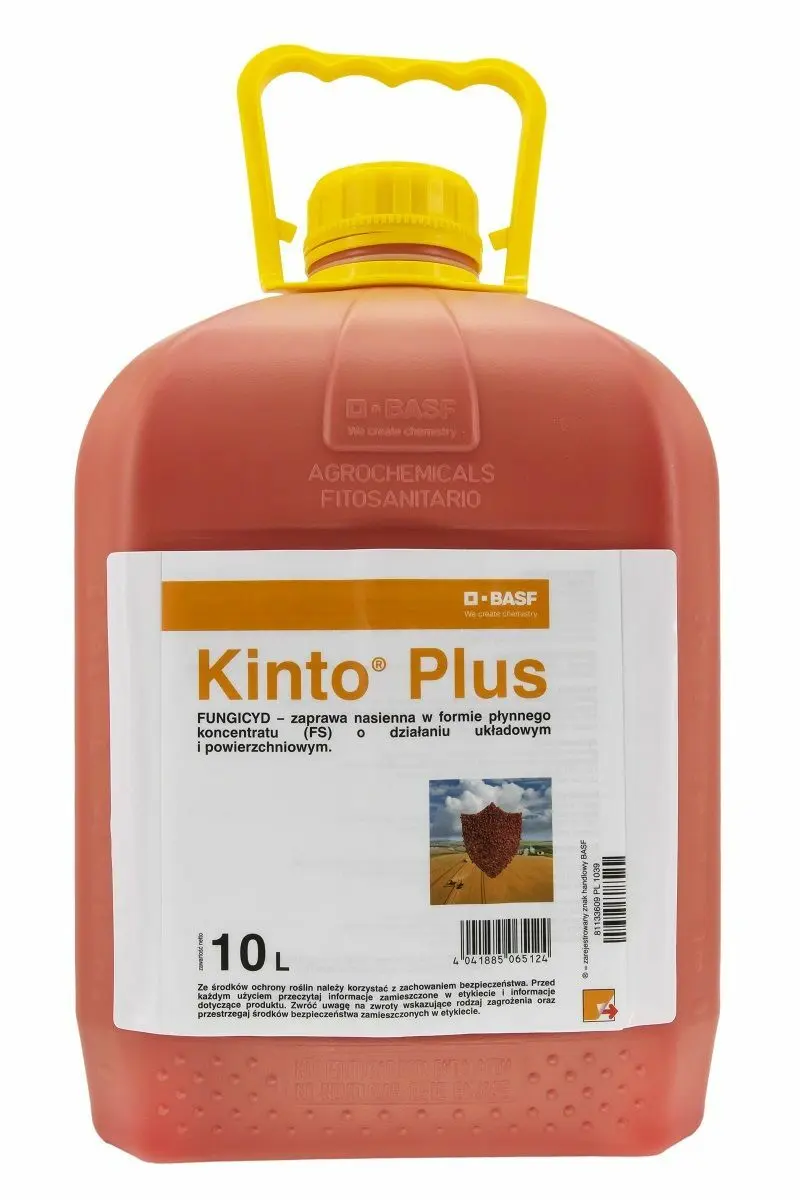
Kinto Plus (fludioxonil, fluxapyroxad, triticonazole) - seed treatment product for winter and spring cereals
Kinto Plus is a liquid concentrate (FS) for treating seeds of winter and spring cereals. This plant protection product acts systemically and on the surface, protecting the seed against pathogens and adverse weather conditions.
Description
Kinto Plus - seed treatment product for sowing material (winter and spring cereals)
What are the benefits of using the plant protection product Kinto Plus for treating cereal seeds?
- Acts systemically and on the surface,
- For treating various cereal species (both winter and spring),
- Contains three active substances that complement each other,
- Guarantees healthy plants,
- Ensures higher yields,
- Increased plant vigour, thus confidence in their excellent condition,
- Protects against pathogens and the adverse effects of difficult weather conditions,
- Plants develop better root systems and germinate better,
- Convenient and more effective seed treatment thanks to modern formulation,
- Reduced dusting.
Kinto Plus is a plant protection product manufactured by BASF from the group of seed treatment products. It is available as a liquid concentrate (FS).
It exhibits systemic and surface action.
It is based on a new formulation that makes the treatment process more convenient, faster, and easier, and the treatment itself better coats the seeds, intensely colours the grains, and is much more effective.
Additionally, the treatment produces significantly less dust – confirmed by tests conducted by BASF.
The product is intended for treatment in seed treaters adapted for liquid and suspension seed treatments.
What is the content of active substances in the Kinto Plus seed treatment?
- Fludioxonil (a compound from the phenylpyrrole group) - 33.3 g/l (3.0%),
- Fluxapyroxad (a compound from the carboxamide group) - 33.3 g/l (3.0%),
- Triticonazole (a compound from the triazole group) - 33.3 g/l (3.0%).
How does the BASF Kinto Plus seed treatment work?
As you know, Kinto Plus contains three active substances: fludioxonil, fluxapyroxad, and triticonazole.
Each of these substances has a different mode of action, which makes them complement each other. Therefore, regardless of which disease attacks your plants – this trio stands no chance!
Fluxapyroxad is a carboxamide compound from the group of succinate dehydrogenase inhibitors (SDHI) – cellular respiration inhibitors (according to FRAC Group 7). Fludioxonil is a phenylpyrrole compound (PP) from the group of signal transduction inhibitors (according to FRAC Group 12), and triticonazole is a triazole compound from the group of sterol biosynthesis inhibitors - SBI (according to FRAC Group 3).
Does the BASF Kinto Plus seed treatment provide greater protection against diseases?
Absolutely! This is confirmed by studies conducted by BASF.
It is confirmed that treating seeds with Kinto Plus protects against seed-borne and soil-borne diseases. Such protection naturally translates into profits. Success requires not only fertile fields and the best seeds – but the best protection for them.
In which crops can the Kinto Plus plant protection product for seed treatment be used?
- Winter wheat,
- Winter barley,
- Winter triticale,
- Winter rye,
- Spring wheat,
- Spring barley,
- Spring rye (in small-scale cultivation).
How to use the Kinto Plus seed treatment product?
Detailed information regarding dosage and use of the Kinto Plus plant protection product can be found in the "Dosage" section and in the plant protection product label attached in the downloadable files.
What is the pre-harvest interval and withdrawal period when using Kinto Plus seed treatment?
The withdrawal period, i.e., the period from the last application of the product to the day of crop harvest, does not apply to Kinto Plus. The same applies to the withdrawal period for feed (the period from the last application of the product on plants intended for feed to the day when animals can be fed with these plants) and the pre-harvest interval, i.e., from the application of the product to the day when people and animals may enter the treated area.
What are the recommendations when using spray liquid made with Kinto Plus?
- Treat only well-cleaned sowing material with high germination energy.
- Perform treatment preferably immediately before sowing.
- The treated material should be thoroughly and evenly coated with the product.
- Do not treat seed with moisture content above 16%.
- Leave treated seed in open bags after treatment until dry.
- Store treated seed in thick paper or foil bags, labelled and tightly sealed, in separate, cool, dry, and well-ventilated rooms, away from food and feed.
- If seed storage until the next season is necessary, test germination capacity before sowing.
- The maximum sowing rate using treated seed is 250 kg/ha.
More information can be found in the attached label in the downloadable files.
We invite you to learn more about using the Kinto Plus plant protection product on the Agricultural Advisor website:
- Expand your knowledge about seed treatments,
- Learn more about seeds,
- Read agricultural announcements.
Warning! Plant protection products must be used safely. Before each use, read the information on the label and product information.
The buyer declares that they meet the conditions specified in Article 25, paragraph 3, point 5 of the Act of 8 March 2013 on plant protection products and has training in the use of plant protection products in the case of products for professional users. Before each use, read the information on the label and product information. Pay attention to detailed risk indications. Follow the safety rules contained in the label. Plant protection products may only be purchased by adults and persons who have completed training and have the qualifications required for persons purchasing plant protection products (Article 28 of the Act on plant protection products of 8 March 2013, as amended). Plant protection products must be used in a way that does not pose a threat to human health, animals, or the environment. The purchaser of plant protection products must be sober. By using this offer, you declare that you meet the above conditions.
Application and dosage
|
Crop |
Pest Control |
How to use? Dosage |
|---|---|---|
|
winter wheat |
wheat and grass snow mould, fusarium seedling blight, wheat bunt |
Maximum / recommended dose for single application: |
|
winter barley |
barley loose smut, barley leaf stripe |
Maximum / recommended dose for single application: |
|
winter triticale |
wheat and grass snow mould |
Maximum / recommended dose for single application: |
|
winter rye |
wheat and grass snow mould, fusarium seedling blight, rye stem smut |
Maximum / recommended dose for single application: |
|
spring barley |
barley loose smut, barley leaf stripe |
Maximum / recommended dose for single application: 150 ml/100 kg seed with addition of 0-1050 ml water. |
|
spring wheat |
fusarium seedling blight, wheat bunt |
Maximum / recommended dose for single application: |
|
spring rye (small-scale cultivation) |
fusarium seedling blight, rye stem smut |
Maximum / recommended dose for single application: |