 SKU CH-13099
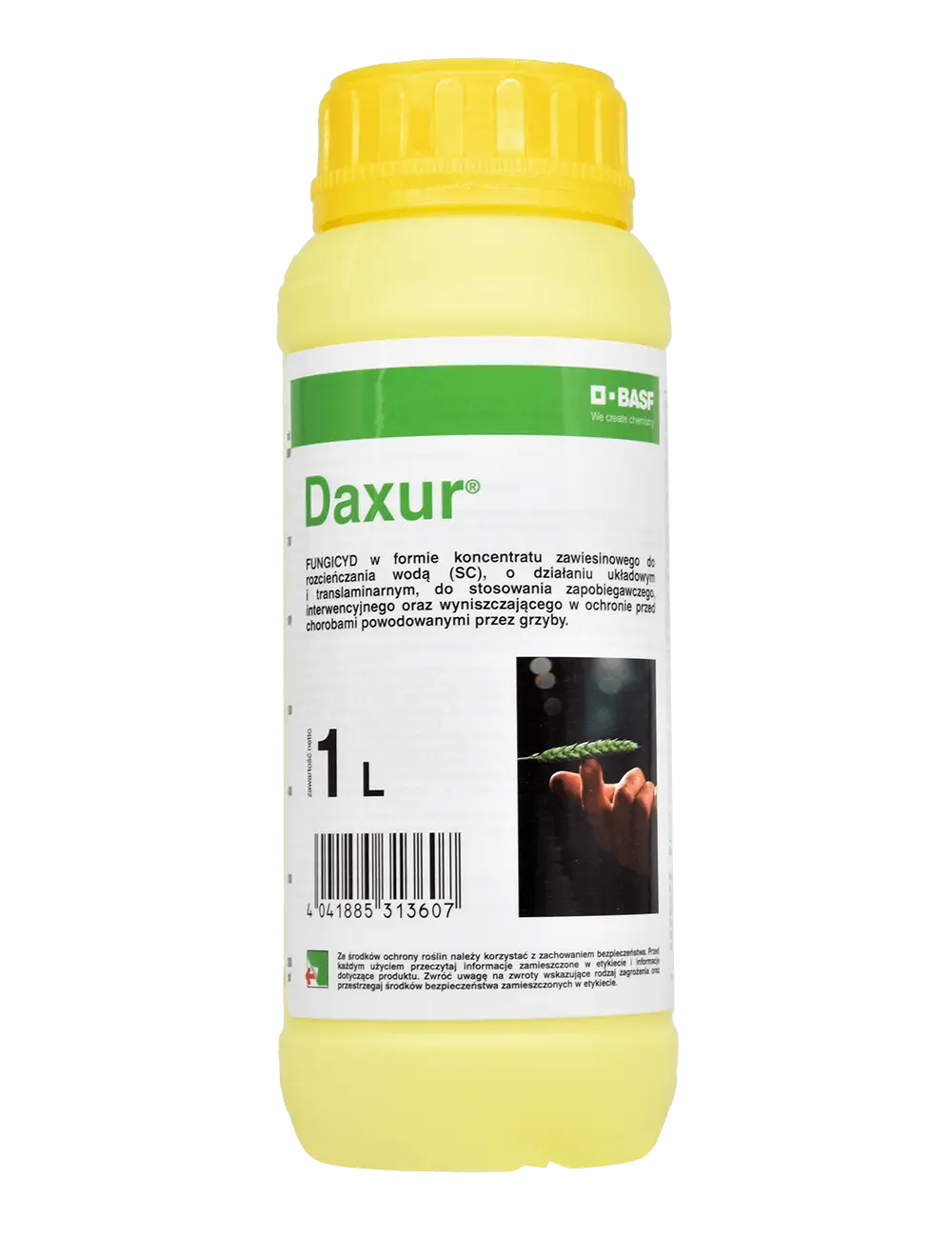
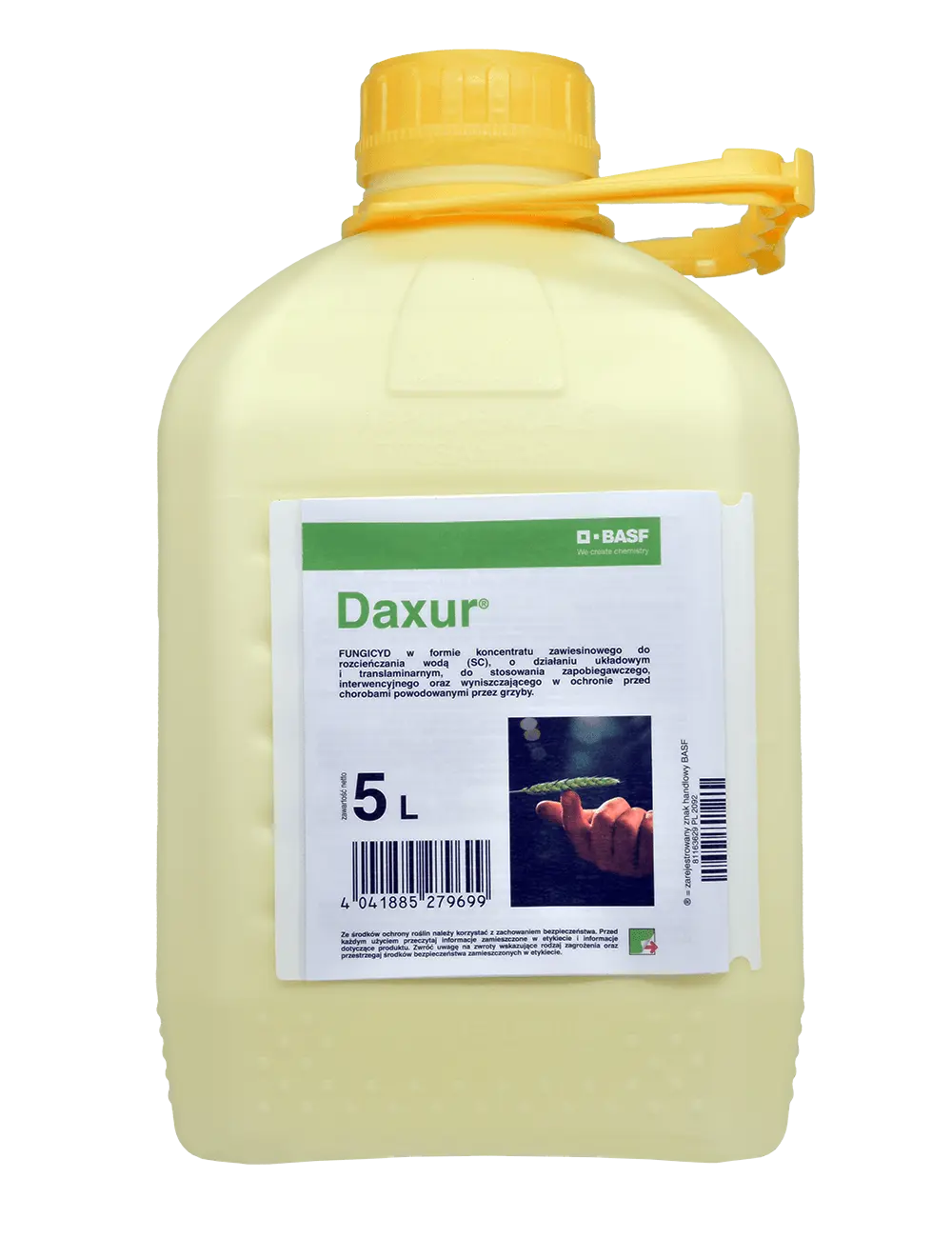
Daxur
Daxar is a fungicide that acts systemically and translaminarly, protecting cereals against fungal diseases both preventively and interventively. Its advantages include a broad spectrum of activity, long-lasting effect, and a positive physiological impact.
Description
ACTION OF DAXUR :
Daxar is a fungicide in the form of a suspension concentrate for dilution with water (SC). The product exhibits systemic and translaminar action and is used both preventively and interventively as well as curatively in the protection against diseases caused by fungi.
Advantages of using Daxur :
- broad spectrum of use: the product is registered for many cereal varieties against a large number of pathogens,
- controls diseases appearing both early in the season and later,
- special formulation helps maintain long-lasting action,
- exhibits a positive physiological effect,
- the use of the product balances effectiveness and economical application.
DAXUR ACTIVE SUBSTANCE CONTENT:
mefentrifluconazole (compound from the triazole group) – 100 g/l (9.23%)
kresoxim-methyl (compound from the strobilurin group) – 150 g/l (13.85%)
DAXUR SCOPE OF USE, TIMING AND DOSES:
The product shows high effectiveness in disease control after a single application. In the same growing season, the product should be applied again only in case of increased infection pressure of disease agents, under conditions favourable for infection and further disease development.
The product is to be applied using a self-propelled or tractor-mounted field sprayer.
How to use Daxur:
Winter wheat
brittleness of cereal and grass stems, powdery mildew of cereals and grasses, brown rust of wheat, septoria leaf blotch of wheat.
Maximum / recommended dose for single application: 1.0 l/ha
Application timing: Use the product preventively or at the first symptoms of diseases, from the beginning of stem elongation to the end of flowering phase when all florets have finished flowering and dried anthers are visible (BBCH 30-69). For control of stem brittleness, apply from the beginning of stem elongation to the second node stage (BBCH 30-32).
Maximum number of treatments per growing season: 2
Interval between treatments:
- at least 14 days or
- at least 21 days - only if the first treatment was applied after BBCH 49 - end of ear development in the leaf sheath, when first awns are visible.
Recommended water volume: 100-300 l/ha
Recommended spraying: fine droplet.
Winter triticale
leaf septoria, brown rust.
Maximum / recommended dose for single application: 1.0 l/ha
Application timing: Use the product preventively or at the first symptoms of diseases, from the beginning of stem elongation to the end of flowering phase when all florets have finished flowering and dried anthers are visible (BBCH 30-69).
Maximum number of treatments per growing season: 2
Interval between treatments:
- at least 14 days or
- at least 21 days - only if the first treatment was applied after BBCH 49 -
end of ear development in the leaf sheath, when first awns are visible.
Recommended water volume: 100-300 l/ha
Recommended spraying: fine droplet.
Winter rye
brown rust of rye.
Maximum / recommended dose for single application: 1.0 l/ha
Application timing: Use the product preventively or at the first symptoms of the disease, until the end of flowering phase when all florets have finished flowering and dried anthers are visible (BBCH 30-69).
Maximum number of treatments per growing season: 2
Interval between treatments:
- at least 14 days or
- at least 21 days - only if the first treatment was applied after BBCH 49 - end of ear development in the leaf sheath, when first awns are visible.
Recommended water volume: 100-300 l/ha
Recommended spraying: fine droplet.
Winter barley
net blotch of barley, barley rust.
Maximum / recommended dose for single application: 1.0 l/ha
Application timing: Use the product preventively or at the first symptoms of diseases, from the beginning of stem elongation to the end of ear development in the leaf sheath when first awns are visible (BBCH 30-49).
Maximum number of treatments per growing season: 2
Interval between treatments: at least 14 days.
Recommended water volume: 100-300 l/ha
Recommended spraying: fine droplet.
Spring wheat
powdery mildew of cereals and grasses, septoria leaf blotch of wheat (moderate control level).
Maximum / recommended dose for single application: 1.0 l/ha
Application timing: Use the product preventively or at the first symptoms of diseases, from the beginning of stem elongation to the end of flowering phase when all florets have finished flowering and dried anthers are visible (BBCH 30-69).
Maximum number of treatments per growing season: 2
Interval between treatments:
- at least 14 days or
- at least 21 days - only if the first treatment was applied after BBCH 49 - end of ear development in the leaf sheath, when first awns are visible.
Recommended water volume: 100-300 l/ha
Recommended spraying: fine droplet.
Spring barley
net blotch of barley, barley rust.
Maximum / recommended dose for single application: 1.0 l/ha
Application timing: Use the product preventively or at the first symptoms of diseases, from the beginning of stem elongation to the end of ear development in the leaf sheath when first awns are visible (BBCH 30-49).
Maximum number of treatments per growing season: 2
Interval between treatments: at least 14 days.
Recommended water volume: 100-300 l/ha
Recommended spraying: fine droplet.
Daxur pre-harvest interval:
Winter wheat, spring barley, winter barley, winter triticale, winter rye – 35 days.