 SKU CH-13026
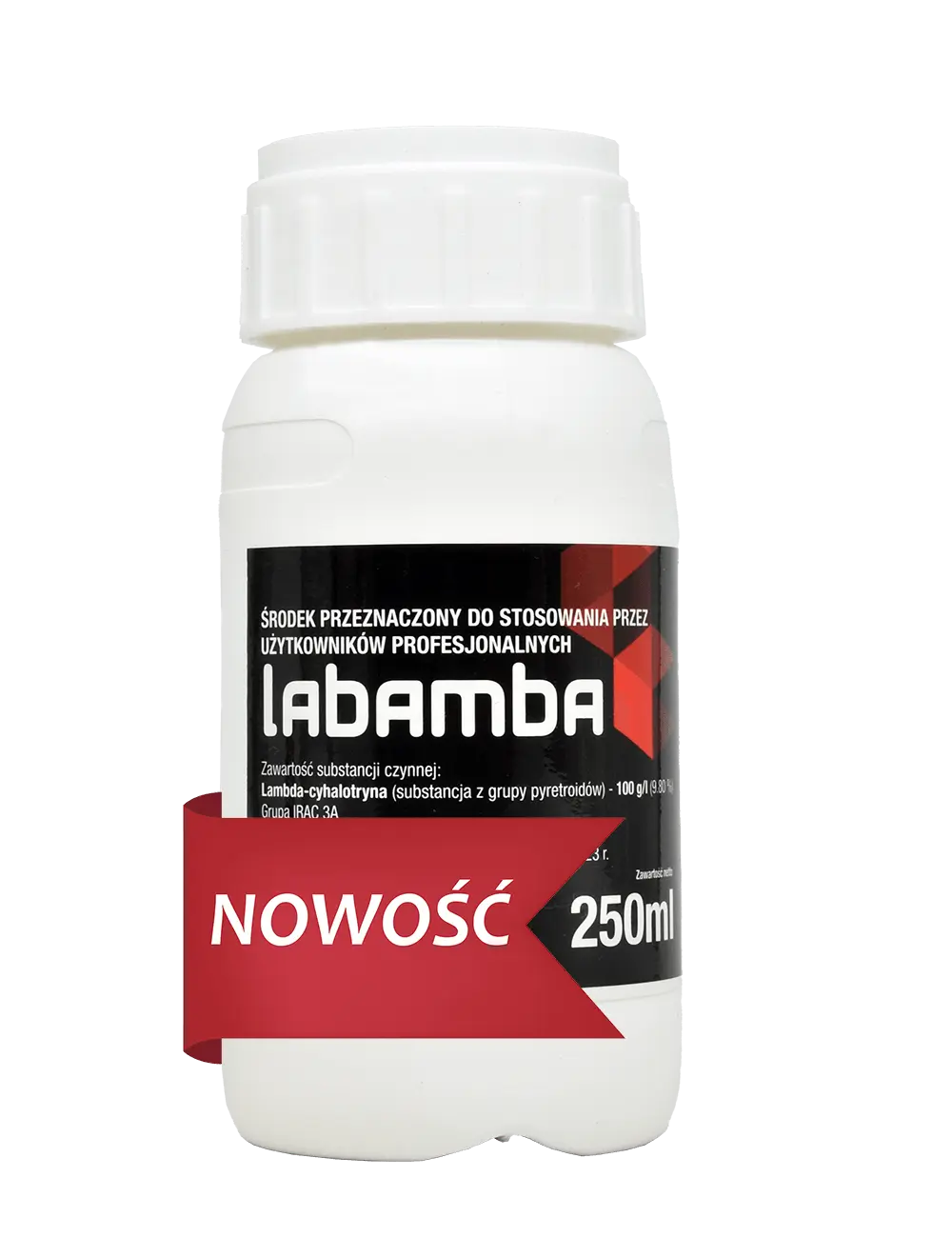
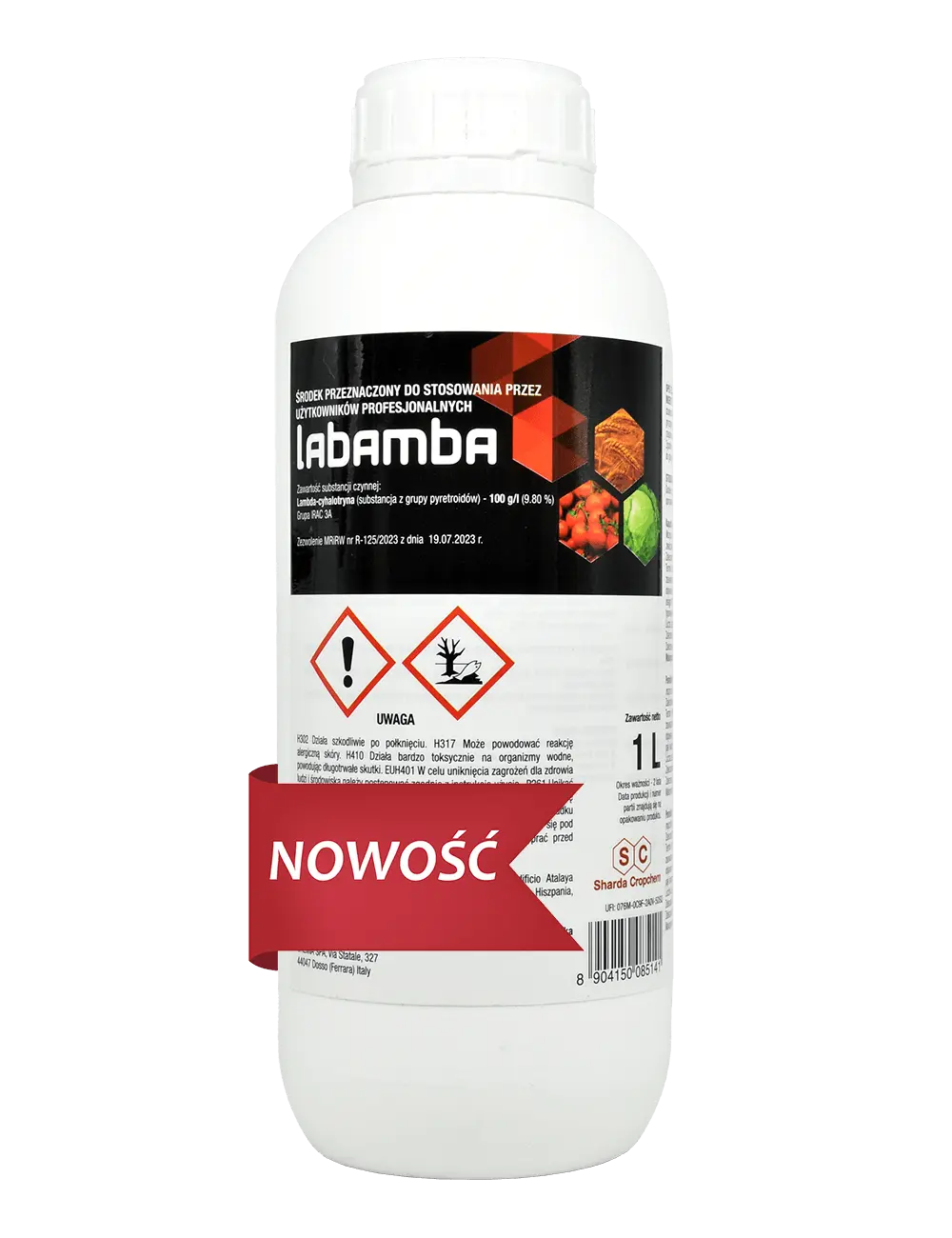
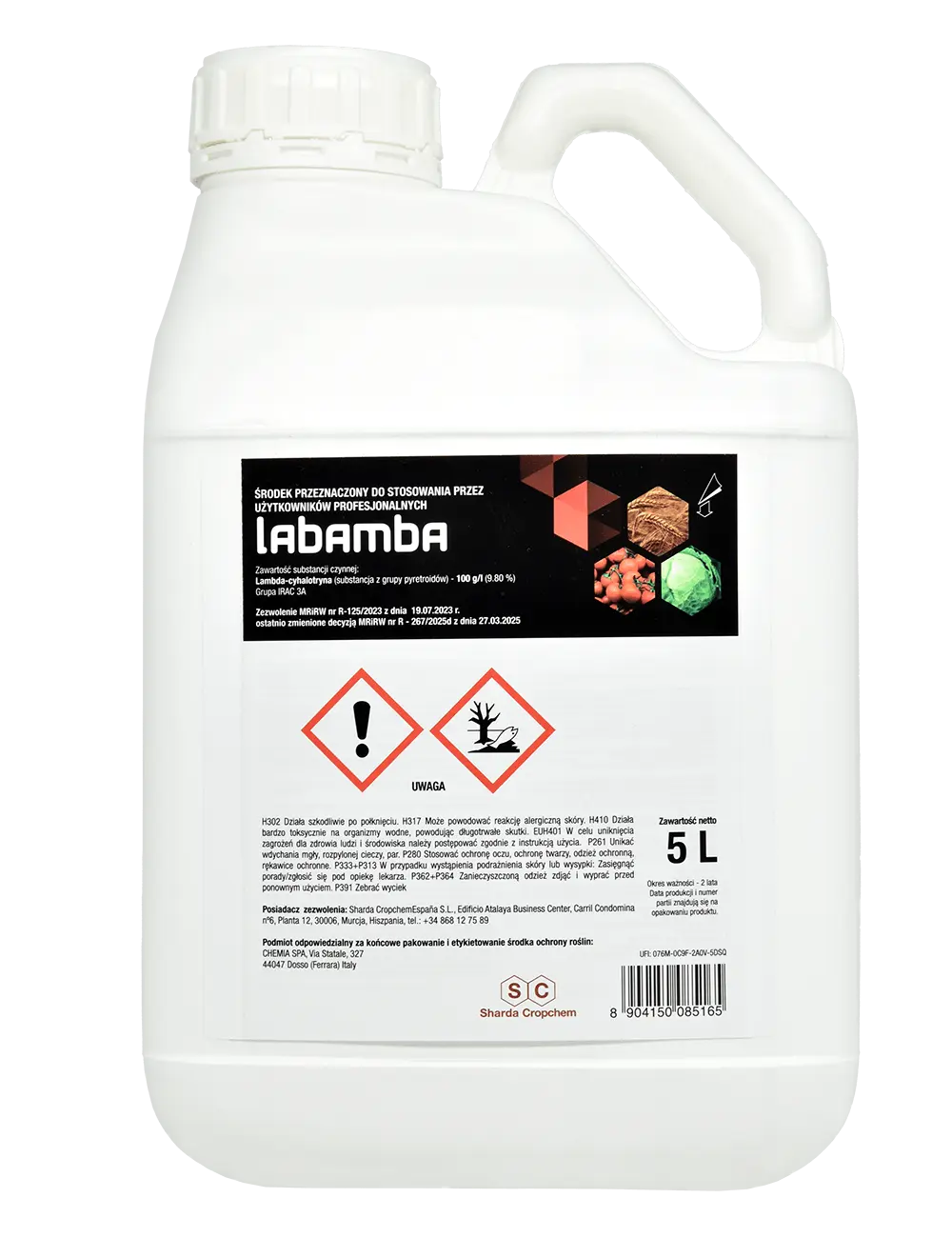
Labamba
Labamba is an insecticide designed for the control of chewing and sucking pests such as whiteflies, aphids, and pollen beetle in the cultivation of cabbage, tomato, as well as wheat and winter oilseed rape. The advantage of the product is its convenient capsule suspension formulation for dilution.
Description
MODE OF ACTION OF LABAMBA :
Labamba is a modern insecticidal plant protection product in the form of capsule suspension (CS), intended for dilution with water. It effectively controls chewing and sucking pests, acting both contact and stomach poison. It acts on the plant surface - after application it forms a protective layer on the plant surface, providing long-lasting protection.
LABAMBA ACTIVE SUBSTANCE CONTENT:
lambda-cyhalothrin (a compound from the pyrethroid group) - 100 g/l (9.80%)
LABAMBA SCOPE OF USE, APPLICATION TIMING AND DOSES:
The product is intended for use with self-propelled or tractor-mounted field sprayers.
How to use Labamba :
Head cabbage
Cabbage aphid, beet aphid and other aphid species (medium level of control)
Recommended/maximum dose for single application: 0.075 l/ha
Application timing: Perform the treatment after pest occurrence or after noticing the first feeding symptoms, from the stage when heads begin to form until the stage when the head reaches 30%
of typical size (BBCH 41-43).
Number of treatments: 1
Recommended water volume: 200-600 l/ha
Recommended spraying: medium droplet size.
Maximum number of treatments per growing season: 1
Tomato (field cultivation)
Beet aphid and other aphid species (medium level of control).
Recommended/maximum dose for single application: 0.075 l/ha
Application timing: Perform the treatment after pest occurrence or after noticing the first feeding symptoms, from the beginning of inflorescence development (visible first flower bud) to the stage when 50% of fruits attain typical colour (BBCH 51-85).
Number of treatments: 1
Recommended water volume: 300-1000 l/ha
Recommended spraying: medium droplet size.
Maximum number of treatments per growing season: 1
Tomato (greenhouse and protected cultivation)
Greenhouse whitefly and other whitefly species (medium level of control).
Recommended/maximum dose for single application: 0.075 l/ha
Application timing: Perform the treatment after pest occurrence or after noticing the first feeding symptoms, from the beginning of inflorescence development (visible first flower bud) to the stage when 50% of fruits attain typical colour (BBCH 51-85).
Number of treatments: 1
Recommended water volume: 300-1000 l/ha
Recommended spraying: medium droplet size.
Maximum number of treatments per growing season (crop cycle): 1
Winter wheat
Cereal aphid
Recommended/maximum dose for single application: 0.075 l/ha
Application timing: Perform the treatment after pest occurrence, from the beginning of flag leaf sheath swelling - early ear development stage to full milk grain maturity stage (BBCH 41–75).
Number of treatments: 1
Recommended water volume: 200-400 l/ha
Recommended spraying: medium droplet size.
Maximum number of treatments per growing season: 1
Winter oilseed rape
Pollen beetle
Recommended/maximum dose for single application: 0.075 l/ha
Application timing: Perform the treatment after pest occurrence, according to monitoring, from the beginning of flower bud development to the yellow bud stage (BBCH 50-59).
Number of treatments: 1
Recommended water volume: 200-600 l/ha
Recommended spraying: medium droplet size.
Maximum number of treatments per growing season: 1
Labamba pre-harvest interval :
Head cabbage – 3 days,
Tomatoes (field, greenhouse and protected cultivation) – 3 days,
Winter wheat – 28 days,
Winter oilseed rape – 35 days.