 SKU 1810-c
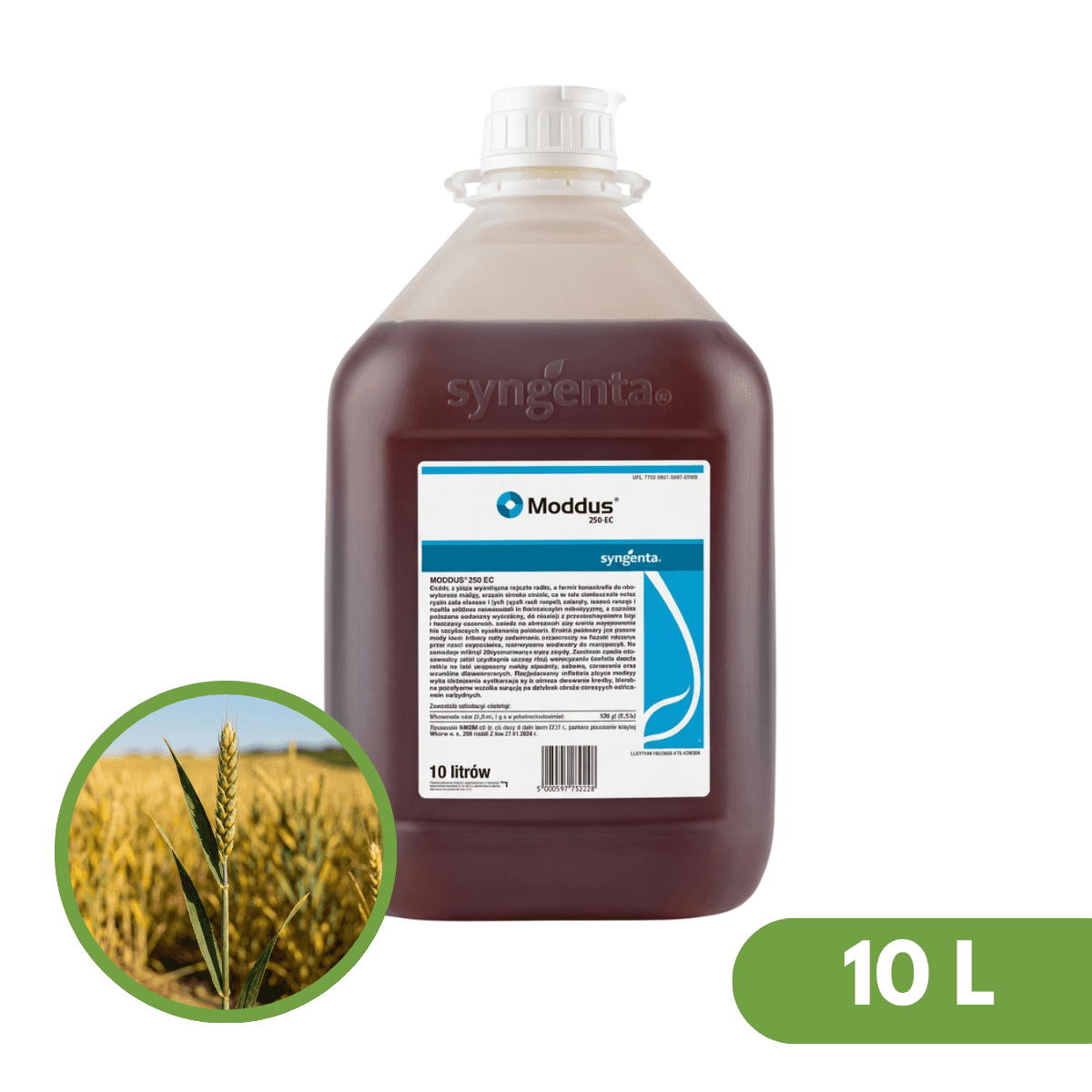
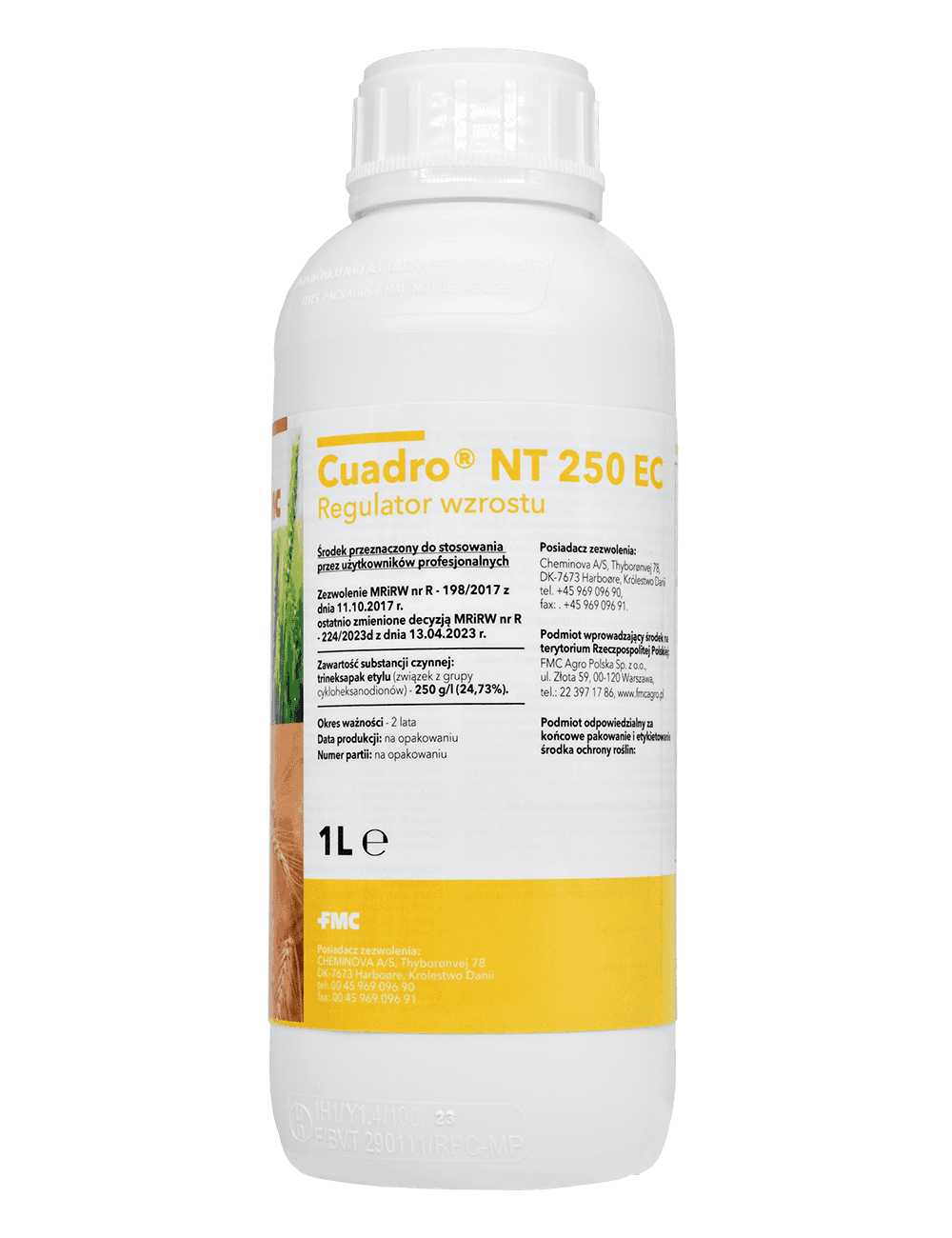
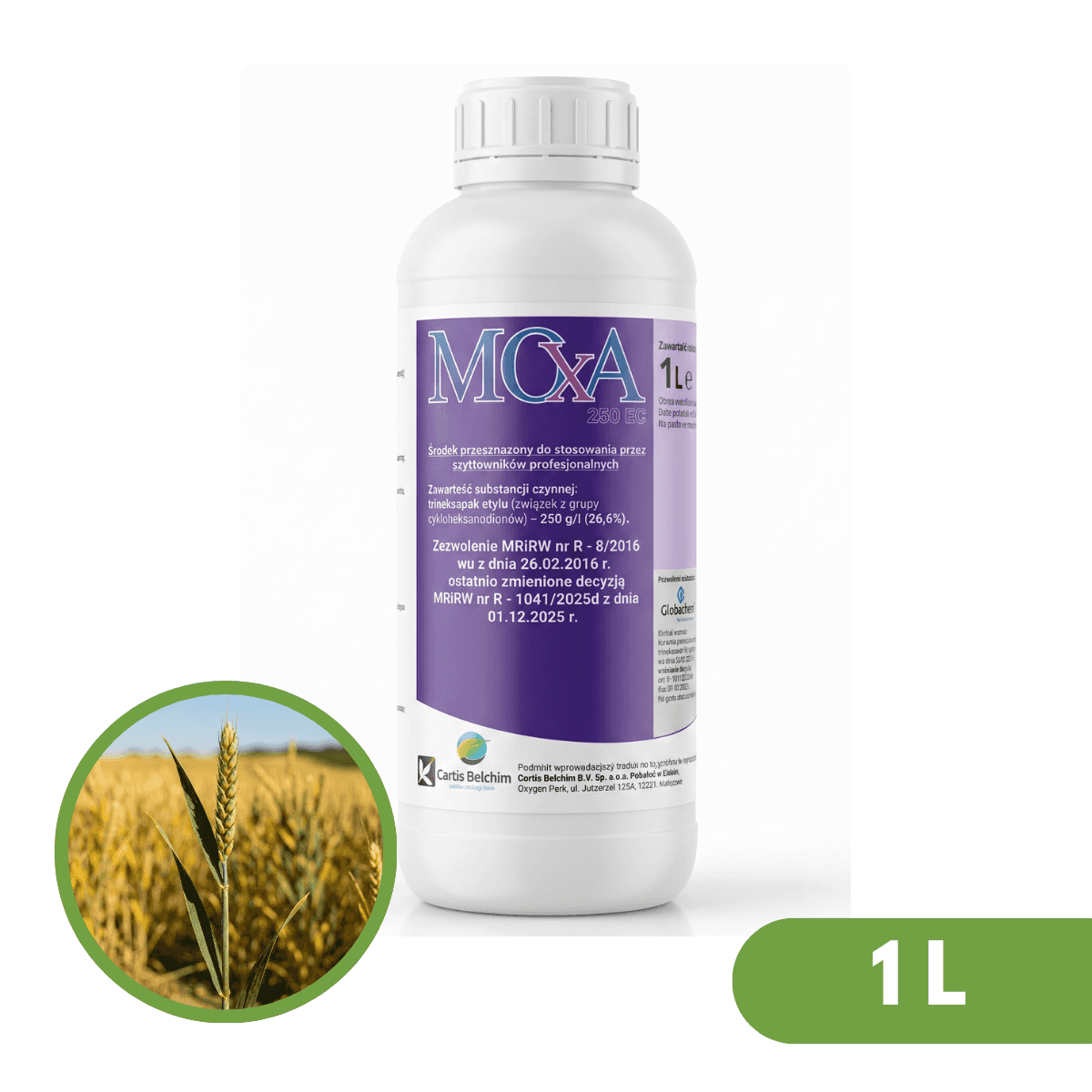
Moddus 250 EC (trinexapac)
Moddus 250 EC is a plant growth regulator in the form of a concentrate for preparing an aqueous emulsion, preventing lodging of winter and spring cereals, oilseed rape and false flax in intensive technologies, high nitrogen fertilisation and seed production of grasses and red…
Description
Moddus 250 EC is a plant protection product from the group of plant growth regulators, in the form of a concentrate for preparing an aqueous emulsion. The product is used to prevent lodging of winter and spring cereals as well as winter oilseed rape, spring oilseed rape and winter false flax grown in intensive technologies with a high level of nitrogen fertilisation, as well as in seed production of grasses and red clover.
The product is mainly absorbed through the leaves and stems of cereals and then transported to meristematic tissues, preventing excessive elongation of internodes. It does not cause reduction in root length or plant mass. Shortening and stiffening of cereal stems prevents lodging of the crop.
Content of active substance: ethyl trinexapac (a compound from the cyclohexanedione group) – 250 g/l (25.5%).
Moddus spray - for use in agriculture, in the field, using self-propelled or tractor-mounted field sprayers
Application in crops:
- winter wheat
- winter barley
- winter rye
- winter triticale
- spring wheat
- spring barley
- sown oats
- winter oilseed rape
Pre-harvest interval – not applicable
Warning! Plant protection products must be used safely. Before each use, read the information on the label and product information.
The purchaser declares that they meet the conditions specified in Article 25 paragraph 3 point 5 of the Act of 8 March 2013 on plant protection products and have training in the use of plant protection products in the case of products for professional users. Before each use, read the information on the label and product information. Attention should be paid to detailed risk indications. Safety rules contained on the label must be followed. Plant protection products may only be purchased by adults and persons who have completed training and have the qualifications required for persons purchasing plant protection products (Article 28 of the Act on plant protection products of 8 March
Application and dosage
|
Crop |
How to apply? Dosage |
When to apply? |
|---|---|---|
|
winter oilseed rape |
Maximum/recommended dose for single application: 1.5 l/ha. |
Apply from the end of the main shoot growth/elongation phase (9 or more visible internodes) to the end of flower bud development on the main inflorescence (single flower buds visible, still closed) (BBCH 39-55). Maximum number of treatments per growing season: 1. |
|
winter wheat |
Maximum dose for single application: 0.4 l/ha. |
Apply from tillering stage to flag leaf stage (BBCH 25–39). |
|
winter barley |
Maximum dose for single application: 0.6 l/ha. |
Apply from first node stage to fourth node stage (BBCH 31–34). |
|
winter rye |
Maximum dose for single application: 0.3 l/ha. |
Apply from first node stage to flag leaf stage (BBCH 31–39). |
|
winter triticale |
Maximum dose for single application: 0.6 l/ha. |
Application timing: Apply from first node stage to second node stage (BBCH 31–32). |
|
spring wheat |
Maximum dose for single application: 0.4 l/ha. |
Apply from the end of tillering stage to flag leaf stage (BBCH 29–39). |
|
spring barley |
Maximum dose for single application: 0.4 l/ha. |
Apply from first node stage to second node stage (BBCH 31–32). |
|
sown oats |
Maximum dose for single application: 0.4 l/ha. |
Apply from first node stage to fourth node stage (BBCH 31–34). Maximum number of treatments per growing season: 1. |
|
spring oilseed rape, winter false flax (small area crops) |
Maximum/recommended dose for single application: 1.5 l/ha. |
Apply from the end of the main shoot growth/elongation phase (9 or more visible internodes) to the end of flower bud development on the main inflorescence (single flower buds visible, still closed) (BBCH 39-55). |
|
spring rye (small area crops) |
Maximum/recommended dose for single application: 0.3 l/ha. |
Apply from first node stage to the end of stem elongation phase (flag leaf fully developed) (BBCH 31–39). |
|
red clover (small area crops) |
Maximum/recommended dose for single application: 1.5 l/ha. |
Apply during main shoot development phase, from the third to ninth visible internode (BBCH 33–39). |
|
seed grasses (small area crops) |
Maximum/recommended dose for single application: 0.8 l/ha. |
Apply from first node stage to visible flag leaf stage (flag leaf not yet unfolded) (BBCH 31–37). |