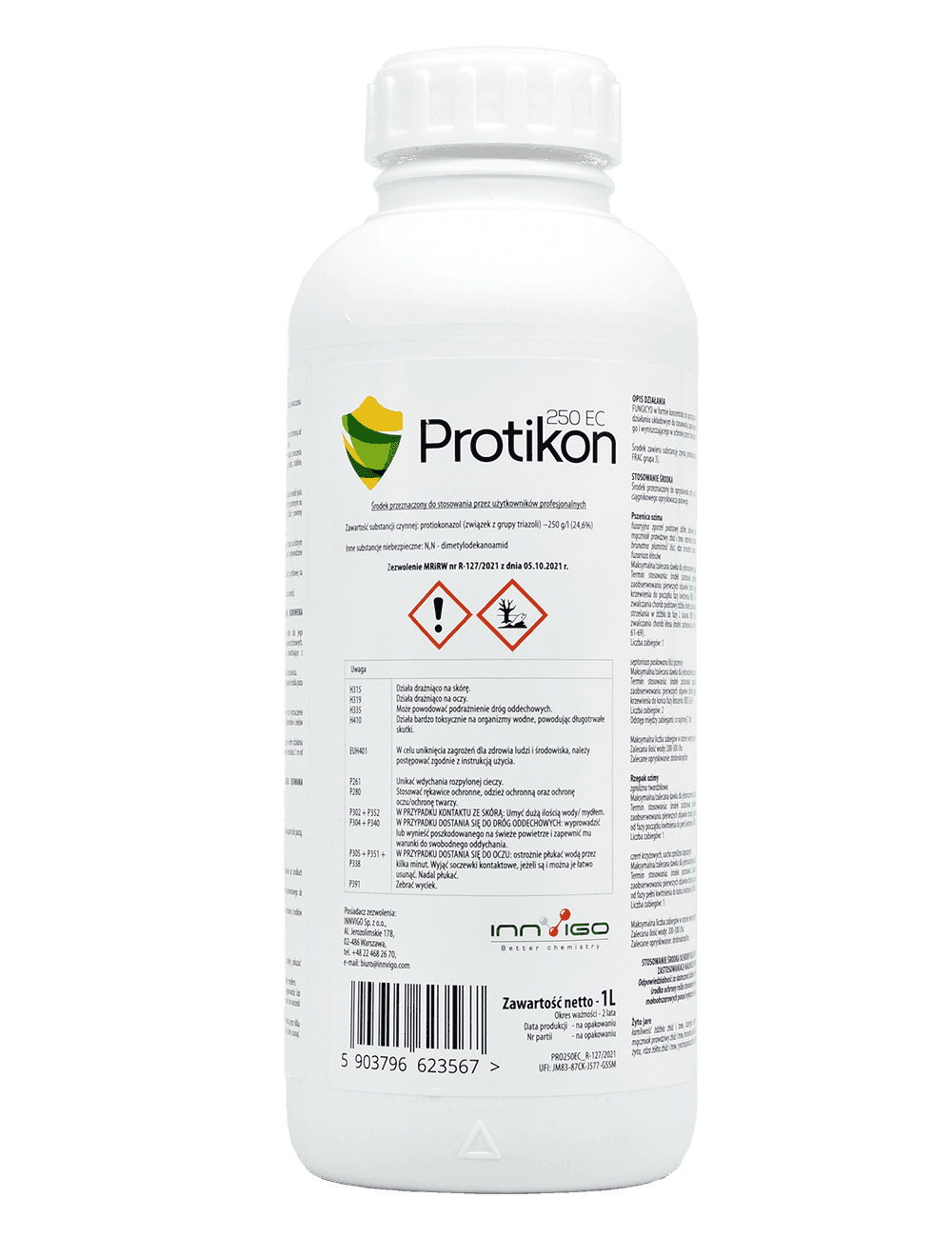
SKU CH-15264
Pabi 300 EC
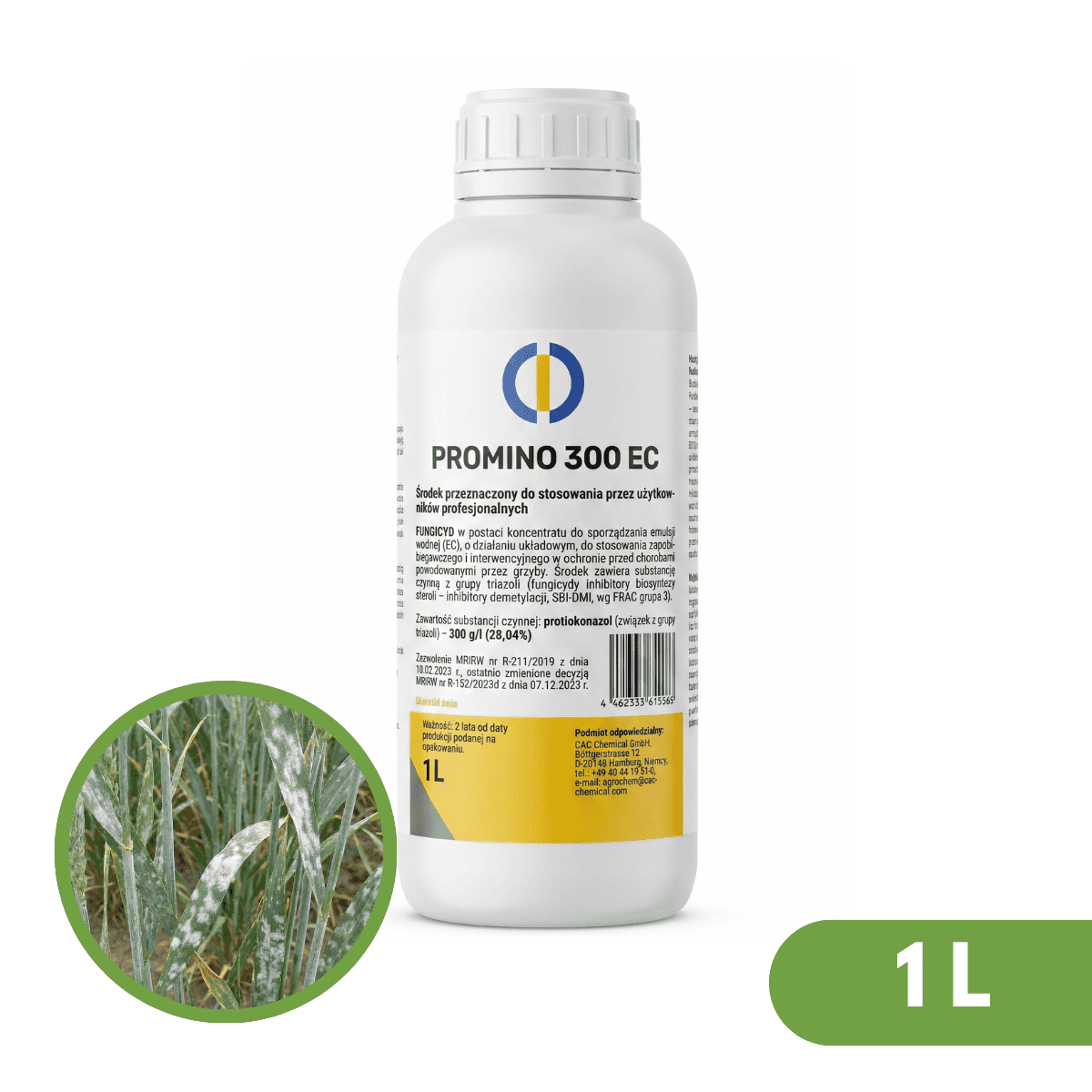
PABI 300 EC is a professional fungicide designed for comprehensive protection of agricultural crops against the most dangerous fungal diseases.
- Pack
- 1 l
Description
ACTION OF PABI 300 EC:
PABI 300 EC is a highly advanced fungicide with a strong systemic action, which after application quickly penetrates the plant structures, circulating with its sap. This ensures not only perfect coverage but also protection of new growth against pathogen attacks. The product features a triple mechanism – it acts preventively, creating an impenetrable barrier, interventionally, inhibiting the development of an ongoing infection, and curatively, ruthlessly eliminating disease foci.
Thanks to the use of a proven active substance from the triazole group, the preparation offers reliable effectiveness even under difficult disease pressure conditions. Its versatility makes it a cornerstone of the protection strategy for cereals and oilseed rape, allowing flexible use from the appearance of the flag leaf until the flowering stage. It protects key plant organs, directly translating into higher vigour and abundant, healthy yield.
CONTENT OF ACTIVE SUBSTANCES:
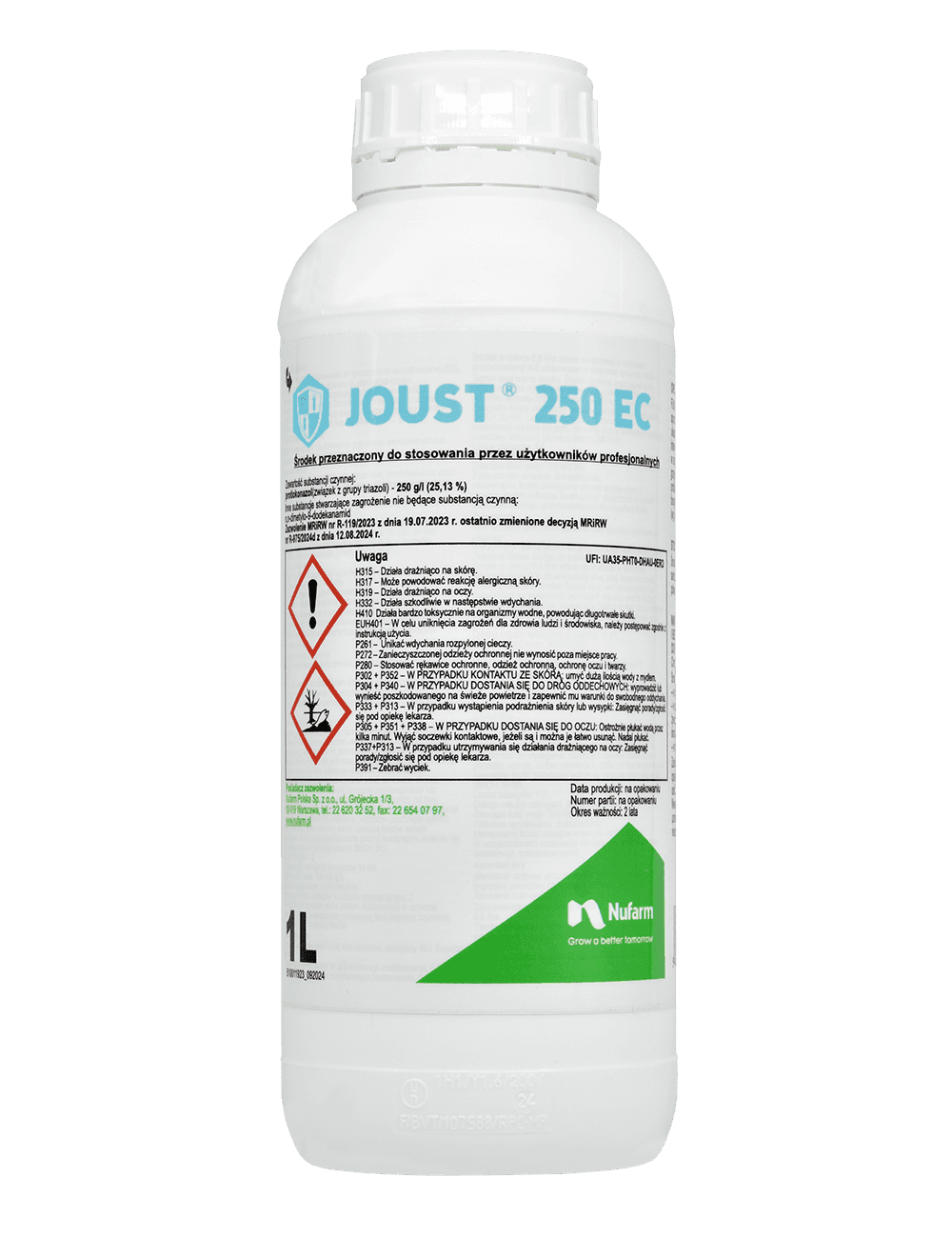
prothioconazole (compound from the triazole group) - 300 g/l (28.04 %)
Advantages of using PABI 300 EC:
- Comprehensive 3-in-1 action: Protects crops preventively, treats interventionally, and eradicates existing disease foci, providing full control over infection.
- Systemic mobility: Quickly penetrates and moves within plant tissues, ensuring continuous and long-lasting protection, including young growth.
- Wide application window: Flexibility of use at various growth stages of cereals and oilseed rape facilitates perfect integration of the treatment into the field work schedule.
- High versatility: Effectively eliminates the most dangerous disease agents such as fusarium, powdery mildew, rusts, and sclerotinia stem rot.
Pre-harvest interval:
- Winter and spring cereals - 35 days
- Winter oilseed rape, spring oilseed rape - 56 days
PABI 300 EC - SCOPE OF USE, TIMING AND DOSES:
Winter wheat, spring wheat
| Controlled pests: | powdery mildew of cereals and grasses, yellow rust of cereals, septoria leaf blotch of wheat |
| Maximum / recommended dose: | 0.33 - 0.65 l/ha (Maximum: 0.65 l/ha) |
| Application timing: | Preventively or immediately after first symptoms appear, from the visible flag leaf stage (still rolled) to the beginning of flowering stage (BBCH 37-61). |
| Controlled pests: | fusarium head blight |
| Maximum / recommended dose: | 0.65 l/ha |
| Application timing: | Immediately after heading, when first anthers are visible until the end of flowering stage (BBCH 61-69). |
| Maximum number of treatments per season: | 2 (interval between treatments: at least 14 days) |
| Recommended water volume: | 200 - 400 l/ha (fine droplet spraying) |
Winter barley, spring barley
| Controlled pests: | barley net blotch |
| Maximum / recommended dose: | 0.33 - 0.65 l/ha (Maximum: 0.65 l/ha) |
| Application timing: | Preventively or immediately after first symptoms appear, from the visible flag leaf stage (still rolled) to the beginning of flowering stage (BBCH 37-61). |
| Maximum number of treatments per season: | 2 (interval between treatments: 14-21 days) |
| Recommended water volume: | 200 - 400 l/ha (fine droplet spraying) |
Winter triticale
| Controlled pests: | powdery mildew of cereals and grasses, septoria leaf blotch |
| Maximum / recommended dose: | 0.33 - 0.65 l/ha (Maximum: 0.65 l/ha) |
| Application timing: | Preventively or immediately after first symptoms appear, from the visible flag leaf stage (still rolled) to the beginning of flowering stage (BBCH 37-61). |
| Maximum number of treatments per season: | 2 (interval between treatments: 14-21 days) |
| Recommended water volume: | 200 - 400 l/ha (fine droplet spraying) |
Winter rye
| Controlled pests: | brown rust of rye, cereal leaf spot (rhynchosporium) |
| Maximum / recommended dose: | 0.33 - 0.65 l/ha (Maximum: 0.65 l/ha) |
| Application timing: | Preventively or immediately after first symptoms appear, from the visible flag leaf stage (still rolled) to the beginning of flowering stage (BBCH 37-61). |
| Maximum number of treatments per season: | 2 (interval between treatments: 14-21 days) |
| Recommended water volume: | 200 - 400 l/ha (fine droplet spraying) |
Winter oilseed rape
| Controlled pests: | blackleg, sclerotinia stem rot |
| Maximum / recommended dose: | 0.3 - 0.6 l/ha (Maximum: 0.6 l/ha) |
| Application timing: | Preventively or immediately after first disease symptoms appear, from the beginning to the end of flowering stage (BBCH 61-69). |
| Maximum number of treatments per season: | 2 (interval between treatments: 21 days) |
| Recommended water volume: | 200 - 400 l/ha (fine droplet spraying) |
SMALL AREA APPLICATIONS:
The responsibility for the effectiveness and phytotoxicity of the plant protection product used in small area crops lies solely with its user.
Spring oilseed rape
| Controlled pests: | dry rot of crucifers, blackleg, sclerotinia stem rot |
| Maximum / recommended dose: | 0.3 - 0.5 l/ha (Maximum: 0.5 l/ha) |
| Application timing: | Preventively or immediately after first symptoms appear, from the 6-leaf stage to the end of flowering stage (BBCH 16-69). In the case of blackleg and/or sclerotinia stem rot, apply from the beginning of flowering stage (BBCH 61). |
| Maximum number of treatments per season: | 2 (interval between treatments: 14-21 days) |
| Recommended water volume: | 200 - 400 l/ha (fine droplet spraying) |