 SKU CH-15043
Pak T2 M Bolt 250 + Astrolab 2 HA
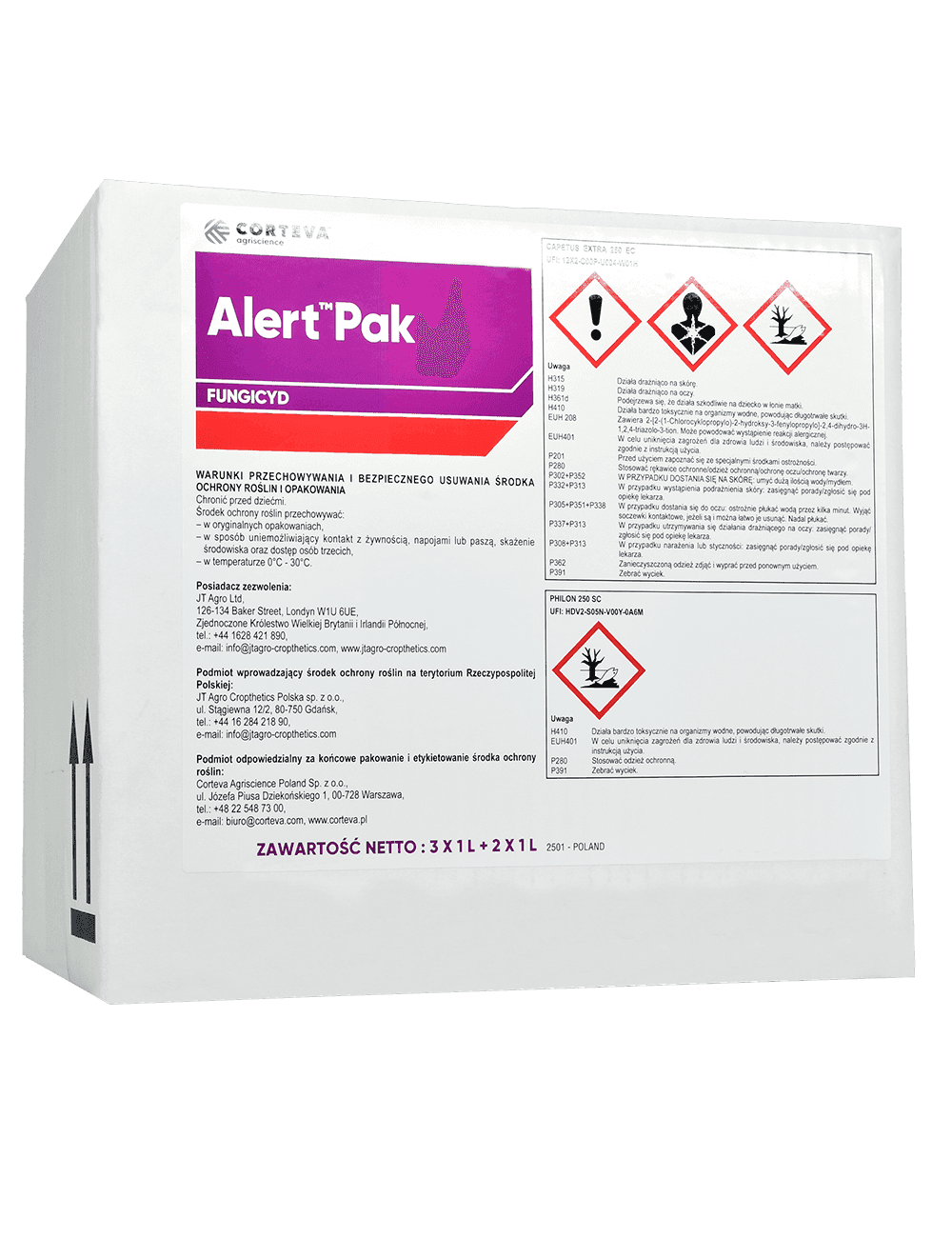
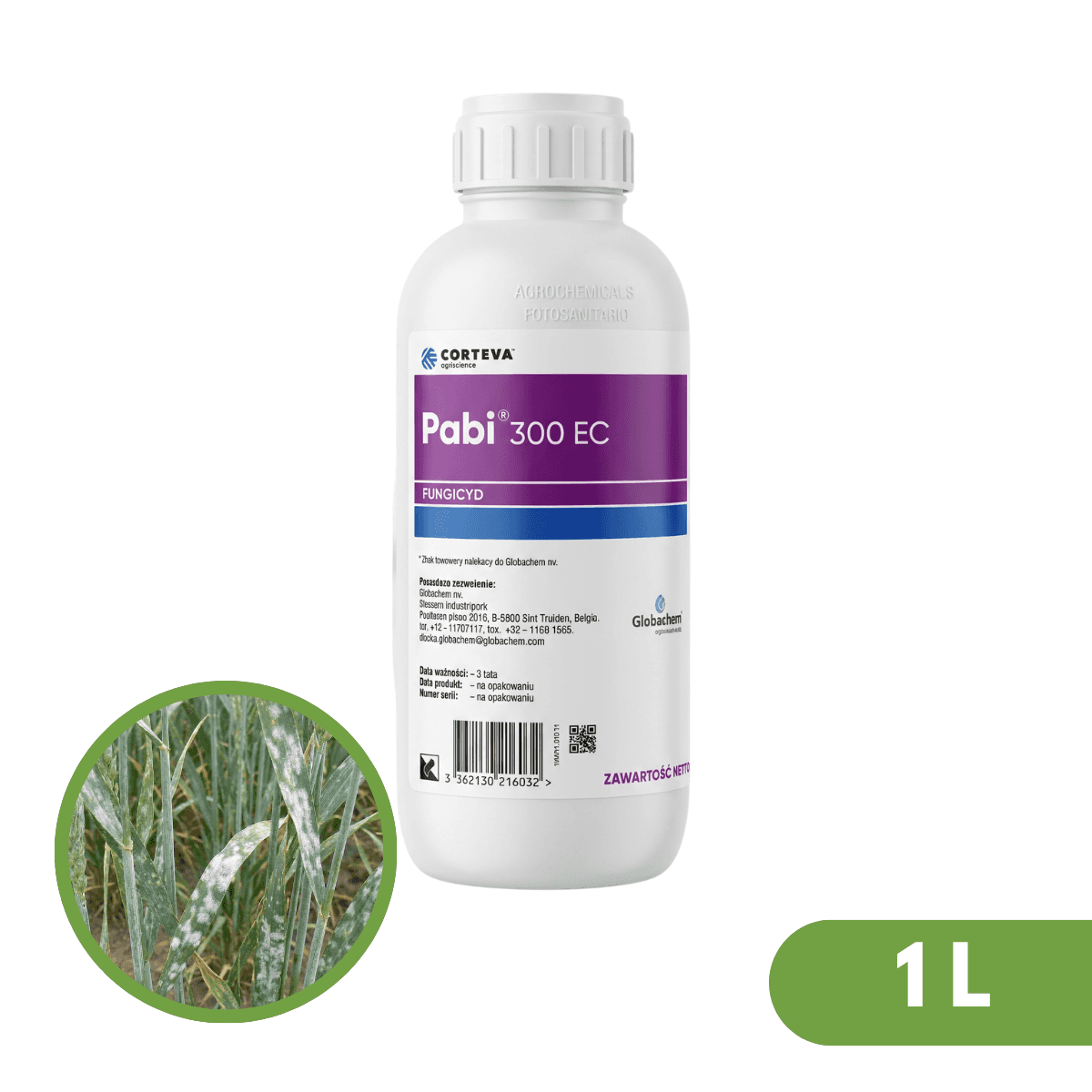
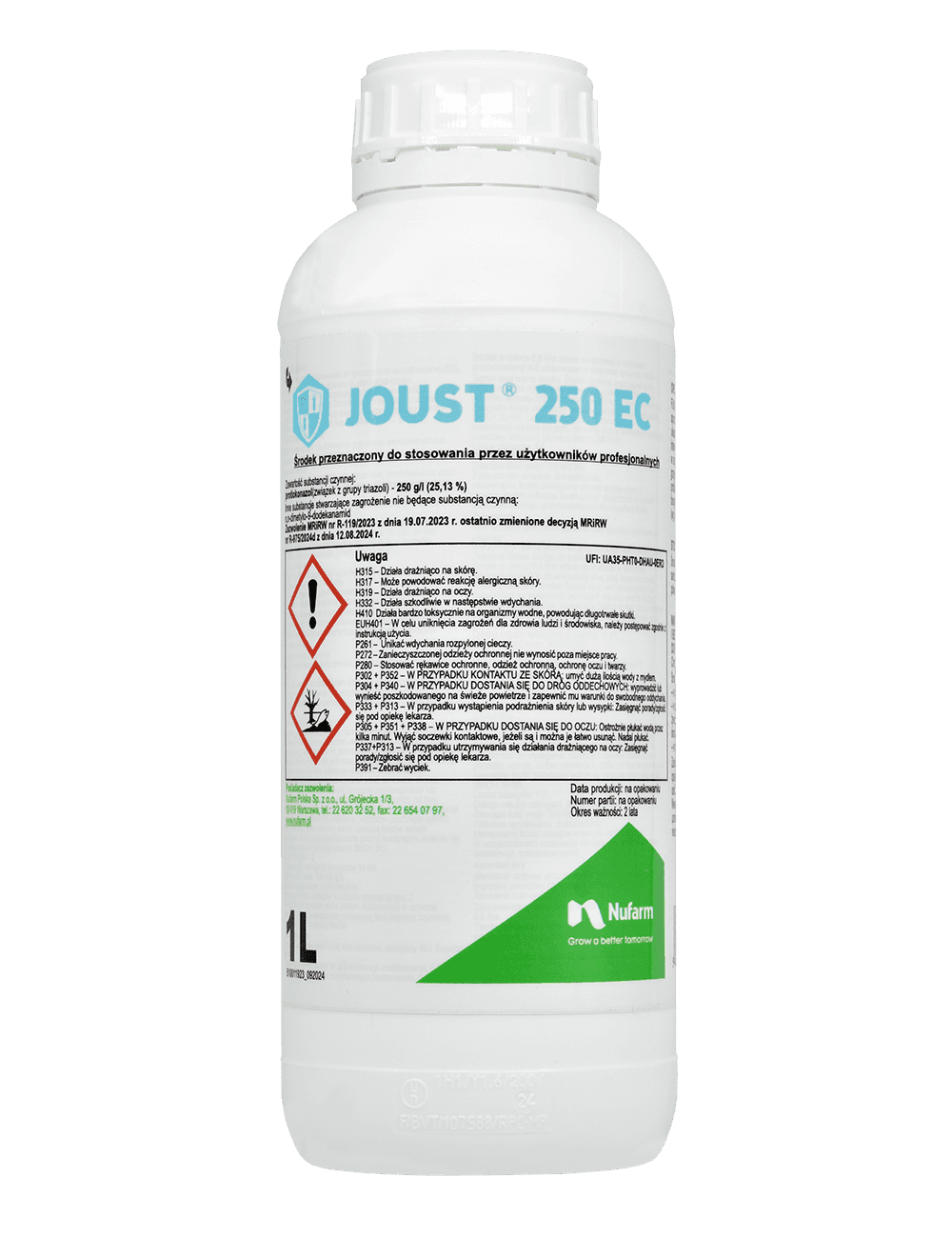
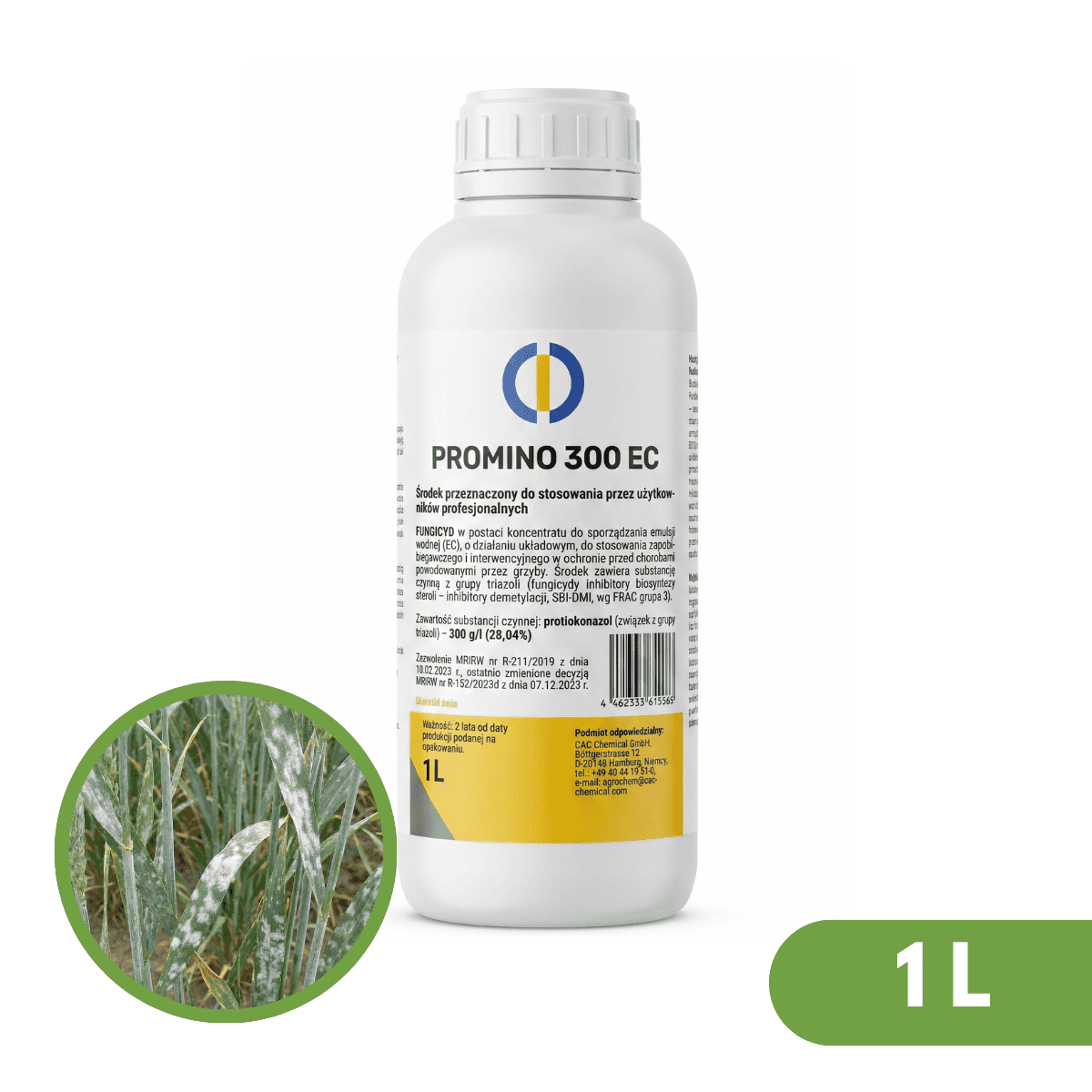
PAK T2 M (BOLT 250 1L + ASTROLAB 1L) is a complete fungicide set designed for comprehensive cereal protection, especially dedicated for the T2 treatment (protection of the flag leaf and ear).
- Pack
- 1 l
Description
ACTION OF THE PAK T2 M SET:
The strength of the set is based on the combination of two modes of action. Bolt 250 EC acts systemically, penetrating the plant and controlling existing infections (curative action) as well as protecting new growth. Astrolab acts locally and systemically, creating a protective barrier (preventive action) and providing the so-called greening effect, which prolongs vegetation and contributes to increased yield. This mixture effectively controls a wide range of pathogens, including difficult-to-control leaf and ear diseases.
Advantages of using PAK T2 M:
- Double mode of action: The synergy of triazole and strobilurin ensures preventive, curative, and eradicative protection.
- Physiological effect: The azoxystrobin content improves plant vigour, increases photosynthesis efficiency, and delays leaf senescence.
- Comprehensive protection: Controls key diseases during the T2 period, including septoria leaf blotch, rust, powdery mildew, and fusarium.
- Application flexibility: Effective within a wide application window, from stem elongation to flowering.
THE SET FOR 2 HA CONTAINS:
- Bolt 1l
- Astrolab 1l
ACTION OF BOLT 250 EC:
Bolt 250 EC is a fungicide in the form of a concentrate for preparing an emulsifiable concentrate (EC). The product has systemic action and is intended for preventive as well as curative use in cereal protection against fungal diseases.
BOLT 250 EC ACTIVE SUBSTANCE CONTENT:
prothioconazole (a compound from the triazole group) – 250 g/l (24.77%)
BOLT 250 EC SCOPE OF USE, TIMING AND DOSES:
The product is intended for use with self-propelled or tractor-mounted field sprayers.
How to use Bolt 250 EC:
Winter wheat
septoria leaf blotch of wheat (medium efficacy), brown rust of wheat, yellow rust of cereals and grasses.
Maximum/recommended dose for single application: 0.8 l/ha
Application timing: Use preventively or immediately after first disease symptoms appear, in spring, from the beginning of stem elongation (the tillering node rises, the first internode begins to elongate) to the end of flowering (all florets have finished flowering, dried anthers visible) (BBCH 30-69).
Number of treatments: 2
Interval between treatments: at least 14 days.
Recommended water volume: 100-300 l/ha
Recommended spraying: fine droplet.
Maximum number of treatments per growing season: 2
Winter barley
net blotch of barley, barley rust.
Maximum/recommended dose for single application: 0.8 l/ha
Application timing: Use preventively or immediately after first disease symptoms appear, in spring, from the beginning of stem elongation (the tillering node rises, the first internode begins to elongate) to full flowering (50% of anthers developed) (BBCH 30-65).
Number of treatments: 2
Interval between treatments: at least 14 days.
Recommended water volume: 100-300 l/ha
Recommended spraying: fine droplet.
Maximum number of treatments per growing season: 2
Winter triticale
leaf septoria (medium efficacy), brown rust, yellow rust of cereals and grasses.
Maximum/recommended dose for single application: 0.8 l/ha
Application timing: Use preventively or immediately after first disease symptoms appear, in spring, from the beginning of stem elongation (tillering node 7/16 rises, the first internode begins to elongate) to full flowering (50% of anthers developed) (BBCH 30-65).
Number of treatments: 2
Interval between treatments: at least 14 days.
Recommended water volume: 100-300 l/ha
Recommended spraying: fine droplet.
Maximum number of treatments per growing season: 2
Winter rye
brown rust of rye
Maximum/recommended dose for single application: 0.8 l/ha
Application timing: Use preventively or immediately after first disease symptoms appear, in spring, from the beginning of stem elongation (the tillering node rises, the first internode begins to elongate) to full flowering (50% of anthers developed) (BBCH 30-65).
Number of treatments: 2
Interval between treatments: at least 14 days.
Recommended water volume: 100-300 l/ha
Recommended spraying: fine droplet.
Maximum number of treatments per growing season: 2
Spring wheat
septoria leaf blotch of wheat (medium efficacy), brown rust of wheat, yellow rust of cereals and grasses.
Maximum/recommended dose for single application: 0.8 l/ha
Application timing: Use preventively or immediately after first disease symptoms appear, from the beginning of stem elongation (the tillering node rises, the first internode begins to elongate) to the end of flowering (all florets have finished flowering, dried anthers visible) (BBCH 30-69).
Number of treatments: 2
Interval between treatments: at least 14 days.
Recommended water volume: 100-300 l/ha
Recommended spraying: fine droplet.
Maximum number of treatments per growing season: 2
Spring barley
net blotch of barley
Maximum/recommended dose for single application: 0.8 l/ha
Application timing: Use preventively or immediately after first disease symptoms appear, from the beginning of stem elongation (the tillering node rises, the first internode begins to elongate) to full flowering (50% of anthers developed) (BBCH 30-65).
Number of treatments: 2
Interval between treatments: at least 14 days.
Recommended water volume: 100-300 l/ha
Recommended spraying: fine droplet.
Maximum number of treatments per growing season: 2
Pre-harvest interval for Bolt 250 EC:
winter wheat, spring wheat, winter barley, spring barley, winter triticale, winter rye – 35 days.
ACTION OF ASTROLAB:
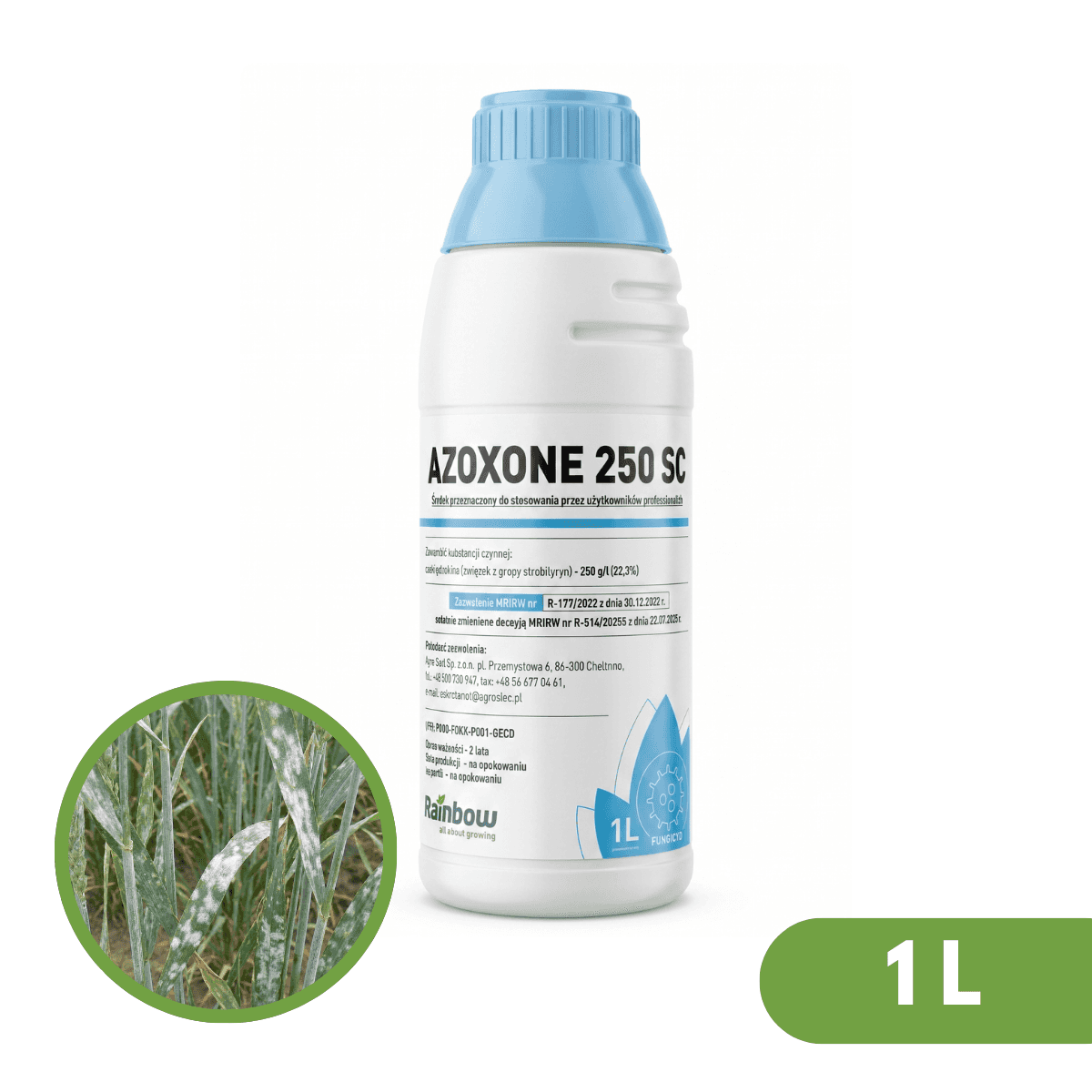
Astrolab is a fungicide, a concentrate in the form of a suspension concentrate (SC). The product has local and systemic action, mainly intended for preventive use in controlling diseases caused by fungi and fungus-like organisms.
ASTROLAB ACTIVE SUBSTANCE CONTENT:
azoxystrobin (a substance from the strobilurin group) – 250 g/l (22.81%)
ASTROLAB SCOPE OF USE, TIMING AND DOSES:
The product is intended for use with self-propelled or tractor-mounted field or orchard sprayers, handheld sprayers, and equipment mounted on planters.
How to use Astrolab:
Winter wheat, spring wheat
powdery mildew of cereals and grasses, brown leaf spot, brown rust of wheat, leaf septoria, glume blotch, fusarium ear blight, black ear mould.
Maximum/recommended dose for single application: 0.8 l/ha
Application timing: Use mainly preventively or immediately after first disease symptoms appear, from the beginning of stem elongation to the end of heading (BBCH 30-59).
Recommended water volume: 200-300 l/ha
Adjust water volume to plant size and density.
Recommended spraying: fine droplet.
Maximum number of treatments per growing season: 1
Winter barley, spring barley
rhynchosporium of cereals (medium control level)
Maximum/recommended dose for single application: 0.8 l/ha
Application timing: Use mainly preventively or immediately after first disease symptoms appear, from the beginning of stem elongation to the end of heading (BBCH 30-59).
Recommended water volume: 200-300 l/ha
Adjust water volume to plant size and density.
Recommended spraying: fine droplet.
Maximum number of treatments per growing season: 1
Winter triticale
glume blotch, brown rust.
Maximum/recommended dose for single application: 0.8 l/ha
Application timing: Use mainly preventively or immediately after first disease symptoms appear, from the beginning of stem elongation to the end of heading (BBCH 30-59).
Recommended water volume: 200-300 l/ha
Adjust water volume to plant size and density.
Recommended spraying: fine droplet.
Maximum number of treatments per growing season: 1
Winter rye
brown rust of rye, rhynchosporium of cereals
Maximum/recommended dose for single application: 0.8 l/ha
Application timing: Use mainly preventively or immediately after first disease symptoms appear, from the beginning of stem elongation to the end of heading (BBCH 30-59).
Recommended water volume: 200-300 l/ha
Adjust water volume to plant size and density.
Recommended spraying: fine droplet.
Maximum number of treatments per growing season: 1
Winter oilseed rape
blackleg, grey mould, sclerotinia stem rot.
Maximum/recommended dose for single application: 0.8 l/ha
Application timing: Use preventively or immediately after first disease symptoms appear, during oilseed rape flowering (BBCH 60-69).
Recommended water volume: 200-300 l/ha
Adjust water volume to plant size and density.
Recommended spraying: fine droplet.
Maximum number of treatments per growing season: 1
Potato
potato rhizoctonia
Maximum dose for single application: 3.0 l/ha
Recommended dose for single application: 2.0 - 3.0 l/ha
Use the higher recommended dose in case of higher disease risk, e.g. due to frequent potato cultivation on the same field.
Application timing: Use for band spraying of soil during spring tuber planting (BBCH 00), using planter-mounted devices equipped with two spraying nozzles. Avoid direct spraying of tubers to prevent delaying sprouting and emergence.
Number of treatments: 1
Recommended water volume: 300-400 l/ha
Potato alternaria leaf spot
Maximum/recommended dose for single application: 0.5 l/ha
Application timing: Use preventively or immediately after first disease symptoms appear, from the beginning of inflorescence development to fruit and seed maturation (first fruit berries turn brown) (BBCH 51-85).
Number of treatments: 3
Interval between treatments: at least 7 days.
Recommended water volume: 300-400 l/ha
Adjust water volume to plant size and density.
Recommended spraying: fine droplet.
Maximum number of treatments per growing season: 4
Onion, garlic, shallot.
onion downy mildew, onion alternaria, grey mould (neck rot).
Maximum/recommended dose for single application: 0.8 l/ha
Application timing: Use preventively or immediately after first disease symptoms appear, from the 4-leaf stage to the end of bulb formation for harvest (visible drying of the bulb tip) (BBCH 14-48).
To ensure even coverage of plants with spray liquid, it is recommended to add an adjuvant.
Recommended water volume: 200-700 l/ha
Adjust water volume to plant size and density.
Maximum number of treatments per growing season: 3 (including small-scale use).
Interval between treatments: at least 7 days.
Green bean
bean anthracnose, grey mould, sclerotinia stem rot, ascochyta blight.
Maximum/recommended dose for single application: 0.8 l/ha
Application timing: Use preventively or immediately after first disease symptoms appear, from the beginning of flowering to pod development (20% of pods reach typical length) (BBCH 60-72).
Recommended water volume: 150-800 l/ha
Adjust water volume to plant size and density.
Maximum number of treatments per growing season: 2 (including small-scale use).
Interval between treatments: at least 14 days.
Pea for green seeds
pea ascochyta blight (stem spot), pea downy mildew.
Maximum/recommended dose for single application: 0.8 l/ha
Application timing: Use preventively or immediately after first disease symptoms appear, from the beginning of inflorescence development to the end of flowering (BBCH 51-69).
Recommended water volume: 200-700 l/ha
Adjust water volume to plant size and density.
Maximum number of treatments per growing season: 2
Interval between treatments: at least 14 days.
Head cabbage, Chinese cabbage (for long-term storage), cauliflower.
blackleg (alternaria), grey mould.
Maximum/recommended dose for single application: 0.8 l/ha
Application timing: Use preventively or immediately after first disease symptoms appear, from the 6-leaf stage to the end of development of the harvestable part of the plant (heads reach typical size and shape) (BBCH 16-49).
Recommended water volume: 200-700 l/ha
Adjust water volume to plant size and density.
To ensure even coverage of plants with spray liquid, it is recommended to add an adjuvant.
Maximum number of treatments per growing season: 2 (including small-scale use).
Interval between treatments: at least 12 days.
Carrot
alternaria leaf spot of carrot tops, powdery mildew of umbellifers.
Maximum/recommended dose for single application: 0.8 l/ha
Application timing: Use preventively or immediately after first disease symptoms appear, from the 6-leaf stage to the end of development of the harvestable part of the plant (root reaches typical size and shape) (BBCH 16-49).
Recommended water volume: 200-700 l/ha
Adjust water volume to plant size and density.
Maximum number of treatments per growing season: 3
Interval between treatments: at least 7 days.
Lettuce (field cultivation)
lettuce downy mildew, grey mould, sclerotinia stem rot, powdery mildew.
Maximum/recommended dose for single application: 0.8 l/ha
Application timing: Use preventively or immediately after first disease symptoms appear, from the beginning of development of the harvestable part of the plant to the end of development of the harvestable part of the plant (head reaches typical size and shape) (BBCH 41-49).
Recommended water volume: 300-1200 l/ha
Adjust water volume to plant size and density.
Maximum number of treatments per growing season: 2
Interval between treatments: at least 7 days.
Tomato (field cultivation)
potato late blight, tomato alternaria leaf spot.
Maximum/recommended dose for single application: 0.8 l/ha
Application timing: Use preventively or immediately after first disease symptoms appear, from the beginning of side shoot development to the end of fruit and seed maturation (fruits reach full maturity) (BBCH 21-89).
Recommended water volume: 400-1200 l/ha
Adjust water volume to plant size and density.
Recommended spraying: fine droplet.
Maximum number of treatments per growing season: 3 (including small-scale uses).
Interval between treatments: at least 7 days.
Note:
Do not use the product in the early growth stage of field-grown tomato (up to 4 weeks after planting or up to 5 weeks after sowing) and on wet plants or immediately after rainfall.
Leek
leek rust, leek alternaria leaf spot.
Maximum/recommended dose for single application: 0.8 l/ha
Application timing: Use preventively or immediately after first disease symptoms appear, from the 6-leaf stage to the end of leek growth (BBCH 16-48).
Recommended water volume: 200-1000 l/ha
Adjust water volume to plant size and density.
Maximum number of treatments per growing season: 2 (including small-scale uses).
Interval between treatments: at least 12 days.
Celeriac
celery septoria leaf spot
Maximum/recommended dose for single application: 0.8 l/ha
Application timing: Use preventively or immediately after first disease symptoms appear, from the 6-leaf stage to the end of development of the harvestable part of the plant (root reaches typical size and shape) (BBCH 16-49).
Recommended water volume: 200-700 l/ha
Adjust water volume to plant size and density.
Maximum number of treatments per growing season: 2
Interval between treatments: at least 14 days.
Sweet pepper (under cover – greenhouses)
grey mould, sclerotinia stem rot, powdery mildew, sweet pepper alternaria leaf spot.
Maximum concentration for single application: 0.1% (100 ml product in 100 litres of water).
Maximum/recommended concentration for single application: 0.08-0.1% (80-100 ml product in 100 litres of water).
Use higher concentration in case of higher disease risk.
Application timing: Use preventively or immediately after first disease symptoms appear, from the 6-leaf stage to the end of fruit and seed maturation (fruits reach full maturity) (BBCH 16-89).
Recommended spray liquid volume: 40-150 l/1000 m2
Adjust water volume to plant size and density.
Maximum number of treatments per growing season: 2
Interval between treatments: at least 7 days.
Lettuce (under cover)
grey mould, powdery mildew, lettuce downy mildew, sclerotinia stem rot, rhizoctonia.
Maximum concentration for single application: 0.1% (100 ml product in 100 litres of water).
Maximum/recommended concentration for single application: 0.08-0.1% (80-100 ml product in 100 litres of water).
Use higher concentration in case of higher disease risk.
Application timing: Use preventively or immediately after first disease symptoms appear, from the 4-leaf stage to the end of development of the harvestable part of the plant (head reaches typical size and shape) (BBCH 14-49).
Recommended spray liquid volume: 30-120 l/1000 m2
Adjust water volume to plant size and density.
Maximum number of treatments per growing season: 2
Interval between treatments: at least 7 days.
SMALL-SCALE USES OF PLANT PROTECTION PRODUCTS INCLUDED IN THE PRODUCT LABEL
ASTROLAB PRE-HARVEST INTERVAL:
Winter wheat, spring wheat, winter barley, spring barley, winter triticale, winter rye - 35 days,
Hop – 28 days,
Oilseed rape, leek - 21 days,
Onion, garlic, shallot, head cabbage, Chinese cabbage, cauliflower, pea for green seeds, celeriac, lettuce, carrot - 14 days,
Potato, green bean - 7 days,
Sweet pepper, tomato - 3 days.