ACTION OF PROMINO 300 EC:
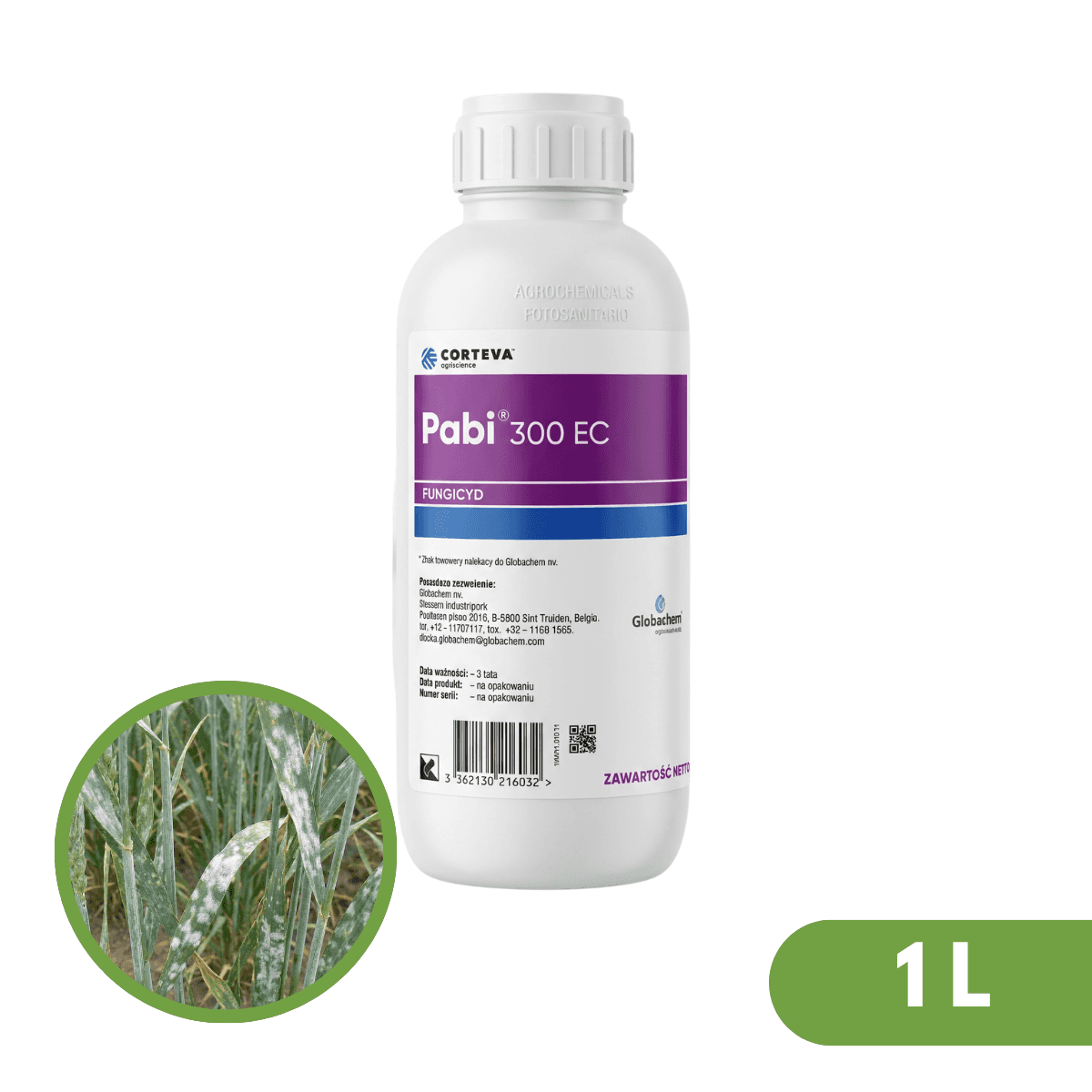
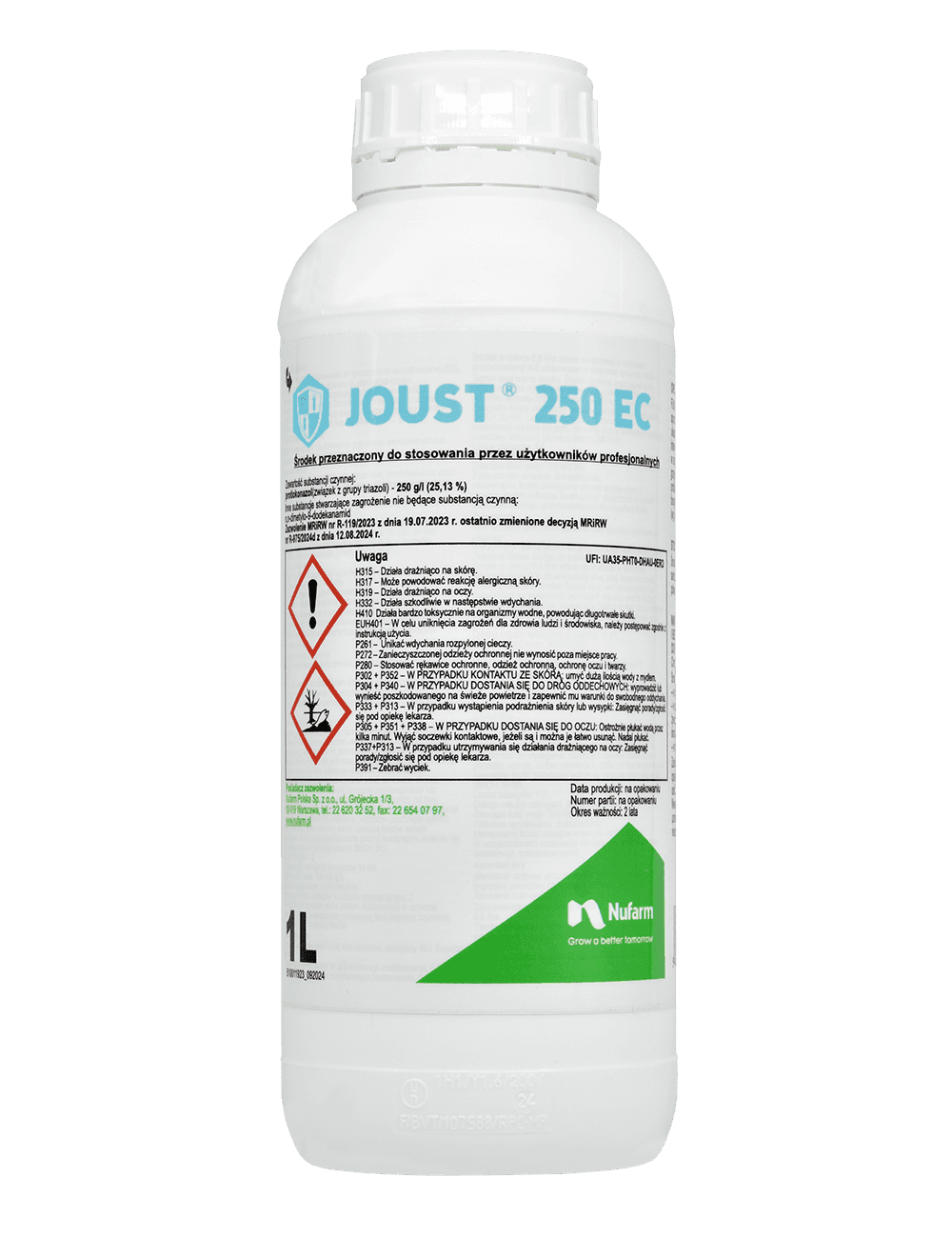
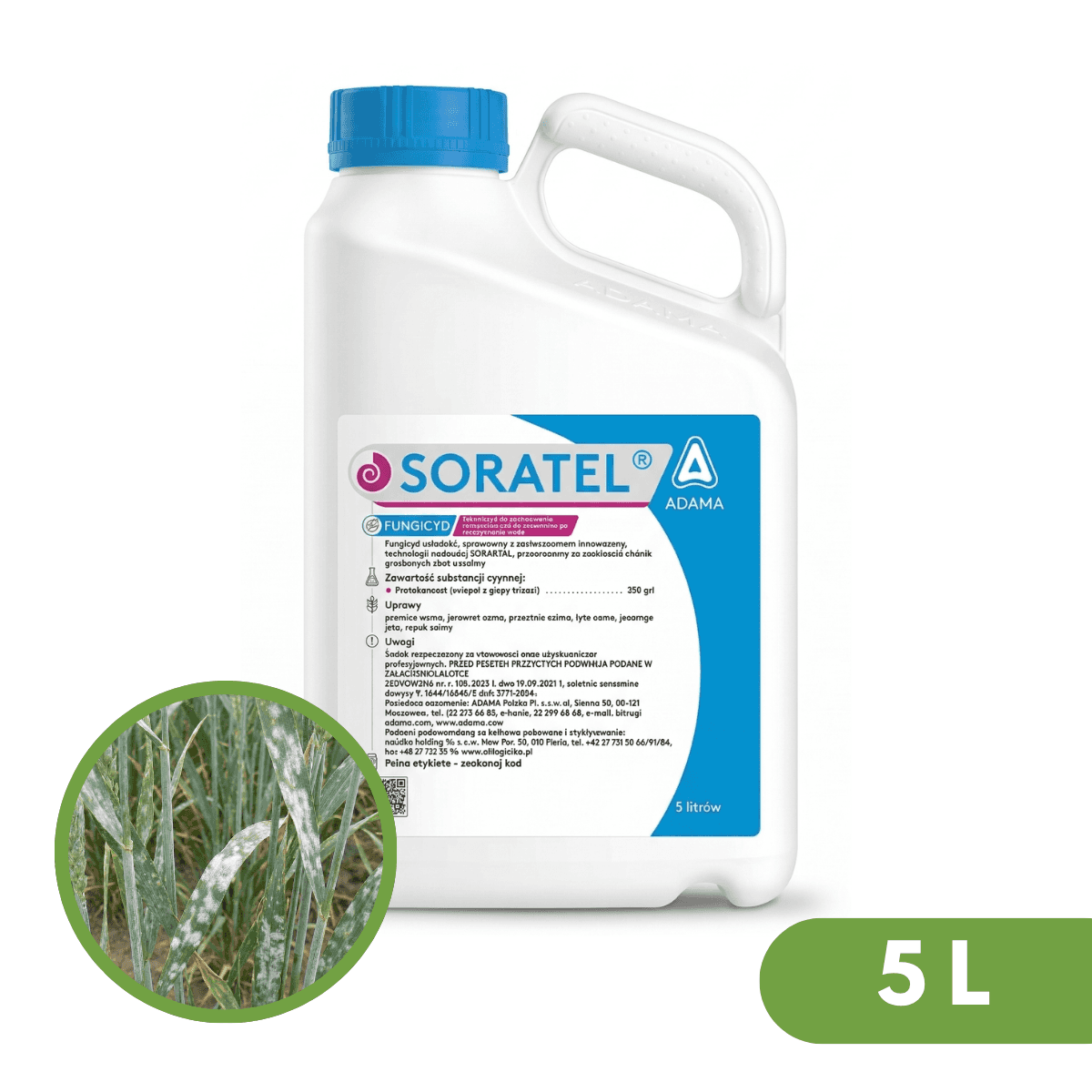
Promino 300 EC is an innovative product distinguished by its exceptionally effective systemic action. This means that after application, the active substance rapidly penetrates deeply into the plant tissues and is transported with its sap. This guarantees comprehensive protection of the entire plant, including newly developing growth, ensuring high efficacy even under difficult or variable weather conditions after treatment.
The product has been developed with flexibility in mind – it works perfectly preventively, building an invisible protective shield before the arrival of pathogens, as well as interventionally, quickly stopping already developing infections. Such a two-pronged attack on pathogenic fungi guarantees high health of leaves and ears, which directly translates into the quality and abundance of the obtained yield.
CONTENT OF ACTIVE SUBSTANCES:
prothioconazole (a compound from the triazole group) - 300 g/l (28.04%)
Advantages of using Promino 300 EC:
- Rapid systemic action: The product penetrates deeply and circulates within the plant, providing continuous and uniform protection of all organs, regardless of weather conditions.
- Preventive and intervention effect: Effectively blocks infections before they occur and ruthlessly treats already infected plants.
- Reliable substance from the triazole group: High content of prothioconazole ensures the highest efficacy, among others, in the control of fusarium, rust, septoria, and dry rot.
Pre-harvest interval:
- All mentioned crops - Not applicable
PROMINO 300 EC - SCOPE OF USE, TIMING AND DOSES:
Winter wheat
| Target pests: |
powdery mildew of cereals and grasses, yellow rust of cereals, brown rust of wheat, septoria leaf blotch of wheat, brown leaf spot (medium control level), glume blotch |
| Maximum / recommended dose: |
0.33 - 0.65 l/ha (Maximum: 0.65 l/ha) |
| Application timing: |
Preventively or immediately after first symptoms appear, from the end of tillering stage to the beginning of flowering stage (BBCH 29-61). |
| Number of treatments: |
2 |
| Target pests: |
fusarium head blight |
| Maximum / recommended dose: |
0.65 l/ha |
| Application timing: |
Immediately after heading, when first anthers are visible until the end of flowering stage (BBCH 61-69). |
| Number of treatments: |
1 |
| Max. number of treatments per season: |
2 (interval between treatments: at least 14 days) |
| Recommended water volume: |
200 - 400 l/ha (fine droplet spraying) |
Winter triticale
| Target pests: |
powdery mildew of cereals and grasses, leaf septoria, cereal rhynchosporium |
| Maximum / recommended dose: |
0.33 - 0.65 l/ha (Maximum: 0.65 l/ha) |
| Application timing: |
From the end of tillering stage to the beginning of flowering stage (BBCH 29-61). |
| Maximum number of treatments: |
2 (interval between treatments: at least 14 days) |
| Recommended water volume: |
200 - 400 l/ha (fine droplet spraying) |
Winter barley
| Target pests: |
net blotch of barley, cereal rhynchosporium |
| Maximum / recommended dose: |
0.33 - 0.65 l/ha (Maximum: 0.65 l/ha) |
| Application timing: |
From the end of tillering stage to the beginning of flowering stage (BBCH 29-61). |
| Maximum number of treatments: |
2 (interval between treatments: at least 14 days) |
| Recommended water volume: |
200 - 400 l/ha (fine droplet spraying) |
Winter rye
| Target pests: |
brown rust of rye, cereal rhynchosporium |
| Maximum / recommended dose: |
0.33 - 0.65 l/ha (Maximum: 0.65 l/ha) |
| Application timing: |
From the end of tillering stage to the beginning of flowering stage (BBCH 29-61). |
| Maximum number of treatments: |
2 (interval between treatments: at least 14 days) |
| Recommended water volume: |
200 - 400 l/ha (fine droplet spraying) |
Spring wheat
| Target pests: |
yellow rust of cereals, brown rust of wheat, septoria leaf blotch of wheat, brown leaf spot (medium control level) |
| Maximum / recommended dose: |
0.33 - 0.65 l/ha (Maximum: 0.65 l/ha) |
| Application timing: |
From the end of tillering stage to the beginning of flowering stage (BBCH 29-61). |
| Maximum number of treatments: |
2 (interval between treatments: at least 14 days) |
| Recommended water volume: |
200 - 400 l/ha (fine droplet spraying) |
Spring barley
| Target pests: |
net blotch of barley, cereal rhynchosporium |
| Maximum / recommended dose: |
0.33 - 0.65 l/ha (Maximum: 0.65 l/ha) |
| Application timing: |
From the end of tillering stage to the beginning of flowering stage (BBCH 29-61). |
| Maximum number of treatments: |
2 (interval between treatments: at least 14 days) |
| Recommended water volume: |
200 - 400 l/ha (fine droplet spraying) |
Winter oilseed rape
| Target pests: |
dry rot of crucifers |
| Maximum / recommended dose: |
0.6 l/ha |
| Application timing: |
Autumn treatment: from 6-leaf stage to 9-leaf stage of oilseed rape (BBCH 16-19).
Spring treatment: from the start of vegetation to the yellow bud stage (BBCH 59). |
| Maximum number of treatments: |
2 (1 in autumn and 1 in spring or 2 in spring) (interval between spring treatments: min. 21 days, interval between autumn and spring: min. 86 days) |
| Recommended water volume: |
200 - 400 l/ha (fine droplet spraying) |
SMALL-SCALE APPLICATIONS:
The responsibility for the efficacy and phytotoxicity of the plant protection product used in small-scale crops lies solely with its user.
Spring oilseed rape
| Target pests: |
dry rot of crucifers |
| Maximum / recommended dose: |
0.3 - 0.6 l/ha (Maximum: 0.6 l/ha) |
| Application timing: |
Preventively or after first symptoms appear, from six-leaf stage to yellow bud stage (BBCH 16-59). |
| Maximum number of treatments: |
1 |
| Recommended water volume: |
200 - 400 l/ha (fine droplet spraying) |