 SKU 46801-c
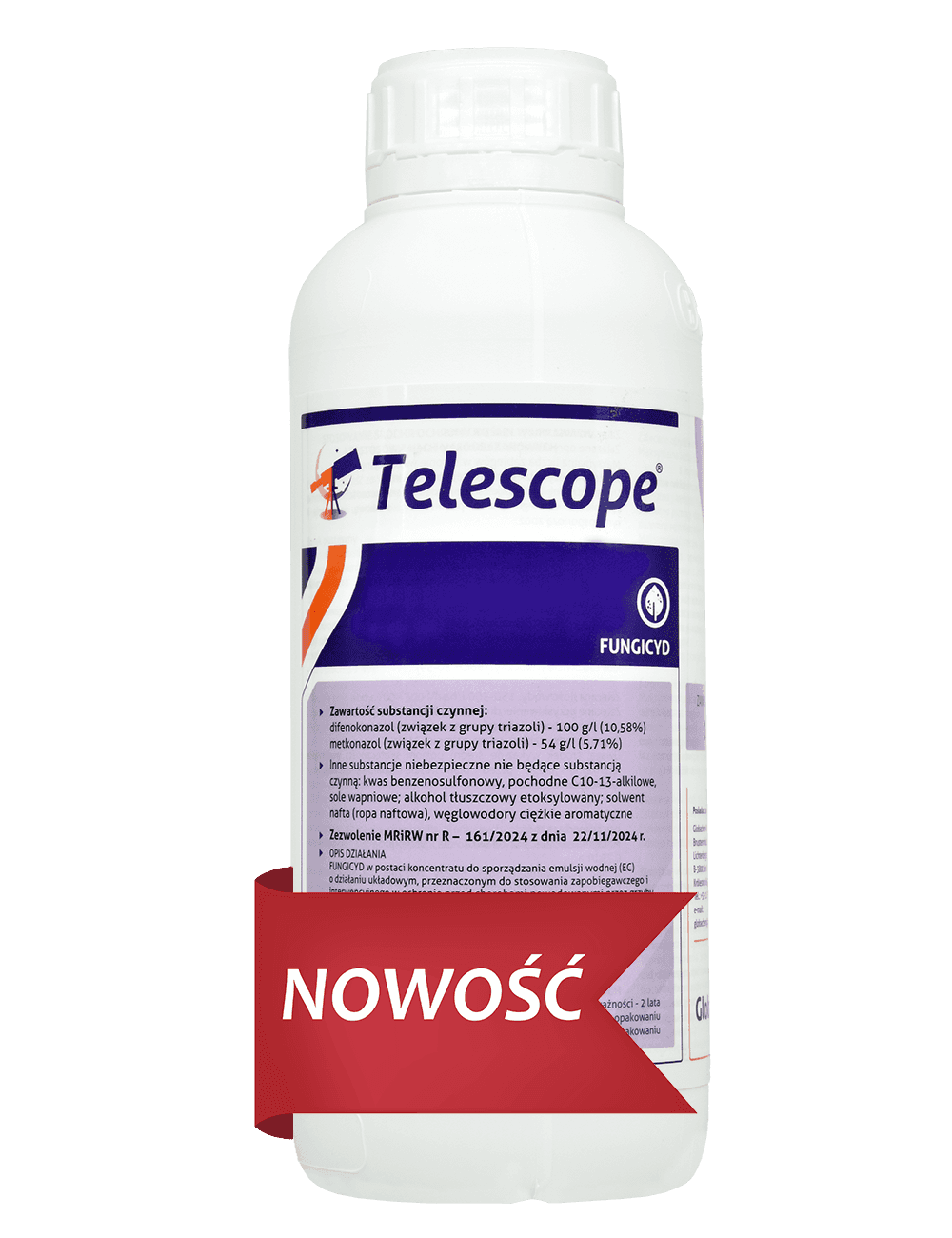
Telescope (difenoconazole, metconazole) fungicide
Telescope is a two-component fungicide designed to protect cereals, sugar beet and oilseed rape against the most important fungal diseases.
Description
TELESCOPE – a universal fungicide for the protection of cereals, beet and oilseed rape
Telescope is a professional fungicide intended for broad use in the cultivation of cereals, beet and oilseed rape, providing effective preventive and curative action against the most dangerous fungal diseases. It contains two active substances from the triazole group – difenoconazole and metconazole, which ensure a dual mode of action, enhancing protection efficiency and reducing the risk of resistance development.
Why choose Telescope?
- Wide application – one product for many crops and diseases
- Two triazoles in one formulation – comprehensive protection, greater effectiveness
- Preventive and curative action – can be applied before or after symptoms appear
- Flexible treatments – effective for both leaf and ear protection
- High mobility within the plant – rapid uptake and translocation, effective protection of the whole plant
Diseases controlled
Sugar beet and fodder beet
- Beet rust, beet rust, powdery mildew, brown leaf spot
Winter and spring oilseed rape
- Sclerotinia stem rot, dry rot of crucifers, blackleg
Winter wheat and spelt
- Septoria leaf blotch, septoria glume blotch, fusarium ear blight, powdery mildew, rusts, brown leaf spot
Winter and spring barley
- Net blotch, cereal rhynchosporium
Winter and spring rye
- Cereal rhynchosporium, rusts, septoria leaf blotch, powdery mildew, fusarium
Active substances and mode of action
- Difenoconazole (100 g/l) – acts systemically, quickly penetrates the plant and controls existing fungal infections as well as protects against new ones.
- Metconazole (54 g/l) – strong curative and eradicative action, effective against a wide spectrum of pathogens, also under high disease pressure.
Both substances belong to the group of sterol biosynthesis inhibitors (DMI, FRAC group 3) – they disrupt the formation of fungal cell membranes, leading to their death.
Ideal product for protection programmes
Telescope fits perfectly into integrated plant protection programmes, and its two-component formulation allows use both in single treatments and in rotation with other products, helping to prevent the development of pathogen resistance.
Application and dosage
| Crop | Target pests | How to apply? Dosage | When to apply? |
|---|---|---|---|
| Winter wheat | Septoria leaf blotch, septoria glume blotch, powdery mildew, brown rust, yellow rust, brown leaf spot, fusarium ear blight | Apply at a dose of 0.75 l/ha, maximum 2 treatments per growing season. Use fine droplet spraying. Water volume: 150–300 l/ha. Interval between treatments: minimum 21 days. | Apply from stem elongation to end of heading (BBCH 30-59) or at early flowering in case of fusarium (BBCH 61). |
| Winter and spring barley | Net blotch, cereal rhynchosporium | Apply at a dose of 0.75 l/ha, maximum 2 treatments per season. Water volume: 150–300 l/ha. Use fine droplet spraying. Interval between treatments: minimum 21 days. | Apply from stem elongation to end of heading (BBCH 30-59). |
| Winter and spring rye | Cereal rhynchosporium, rusts, septoria leaf blotch, powdery mildew, fusarium | Apply at a dose of 0.75 l/ha, maximum 2 treatments per season. Water volume: 150–300 l/ha. Use fine droplet spraying. Interval between treatments: minimum 21 days. | Apply from stem elongation to end of heading (BBCH 30-59) or at early flowering in case of fusarium (BBCH 61). |
| Sugar beet and fodder beet | Beet rust, beet rust, powdery mildew, brown leaf spot | Apply at a dose of 1.0 l/ha, maximum 1 treatment per season. Water volume: 200–300 l/ha. Use fine droplet spraying. | Apply from row closure to harvest maturity (BBCH 39-49). |
| Winter and spring oilseed rape | Sclerotinia stem rot, dry rot of crucifers, blackleg | Apply at a dose of 1.0 l/ha, maximum 1 treatment per season. Water volume: 200–300 l/ha. Use fine droplet spraying. | Apply from 4-leaf stage to end of flowering (BBCH 14-69). |