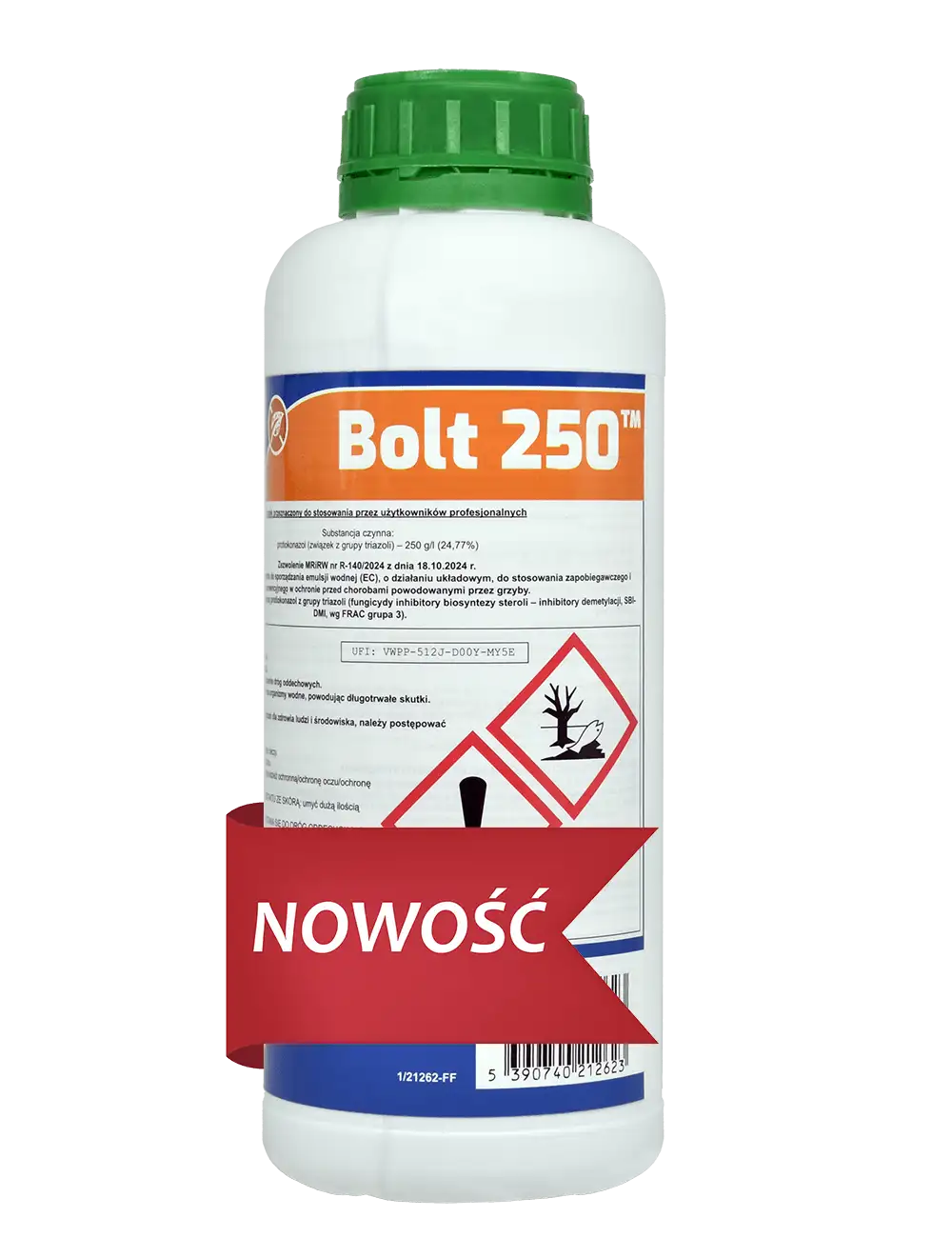
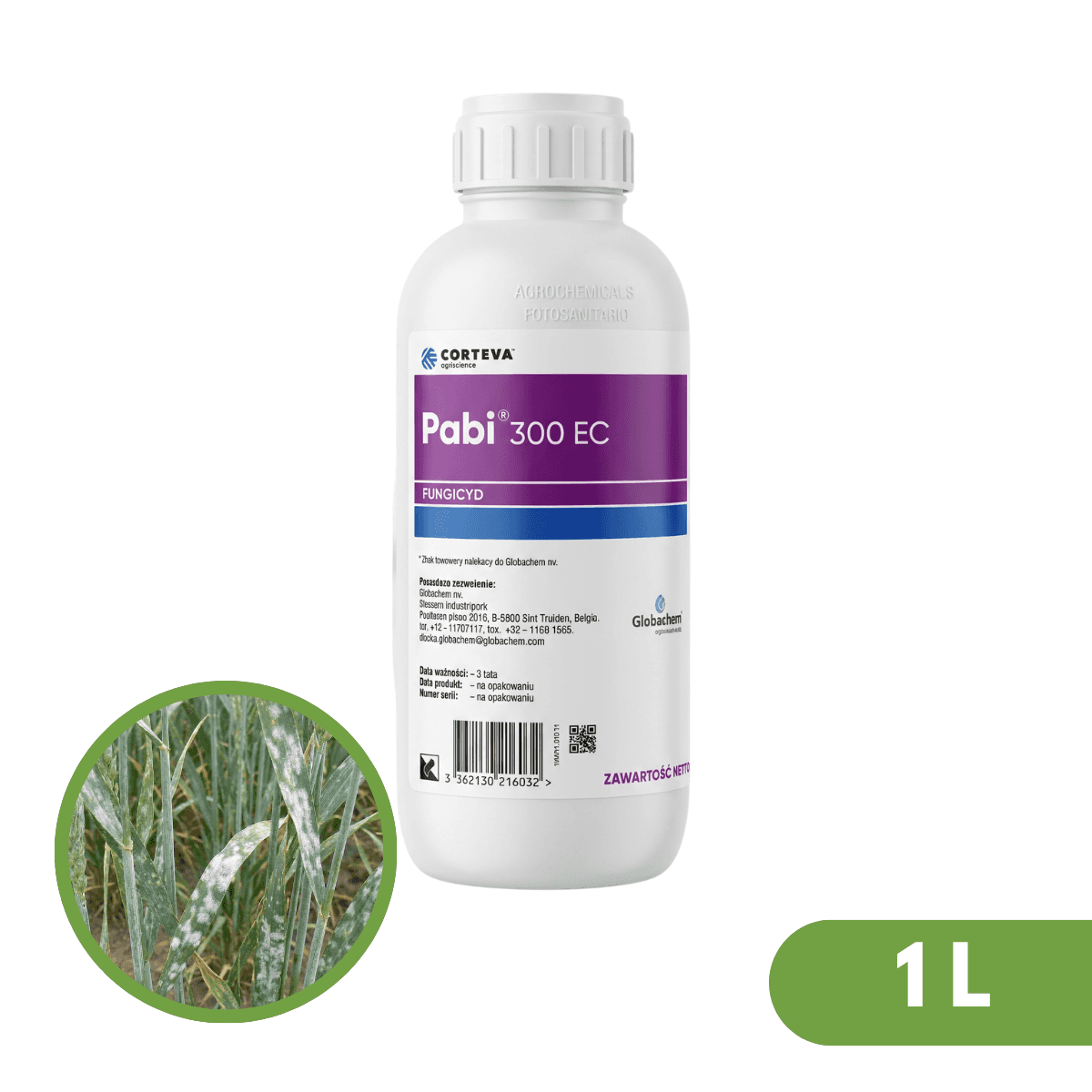
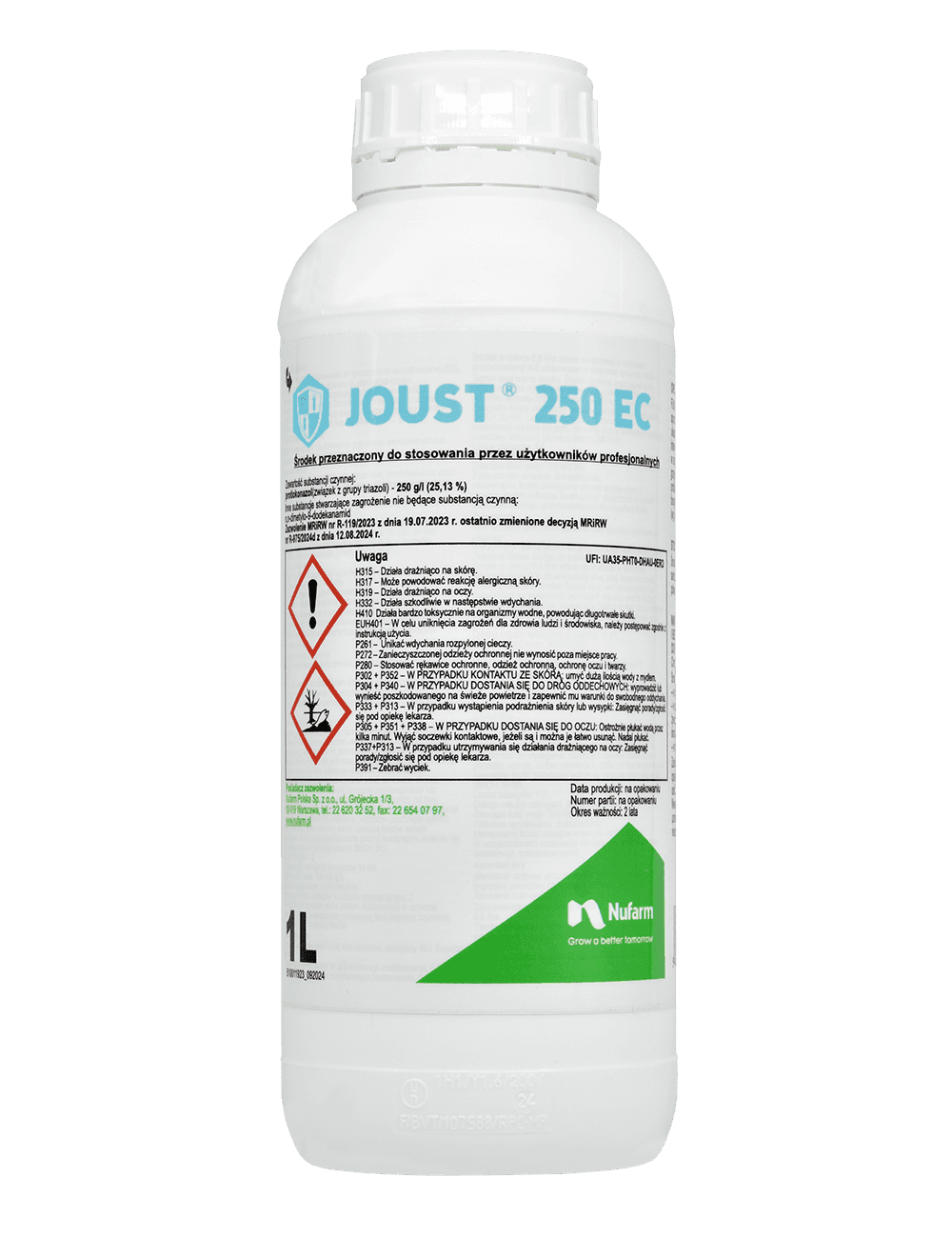
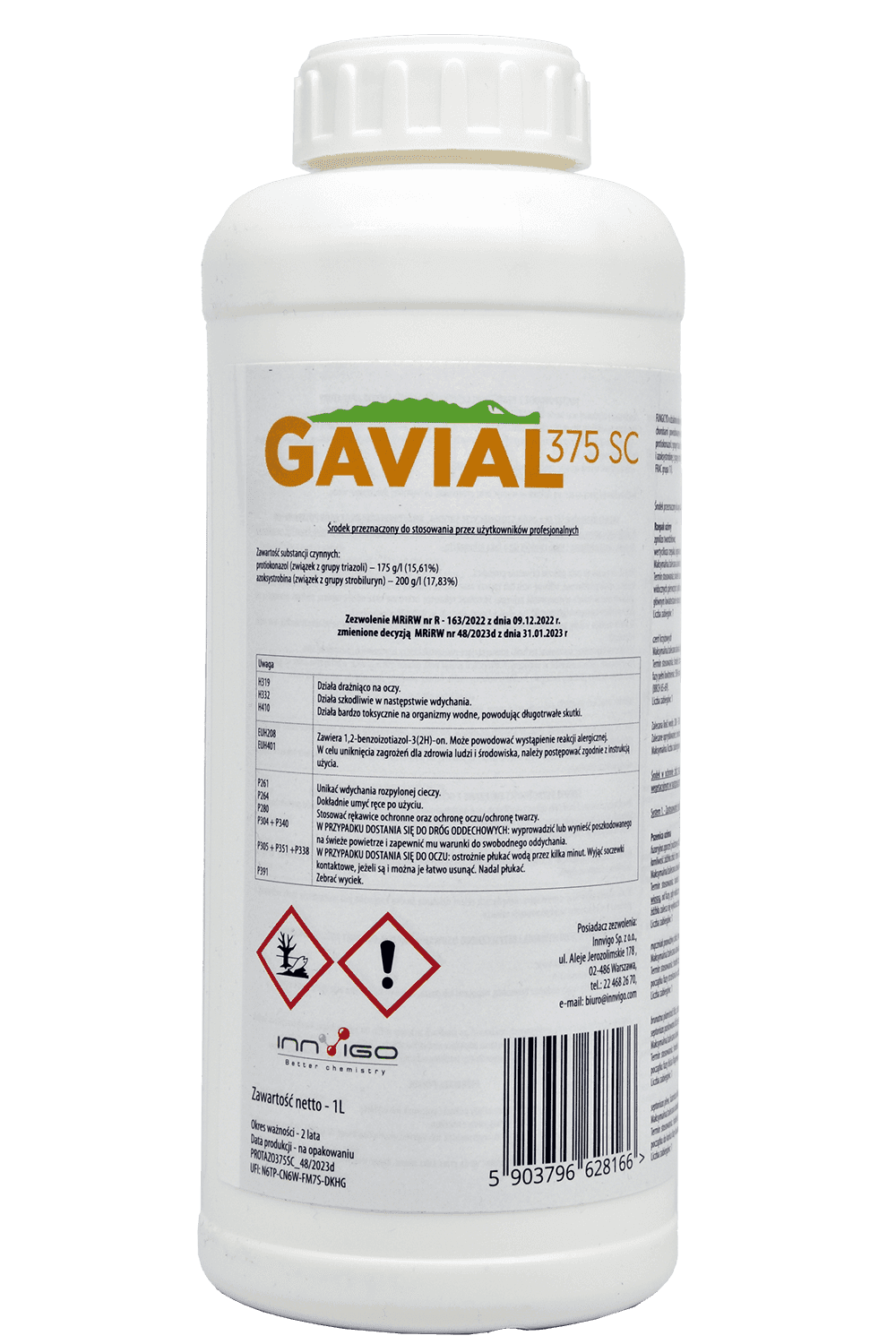
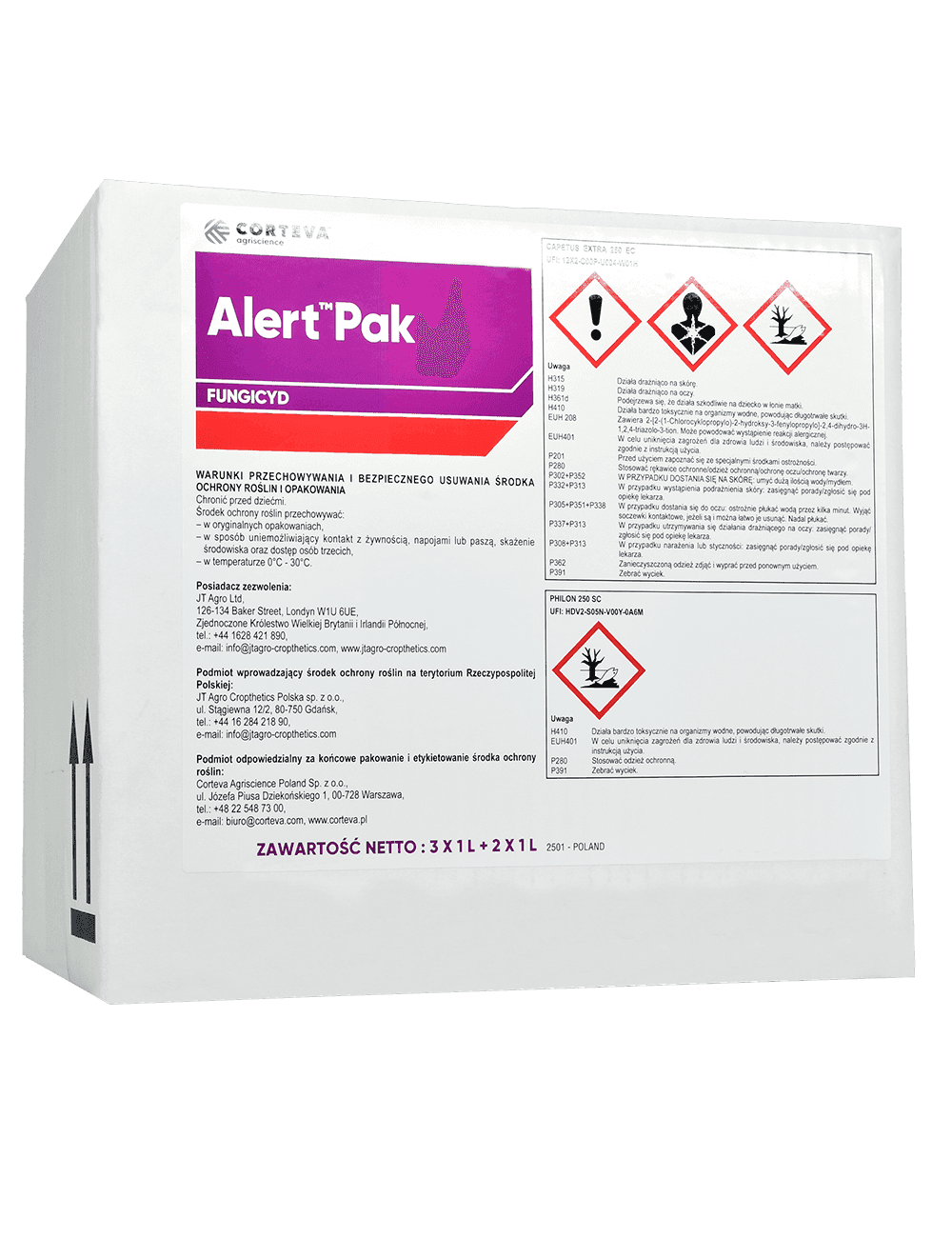
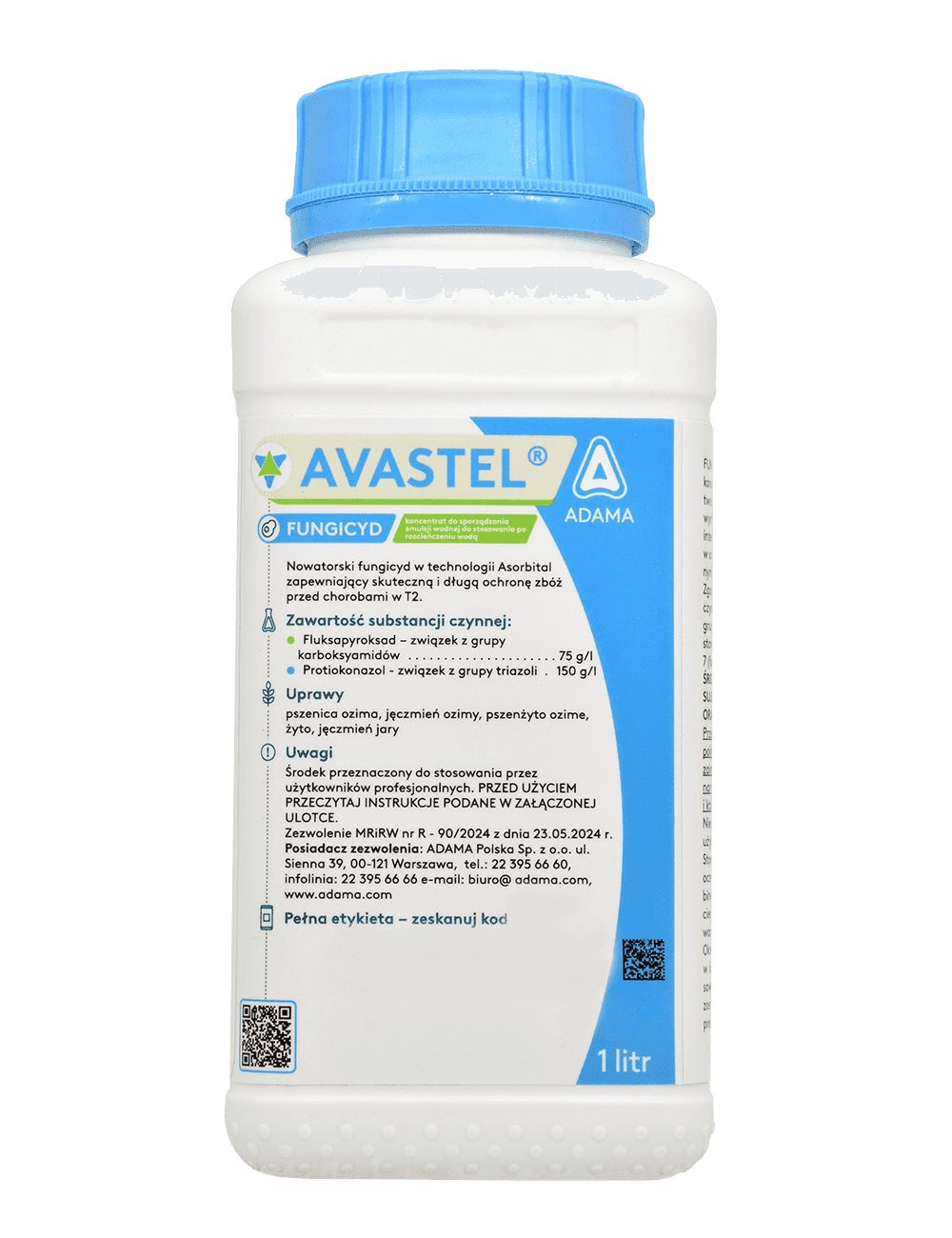
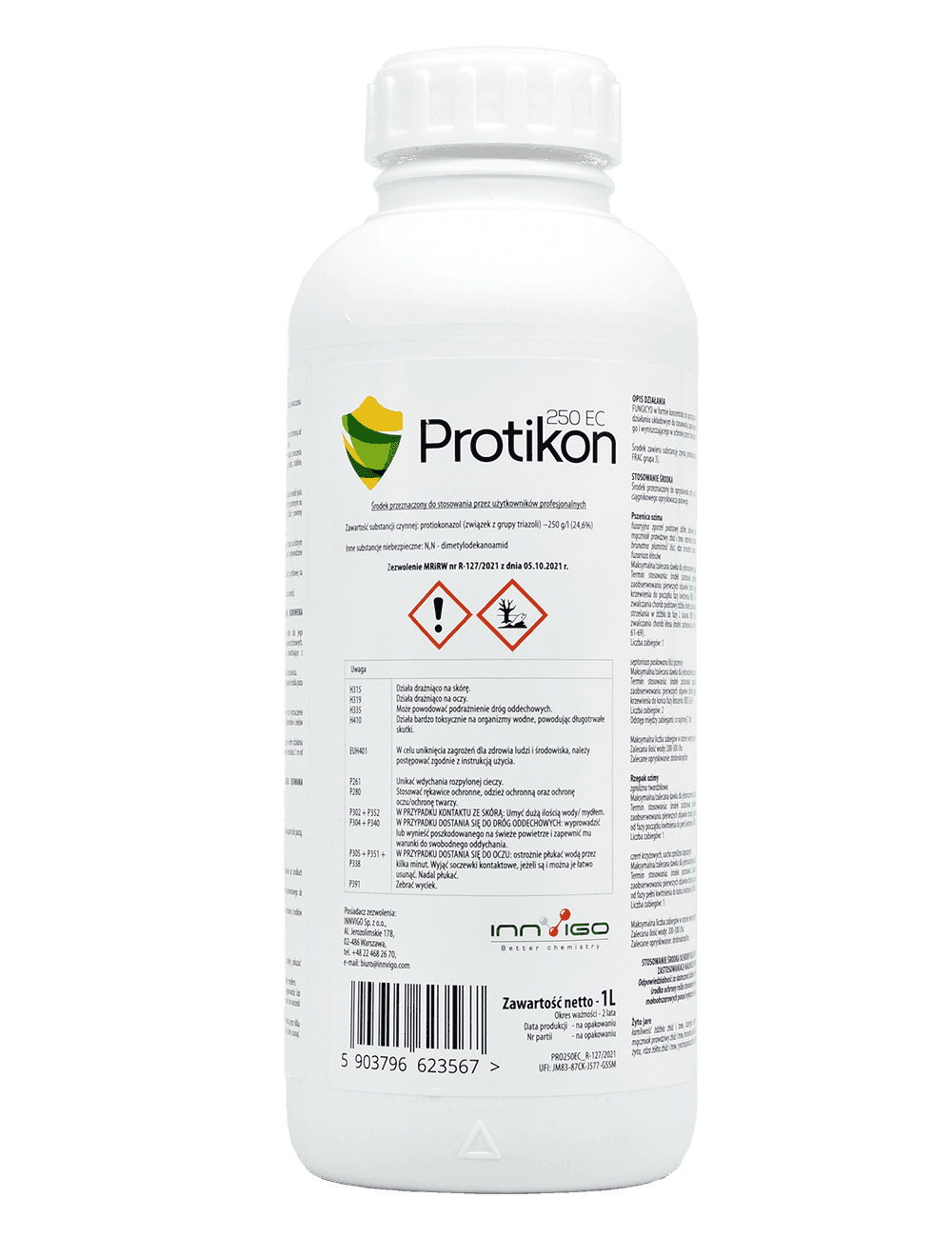
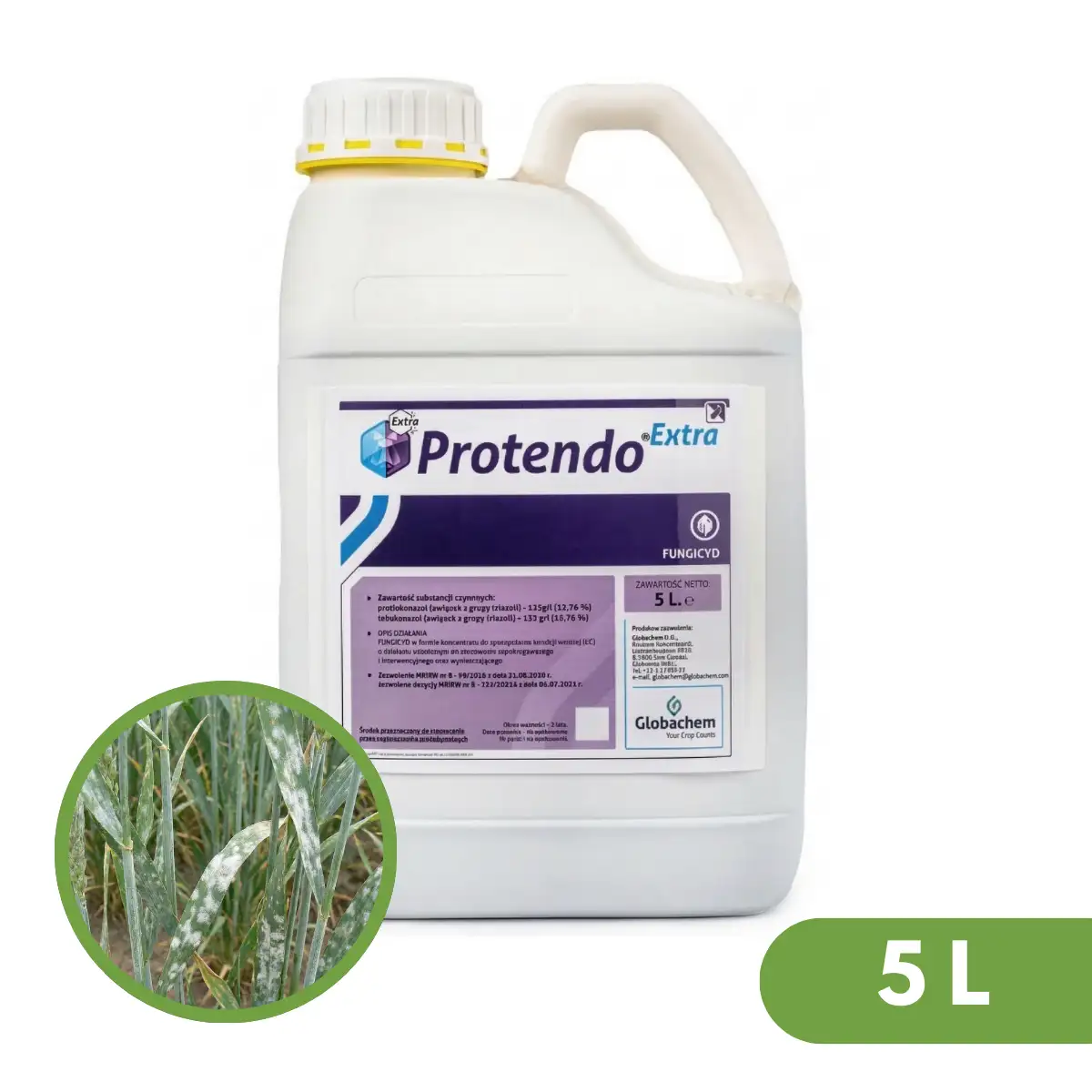
Bolt 250 (prothioconazole) - fungicide
Bolt 250 is a systemic fungicide containing prothioconazole (250 g/l), effectively protecting wheat, barley, triticale and rye against fungal diseases.
Description
Bolt 250 – effective cereal protection against fungal diseases
Bolt 250 is a systemic fungicide designed to protect winter and spring cereals against the most dangerous fungal diseases. It contains prothioconazole (250 g/l) – an active substance from the triazole group, which acts as a sterol biosynthesis inhibitor (SBI – demethylation inhibitor), effectively inhibiting the development of fungal pathogens. The product exhibits preventive, curative and eradicative action, meaning it combats infections at various stages of disease development, limiting its spread and protecting yields from losses.
Bolt 250 is available in a concentrate formulation for preparing water emulsions (EC), which facilitates application and ensures even coverage of plants. After application, the active substance quickly penetrates plant tissues and moves within them, protecting leaves and ears for a long time.
Benefits of using Bolt 250
- Effective protection against a wide range of fungal diseases,
- Systemic action providing long-lasting protection,
- Elimination of infections at various stages of disease development,
- Safe for cereals – no negative impact on yield,
- Easy application thanks to EC formulation.
Application and recommended doses
Barclay Bolt 250 is used to protect cereals against fungal diseases:
- Winter and spring wheat – septoria leaf blotch, brown rust, yellow rust, fusarium ear blight
- Winter and spring barley – powdery mildew, rhynchosporium, net blotch
- Winter triticale – brown rust, septoria leaf blotch
- Winter rye – brown rust, rhynchosporium
The product is applied from stem elongation to the end of flowering (BBCH 30-65) at a dose of 0.8 l/ha, using 100-300 litres of water per hectare. The recommended spraying technique is fine droplet spraying.
Summary
Bolt 250 is an effective fungicide that provides long-lasting protection of cereals against fungal diseases. Thanks to its systemic action, broad spectrum of controlled pathogens and ease of use, this product is an indispensable tool in yield protection.
Application and dosage
|
Crop |
Target Pest Control |
How to apply? Dosage |
When to apply? |
|---|---|---|---|
|
Winter wheat |
septoria leaf blotch, brown rust, yellow rust, fusarium ear blight |
Maximum dose for single application: 0.8 l/ha. |
From the beginning of stem elongation to the end of flowering (BBCH 30-65) Maximum number of treatments per growing season: 2. |
|
Spring wheat |
septoria leaf blotch, brown rust, yellow rust, fusarium ear blight |
Maximum dose for single application: 0.8 l/ha. |
From the beginning of stem elongation to the end of flowering (BBCH 30-65) Maximum number of treatments per growing season: 2. |
|
Winter barley |
powdery mildew, rhynchosporium, net blotch |
Maximum dose for single application: 0.8 l/ha. |
From the beginning of stem elongation to the end of flowering (BBCH 30-65) Maximum number of treatments per growing season: 2. |
|
Spring barley |
powdery mildew, rhynchosporium, net blotch |
Maximum dose for single application: 0.8 l/ha. |
From the beginning of stem elongation to the end of flowering (BBCH 30-65) Maximum number of treatments per growing season: 2. |
|
Winter triticale |
brown rust, septoria leaf blotch |
Maximum dose for single application: 0.8 l/ha. |
From the beginning of stem elongation to the end of flowering (BBCH 30-65). Apply preventively or curatively after symptoms appear. Maximum number of treatments per growing season: 2. |
|
Winter rye |
brown rust, rhynchosporium |
Maximum dose for single application: 0.8 l/ha. |
From the beginning of stem elongation to the end of flowering (BBCH 30-65). Apply preventively or after first disease symptoms appear. Maximum number of treatments per growing season: 2. |