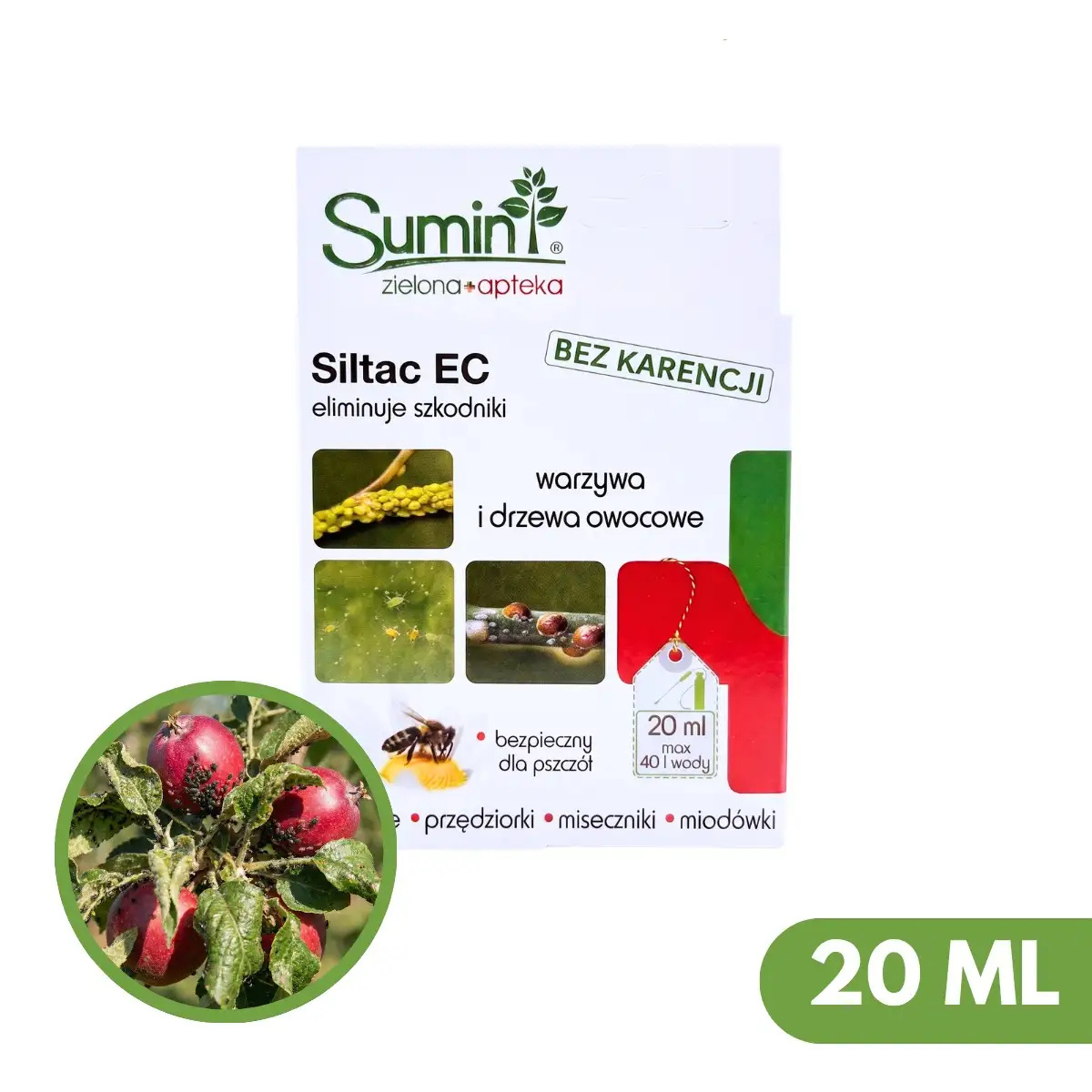
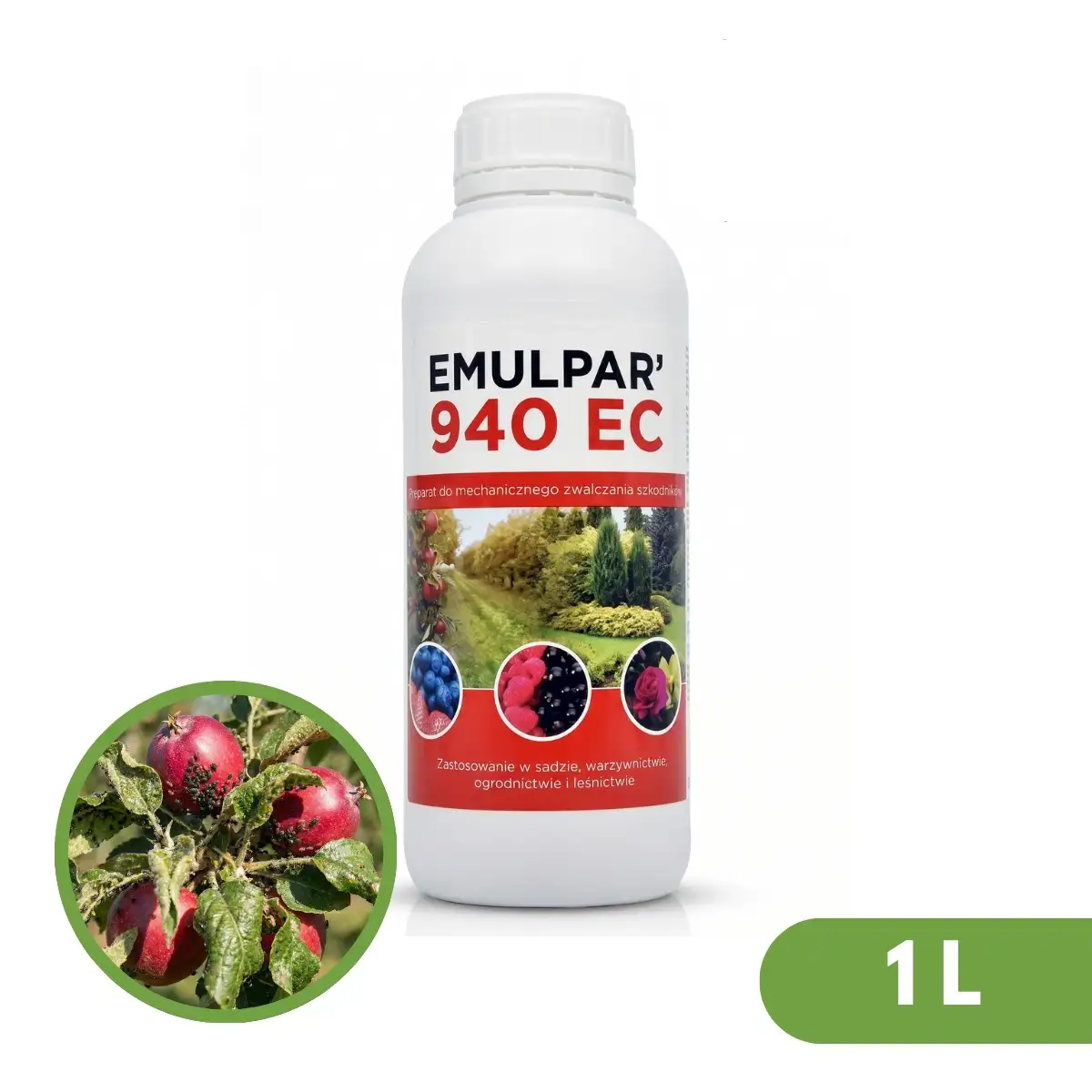
Siltac EC
Siltac EC is designed to physically eliminate harmful insects and mites feeding on cultivated plants. The formulation is based on silicone polymers.
Description
HOW TO USE SILTAC EC
HORTICULTURAL CROPS:
Fruit trees
Elimination of aphids (including apple blossom weevil), spider mites, rust mites, leafroller larvae, reduction of woolly aphid populations.
Recommended concentration: 0.15% (150 ml of product in 100 l of water)
Recommended water volume: 500-750 l/ha
Siltac EC effectively eliminates the fruit spider mite in early spring treatments. The treatment should be performed during the larval hatching phase from overwintering eggs:
apple tree – from green to pink bud stage;
plum tree – green bud stage.
Notes:
Avoid use during flowering – on some species it may cause damage to flower petals.
In apple tree and pear tree, to eliminate the risk of plant damage, treatments should be carried out under conditions allowing very rapid drying of the spray liquid on plants (e.g. before noon or afternoon, during dry weather).
Drizzle or light rain within 8-10 hours after spraying may increase the risk of phytotoxicity, especially on pear leaves and apple fruits.
Plants in flowering stage – on some species it may cause damage to flower petals.
Berry plants
Elimination of aphids (including apple blossom weevil), spider mites, rust mites, leafroller larvae, blackcurrant gall mite.
Recommended concentration: 0.15%-0.18% (150-180 ml of product in 100 l of water)
Use higher recommended concentrations in case of heavy pest infestation.
Recommended water volume: 500-800 l/ha
Notes:
For control of blackcurrant gall mite, apply Siltac EC during pest migration – from the start of vegetation to the period immediately after flowering (2-3 treatments, every 7-10 days).
During currant flowering, use the product at 0.1% concentration.
Treatments should be performed under conditions allowing very rapid drying of the spray liquid on plants.
DO NOT USE IN HASKAP BERRY CULTIVATION
VEGETABLES IN OPEN FIELD AND UNDER COVER:
Elimination of aphids, spider mites, whiteflies, reduction of thrips populations.
Recommended concentration: 0.12% – 0.15% (120 – 150 ml of product in 100 l of water)
Cucumber: 0.10%-0.12% (100-120 ml of product in 100 l of water).
Tomato and sweet pepper: 0.05% – 0.07% (50 – 70 ml of product in 100 l of water).
Recommended water volume: Adjust the spray liquid volume according to plant size to ensure thorough coverage with the product.
Notes:
Some tomato and sweet pepper varieties may be sensitive to Siltac EC.
On some species it may cause damage to flower petals.
To reduce the risk of leaf burn in sensitive crop varieties – Siltac EC must be applied when conditions allow easy and rapid drying of the spray liquid on leaves (during dry weather, during the day or dry evening).
Plants in flowering stage – on some species it may cause damage to flower petals.
After application of Siltac EC in cabbage cultivation, a temporary loss of blue-green colour may occur due to the reaction of the product with the waxy coating on leaves.
DUE TO THE RISK OF PHYTOTOXICITY, USE CAUTIOUSLY IN SOME LETTUCE VARIETIES AND HERB SPECIES.
WINTER AND SPRING CEREALS:
Elimination of aphids.
Recommended concentration: 0.15% (150 ml of product in 100 l of water)
Recommended water volume: 200 l/ha
ORNAMENTAL PLANTS IN OPEN FIELD AND UNDER COVER:
Elimination of aphids, spider mites, leafroller larvae, whiteflies, reduction of thrips populations.
Recommended concentrations:
Ornamental trees and shrubs: 0.12% – 0.15% (120 – 150 ml of product in 100 l of water)
Roses: 0.1%-0.12% (100 ml of product in 100 l of water)
Other ornamental plant species: 0.05% (50 ml in 100 l of water)
Recommended water volume: Adjust the spray liquid volume according to plant size to ensure thorough coverage with the product.
Notes:
To reduce the risk of leaf burn in sensitive crop varieties – Siltac EC must be applied when conditions allow easy and rapid drying of the spray liquid on leaves (during dry weather, during the day or dry evening).
Plants in flowering stage – on some species it may cause damage to flower petals.
In cultivation of some pelargonium, gerbera, chrysanthemum varieties and other plants with delicate leaves, it may cause leaf damage.
Before application of the product CONDUCT TESTS TO EXCLUDE PHYTOTOXICITY.