Algasoil - granulated organic fertiliser from seaweed
Algasoil by Leili is a granulated organic fertiliser based on Sargassum ssp seaweed, intended for use in organic farming. It is the first product of its kind in Poland, sold in over 80 countries.
Description
Algasoil by Leili - granulated fertiliser based on seaweed
What are the benefits of using the Algasoil granulated seaweed fertiliser?
- More developed root system of plants,
- Greater availability and utilisation of nutrients,
- Activation of biological life,
- Improvement of soil structure and water absorption,
- Increased health of the root system,
- Faster plant growth,
- Improves the taste of fruits (they will be sweeter), as well as their colour, size and quality,
- Better yields,
- It is economical and ecological,
- Convenient granule form,
- Possibility to reduce NPK fertiliser use by 25%,
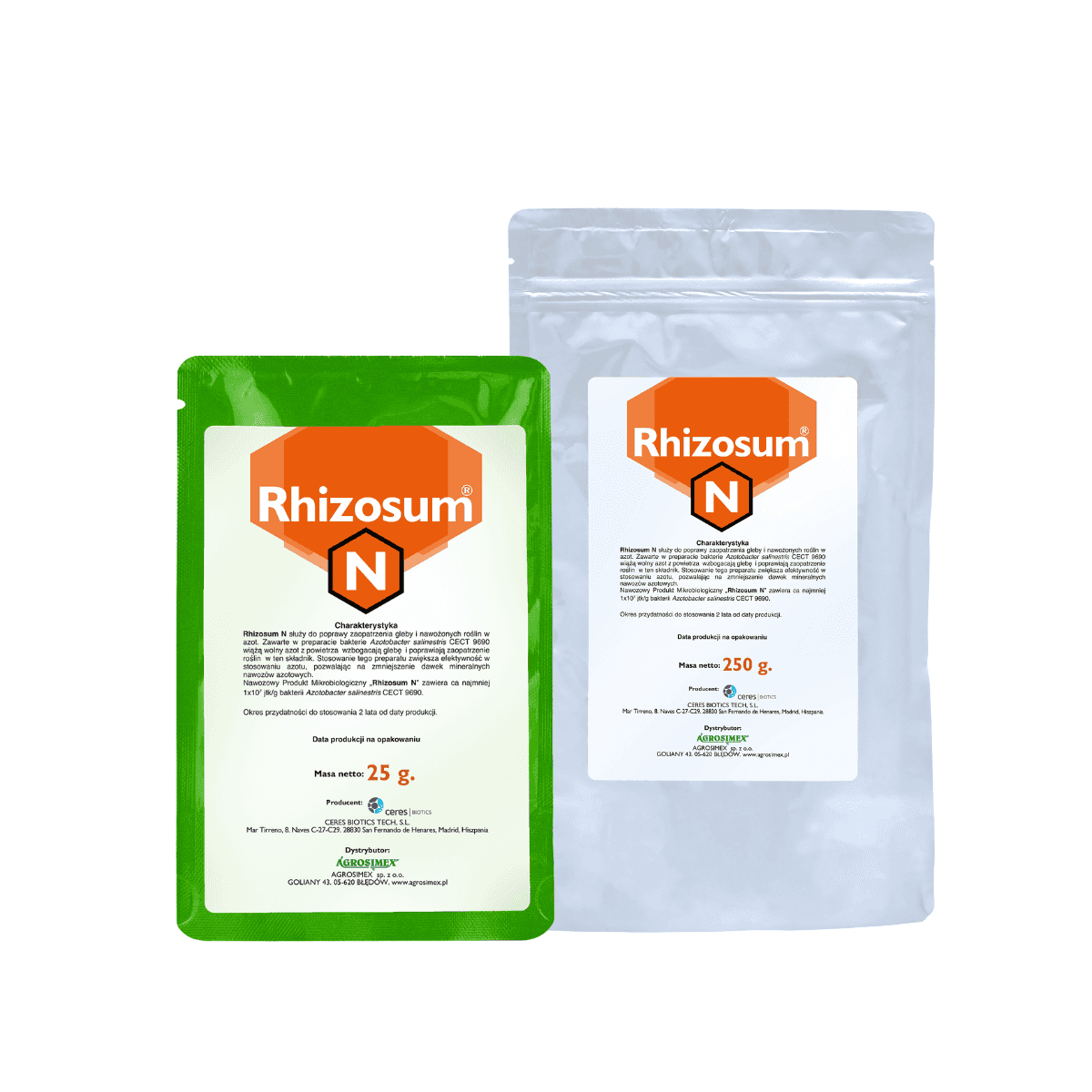
- Higher effectiveness of biological preparations including Rhizosum N Plus,
- Reduction of antagonism in the soil between nutrients.
Algasoil is a granulated organic soil fertiliser produced from Sargassum ssp seaweed. It is used in organic farming. It is the first granulated soil fertiliser obtained from seaweed in Poland.
It stimulates root system development, improves soil structure, increases nutrient availability and utilisation, activates biological life. It also improves root system health, plant growth and yield.
It also positively affects fruits - improving their taste (they will be sweeter), colour, size and quality.
Algasoil rebuilds the granular soil structure, retains water-soluble nutrients, creates more colloidal substances and prevents leaching and degradation of nutrients such as nitrogen, potassium, magnesium, calcium, etc.
After applying Algasoil fertiliser, benefits can also be observed in nutrient accumulation and increased utilisation rate.
It contains various active substances – humic acids, alginic acid, amino acids, mannitol, laminarin, iodine and natural oligosaccharides to prepare the soil for rapid expansion of beneficial microorganisms and activate free movement of earthworms. More living organisms provide a good ecological environment for better germination, root development, intensive growth and achieving high crop yields even under adverse conditions.
Allows reducing mineral fertiliser doses by 25%.
The product is approved for use in organic farming. It is sold in over 80 countries - now also in Poland.
When to apply Algasoil fertiliser?
- When soil humus level is low.
- When mineral fertilisers have low efficiency and are poorly utilised by plants.
- To increase soil microbiological activity.
- When using preparations containing microorganisms to increase their activity.
- When aiming for maximum yields.
What is the composition of the Algasoil soil fertiliser with seaweed?
In brief it contains:
- 35% organic matter,
- 10% organic carbon,
- 3.7% humic and fulvic acids,
- NPK 2-2.9-3.5,
- iodine and alginic acid,
- amino acids,
- laminarin,
- mannitol,
- oligosaccharides.
In other words (more detailed data):
- Total nitrogen - at least 2% w/w,
- Potassium expressed as K2O - at least 3.5% w/w,
- Water-soluble potassium expressed as K2O - at least 2.9% w/w,
- Phosphorus soluble in mineral acids expressed as P2O5 - at least 2.7%,
- Total iodine (J) - at least 0.003% w/w,
- Organic carbon Corg. - at least 10% w/w,
- Organic substances - at least 35.5% w/w,
- Humic and fulvic acids - at least 3.7% w/w.
How can Algasoil product be applied?
Algasoil seaweed fertiliser can be applied to the soil at a dose of 50-100kg/ha. When using Algasoil, NPK fertiliser use can be reduced by 25%.
In which crops can Algasoil seaweed preparation be used?
Algasoil fertiliser can be used in all crops: agricultural, orchard and vegetable.
What are the recommendations regarding the use and storage of Algasoil seaweed fertiliser?
- Combined use of Algasoil fertiliser with plant protection products is not recommended.
- Do not apply on frozen, waterlogged, saturated or snow-covered soils. Soil that freezes at least superficially during the day is considered frozen soil.
- Do not exceed recommended doses.
- Store fertiliser in closed, original packaging, in dry rooms, away from food and feed, in a place inaccessible to children. Protect from heat, direct sunlight, moisture and mechanical damage during storage and transport.
- Shelf life - 3 years.
What precautions should be taken when using Algasoil soil fertiliser with seaweed?
- When working with the fertiliser, use appropriate personal protective equipment: safety glasses, protective gloves and clothing. Do not eat, drink or smoke while working with the fertiliser.
- Wash hands after working with the fertiliser.
- Keep out of reach of children.
- In case of accidental ingestion, seek medical advice immediately. Rinse areas contaminated with fertiliser thoroughly with water.
For more knowledge related to seaweed, visit the Vegetable Advisory, Orchard Advisory, Agricultural Advisor pages.
Application and dosage
What are the dosage, timing and method of application of Algasoil granulated fertiliser for vegetables, orchards, agricultural crops?
| Agricultural crops | Algasoil is recommended at a dose of 50-100kg/ha before sowing seeds or planting potatoes, preferably together with NPK mineral fertilisers using fertiliser spreaders. In case of surface application, mix with soil during soil preparation for sowing or planting. |
| Orchard crops | Algasoil is recommended at a dose of 50-100kg/ha before planting fruit trees and shrubs, preferably together with NPK mineral fertilisers using fertiliser spreaders. In case of surface application, mix with soil during soil preparation for planting trees and shrubs. |
| Fruit plantations | Apply fertiliser at 50-100kg/ha in early spring, preferably together with mineral fertilisers using fertiliser spreaders. |
| Blueberry | Apply fertiliser in early spring at 100kg/ha in rows of shrubs using fertiliser spreaders. |
| Vegetable crops | Algasoil is recommended at a dose of 50-100kg/ha before sowing seeds or planting vegetables, preferably together with NPK mineral fertilisers using fertiliser spreaders. In case of surface application, mix with soil during soil preparation for sowing or planting seedlings. |
| Cucumbers | Fertiliser should be applied at 100kg/ha before sowing seeds together with NPK mineral fertilisers using fertiliser spreaders. In case of surface application, mix with soil during soil preparation for sowing or planting seedlings. |
| Pot and balcony plants | Mix fertiliser with growing medium at 4-5 kg per 1 m3 (4-5 g per 1 litre of growing medium), fill pots or balcony boxes with the medium and plant the plants, then water. During cultivation, apply standard top dressing with NPK fertilisers. |
| Bedding plants, ornamental trees and shrubs | Before planting — evenly distribute fertiliser on previously prepared soil at a dose of 100 kg per ha (100 g per 10 m2), preferably together with NPK mineral fertilisers, then mix to a depth of about 15 cm using available cultivation tools. During the growing season, apply standard top dressing with NPK fertilisers. Existing plantings/plantations — in early spring (before vegetation starts), evenly distribute fertiliser around plants at a dose of 50-100 kg per ha (50-100 g per 10 m2), preferably together with NPK mineral fertilisers, then water. During the growing season, apply standard top dressing with NPK fertilisers. When planting trees and shrubs — mix fertiliser with soil from the hole in a ratio of 5-8 g per 1 litre of soil and cover the root ball, then water. During the growing season, apply standard top dressing with NPK fertilisers. |
| Lawn | Fertiliser is best applied in spring. For soil intended for lawn establishment, evenly distribute fertiliser at 100 g per 10 m2. Then mix with the topsoil layer using a rototiller or other tools, level and sow grass. During the growing season, apply standard top dressing with NPK fertilisers. Top dressing — in early spring (before vegetation starts), spread fertiliser on the grass at a dose of 50-100 kg per ha (50-100 g per 10 m2) and then water. Repeat the treatment after 30 days using 50 kg per ha (50 g fertiliser per 10 m2), preferably together with NPK mineral fertilisers. |