 SKU CH-13932
Rhapsody
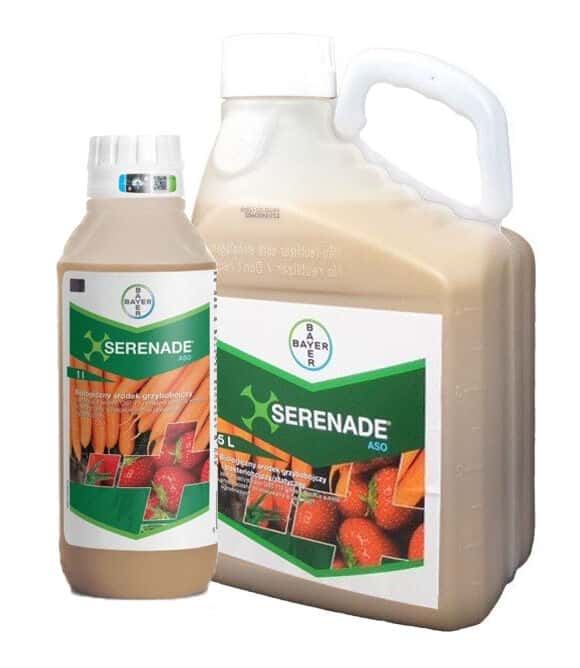
Rhapsody is a biological fungicide and bactericide based on the natural strain of bacteria Bacillus subtilis QST 713.
- Pack
- 10 l
Currently unavailable
Description
RHAPSODY ACTION:
Rhapsody is a biological fungicide and bactericide distinguished by its surface action, providing effective protection against fungal and bacterial diseases. The preparation is in the form of a concentrated suspension, and its key ingredient is the naturally occurring strain of bacteria Bacillus subtilis QST 713. These beneficial microorganisms, working in harmony with nature, form a reliable protective shield for your crops.
The action of Rhapsody involves several defence mechanisms. Bacillus subtilis bacteria actively compete with pathogens for living space and nutrients on the plant surface, preventing their development. Additionally, they produce special substances that disrupt the functioning of fungal cell membranes and block bacterial cell wall synthesis, effectively inhibiting their growth. The product also induces systemic plant resistance, enhancing their natural ability to defend against infections. Rhapsody is especially recommended for preventive use, allowing crop protection before diseases can develop.
Biological product - approved for use in organic farming.
Advantages of using Rhapsody:
-Biological protection: Product based on a natural bacterial strain, making it environmentally friendly and safe for plants.
-Multidirectional action: Controls fungal and bacterial diseases, offering comprehensive protection.
-Resistance mechanism: Induces natural plant resistance, supporting healthy growth.
-Prevention: Achieves highest effectiveness when used preventively, protecting crops before disease occurrence.
-Wide application: Can be used in many fruit, vegetable and ornamental crops.
RHAPSODY ACTIVE SUBSTANCE CONTENT:
Bacillus subtilis strain QST 713 – 13.96 g/l (1.34%) (minimum concentration 1.042 x10¹² CFU/L).
RHAPSODY SCOPE OF USE AND DOSES:
Product for use with self-propelled or tractor-mounted orchard or field sprayers.
Apple tree
Fire blight
Maximum dose for single application: 8.0 l/ha
Recommended dose for single application: 4.0-8.0 l/ha
Application timing: Use preventively from the beginning of flowering to the end of fruit development (fruits reach 90% of typical size) (BBCH 60-79).
Maximum number of treatments per growing season: 6
Interval between treatments: at least 5 days.
Recommended water volume: 500-750 l/ha
Recommended spraying: fine droplet.
Strawberry (under cover)
Grey mould
Maximum/recommended dose for single application: 8.0 l/ha
Application timing: Use preventively from the beginning of flowering to the second harvest (majority of fruits coloured) (BBCH 60-89).
Maximum number of treatments per growing season: 6
Interval between treatments: at least 5 days
Recommended water volume: 400-1000 l/ha
Recommended spraying: fine droplet.
Carrot (field cultivation)
Alternaria leaf spot of carrot
Maximum/recommended dose for single application: 8.0 l/ha
Application timing: Use preventively from the stage when the root begins to widen to the stage when it reaches typical size and shape (BBCH 41-49).
Number of treatments: 6
Interval between treatments: at least 5 days
Recommended water volume: 200-500 l/ha
Recommended spraying: fine droplet.
Maximum number of treatments in the carrot growing season considering product use indicated later on the label: 6
Lettuce (field cultivation)
Grey mould
Maximum/recommended dose for single application: 8.0 l/ha
Application timing: Use preventively from the 3-leaf stage to the stage when typical leaf mass is reached (BBCH 13-49).
Number of treatments: 6
Interval between treatments: at least 5 days
Recommended water volume: 200-500 l/ha
Recommended spraying: fine droplet.
Maximum number of treatments in the field-grown lettuce growing season considering product use indicated later on the label: 6
Tomato, sweet pepper, aubergine (field cultivation)
Grey mould, alternaria leaf spot
Maximum/recommended dose for single application: 8.0 l/ha
Application timing: Use preventively or immediately after first disease symptoms appear from the beginning of side shoot development to full maturity (fruits have typical colour) (BBCH 21-89).
Number of treatments: 6
Interval between treatments: at least 5 days
Recommended water volume: 500-1000 l/ha
Recommended spraying: fine droplet.
Maximum number of treatments in the growing season of tomato, aubergine and sweet pepper grown in the field considering product use indicated later on the label: 6
Tomato, sweet pepper, aubergine (under cover)
Grey mould
Maximum/recommended dose for single application: 8.0 l/ha
Application timing: Use preventively from the beginning of side shoot development to full maturity (fruits have typical colour) (BBCH 21-89).
Number of treatments: 6
Interval between treatments: at least 5 days
Recommended water volume: 500-1000 l/ha
Recommended spraying: fine droplet.
Maximum number of treatments in the growing season of tomato, aubergine and sweet pepper grown under cover considering product use indicated later on the label: 6
Winter oilseed rape
Sclerotinia stem rot
Maximum/recommended dose for single application: 2.0 l/ha
Application timing: Use preventively from the beginning of flowering (first open flowers) to the end of flowering (BBCH 60-69).
Maximum number of treatments per growing season: 2
Interval between treatments: at least 5 days
Recommended water volume: 100-400 l/ha
Recommended spraying: fine droplet
Potato
Potato Rhizoctonia
Maximum/recommended dose for single application: 5.0 l/ha
Application timing: Apply during planting directly on tubers as they drop into the ridge and simultaneously spray the soil in strips (BBCH 00).
Recommended water volume: 100-250 l/ha
Maximum number of treatments per growing season: 1
USE OF PLANT PROTECTION PRODUCT IN SMALL-AREA CROPS AND APPLICATIONS
The user alone is responsible for the effectiveness and phytotoxicity of the plant protection product used in small-area crops
Strawberry (field cultivation)
Grey mould, powdery mildew of strawberry
Maximum/recommended dose for single application: 8.0 l/ha
Application timing: Use preventively from pre-flowering to the second harvest (majority of fruits coloured) (BBCH 55-89).
Maximum number of treatments per growing season: 6
Interval between treatments: at least 5 days
Recommended water volume: 400-1000 l/ha
Recommended spraying: fine droplet.
Pear tree
Bacterial canker of fruit trees, fire blight
Maximum/recommended dose for single application: 8.0 l/ha
Application timing: Use preventively from the beginning of flowering to the end of fruit ripening (BBCH 60-79).
Maximum number of treatments per growing season: 4
Interval between treatments: at least 5 days
Recommended water volume: 500-750 l/ha
Recommended spraying: fine droplet.
Apricot, peach, sour cherry, sweet cherry, plum tree
Brown rot of stone fruit trees, bacterial canker of fruit trees
Maximum/recommended dose for single application: 8.0 l/ha
Application timing: Use preventively from the beginning of flowering to the end of advanced fruit ripening (BBCH 51-85).
Maximum number of treatments per growing season: 4
Interval between treatments: at least 5 days
Recommended water volume: 500-750 l/ha
Recommended spraying: fine droplet.
Gooseberry, chokeberry, blueberry, blackberry, raspberry, black currant, red currant, white currant, cranberry (field cultivation)
Grey mould, powdery mildews
Maximum/recommended dose for single application: 8.0 l/ha
Application timing: Use preventively from the beginning of flowering to the end of advanced fruit ripening (BBCH 51-85).
Maximum number of treatments per growing season: 9
Interval between treatments: at least 5 days
Recommended water volume: 500-750 l/ha
Recommended spraying: fine droplet.
Grapevine
Grey mould, powdery mildew of grapevine
Maximum dose for single application: 8.0 l/ha
Recommended dose for single application: 4.0 - 8.0 l/ha
Application timing: Use preventively from the beginning of flowering to full berry maturity (BBCH 60-89).
Maximum number of treatments per growing season: 4
Interval between treatments: at least 5 days
Recommended water volume: 300-750 l/ha
Recommended spraying: fine droplet.
Carrot (field cultivation)
Powdery mildew of umbellifers
Maximum/recommended dose for single application: 8.0 l/ha
Application timing: Use preventively from the stage when the root begins to widen to the stage when it reaches typical size and shape (BBCH 41-49).
Number of treatments: 6
Interval between treatments: at least 5 days
Recommended water volume: 300-600 l/ha
Recommended spraying: fine droplet.
Carrot root rot spot
Maximum/recommended dose for single application: 10.0 l/ha
Application timing: Apply to soil before carrot sowing (BBCH 00).
Number of treatments: 1
Recommended water volume: 200-500 l/ha
Maximum number of treatments in the carrot growing season considering product use indicated earlier on the label: 6
Root parsley, parsnip, celeriac
Powdery mildew of umbellifers
Maximum/recommended dose for single application: 8.0 l/ha
Application timing: Use preventively from the stage when the root begins to widen to the stage when it reaches typical size and shape (BBCH 41-49).
Number of treatments: 6
Interval between treatments: at least 5 days
Recommended water volume: 300-600 l/ha
Recommended spraying: fine droplet.
Root rot spot
Soil treatment:
Maximum/recommended dose for single application: 10.0 l/ha
Application timing: Apply to soil before sowing the crop (BBCH 00).
Number of treatments: 1
Recommended water volume: 200-500 l/ha
Maximum number of treatments per growing season: 6
Lettuce (field cultivation)
Sclerotinia stem rot
Maximum/recommended dose for single application: 8.0 l/ha
Application timing: Use preventively from the 3-leaf stage to the stage when typical leaf mass is reached (BBCH 13-49).
Number of treatments: 6
Interval between treatments: at least 5 days
Recommended water volume: 200-500 l/ha
Recommended spraying: fine droplet.
Sclerotinia stem rot, rhizoctonia
Maximum/recommended dose for single application: 10.0 l/ha
Application timing: Apply before lettuce planting/sowing (BBCH 00).
Number of treatments: 1
Recommended water volume: 200-500 l/ha
Maximum number of treatments in the field-grown lettuce growing season considering product use indicated earlier on the label: 6
Lettuce (under cover)
Grey mould
Maximum/recommended dose for single application: 8.0 l/ha
Application timing: Use preventively from the 3-leaf stage to the stage when typical leaf mass is reached (BBCH 13-49).
Number of treatments: 6
Interval between treatments: at least 5 days
Recommended water volume: 200-500 l/ha
Recommended spraying: fine droplet.
Sclerotinia stem rot
Maximum/recommended dose for single application: 8.0 l/ha
Application timing: Use preventively from the 3-leaf stage to the stage when typical leaf mass is reached (BBCH 13-49).
Number of treatments: 6
Interval between treatments: at least 5 days
Recommended water volume: 200-500 l/ha
Recommended spraying: fine droplet.
Sclerotinia stem rot, rhizoctonia
Maximum/recommended dose for single application: 10.0 l/ha
Application timing: Apply before lettuce planting/sowing (BBCH 00).
Number of treatments: 1
Recommended water volume: 200-500 l/ha
Recommended spraying: fine droplet.
Maximum number of treatments in the lettuce growing season: 6
Tomato, aubergine, sweet pepper (field cultivation)
Fusarium dry rot
Maximum/recommended dose for single application: 10.0 l/ha
Application timing: Apply before planting the crop (BBCH 00).
Number of treatments: 1
Recommended water volume: 200-500 l/ha
Maximum number of treatments in the growing season of tomato, aubergine and sweet pepper grown in the field considering product use indicated earlier on the label: 6
Tomato, aubergine, sweet pepper (under cover)
Alternaria leaf spot, bacterial spot of tomato, bacterial spot of sweet pepper, bacterial spot of aubergine
Maximum/recommended dose for single application: 8.0 l/ha
Application timing: Use preventively from the beginning of side shoot development to full maturity (fruits have typical colour) (BBCH 21-89).
Number of treatments: 6
Interval between treatments: at least 5 days
Recommended water volume: 500-1000 l/ha
Recommended spraying: fine droplet.
Fusarium dry rot
Maximum/recommended dose for single application: 10.0 l/ha
Application timing: Apply before planting the crop (BBCH 00).
Number of treatments: 1
Recommended water volume: 200-500 l/ha
Recommended spraying: fine droplet.
Maximum number of treatments in the growing season of tomato, aubergine and sweet pepper grown under cover considering product use indicated earlier on the label: 6
Cucumber (field and under cover)
Powdery mildew of cucurbits, bacterial angular leaf spot of cucumber
Maximum/recommended dose for single application: 8.0 l/ha
Application timing: Use preventively from the beginning of side shoot development to full maturity (fruits have typical colour) (BBCH 21-89).
Maximum number of treatments per growing season: 6
Interval between treatments: at least 5 days
Recommended water volume: 400-800 l/ha
Recommended spraying: fine droplet.
White cabbage, red cabbage, Chinese cabbage, Brussels sprouts, cauliflower, kale, broccoli
Alternaria leaf spot, powdery mildew, grey mould, black rot
Maximum/recommended dose for single application: 10.0 l/ha
Application timing: Use preventively on seedlings or immediately after transplanting to the field.
Maximum number of treatments per growing season: 6
Interval between treatments: at least 10 days
Recommended water volume: 200-600 l/ha
Recommended spraying: fine droplet.
Ornamental plants (field and under cover)
Powdery mildews
Maximum/recommended dose for single application: 5.0 l/ha
Application timing: Use preventively or immediately after first disease symptoms appear, from the first leaf development stage to full maturity and fruit colouring (BBCH 11-85).
Maximum number of treatments per growing season: 6
Interval between treatments: at least 5 days
Recommended water volume: 500-4000 l/ha
Recommended spraying: fine droplet.
RHAPSODY PRE-HARVEST INTERVAL:
Do not apply on the day of harvest of edible plants.