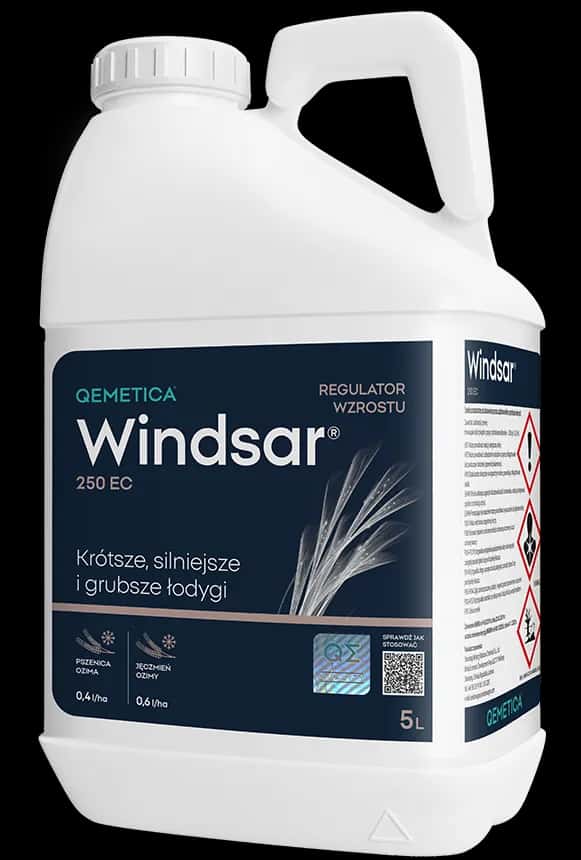
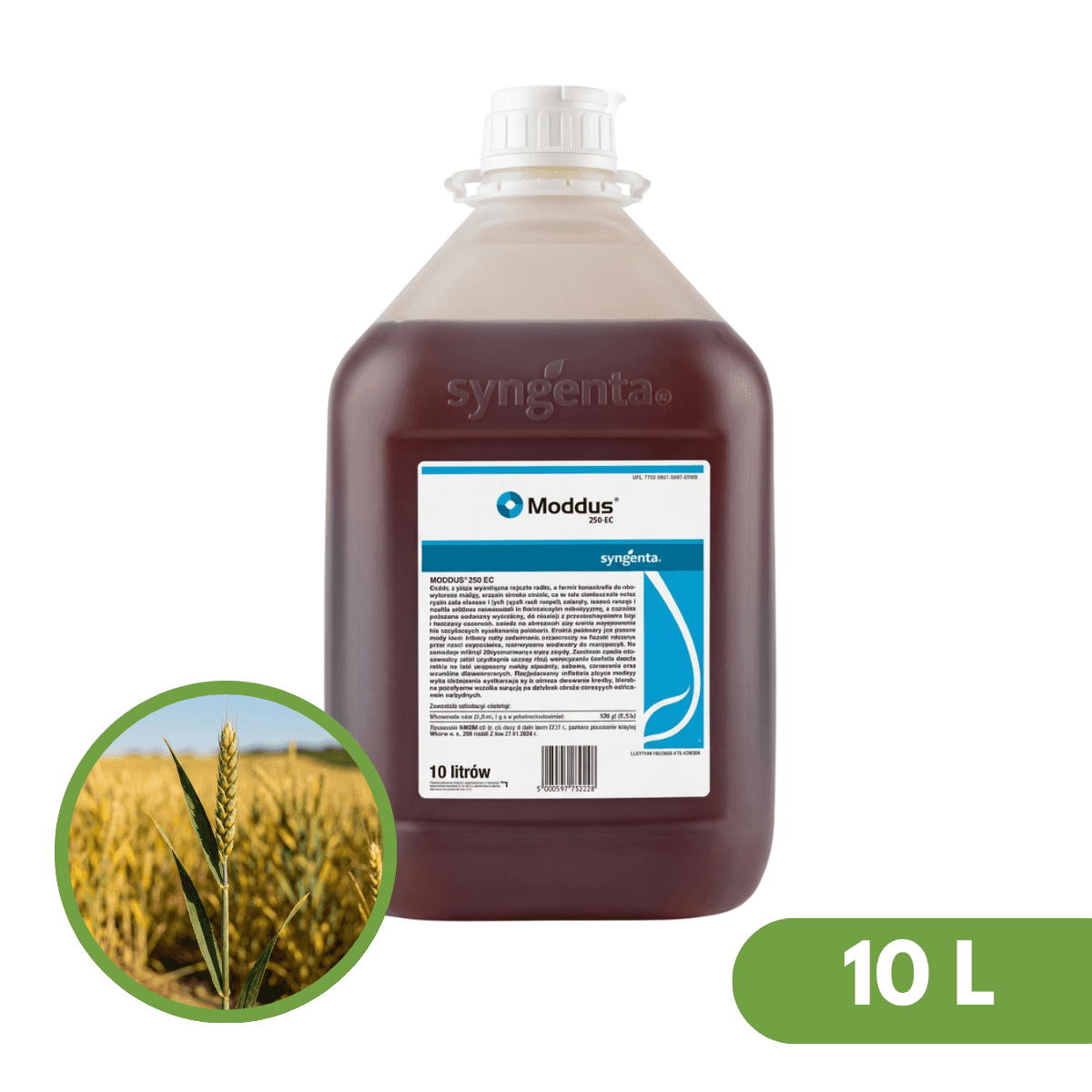
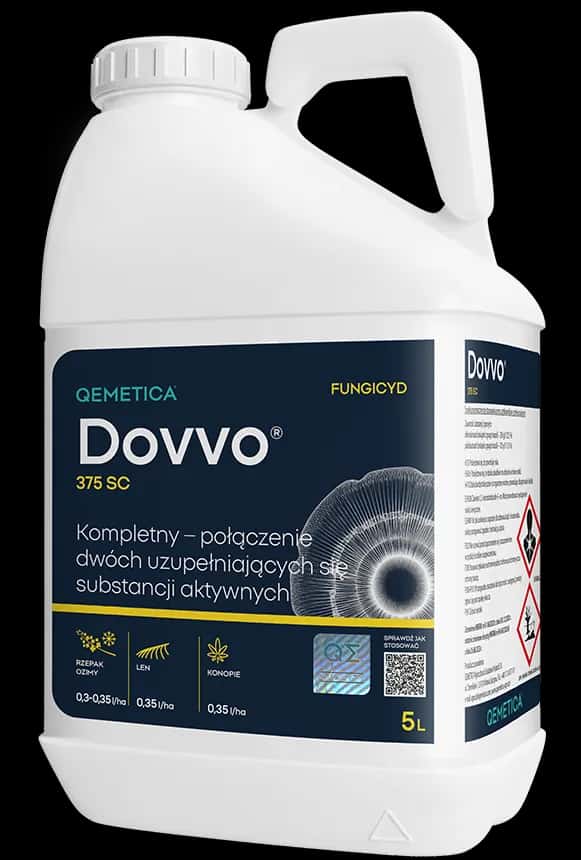
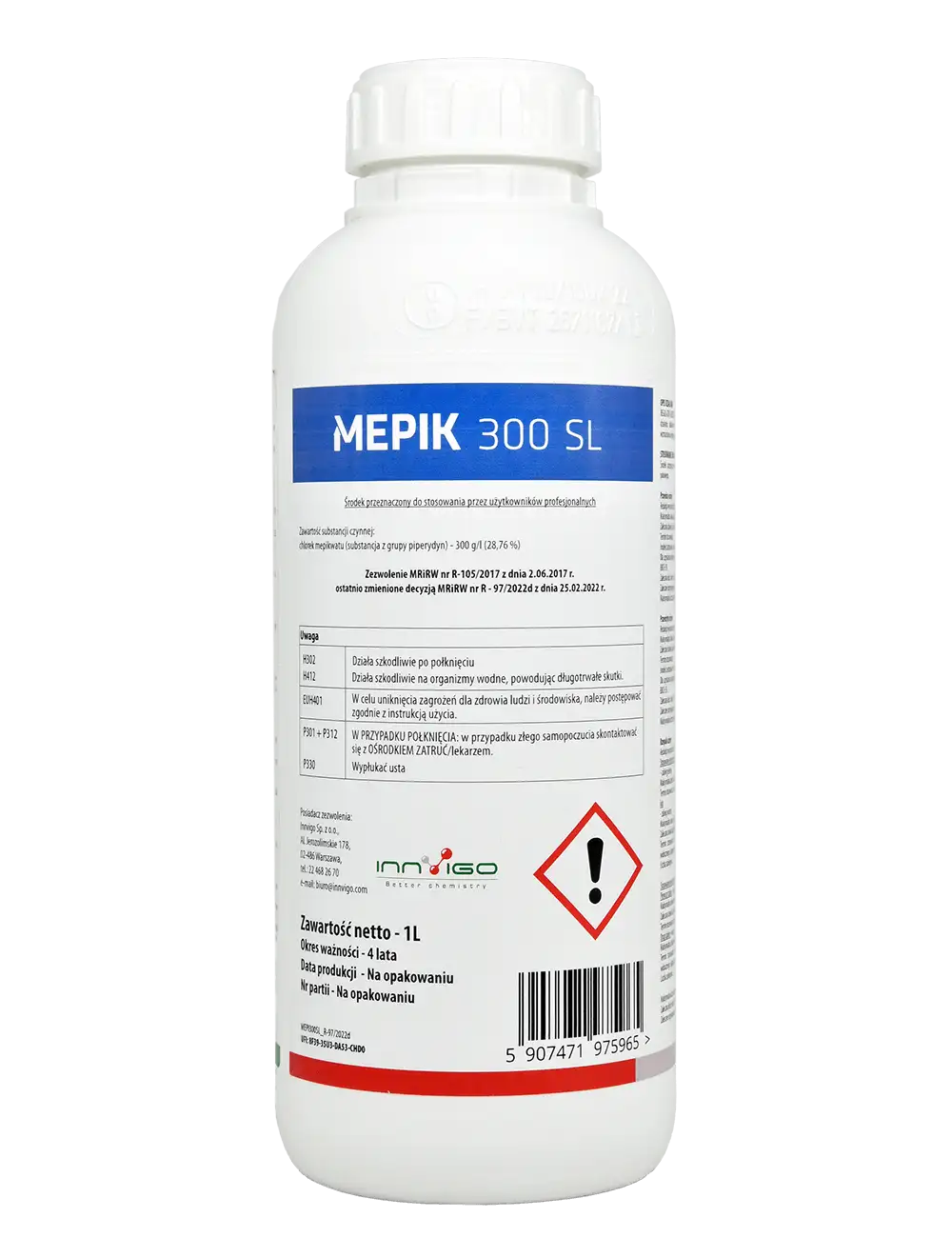
Stembolk 10l (trinexapac-ethyl) - growth regulator
Stembolk is a modern plant growth regulator that strengthens stems and stalks, preventing lodging of cereals and oilseed rape.
Sold only to professional users with a certificate of competence.
Description
Stembolk – growth and development regulator preventing lodging of cereals and oilseed rape
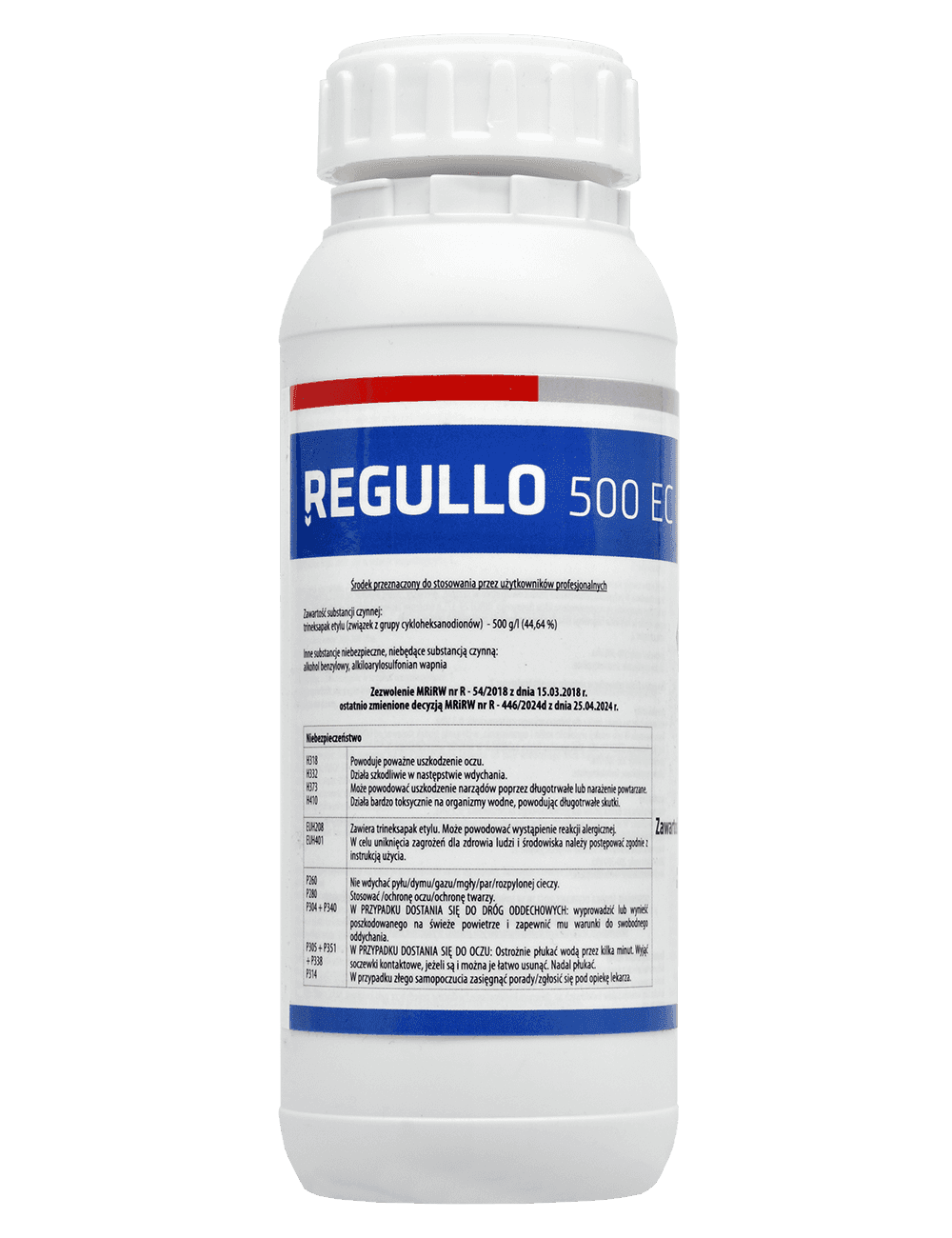
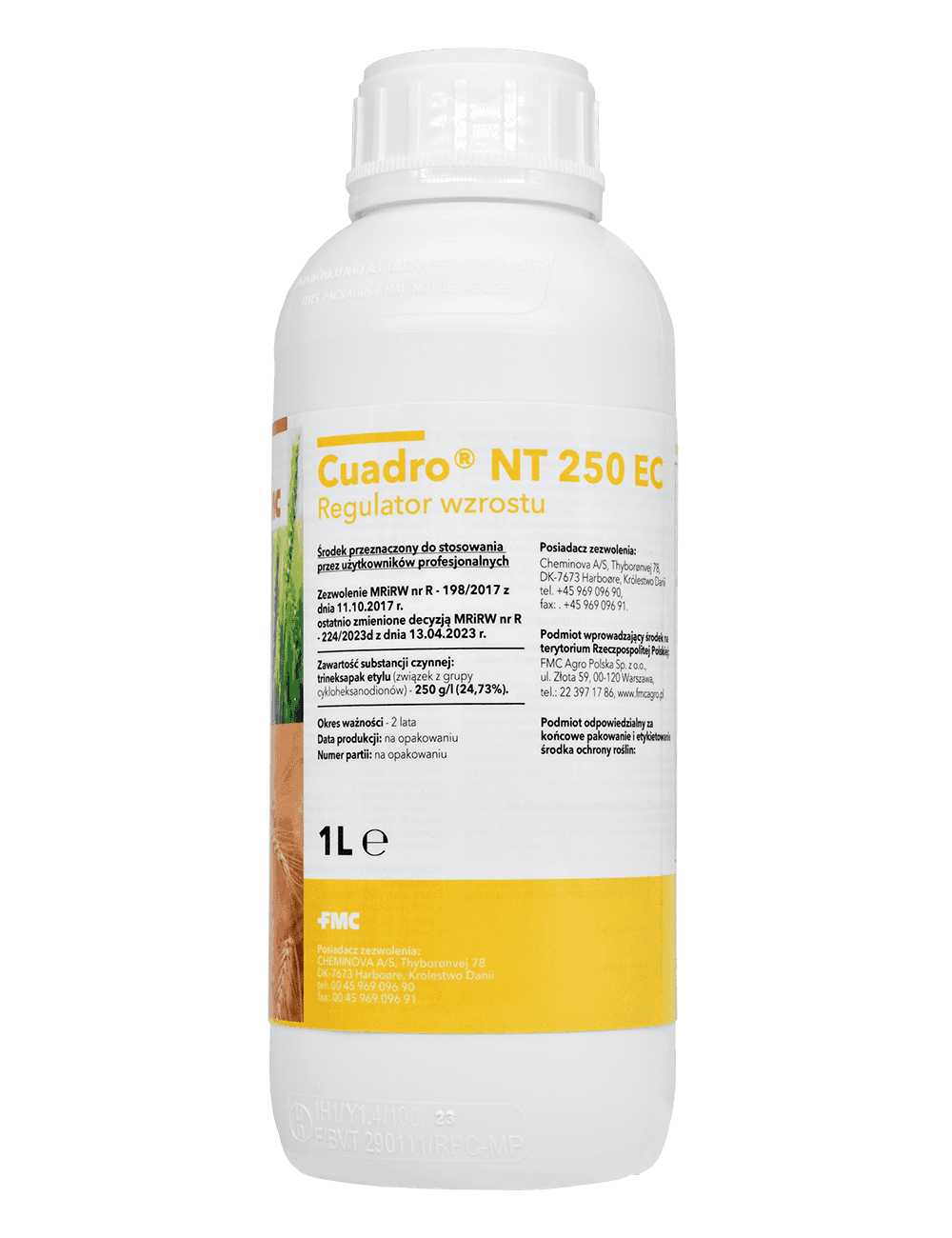
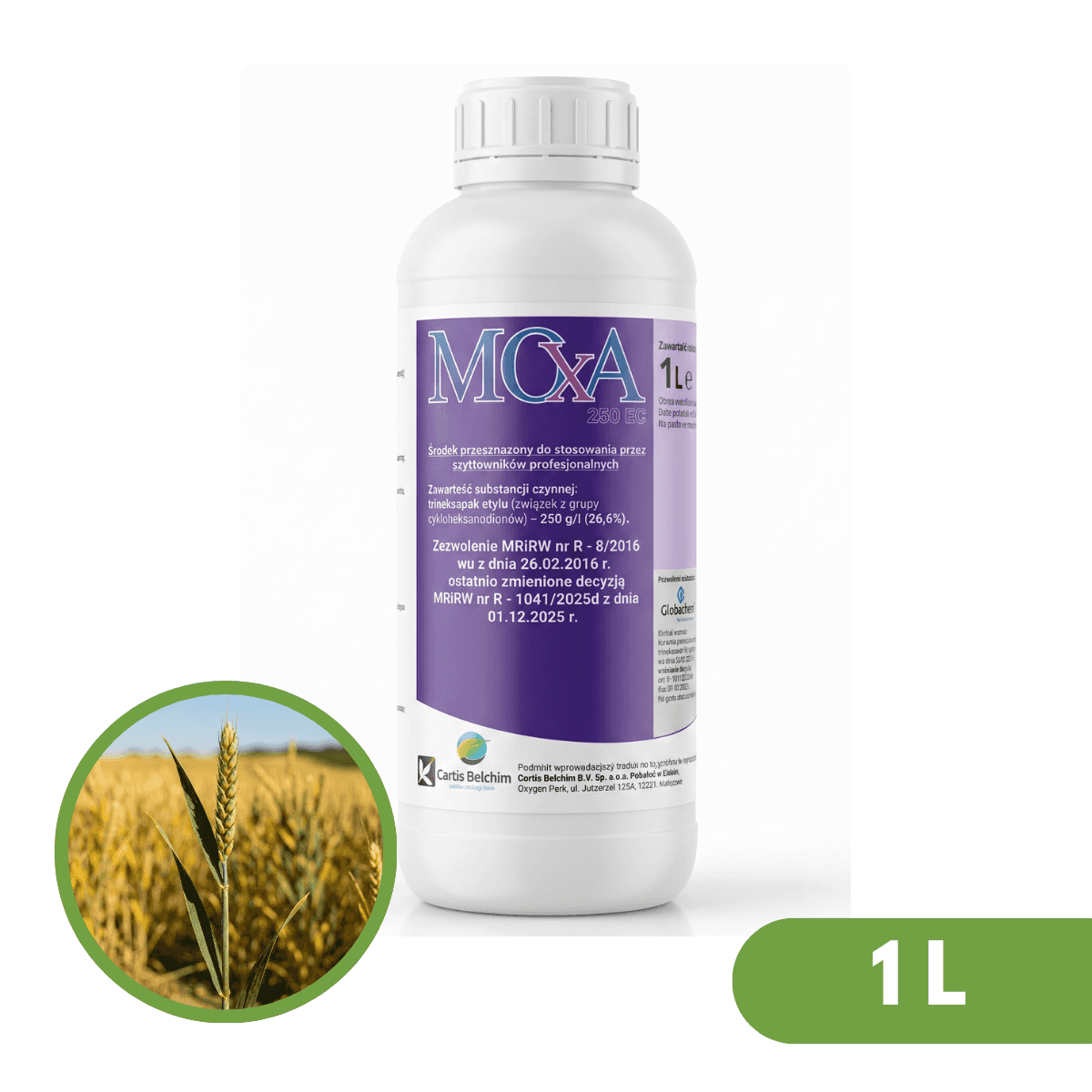
Stembolk is a modern plant growth regulator that strengthens the base of stems and stalks, preventing lodging of cereals and oilseed rape. It contains trinexapac ethyl (250 g/l), an active substance from the cyclohexanedione group, which limits excessive internode elongation while not negatively affecting the root system. The product is mainly absorbed through leaves, stalks or stems and quickly transported to meristematic tissues. Shortening and stiffening of stalks increases plant resistance to weather conditions, minimising the risk of yield losses.
Benefits of using Stembolk
- Increased lodging resistance thanks to shortening and stiffening of stalks and stems,
- Safety for the root system – no negative impact on plant development,
- Flexibility of use across a wide range of developmental stages of cereals and oilseed rape,
- Effectiveness in intensive cultivation technologies – stabilises plants under high nitrogen fertilisation,
- Long-lasting effects – influences plant development throughout the growing season.
Application and recommended doses
Stembolk is intended for use in winter and spring cereals, winter and spring oilseed rape, and seed plantations of grasses and red clover.
- Winter wheat, winter barley, winter triticale, winter rye – apply from tillering stage to flag leaf stage (BBCH 25-39) at a dose of 0.3-0.6 l/ha,
- Spring wheat, spring barley, spring oats – apply from first node stage to flag leaf stage (BBCH 31-39) at a dose of 0.3-0.4 l/ha,
- Winter oilseed rape, spring oilseed rape, winter turnip rape – apply from main shoot elongation to flower bud development stage (BBCH 39-55) at a dose of 1.5 l/ha,
- Seed plantations of grasses and red clover – apply at main shoot development stage at a dose of 0.8-1.5 l/ha.
The recommended water volume is 200-400 l/ha, adjusted to plant size and density.
Summary
Stembolk is an effective growth regulator that provides plants with greater lodging resistance, supporting optimal yield development. Thanks to precise action and wide application spectrum, this product is an essential element of modern cereal and oilseed rape protection.
Application and dosage
|
Crop |
How to apply? Dosage |
When to apply? |
|---|---|---|
|
Winter wheat |
Maximum/recommended dose for single application: 0.4 l/ha. Recommended water volume: 200-400 l/ha. |
Application timing: Use from tillering stage to flag leaf stage (BBCH 25–39). |
|
Winter barley |
Maximum/recommended dose for single application: 0.6 l/ha. Recommended water volume: 200-400 l/ha. |
Application timing: Use from first node to fourth node stage (BBCH 31–34). |
|
Winter rye |
Maximum/recommended dose for single application: 0.3 l/ha. Recommended water volume: 200-400 l/ha. |
Application timing: Use from first node to flag leaf stage (BBCH 31–39). |
|
Winter triticale |
Maximum/recommended dose for single application: 0.6 l/ha. Recommended water volume: 200-400 l/ha. |
Application timing: Use from first node to second node stage (BBCH 31–32). |
|
Spring wheat |
Maximum/recommended dose for single application: 0.4 l/ha. Recommended water volume: 200-400 l/ha. |
Application timing: Use from end of tillering to flag leaf stage (BBCH 29–39). |
|
Spring barley |
Maximum/recommended dose for single application: 0.4 l/ha. Recommended water volume: 200-400 l/ha. |
Application timing: Use from first node to second node stage (BBCH 31–32). |
|
Spring oats |
Maximum/recommended dose for single application: 0.4 l/ha. Recommended water volume: 200-400 l/ha. |
Application timing: Use from first node to fourth node stage (BBCH 31–34). |
|
Winter oilseed rape |
Maximum/recommended dose for single application: 1.5 l/ha. Recommended water volume: 200-400 l/ha. |
Apply from the end of main shoot elongation (visible 9 or more internodes) to the end of flower bud development on the main inflorescence (visible individual flower buds, still closed) (BBCH 39-55). |