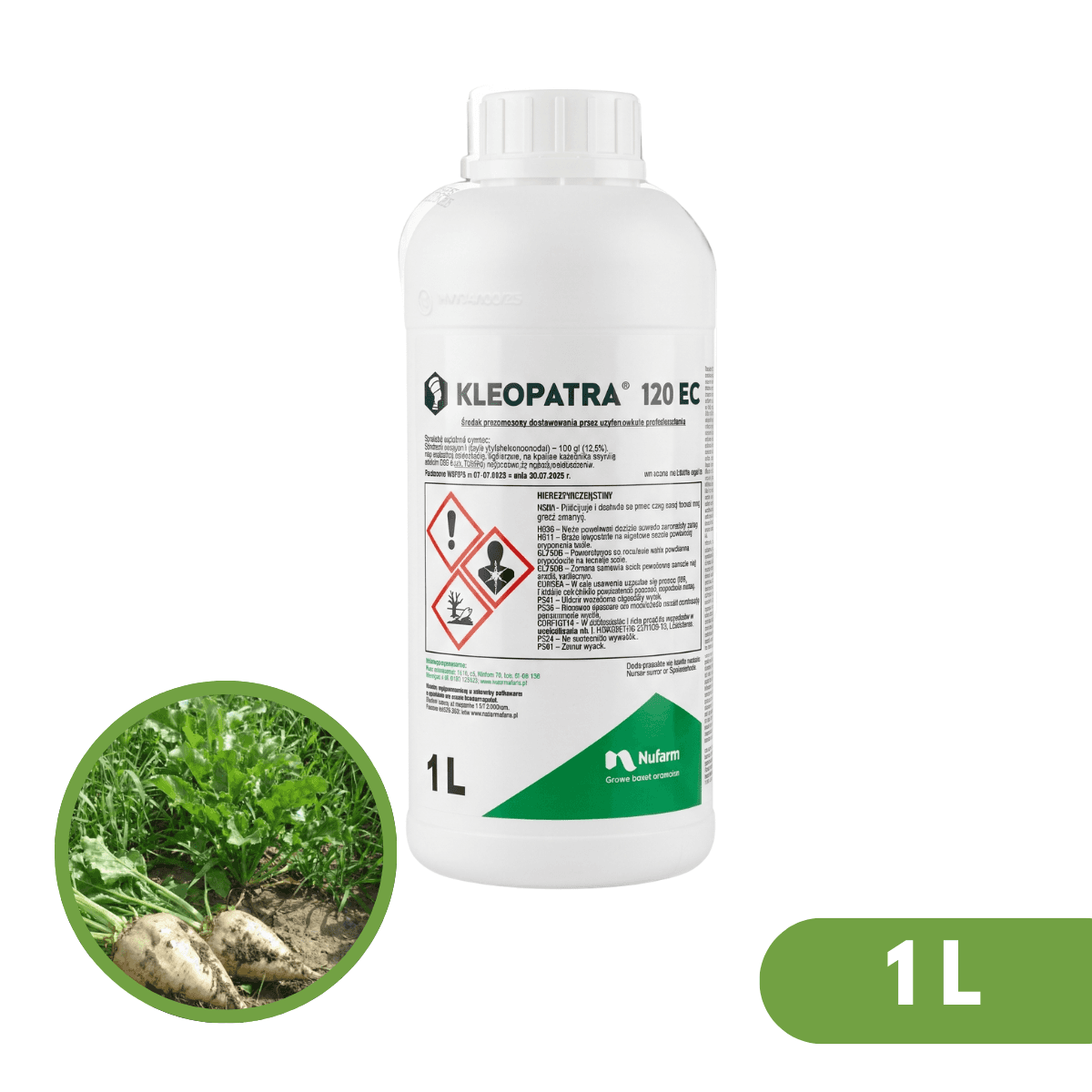
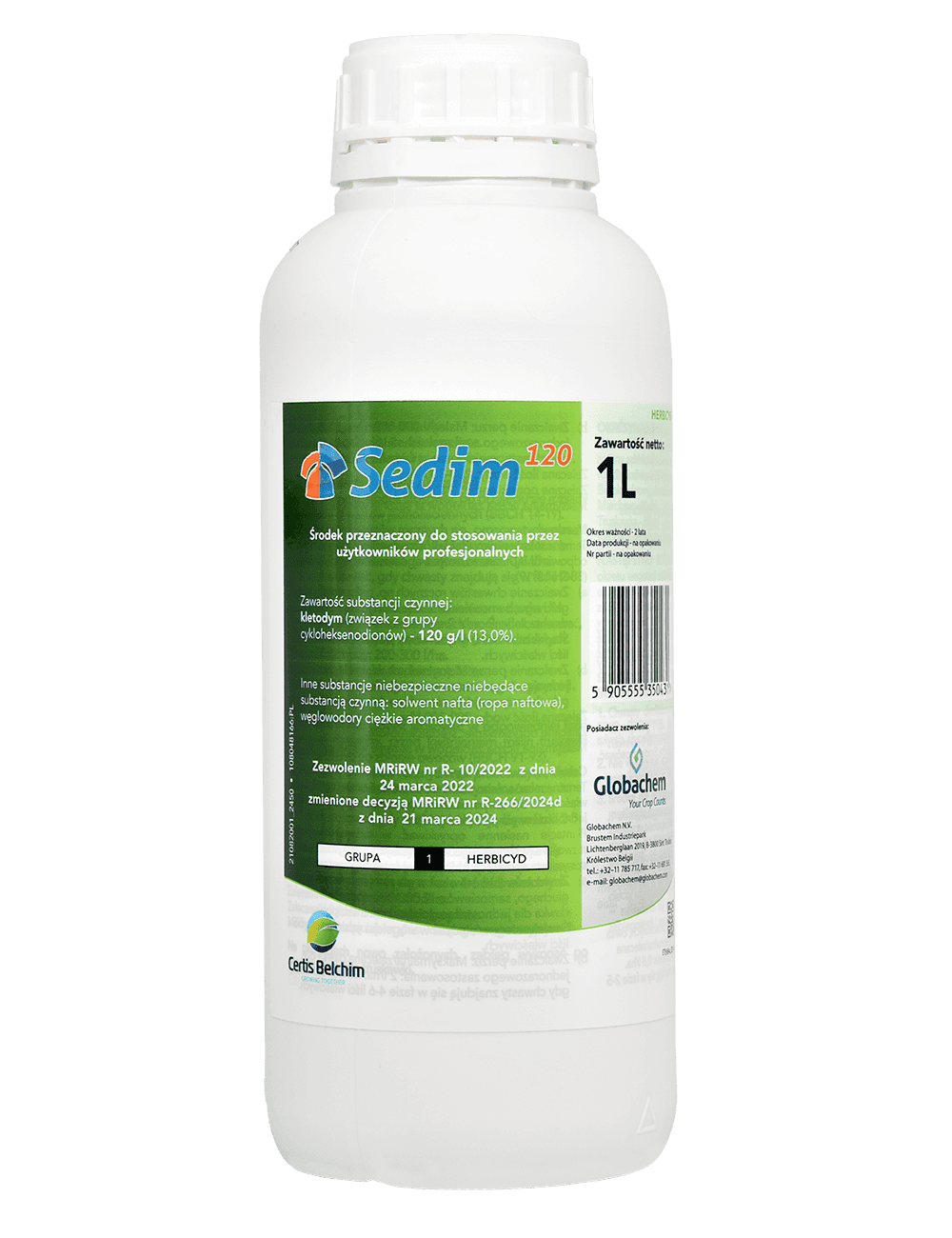
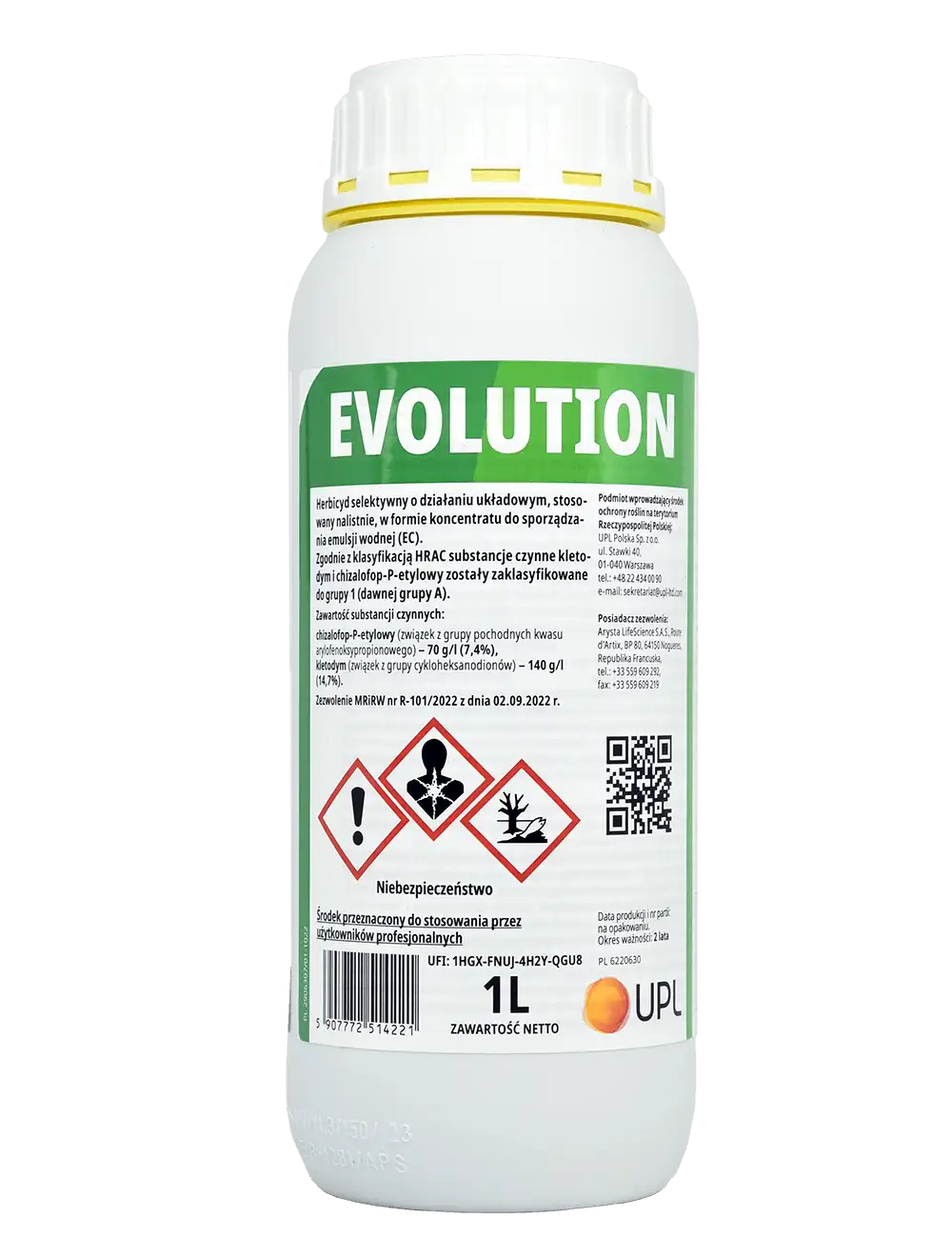
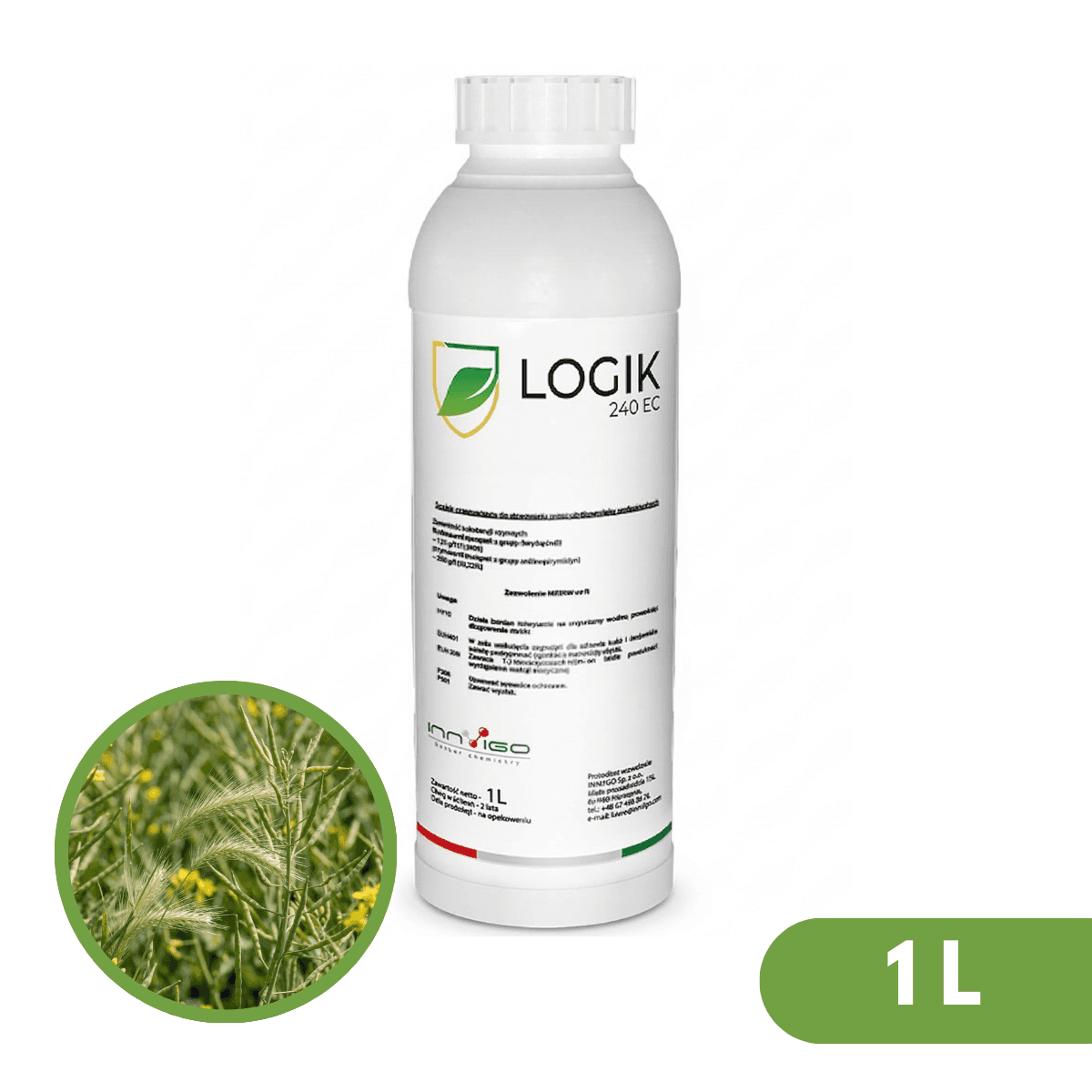
Camwin 120 EC (clethodim) Rainbow - herbicide
Camwin 120 EC Rainbow, a herbicide in the form of a concentrate for preparing an emulsifiable concentrate (EC), applied foliarly, effectively controls monocotyledonous weeds.
Description
Camwin 120 EC Rainbow - herbicide
- Effectively controls monocotyledonous weeds.
- For foliar application.
- Dedicated action - for use in the cultivation of winter oilseed rape, sugar beet, onion, cabbage, carrot, potato and strawberry.
- In a convenient and efficient concentrate form for preparing an emulsifiable concentrate.
Camwin 120 EC Rainbow is a herbicide in the form of a concentrate for preparing an emulsifiable concentrate (EC), applied foliarly.
The product is intended for use with self-propelled or tractor-mounted field sprayers.
Apply the product taking into account the appropriate developmental stage of the target weed and the appropriate developmental stage of the crop plant.
Camwin Rainbow - mode of action
The product is a selective herbicide. It acts systemically within the plant. It is absorbed very quickly through the leaves and then translocated to the roots and rhizomes of weeds, causing inhibition of their growth and development. The effect on weeds manifests as yellowing and then drying of the youngest leaves. The first symptoms are visible about 7 days after spraying. Rapid weed growth, warm weather, and moist soil accelerate the product's action. Rainfall occurring within one hour after treatment does not affect the product's efficacy. The product is applied foliarly after weed emergence. Annual monocotyledonous weeds are most sensitive to the product from the 2-leaf stage to the beginning of tillering, while perennial weeds (e.g. couch grass) are sensitive at the 4-6 leaf stage.
Camwin Rainbow herbicide - active substance content
- Clethodim (a compound from the cyclohexanedione group) - 120 g/l (13.0%).
- Other hazardous substances not being active substances: solvent naphtha (petroleum), heavy aromatic hydrocarbons.
According to HRAC classification, the active substance clethodim is classified in group A.
Camwin 120 EC - controlled weeds, pre-emergence treatment:
Sensitive weeds:
- annual grass,
- wild oats,
- couch grass,
- volunteer cereals.
Resistant weeds:
- dicotyledonous plants.
Camwin 120 EC Rainbow herbicide - use in crops:
Field crops:
- Winter oilseed rape.
Vegetable crops:
- Sugar beet,
- Onion grown from seed,
- Head cabbage (grown from seedlings),
- Carrot,
- Potato.
Orchard crops:
- Strawberry.
Camwin Rainbow herbicide - pre-harvest interval and re-entry period:
Pre-harvest interval - the period from the last application of the product to the day of crop harvest:
- Winter oilseed rape - 120 days
- Sugar beet, potato, onion - 56 days
- Carrot - 40 days
- Strawberry - 30 days
- Head cabbage - 28 days.
Re-entry period - the period from application until people may enter the treated area and animals may be introduced:
- Do not enter until the spray liquid has completely dried on the plant surfaces.
Camwin 120 EC Rainbow herbicide - crop rotation:
The product decomposes during the growing season without posing a threat to subsequently grown crops. In case of earlier ploughing of the treated field (e.g. due to frost damage or plant damage by diseases or pests), crops for which the product is recommended or other dicotyledonous plants can be grown on that field.
Camwin Rainbow herbicide - preparation of spray liquid:
Before preparing the spray liquid, accurately determine the required amount. Shake the container contents well before use. Pour the measured amount of product into a sprayer tank partially filled with water and then fill up with water to the required volume. Mix the liquid according to the sprayer manufacturer's instructions or mechanically. Triple rinse empty containers with water and pour the rinsate into the spray tank. Use the spray liquid immediately after preparation. After any break, mix the spray liquid thoroughly in the sprayer tank before resuming work.
Camwin 120 EC Rainbow plant protection product - usage guidelines:
- Dicotyledonous weeds can be chemically controlled at least 7 days before or at least 7 days after application of this product.
- Do not perform mechanical cultivation 7 days before and 7 days after application.
- Do not use the product:
- during windy conditions that may cause spray drift to neighbouring fields, especially monocotyledonous crop plantations (e.g. maize, cereals),
- during prolonged drought,
- if rain is expected within one hour after treatment. - During application, avoid:
- spray drift onto neighbouring crop plantations,
- overlapping spray liquid on the edges of treated strips and headlands. - Keep out of reach of children.
- Store the plant protection product:
- in original packaging,
- in a way that prevents contact with food, beverages or feed, environmental contamination, and access by unauthorized persons,
- at temperatures between 0°C and 30°C.
Warning! Plant protection products must be used safely. Before each use, read the information on the label and product information.
The purchaser declares that they meet the conditions specified in Article 25 paragraph 3 point 5 of the Act of 8 March 2013 on plant protection products and have training in the use of plant protection products in the case of products for professional users. Before each use, read the information on the label and product information. Pay attention to detailed risk indications. Follow safety rules contained on the label. Plant protection products may only be purchased by adults and persons who have completed training and have the qualifications required for persons purchasing plant protection products (Article 28 of the Act on plant protection products of 8 March 2013 as amended). Plant protection products must be used in a manner that does not pose a threat to human health, animals or the environment. The purchaser of plant protection products must be sober. By using this offer, you declare that you meet the above conditions.
Application and dosage
|
Crop |
Target Pest Control |
How to apply? Dosage |
When to apply? |
|---|---|---|---|
|
Sugar beet |
annual grass, wild oats, couch grass, volunteer cereals. |
a) Control of annual weeds such as foxtails, wild oats, volunteer cereals: Maximum/recommended dose for single application: 0.8 l/ha. b) Control of couch grass: Maximum/recommended dose for single application: 2 l/ha. Recommended water volume: 200-300 l/ha. Recommended spraying: medium droplet size. |
Application timing: apply the product from the development of the first pair of beet leaves until the plants cover no more than 50% of the inter-row space (BBCH 12-35). a) apply when weeds are at the 2-5 true leaf stage, b) apply when weeds are at the 4-6 true leaf stage. Maximum number of treatments per growing season: 1. |
|
Winter oilseed rape |
annual grass, wild oats, couch grass, volunteer cereals. |
Note: Use the product only for control of annual weeds and volunteer cereals. Control of annual weeds such as foxtails, wild oats, volunteer cereals: |
Apply in autumn when oilseed rape plants have developed at least the first pair of leaves (BBCH 12) or in spring, no later than the beginning of stem elongation (BBCH 30). Apply when weeds are at the 2-5 true leaf stage. Maximum number of treatments per growing season: 1. |
|
Potato |
annual grass, wild oats, couch grass, volunteer cereals. |
a) Control of annual weeds such as foxtails, wild oats, volunteer cereals: Maximum/recommended dose for single application: 0.8 l/ha. b) Control of couch grass: Recommended water volume: 200-300 l/ha. |
Apply after inter-row cultivation is completed (after potato emergence when plants reach 13-15 cm height), but before canopy closure (BBCH 12-33), at the appropriate weed developmental stage. a) apply when weeds are at the 2-5 true leaf stage. b) apply when weeds are at the 4-6 true leaf stage. Maximum number of treatments per growing season: 1 |
|
Carrot |
annual grass, wild oats, couch grass, volunteer cereals. |
a) Control of annual weeds such as foxtails, wild oats, volunteer cereals: Maximum/recommended dose for single application: 0.8 l/ha. b) Control of couch grass: Maximum/recommended dose for single application: 2 l/ha. Recommended water volume: 200-300 l/ha. Recommended spraying: medium droplet size. |
Application timing: apply from the 2-leaf stage, at the appropriate developmental stage of monocotyledonous weeds (BBCH 12-19). a) apply when weeds are at the 2-5 true leaf stage, b) apply when weeds are at the 4-6 true leaf stage Maximum number of treatments per growing season: 1. |
|
Onion grown from seed |
annual grass, wild oats, couch grass, volunteer cereals. |
a) Control of annual weeds such as foxtails, wild oats, volunteer cereals: Maximum/recommended dose for single application: 0.8 l/ha. b) Control of couch grass: Recommended water volume: 200-300 l/ha. |
Apply from the 1-2 true leaf stage at the appropriate developmental stage of monocotyledonous weeds (BBCH 11-18). Seed plantations should be sprayed at the appropriate developmental stage of monocotyledonous weeds. a) apply when weeds are at the 2-5 true leaf stage. b) apply when weeds are at the 4-6 true leaf stage. Maximum number of treatments per growing season: 1 |
|
Head cabbage (grown from seedlings) |
annual grass, wild oats, couch grass, volunteer cereals. |
a) Control of annual weeds such as foxtails, wild oats, volunteer cereals: Maximum/recommended dose for single application: 0.8 l/ha. b) Control of couch grass: Recommended water volume: 200-300 l/ha. |
Application timing: apply after seedling establishment and after emergence of monocotyledonous weeds (BBCH 14-19). a) apply when weeds are at the 2-5 true leaf stage, b) apply when weeds are at the 4-6 true leaf stage. Maximum number of treatments per growing season: 1 |
|
Strawberry |
annual grass, wild oats, couch grass, volunteer cereals. |
a) Control of annual weeds such as foxtails, wild oats, volunteer cereals: Maximum/recommended dose for single application: 0.8 l/ha. b) Control of couch grass: Maximum number of treatments per growing season: 1. |
Application timing: apply at the appropriate developmental stage of weeds, before strawberry flowering (BBCH 12-59) or after fruit harvest (BBCH 91-93). a) apply when weeds are at the 2-5 true leaf stage. b) apply when weeds are at the 4-6 true leaf stage. Maximum number of treatments per growing season: 1. |