 SKU 475-c
Targa Super 05 EC (quizalofop) UPL - herbicide
TARGA SUPER 05 EC is a selective herbicide in the form of a concentrate for preparing an aqueous emulsion, used foliar for the control of annual and perennial monocotyledonous weeds in agricultural and vegetable crops.
Description
TARGA SUPER 05 EC is a herbicide in the form of a concentrate for preparing an aqueous emulsion, applied foliar, intended for the control of annual and perennial monocotyledonous weeds (after their emergence) in agricultural and vegetable crops.
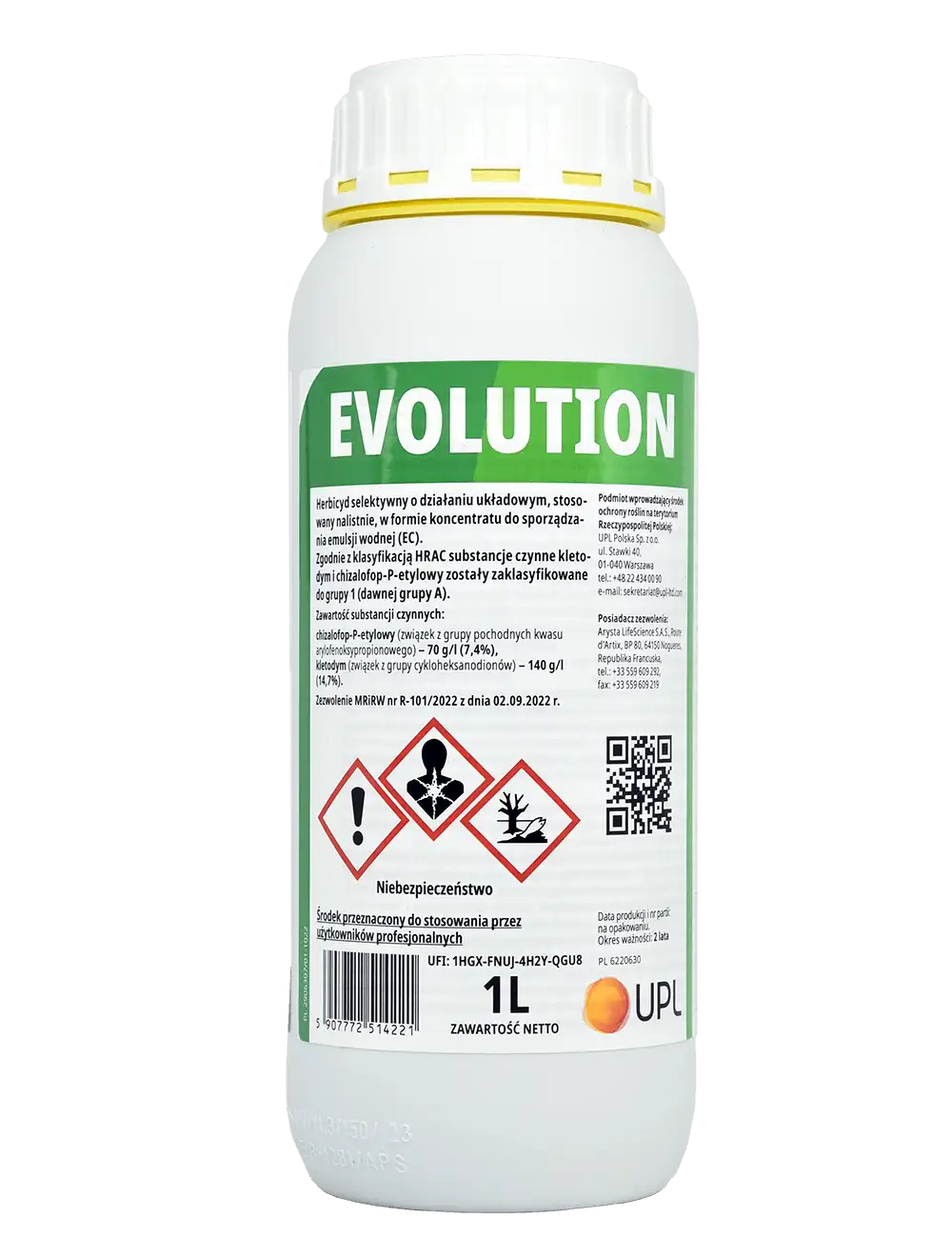
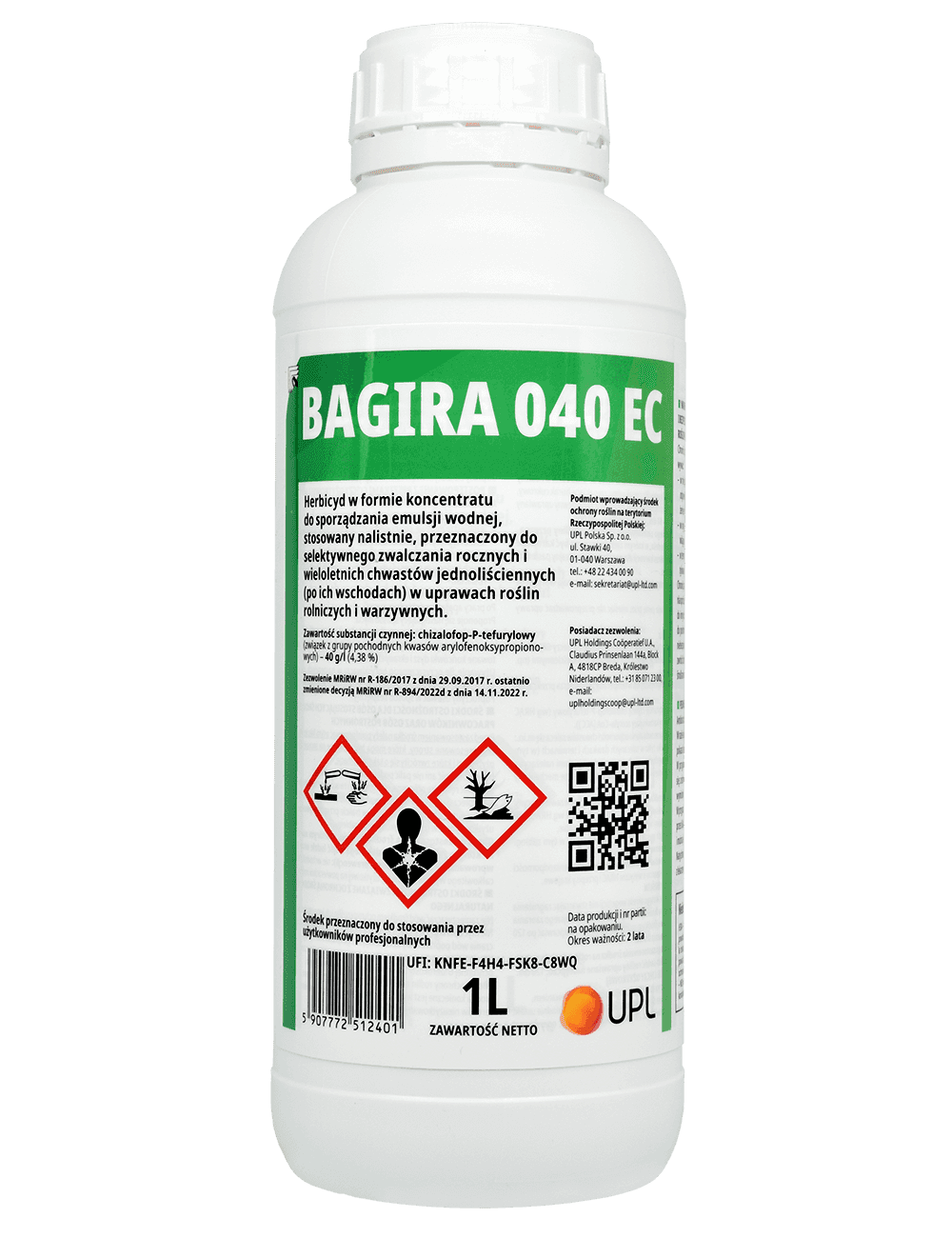
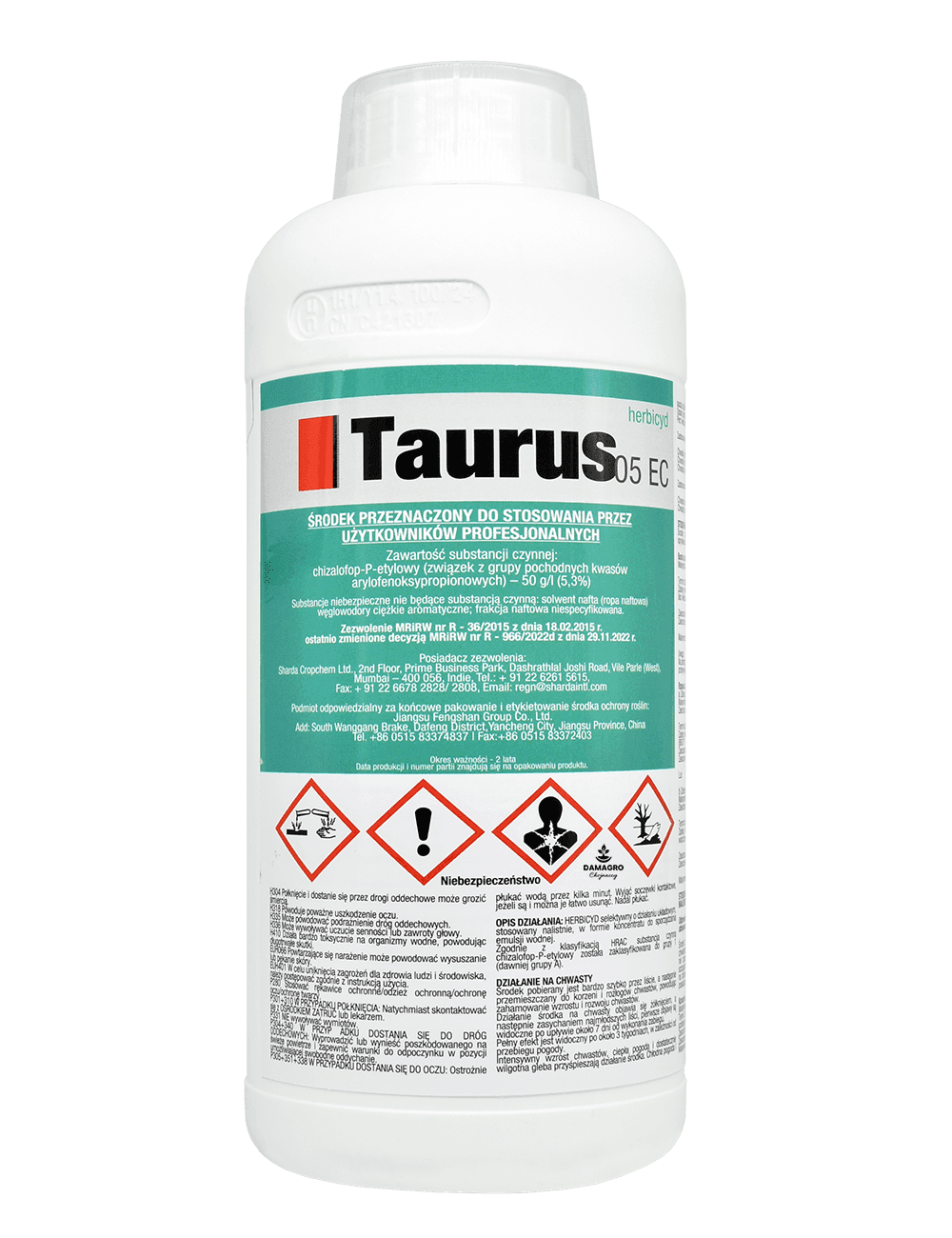
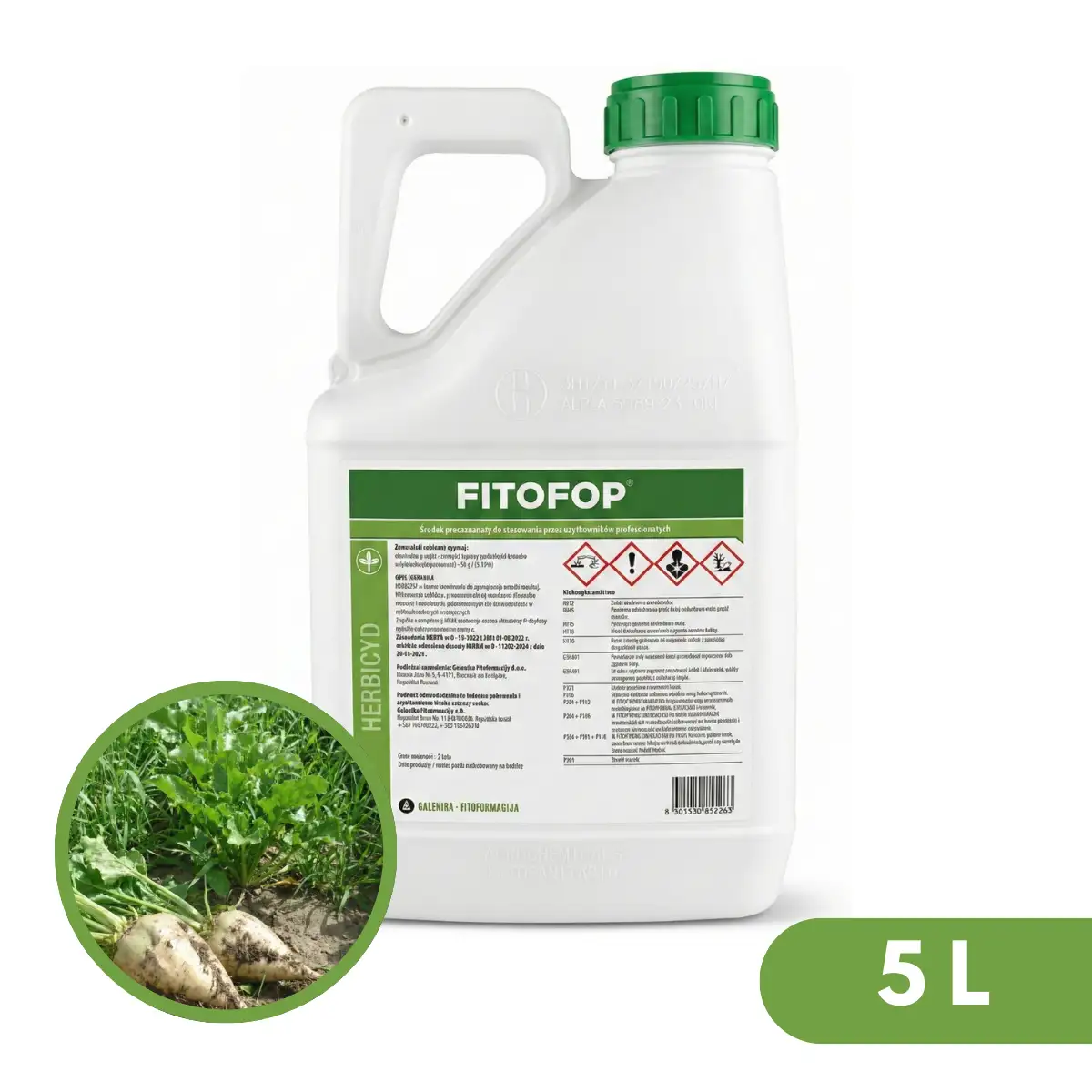
Active substance content: quizalofop-P-ethyl (compound from the aryloxyphenoxypropionic acid derivatives group) – 50 g/l (5.22%)
The product is intended for use with self-propelled or tractor-mounted field sprayers.
Targa Super 05 EC is a selective herbicide with systemic action, absorbed very quickly through the leaves and then translocated to the roots and rhizomes of weeds, causing inhibition of weed growth and development.
The effect of the product on weeds is manifested by yellowing, followed by drying of the youngest leaves. The full effect is visible after about 2-3 weeks or slightly later in case of persistent low temperatures. Cool weather and drought delay the action of the product but do not reduce its effectiveness.
Targa Super 05 EC is applied foliar after weed emergence. Annual weeds are most sensitive to the product at the 2-3 leaf stage, and couch grass at the 4-6 leaf stage. The product does not control weeds that emerge after treatment.
Warning! Plant protection products must be used safely. Before each use, read the information on the label and product information.
The purchaser declares that they meet the conditions specified in Article 25 paragraph 3 point 5 of the Act of 8 March 2013 on plant protection products and have training in the use of plant protection products in the case of products for professional users. Before each use, read the information on the label and product information. Attention should be paid to detailed risk indications. Safety rules contained on the label must be followed. Plant protection products may only be purchased by adults and persons who have completed training and have the qualifications required for persons acquiring plant protection products (Article 28 of the Act on plant protection products of 8 March 2013 as amended). Plant protection products must be used in a way that does not pose a threat to human health, animals, or the environment. The purchaser of plant protection products must be sober. By using this offer, you declare that you meet the above conditions.
Application and dosage
|
Crop |
Pest Control |
How to apply? Dosage |
When to apply? |
|---|---|---|---|
|
sugar beet, fodder beet |
volunteer cereals, blackgrass, loose silky-bent, wild oats, bluegrass, barren brome, ryegrass, couch grass |
Maximum single application dose: 2.5 l/ha Maximum number of treatments per growing season: 1. Note: |
Apply from the stage of visible first pair of still undeveloped beet leaves to the stage before soil surface coverage (about 90% of beet plants touching between rows) (BBCH11-39). |
|
potato |
volunteer cereals, blackgrass, loose silky-bent, wild oats, bluegrass, barren brome, ryegrass, couch grass |
Maximum single application dose: 2.0 l/ha Recommended water volume: 200-400 l/ha. |
Apply from the beginning of development of the first potato leaves to the stage before complete inter-row coverage (BBCH 10-39), before weeds are completely covered. |
|
winter oilseed rape |
volunteer cereals, blackgrass, loose silky-bent, wild oats, bluegrass, barren brome, ryegrass, couch grass |
Maximum single application dose: 2.5 l/ha Maximum number of treatments per growing season: 1. |
Apply from the stage of fully developed cotyledons to the stage of visible 9 or more internodes of oilseed rape (BBCH 10-39), before weeds are completely covered. |
|
carrot |
volunteer cereals, blackgrass, loose silky-bent, wild oats, bluegrass, barren brome, ryegrass, couch grass |
Maximum single application dose: 2.5 l/ha Maximum number of treatments per growing season: 1. |
Apply from the stage of fully developed carrot cotyledons to the stage when the root reaches typical shape and size (BBCH10-49) |
|
Common flax grown for seed, common flax grown for fibre, fibre hemp grown for fibre |
volunteer cereals, blackgrass, loose silky-bent, wild oats, bluegrass, barren brome, ryegrass, couch grass |
Maximum single application dose: 2.5 l/ha. Recommended water volume: 200-400 l/ha. |
Apply from the stage of developed cotyledons to the stage of developed sixth true leaf (BBCH 10-16). |
|
spring oilseed rape |
volunteer cereals, blackgrass, loose silky-bent, wild oats, bluegrass, barren brome, ryegrass, couch grass |
Maximum single application dose: 2.5 l/ha. |
Apply from the stage of fully developed cotyledons to the stage of visible 9 or more internodes (BBCH 10-39). |
|
common sunflower |
volunteer cereals, blackgrass, loose silky-bent, wild oats, bluegrass, barren brome, ryegrass, couch grass |
Maximum single application dose: 1.25 l/ha. |
Apply from the stage of fully developed cotyledons to the stage of 6 leaves (BBCH 10-16). |
|
broad bean, snap bean, sugar pea grown for pods |
volunteer cereals, blackgrass, loose silky-bent, wild oats, bluegrass, barren brome, ryegrass, couch grass |
Maximum single application dose: 2.5 l/ha. |
Apply from the stage of developed first true leaf to the stage when first petals are visible but flower buds are still closed (BBCH 11-59). |
|
common bean grown for dry seeds, field pea grown for dry seeds, edible lentil |
volunteer cereals, blackgrass, loose silky-bent, wild oats, bluegrass, barren brome, ryegrass, couch grass |
Maximum single application dose: 2.5 l/ha Recommended water volume: 200-400 l/ha. |
Apply from the stage of developed first true leaf to the stage when first petals are visible but flower buds are still closed (BBCH 11-59). |
|
faba bean, fodder pea (field pea), white lupin, yellow lupin, narrow-leaved lupin |
volunteer cereals, blackgrass, loose silky-bent, wild oats, bluegrass, barren brome, ryegrass, couch grass |
Maximum single application dose: 2.5 l/ha. |
Apply from the stage of developed first true leaf to the stage when first petals are visible but flower buds are still closed (BBCH 11-59). |
|
soybean |
volunteer cereals, blackgrass, loose silky-bent, wild oats, bluegrass, barren brome, ryegrass, couch grass |
Maximum single application dose: 2.5 l/ha. |
Apply from the stage of first pair of true leaves to the stage when first flower buds are visible (BBCH 11-51). |
|
red beet |
volunteer cereals, blackgrass, loose silky-bent, wild oats, bluegrass, barren brome, ryegrass, couch grass |
Maximum single application dose: 2.5 l/ha. |
Apply from the stage of visible first pair of still undeveloped leaves to the stage when leaves cover 90% of soil surface (BBCH 11-39). |
|
root parsley, root celery, parsnip, rutabaga, horseradish, turnip |
volunteer cereals, blackgrass, loose silky-bent, wild oats, bluegrass, barren brome, ryegrass, couch grass |
Maximum single application dose: 2.5 l/ha. |
Apply from the stage of fully developed cotyledons to the stage when root reaches typical shape and size (BBCH 10-49). |
|
tomato, eggplant |
volunteer cereals, blackgrass, loose silky-bent, wild oats, bluegrass, barren brome, ryegrass, couch grass |
Maximum single application dose: 2.5 l/ha. Recommended water volume: 200-400 l/ha |
Apply from the stage of fourth developed leaf on the main shoot to the stage when 9 or more first order lateral shoots are visible (BBCH 14-29) |
|
Jerusalem artichoke (feeding wild animals) |
volunteer cereals, blackgrass, loose silky-bent, wild oats, bluegrass, barren brome, ryegrass, couch grass |
Maximum single application dose: 2.0 l/ha. |
Apply from the beginning of development of first leaves to the moment when 9 or more internodes are visible (BBCH 10-39). |