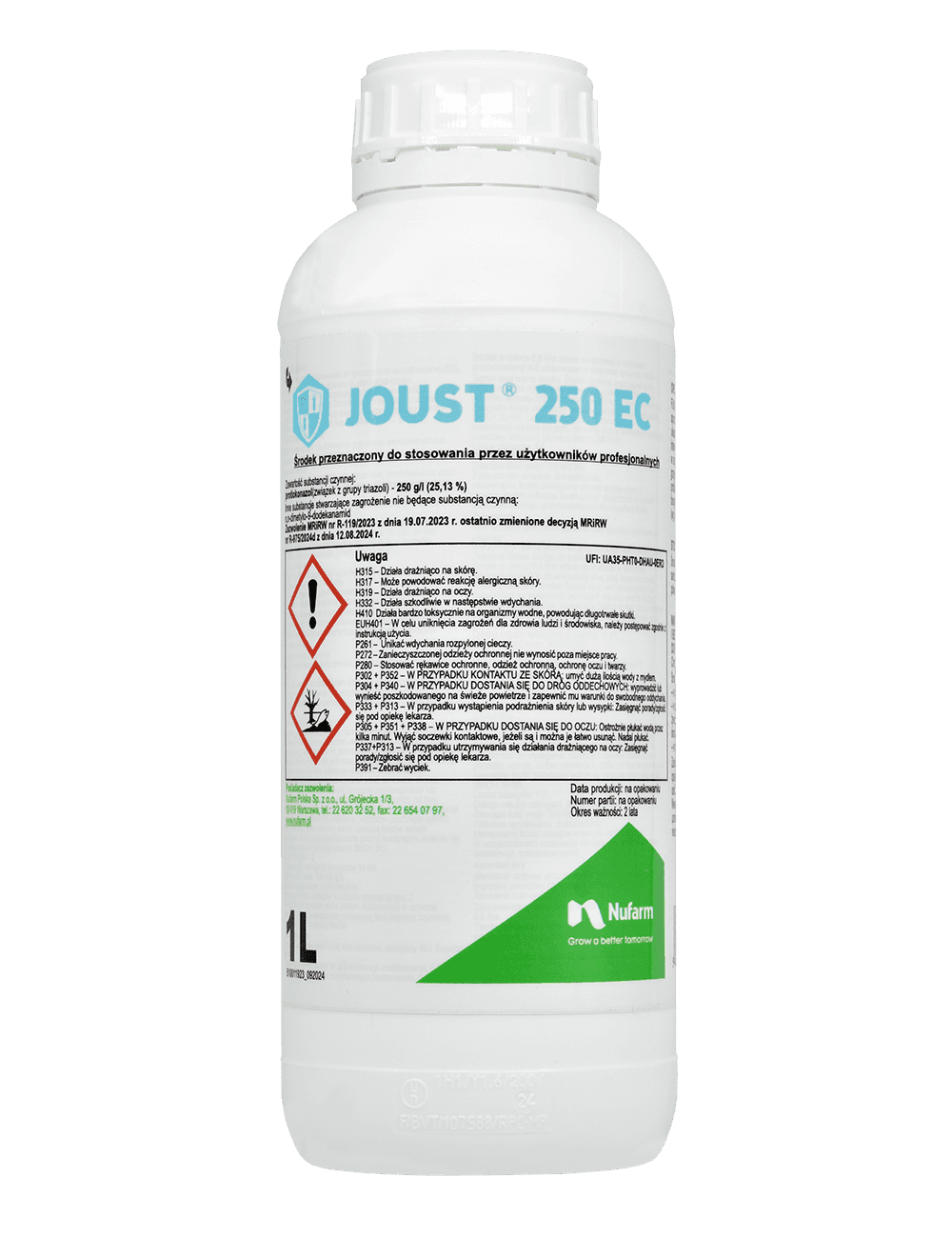
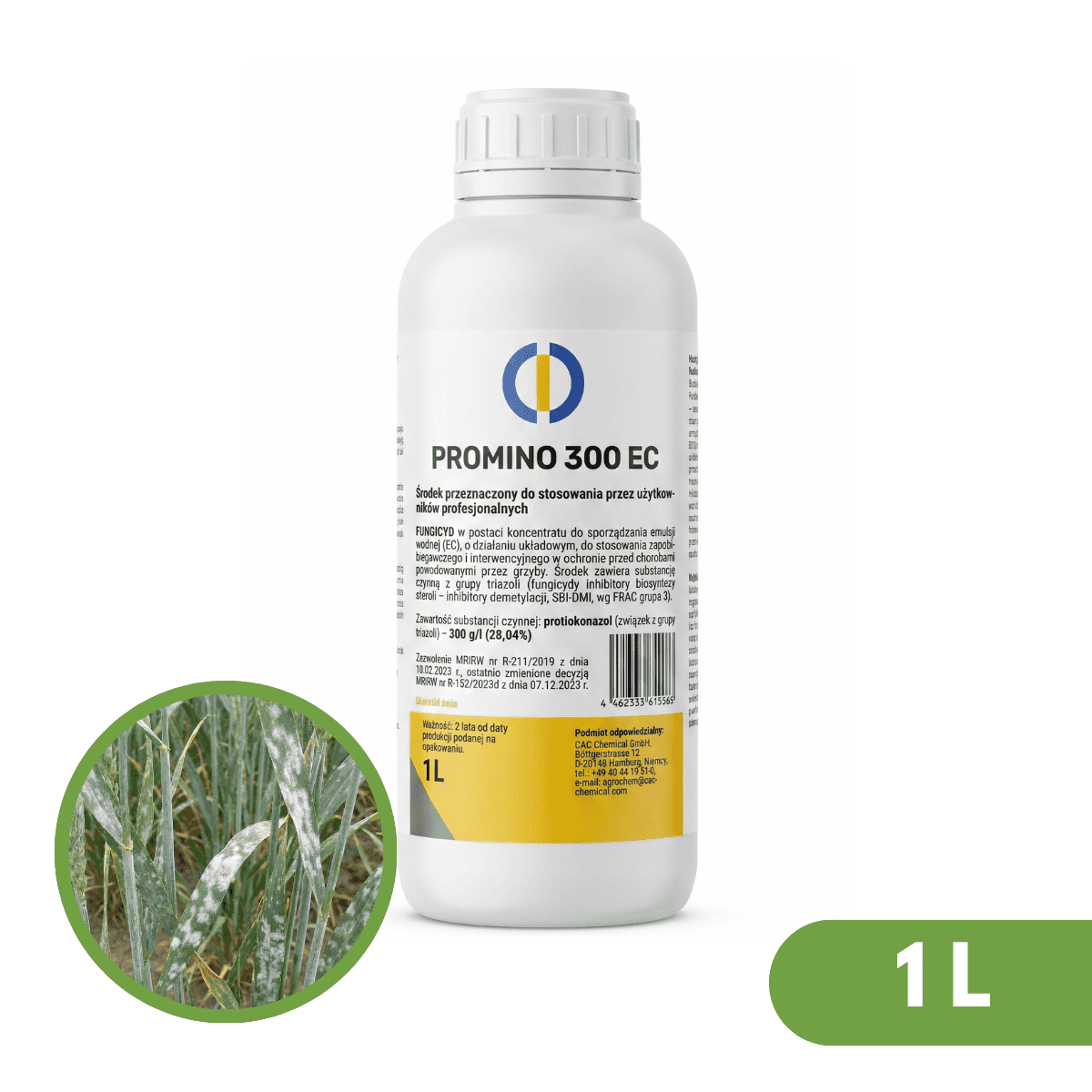
 SKU CH-15094
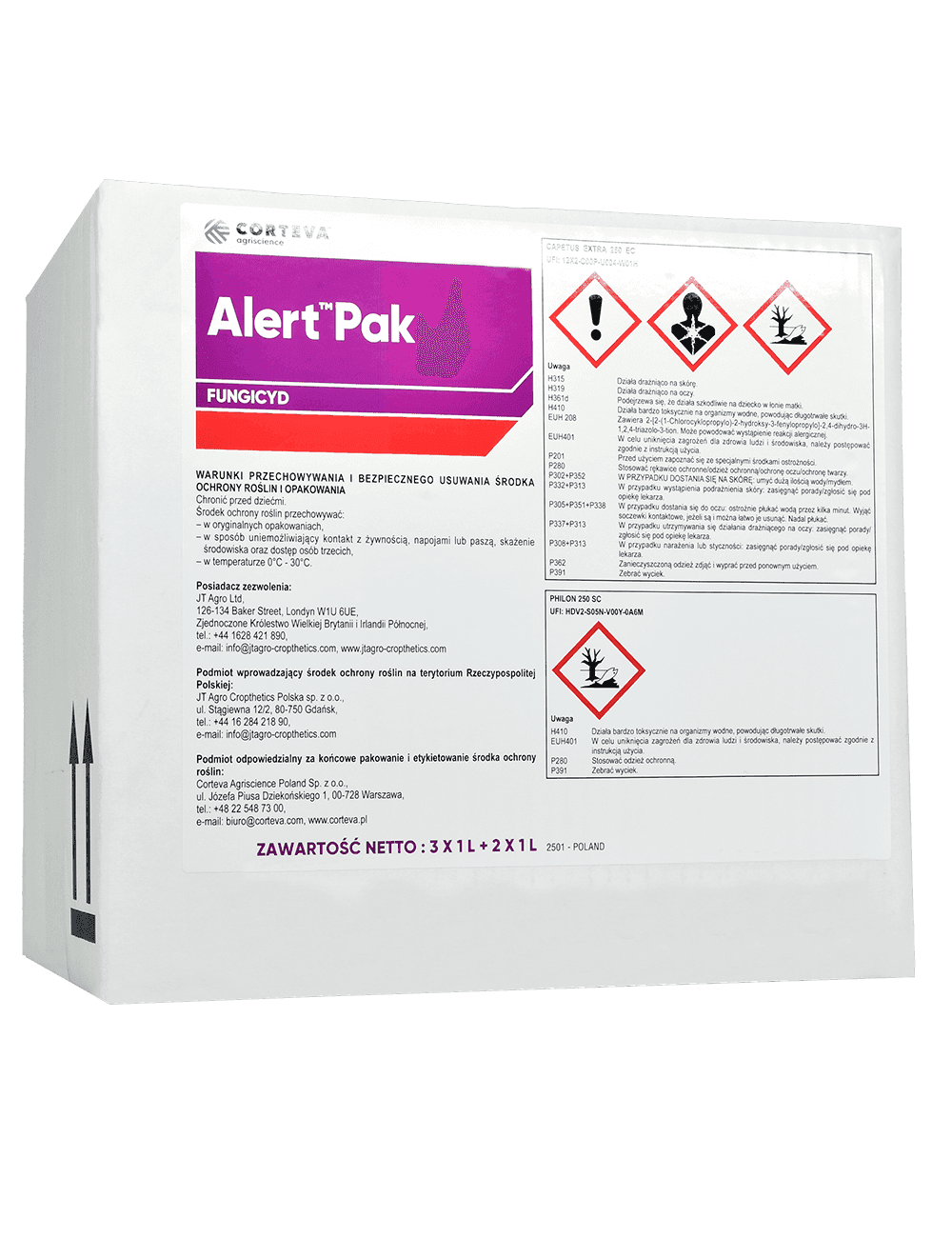
Turbo Prime Pak Amistar Prime 2 X + Pecari 2.5 HA
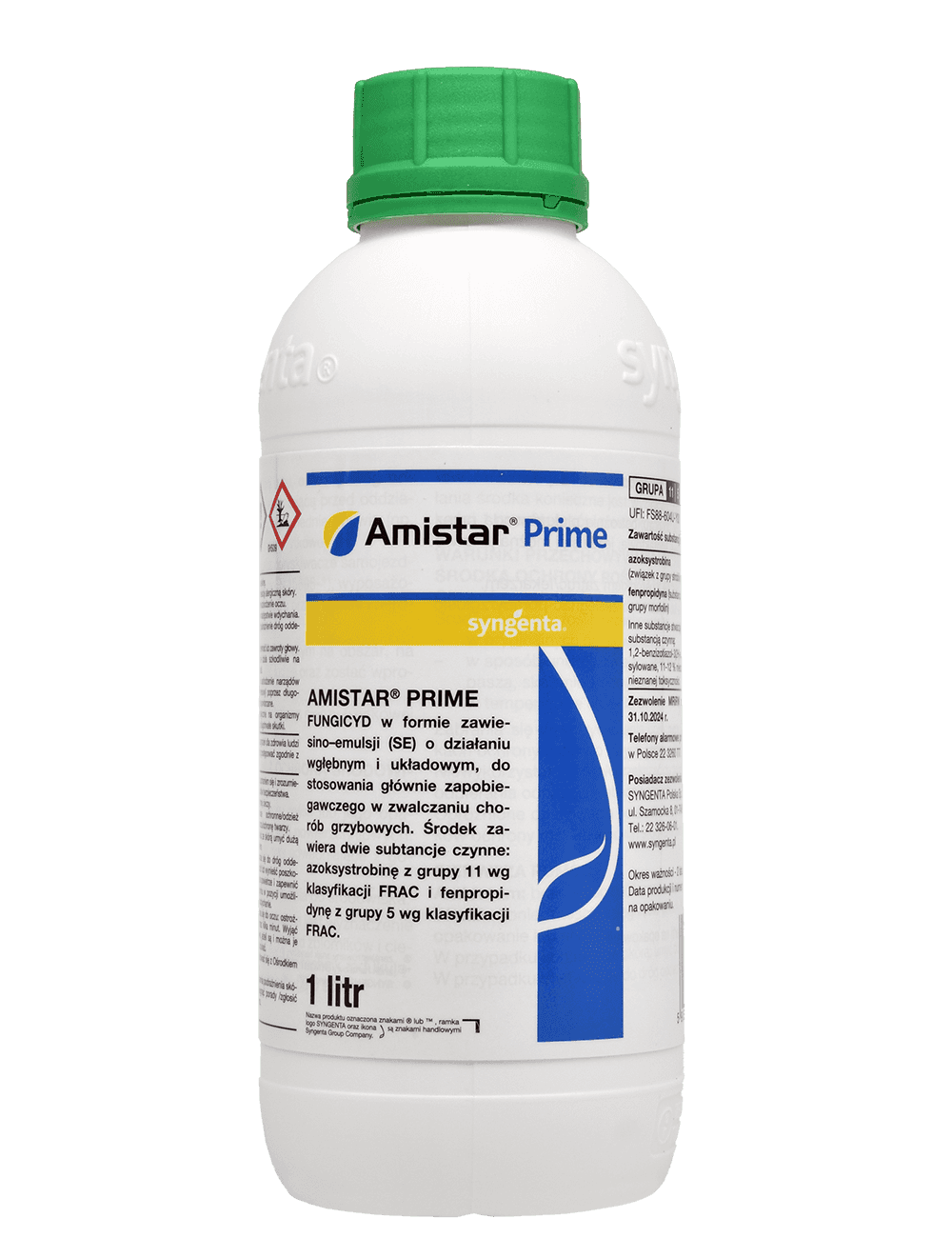
TURBO PRIME PAK (AMISTAR PRIME + PECARI 300 EC) is a professional fungicide set designed for the protection of crops such as winter wheat, spring wheat, winter triticale, winter oilseed rape, and winter barley.
- Pack
- 1 l
Currently unavailable
Description
ACTION OF TURBO PRIME PAK:
The set provides broad protective action. Amistar Prime works locally and systemically, blocking pathogen development in a preventive manner. Pecari 300 EC exhibits systemic action, penetrates plant tissues and can be used both preventively, interventively, and curatively. Thanks to three different chemical groups (FRAC 11, 5, 3), the set effectively reduces the risk of fungal resistance development.
Advantages of using TURBO PRIME PAK:
- Broad spectrum control: Protects cereals and oilseed rape against key diseases such as powdery mildew, septoria leaf blotch, rusts, and fusarium ear blight.
- Application flexibility: Can be used preventively, and thanks to the Pecari component – also for rapid intervention after symptom appearance.
- No cross-resistance: The synergy of three active substances from different groups protects against pathogen resistance.
TURBO PRIME PAK ACTIVE SUBSTANCES CONTENT:
azoxystrobin (strobilurin group) - 150 g/l (14.5 %)
fenpropidine (morpholine group) - 280 g/l (27.1 %)
prothioconazole (triazole group) - 300 g/l (28.04 %)
ACTION OF AMISTAR PRIME:
The product is a fungicide with local and systemic action. It is intended mainly for preventive use in the control of fungal diseases. Thanks to the content of two active substances from different chemical groups (azoxystrobin from group 11 and fenpropidine from group 5 according to FRAC classification), the preparation effectively blocks pathogen development, penetrating deep into tissues and circulating within the plant, providing long-lasting and comprehensive protection against key pests.
AMISTAR PRIME ACTIVE SUBSTANCES CONTENT:
azoxystrobin (substance from the strobilurin group) - 150 g/l (14.5 %)
fenpropidine (substance from the morpholine group) - 280 g/l (27.1 %)
AMISTAR PRIME SCOPE OF USE, TIMING AND DOSES:
How to use AMISTAR PRIME:
Winter wheat
Powdery mildew of cereals and grasses, septoria leaf blotch of wheat.
Maximum/recommended dose: 1.0 l/ha
Application timing: the product should be applied preventively or immediately after the first symptoms of diseases are observed, from the beginning of stem elongation (start of stem growth) to the end of heading (all spikelets emerged from the sheath, spike fully visible) (BBCH 30-59).
Maximum number of treatments: 1
Recommended water volume: 200-300 l/ha
Note: the product shows moderate efficacy in protecting winter wheat against septoria leaf blotch.
Spring wheat
Powdery mildew of cereals and grasses.
Maximum/recommended dose: 1.0 l/ha
Application timing: the product should be applied preventively or immediately after the first symptoms of the disease are observed, from the beginning of stem elongation (start of stem growth) to the end of heading (all spikelets emerged from the sheath, spike fully visible) (BBCH 30-59).
Maximum number of treatments: 1
Recommended water volume: 200-300 l/ha
Note: the product shows moderate efficacy in protecting spring wheat against powdery mildew of cereals and grasses.
Winter triticale
Powdery mildew of cereals and grasses.
Maximum/recommended dose: 1.0 l/ha
Application timing: the product should be applied preventively or immediately after the first symptoms of the disease are observed, from the beginning of stem elongation (start of stem growth) to the end of heading (all spikelets emerged from the sheath, spike fully visible) (BBCH 30-59).
Maximum number of treatments: 1
Recommended water volume: 200-300 l/ha
USE OF THE PLANT PROTECTION PRODUCT IN SMALL-AREA CROPS AND APPLICATIONS
Note: Responsibility for the efficacy and phytotoxicity of the plant protection product used in small-area crops lies solely with its user.
Spring rye
Powdery mildew of cereals and grasses, brown rust of rye, rhynchosporium of cereals.
Maximum/recommended dose: 1.0 l/ha
Application timing: the product should be applied preventively or immediately after the first symptoms of diseases are observed, from the beginning of stem elongation (start of stem growth) to the end of heading (all spikelets emerged from the sheath, spike fully visible) (BBCH 30-59).
Maximum number of treatments: 1
Recommended water volume: 100-400 l/ha
Durum wheat, spelt wheat
Brown leaf spot, powdery mildew of cereals and grasses, brown rust of wheat, yellow rust of cereals and grasses, septoria leaf blotch of wheat.
Maximum/recommended dose: 1.0 l/ha
Application timing: the product should be applied preventively or immediately after the first symptoms of diseases are observed, from the beginning of stem elongation to the end of heading (all spikelets emerged from the sheath, spike fully visible) (BBCH 30-59).
Maximum number of treatments: 1
Recommended water volume: 100-400 l/ha
Seed grasses, ornamental grasses, miscanthus (energy crop)
Septoria leaf spots, rusts.
Maximum/recommended dose: 1.0 l/ha
Application timing: the product should be applied preventively or immediately after the first symptoms of diseases are observed, from the beginning of stem elongation (start of stem growth) to the end of heading (BBCH 30-59).
Maximum number of treatments: 1
Recommended water volume: 100-400 l/ha
PRE-HARVEST INTERVAL OF AMISTAR PRIME:
Not required.
ACTION OF PECARI 300 EC:
The product is a fungicide with strong systemic action. Thanks to the content of prothioconazole (FRAC group 3), the active substance quickly penetrates plant tissues and moves within them, providing long-lasting protection. It can be successfully used both preventively (protecting against infection), interventively (after first symptoms appear), and curatively on already developing diseases caused by fungal pathogens.
Advantages of using PECARI 300 EC:
- Three modes of action: Unique possibility of preventive, interventive, and curative use, offering great flexibility of treatments.
- Broad spectrum of protection: Effectively controls key fungal diseases of cereals (including fusarium ear blight) and major pathogens of oilseed rape (such as sclerotinia stem rot).
- High versatility: Wide registration covering main winter and spring cereals, oilseed rape, as well as small-area crops such as sunflower and soybean.
PECARI 300 EC ACTIVE SUBSTANCES CONTENT:
prothioconazole (compound from the triazole group) - 300 g/l (28.04 %)
PECARI 300 EC SCOPE OF USE, TIMING AND DOSES:
How to use PECARI 300 EC:
Winter wheat
Powdery mildew of cereals and grasses, brown rust of wheat, yellow rust of cereals and grasses, septoria leaf blotch of wheat, brown leaf spot, glume blotch.
Maximum dose: 0.65 l/ha (recommended dose: 0.33-0.65 l/ha)
Application timing: preventively or immediately after first symptoms are noticed, from the end of tillering to the beginning of flowering (BBCH 29-61).
Maximum number of treatments: 2
Recommended water volume: 200-400 l/ha
Interval between treatments: at least 14 days.
Note: the product shows moderate efficacy in protecting winter wheat against brown leaf spot.
Fusarium ear blight.
Maximum/recommended dose: 0.65 l/ha
Application timing: immediately after heading, when first anthers are visible until the end of flowering (BBCH 61-69).
Maximum number of treatments: 1 (total max 2 per growing season for the crop)
Recommended water volume: 200-400 l/ha
Winter barley
Net blotch of barley, rhynchosporium of cereals.
Maximum dose: 0.65 l/ha (recommended dose: 0.33-0.65 l/ha)
Application timing: preventively or immediately after first symptoms of disease, from the end of tillering to the beginning of flowering (BBCH 29-61).
Maximum number of treatments: 2
Recommended water volume: 200-400 l/ha
Interval between treatments: at least 14 days.
Winter triticale
Powdery mildew of cereals and grasses, leaf septoria, rhynchosporium of cereals.
Maximum dose: 0.65 l/ha (recommended dose: 0.33-0.65 l/ha)
Application timing: preventively or immediately after first symptoms of diseases, from the end of tillering to the beginning of flowering (BBCH 29-61).
Maximum number of treatments: 2
Recommended water volume: 200-400 l/ha
Interval between treatments: at least 14 days.
Winter rye
Brown rust of rye, rhynchosporium of cereals.
Maximum dose: 0.65 l/ha (recommended dose: 0.33-0.65 l/ha)
Application timing: preventively or immediately after first symptoms of diseases from the end of tillering to the beginning of flowering (BBCH 29-61).
Maximum number of treatments: 2
Recommended water volume: 200-400 l/ha
Interval between treatments: at least 14 days.
Spring wheat
Powdery mildew of cereals and grasses, brown rust of wheat, yellow rust of cereals and grasses, septoria leaf blotch of wheat, brown leaf spot.
Maximum dose: 0.65 l/ha (recommended dose: 0.33-0.65 l/ha)
Application timing: preventively or immediately after first symptoms of diseases, from the end of tillering to the beginning of flowering (BBCH 29-61).
Maximum number of treatments: 2
Recommended water volume: 200-400 l/ha
Interval between treatments: at least 14 days.
Note: the product shows moderate efficacy in protecting spring wheat against brown leaf spot.
Fusarium ear blight.
Maximum/recommended dose: 0.65 l/ha
Application timing: immediately after heading, when first anthers are visible until the end of flowering (BBCH 61-69).
Maximum number of treatments: 1 (total max 2 per growing season for the crop)
Recommended water volume: 200-400 l/ha
Spring barley
Net blotch of barley, rhynchosporium of cereals.
Maximum dose: 0.65 l/ha (recommended dose: 0.33-0.65 l/ha)
Application timing: preventively or immediately after first symptoms of disease, from the end of tillering to the beginning of flowering (BBCH 29-61).
Maximum number of treatments: 2
Recommended water volume: 200-400 l/ha
Interval between treatments: at least 14 days.
Winter oilseed rape
Sclerotinia stem rot.
Maximum dose: 0.6 l/ha (recommended dose: 0.3-0.6 l/ha)
Application timing: preventively or immediately after first symptoms appear at the following times: autumn (BBCH 16-19) from 6 to 9 leaves of oilseed rape; spring (up to BBCH 59) from vegetation restart to yellow bud stage.
Number of treatments: 2 (1 in autumn, 1 in spring)
Recommended water volume: 200-400 l/ha
Blackleg, sclerotinia stem rot.
Maximum dose: 0.6 l/ha (recommended dose: 0.3-0.6 l/ha)
Application timing: preventively or immediately after first symptoms, from the beginning to the end of flowering (BBCH 61-69).
Number of treatments: 1 (total max 2 per season for the crop)
Recommended water volume: 200-400 l/ha
Interval between treatments: spring treatments (min. 21 days), between autumn and spring (min. 86 days).
USE OF THE PLANT PROTECTION PRODUCT IN SMALL-AREA CROPS AND APPLICATIONS
Note: Responsibility for the efficacy and phytotoxicity of the plant protection product used in small-area crops lies solely with its user.
Spring oilseed rape
Sclerotinia stem rot, blackleg, sclerotinia stem rot.
Maximum dose: 0.5 l/ha (recommended dose: 0.3-0.5 l/ha)
Application timing: preventively or immediately after first symptoms from the 6-leaf stage of oilseed rape to the end of flowering (BBCH 16-69). For control of blackleg and/or sclerotinia stem rot, apply from the beginning of flowering (BBCH 61).
Maximum number of treatments: 2
Recommended water volume: 200-400 l/ha
Interval between treatments: 14-21 days.
Winter turnip rape
Sclerotinia stem rot.
Maximum dose: 0.6 l/ha (recommended dose: 0.3-0.6 l/ha)
Application timing: autumn from 6 to 9 leaves (BBCH 16-19), spring from vegetation restart to yellow bud stage (BBCH 59).
Number of treatments: 2 (1 in autumn, 1 in spring)
Blackleg, sclerotinia stem rot.
Maximum dose: 0.6 l/ha (recommended dose: 0.3-0.6 l/ha)
Application timing: from the beginning to the end of flowering (BBCH 61-69).
Maximum number of treatments: 1 (total max 2 per season for the crop)
Recommended water volume: 200-400 l/ha
Brown mustard, white mustard, black mustard
Sclerotinia stem rot, blackleg, sclerotinia stem rot.
Maximum dose: 0.5 l/ha (recommended dose: 0.3-0.5 l/ha)
Application timing: from the 6-leaf stage of oilseed rape to the end of flowering (BBCH 16-69). For blackleg and sclerotinia stem rot from the beginning of flowering (BBCH 61).
Maximum number of treatments: 2
Recommended water volume: 200-400 l/ha
Interval between treatments: 14-21 days.
Durum wheat, spelt wheat, einkorn wheat
Powdery mildew of cereals and grasses, brown rust of wheat, yellow rust of cereals and grasses, septoria leaf blotch of wheat, brown leaf spot, glume blotch.
Maximum dose: 0.65 l/ha (recommended dose: 0.33-0.65 l/ha)
Application timing: from the end of tillering to the beginning of flowering (BBCH 29-61).
Maximum number of treatments: 2
Recommended water volume: 200-400 l/ha
Note: the product shows moderate efficacy against brown leaf spot.
Fusarium ear blight.
Maximum/recommended dose: 0.65 l/ha
Application timing: immediately after heading, when first anthers are visible until the end of flowering (BBCH 61-69).
Maximum number of treatments: 1 (total max 2 in the season)
Recommended water volume: 200-400 l/ha
Common sunflower
Sunflower stem spot, sunflower alternaria leaf spot.
Maximum dose: 0.6 l/ha (recommended dose: 0.3-0.6 l/ha)
Application timing: from the 6-leaf stage to the 8-leaf stage of sunflower (BBCH 16-18).
Number of treatments: 1
Sunflower alternaria leaf spot, sclerotinia stem rot, grey mould.
Maximum dose: 0.6 l/ha (recommended dose: 0.3-0.6 l/ha)
Application timing: from visible inflorescence to the stage when outer flowers bloom (BBCH 51-63).
Maximum number of treatments: 1 (total max 2 per season for the crop)
Recommended water volume: 150-300 l/ha
Interval between treatments: 28 days.
Soya
Sclerotinia stem rot.
Maximum dose: 0.6 l/ha (recommended dose: 0.3-0.6 l/ha)
Application timing: from the stage when first flower buds are visible to full flowering (BBCH 51-65).
Maximum number of treatments: 1
Recommended water volume: 150-300 l/ha
PRE-HARVEST INTERVAL OF PECARI 300 EC:
winter wheat, spring wheat, durum wheat, spelt wheat, einkorn wheat, winter barley, spring barley, winter triticale, winter rye – 35 days;
winter oilseed rape, spring oilseed rape, winter turnip rape, brown mustard, white mustard, black mustard – 56 days;
sunflower, soya – 50 days.