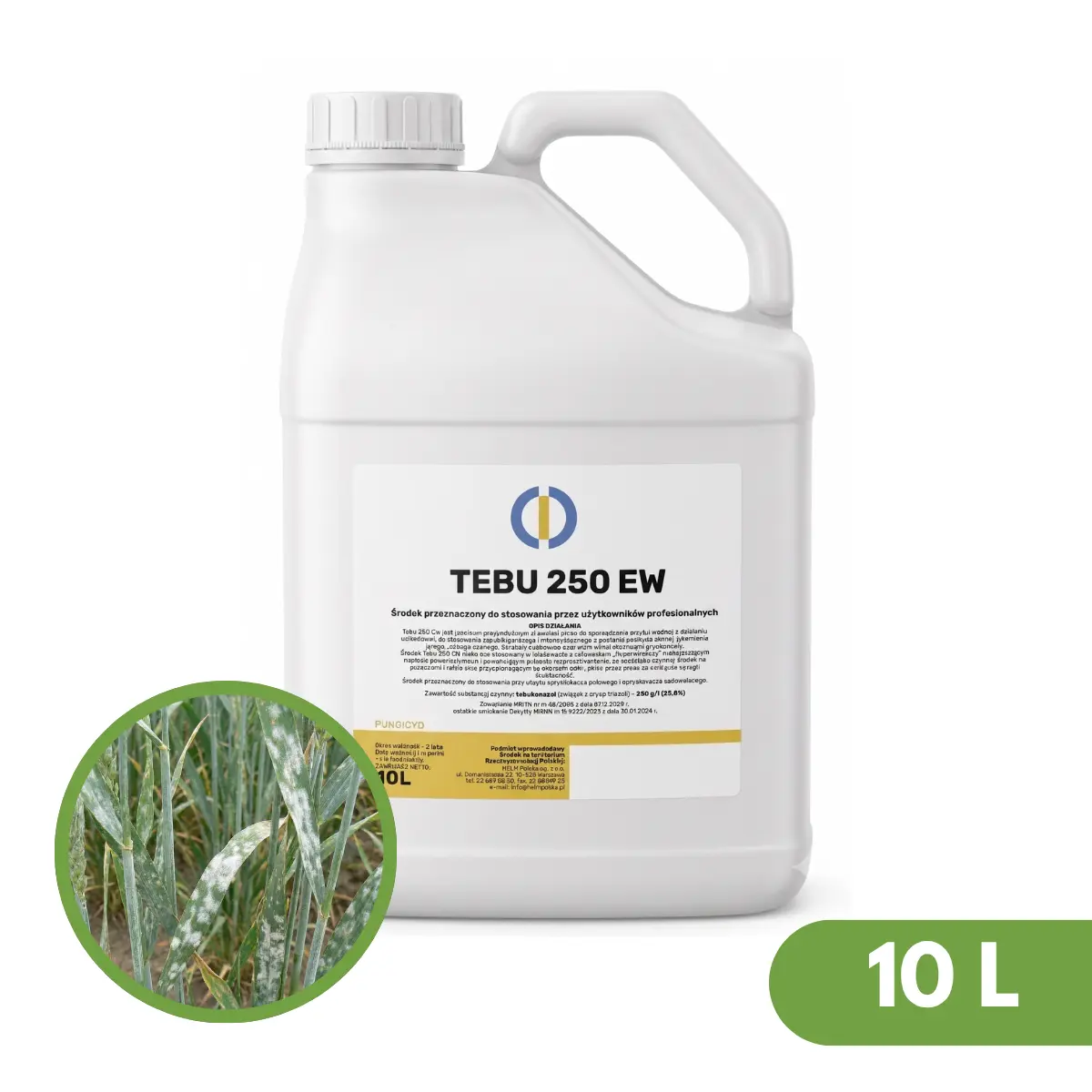
Tebu 250 EW
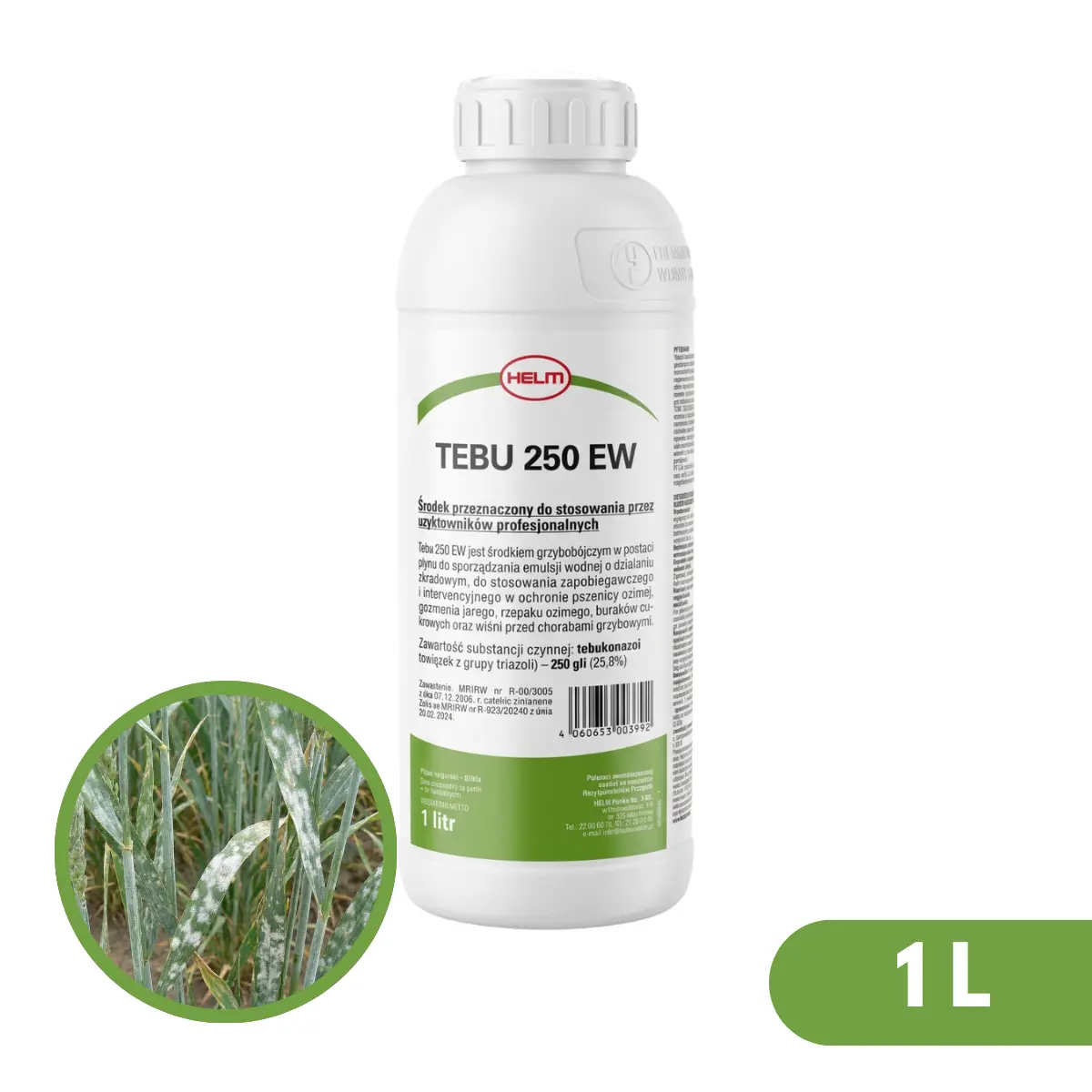
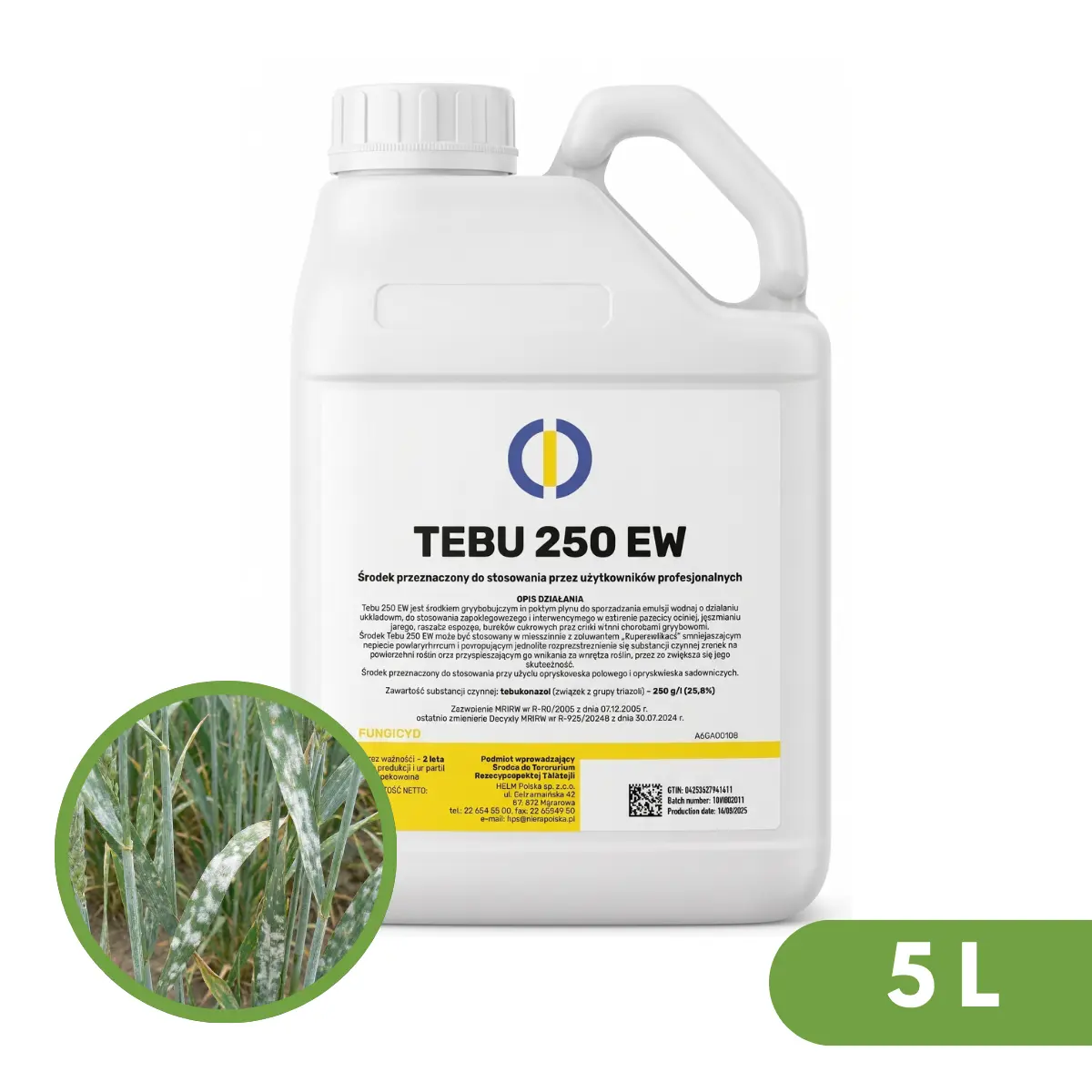
Tebu 250 EW is a professional fungicide designed for reliable protection of cereals, oilseed rape, sugar beet and sour cherry orchards against serious fungal diseases.
Description
ACTION OF TEBU 250 EW:
Tebu 250 EW is a powerful fungicide characterised by fast and effective systemic action. This means that after application it rapidly penetrates into the plant tissues and easily moves with its sap, providing comprehensive internal protection. It exhibits a dual mechanism: when used preventively it builds a strong barrier against pathogens, and when used interventionally, it immediately inhibits the development of an existing infection, minimising losses.
The product offers additional benefits in winter oilseed rape cultivation. Applied in autumn, it significantly improves winter hardiness of plants by reducing excessive above-ground growth. Spring application induces a stem shortening effect, which minimises lodging risk, facilitates harvesting and improves yield quality. For even higher efficacy and faster penetration, Tebu 250 EW is recommended to be used with a specialised adjuvant.
ACTIVE SUBSTANCE CONTENT:
tebuconazole (a triazole compound) - 250 g/l (25.8%)
Advantages of using Tebu 250 EW:
- Strong systemic action: The product rapidly penetrates and circulates within the plant, providing continuous protection regardless of external conditions.
- Dual protective power: Effectively prevents new infections and decisively treats already infected parts of the crop.
- Regulatory properties in oilseed rape: Improves winter hardiness when applied in autumn and reduces lodging when used in spring.
- High versatility: Controls key pathogens in a wide range of important crops (cereals, oilseed rape, beet, sour cherry).
Pre-harvest interval:
- Sour cherry - 7 days
- Sugar beet - 30 days
- Winter oilseed rape - 35 days
- Winter wheat, spring barley - not applicable
TEBU 250 EW - SCOPE OF USE, TIMING AND DOSES:
Winter wheat
| Target pests: | powdery mildew of cereals and grasses, brown rust of wheat, septoria leaf blotch, brown leaf spot, glume blotch, fusarium head blight |
| Maximum / recommended dose: | 1.0 l/ha |
| Application timing: | Preventively or immediately after symptoms appear, from the beginning of stem elongation to the end of heading stage (BBCH 30-59). For glume blotch and fusarium head blight, spraying can be extended to watery ripe grain stage (BBCH 71). |
| Maximum number of treatments: | 1 |
| Recommended water volume: | 200 - 400 l/ha (fine droplet spraying) |
Spring barley
| Target pests: | powdery mildew of cereals and grasses, barley leaf rust, cereal leaf spot (rhynchosporium), net blotch of barley, fusarium head blight |
| Maximum / recommended dose: | 1.0 l/ha |
| Application timing: | Preventively or immediately after symptoms appear, from the beginning of stem elongation to the end of heading stage (BBCH 30-59). |
| Maximum number of treatments: | 1 |
| Recommended water volume: | 200 - 400 l/ha (fine droplet spraying) |
Winter oilseed rape
| Target pests: | dry rot of crucifers, blackleg (autumn treatment) |
| Maximum / recommended dose: | 0.5 - 0.75 l/ha (Maximum: 0.75 l/ha) |
| Application timing: | In autumn at 4-8 leaf stage of oilseed rape (BBCH 14-18). |
| Target pests: | dry rot of crucifers, blackleg (spring treatment - shoot stage) |
| Maximum / recommended dose: | 1.0 l/ha |
| Application timing: | In spring at main shoot growth stage (BBCH 31-32). |
| Target pests: | blackleg, grey mould, sclerotinia stem rot (spring treatment - flowering) |
| Maximum / recommended dose: | 1.25 l/ha |
| Application timing: | In spring from end of flowering to petal fall stage (BBCH 57-65). For blackleg only, spraying can be delayed until first pods appear. |
| Maximum number of treatments per season: | 2 (1 treatment in autumn and 1 treatment in spring) |
| Recommended water volume: | 200 - 400 l/ha (fine droplet spraying) |
Sugar beet
| Target pests: | beet rust, powdery mildew of beet |
| Maximum / recommended dose: | 0.8 l/ha |
| Application timing: | Preventively or interventionally immediately after symptoms appear, from full canopy closure between rows (BBCH 39). |
| Maximum number of treatments: | 2 (interval between treatments: at least 21 days) |
| Recommended water volume: | 200 - 400 l/ha (fine droplet spraying) |
Sour cherry
| Target pests: | brown rot of stone fruit trees |
| Maximum / recommended dose: | 0.75 l/ha |
| Application timing: | At early flowering or full flowering stage (BBCH 61-66). |
| Maximum number of treatments: | 1 |
| Recommended water volume: | 500 - 750 l/ha |