Weeds in the lawn — how to identify and when to control them
Dandelion, clover or daisy can appear even in a well-kept lawn. We advise how to recognise six of the most common weeds, when to act and what to do so that the grass itself leaves them less space.
Published on October 12, 2026
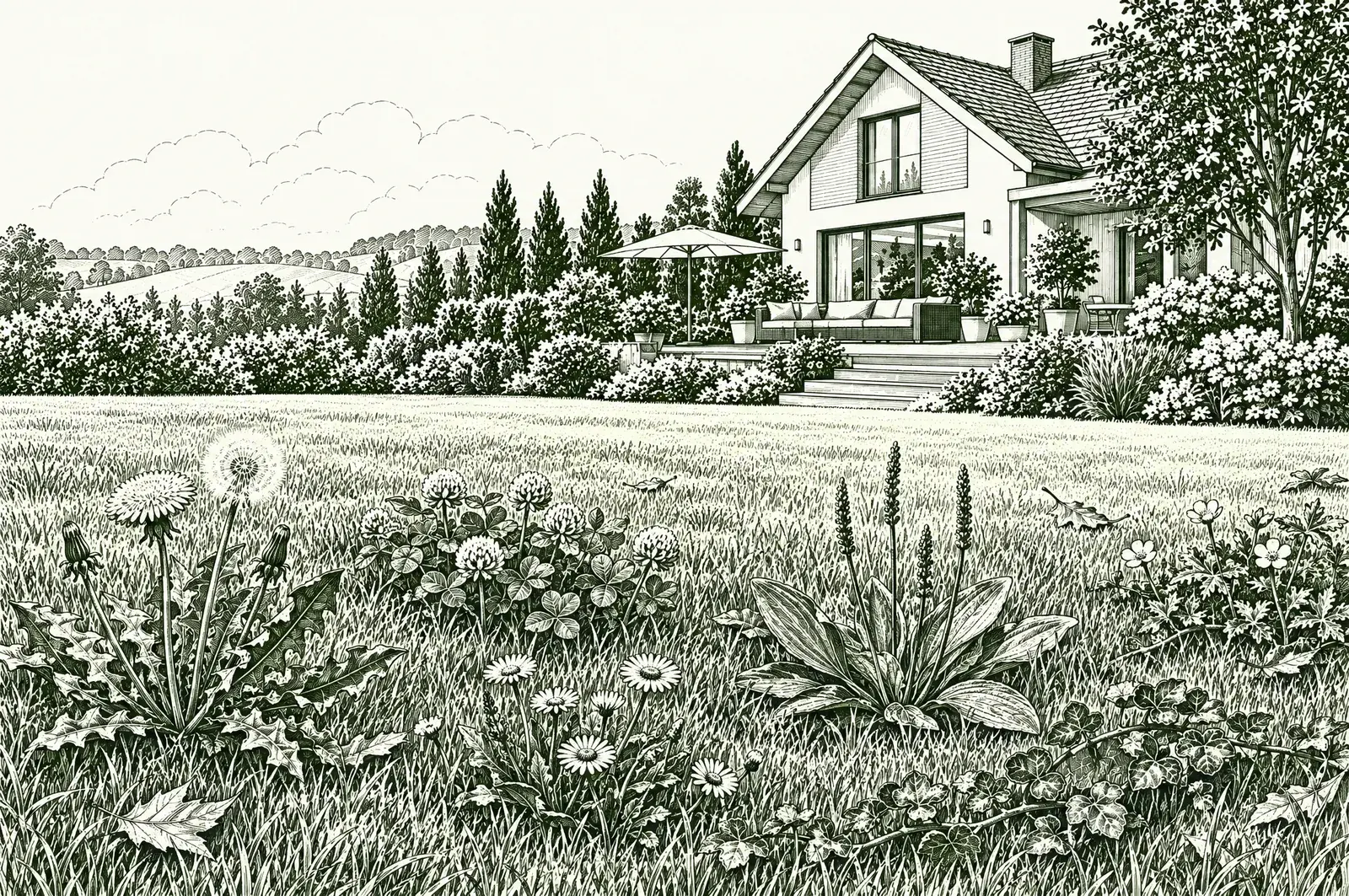
Weeds in the lawn are not just a matter of appearance. The rosettes of dandelion and plantain shade the grass, clover and ground ivy spread with creeping shoots, and every free spot in the turf is quickly taken by something other than grass. Good news: most lawn weeds are dicotyledonous plants, which are easy to distinguish from grasses — and can be limited both by care and by products intended for lawns.
Where do weeds in the lawn come from
Weeds enter where the grass is weak: in sparse spots, on compacted soil, in shade, on an unfertilised lawn or one mown too low. Seeds are brought by wind and birds, and some have been waiting in the soil for years for light. Many lawn weeds have a flat rosette of leaves or shoots creeping just above the ground — the mower passes over them, and they keep growing.
The most common lawn weeds
Before you do anything, check what you are dealing with. You will find these six species in most gardens.

- Dandelion (Taraxacum) — rosette of deeply lobed leaves, yellow flower heads, then fluffy “blowballs”. It has a thick, deep taproot: pulled out only at the surface it quickly regrows.
- White clover — leaves composed of three leaflets, often with a light horseshoe-shaped pattern, and white, spherical flower heads. Creeping shoots root at the nodes. It spreads especially where the grass lacks nitrogen.
- Common plantain — flat rosette of broad, ovate leaves with distinct parallel veins and slender flower spikes. It grows on compacted soil: by paths, in play areas and where there is frequent foot traffic. Similar is lanceolate plantain with narrow, elongated leaves.
- Common daisy — small rosette of spatulate leaves and flowers with white petals and a yellow centre. It tolerates low mowing well, which is why it most often spreads in short-cut grass.
- Creeping buttercup — leaves divided into three toothed parts, shiny yellow flowers and long runners that root at intervals. Usually indicates moist, compacted soil.
- Ground ivy — square, creeping shoots with kidney-shaped, scalloped leaves and small purple flowers; crushed it smells. It most often grows in shade and semi-shade.
When to act
Dicotyledonous weeds are easiest to control when they are growing vigorously. There are two good times for this: spring, when grass and weeds start growing (usually April and May), and late summer and autumn — September and October, when weeds store reserves in their roots for winter. In autumn the grass quickly fills gaps left by weeds, and the heat no longer stresses it.
- Weather: warm but not hot, dry grass and a windless day. Wind carries droplets onto flowerbeds and vegetables, and rain right after treatment can wash the product off the leaves.
- Growth stage: weeds should have well-developed leaves. Lawn products penetrate mainly through leaves — the more leaves, the more product reaches the plant.
- Mowing before treatment: do not mow a few days before so that weeds have time to regrow and have leaves to absorb the product.
- Mowing after treatment: wait to mow as long as the label states so the product has time to move to the roots. Also check the label for what to do with grass clippings from the first mowings.
- Young lawn: do not spray a newly established or overseeded lawn until the grass has formed a turf — the label states when it is allowed.
Non-chemical methods
Dense, well-nourished turf leaves little space for weeds, so it is worth starting with care — also when you plan treatment.

- Mowing: mow regularly and not too low — cut at most one third of the blade height at a time. Taller grass shades the soil and hinders weed seed germination. Sharp blades cut evenly; torn blades yellow and grow less well.
- Fertilisation: use lawn fertiliser during the growing season — in spring with more nitrogen, in autumn an autumn fertiliser with more potassium. Dose and timing — according to the packaging. When the grass has enough nitrogen, clover finds it harder to spread.
- Scarifying and aeration: a scarifier cuts the turf and rakes out thatch and moss, and an aerator aerates compacted soil. Do this in spring or early autumn when grass regenerates quickly.
- Overseeding: overseed bare spots with a grass mix suited to the site — different for shade, different for a play lawn. If you use a herbicide, the interval between treatment and overseeding is stated on the label.
- Manual removal: remove individual dandelions and plantains with a weed extractor — easiest after rain when the soil is soft. Lift creeping shoots of ground ivy and clover with a rake before mowing so the mower cuts them.
Selective lawn herbicides
When there are many weeds, you can reach for a selective herbicide for lawns. These are plant protection products intended to control dicotyledonous weeds in grass: they work on dandelion, clover, plantain, daisy, buttercup or ground ivy, while grasses — monocotyledonous plants — remain if you use the product as the label states.
Lawn products work mainly through the leaves: the plant absorbs the active substance and transports it down to the roots. Changes in weeds — twisting and yellowing of leaves — appear gradually, not immediately. However, such products do not distinguish weeds from other dicotyledonous plants: flowers in the flowerbed, vegetables or young shrubs. They also do not work on moss or grassy weeds — there are separate products for moss.
Lawn products come in several forms: as a concentrate to be diluted in a sprayer, as a ready-to-use spray for spot treatment of individual weeds, and as a lawn fertiliser with an added herbicide. Choose a product registered for use on lawns and check the label to see if it can be used by non-professional users.
Safety during treatment
- Before each use, read the label: scope of use, dose, timing, precautions and when it is safe to enter the lawn again.
- Keep children and pets away from the lawn during treatment and for the time specified on the label. Remove toys, bowls and garden furniture beforehand.
- Avoid rain: do not spray before forecasted rain or on wet grass, and do not water the lawn after treatment. The label states how long the product needs without rain.
- Spray only in calm weather, close to the grass. Protect flowerbeds, vegetables and ponds; do not spray near wells or water bodies.
- Wear gloves and protective clothing if required by the label, and wash your hands and face after work.
- Prepare only as much spray liquid as you will use. Do not pour leftovers into the sewage system or onto the ground; dispose of empty containers according to the label instructions.
- Store products in their original packaging, out of reach of children, away from food and animal feed.
Summary
Weeds in the lawn are usually a sign that the grass is lacking something — light, nitrogen, well-aerated soil or dense turf. Regular mowing, fertilisation, scarification and overseeding leave them less space. When there are many weeds, you can reach for a selective lawn product: in spring or in September and October, in warm, dry and calm weather — always according to the label. Then return to care: dense grass leaves the least space for weeds.
Use plant protection products safely. Always read the label and product information before use.
Matching products
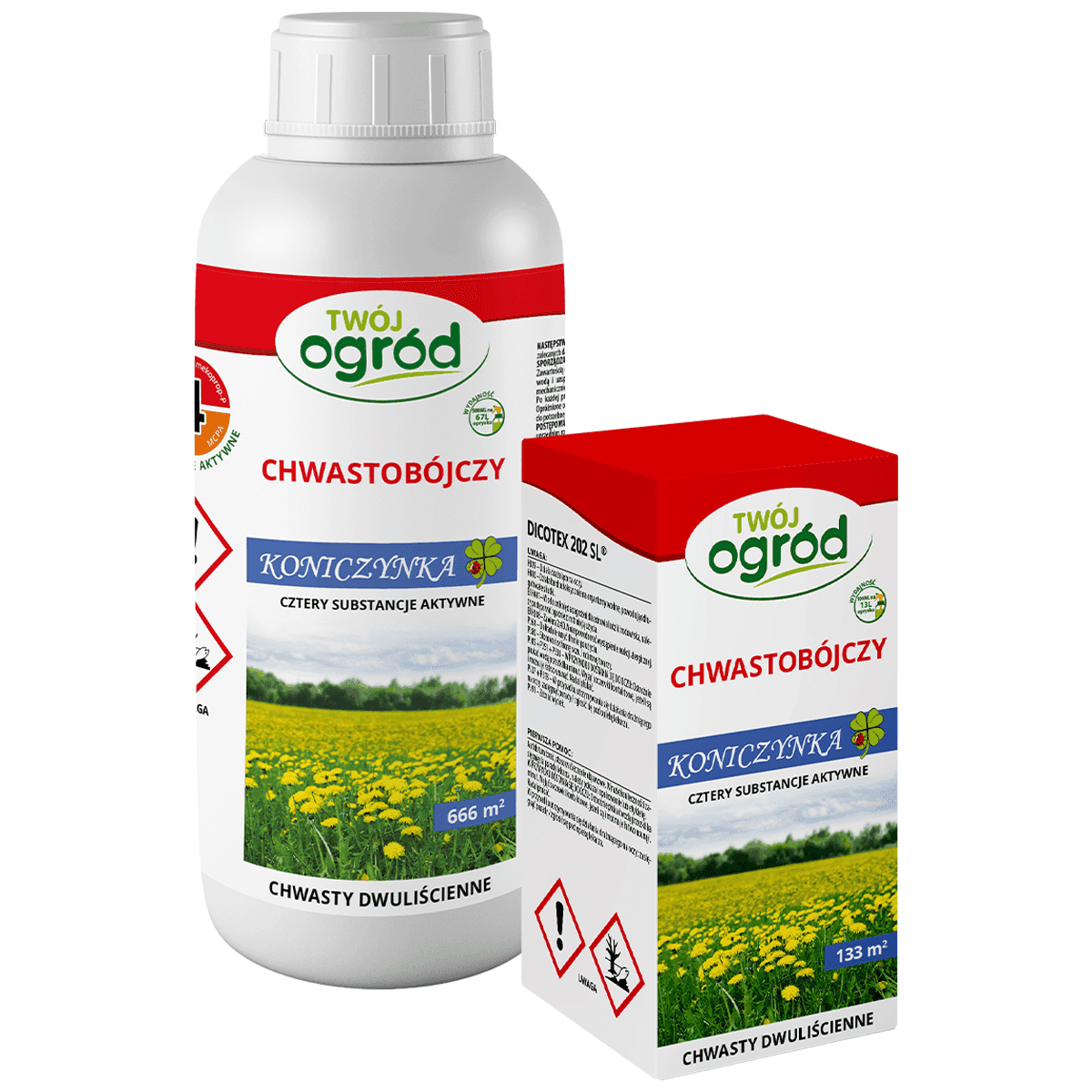 Halloween −20%Lowest price in the last 30 days: CHF 13.58Twój OgródKoniczynka Dicotex 202 SL Twój Ogród - herbicidefrom CHF 13.58CHF 10.86View detailsCHF 108.60 / 1 l
 Halloween −20%Lowest price in the last 30 days: CHF 16.53Twój OgródStarane Trawniki (fluroxypyr, chlopyralid, MCPA) Twój Ogród - herbicidefrom CHF 16.53CHF 13.22View detailsCHF 264.40 / 1 l
 Halloween −20%Lowest price in the last 30 days: CHF 14.66SubstralMniszek Ultra 070 EW Substral - weed control product for lawnsfrom CHF 14.66CHF 11.73View detailsCHF 46.92 / 1 l