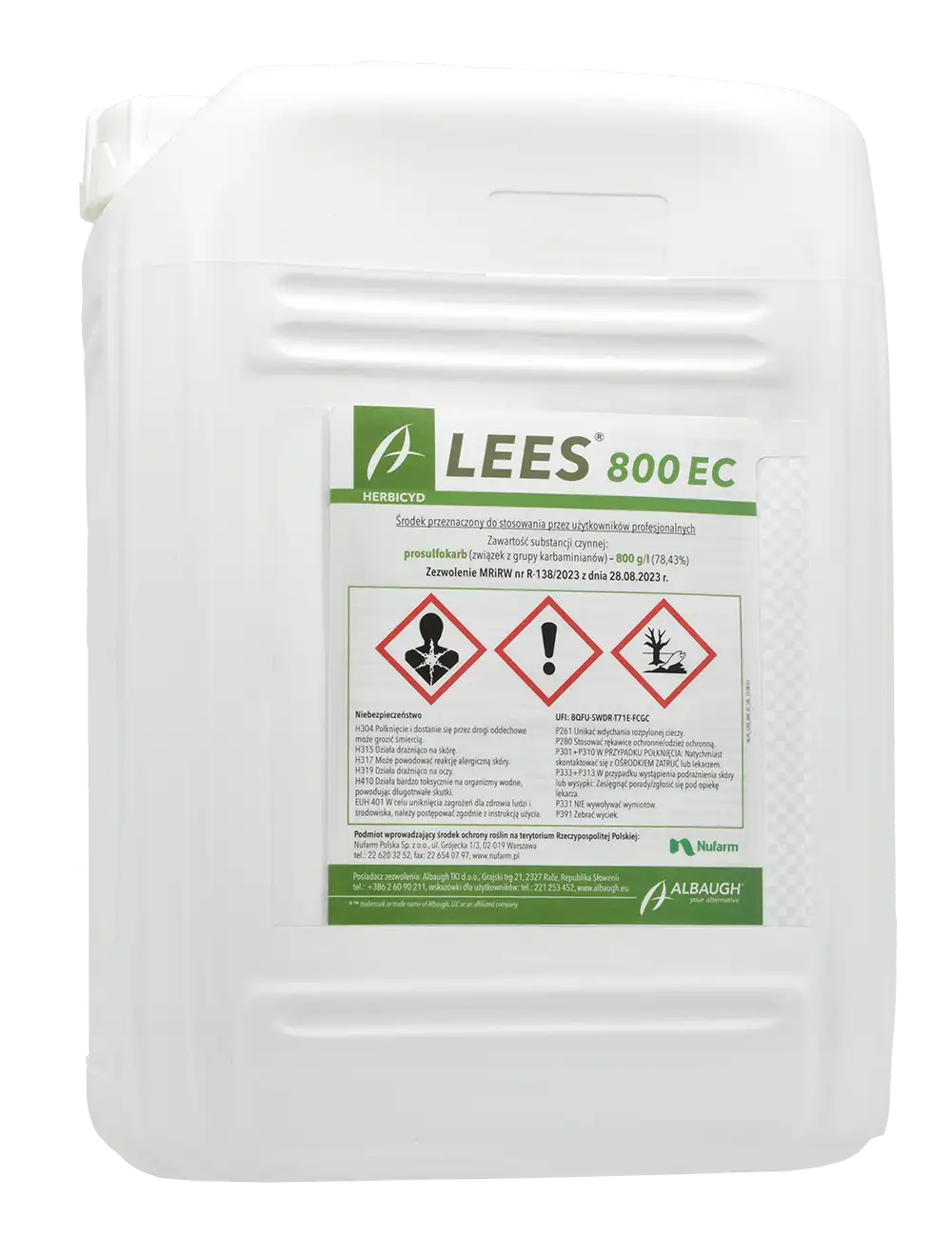
 SKU CH-15228
Aminopielik 600 SL
AMINOPIELIK STANDARD 600 SL is a professional selective herbicide with strong systemic action, designed for effective control of a wide range of dicotyledonous weeds.
- Pack
- 5 l
Currently unavailable
Description
ACTION OF AMINOPIELIK STANDARD 600 SL:
AMINOPIELIK STANDARD 600 SL bases its action on an advanced active substance from the group of growth regulators (synthetic auxins), which rapidly penetrates weeds both through leaves and the root system. The product destructively affects cell division processes, leading to a rapid growth inhibition and severe deformation of stems and leaves. Thanks to its exceptional systemic efficacy, the preparation spreads throughout the entire plant, causing rapid chlorosis, necrosis, and irreversible drying.
An incredible advantage of the product is its express speed of action – the first visible symptoms in the form of deformation of the youngest shoots appear just a few hours after treatment. Complete weed death occurs within 7 to 14 days, freeing the crop from competition for water and nutrients. The preparation achieves maximum combat effectiveness when weeds are in the early, sensitive phase from 2 to 6 leaves.
CONTENT OF ACTIVE SUBSTANCES:
2,4-D - acid (2,4-dichlorophenoxyacetic acid in the form of dimethylammonium salt (compound from the phenoxy acid group)) - 600 g/l (50.0%)
Advantages of using AMINOPIELIK STANDARD 600 SL:
- Instant visual effect: Weed deformations are noticeable just a few hours after spraying.
- Dual absorption pathway: The product effectively penetrates unwanted plants both through their above-ground parts (leaves) and underground parts (roots).
- Comprehensive plant destruction: Systemic action disrupts the cellular development of weeds, leading to their complete drying within 7-14 days.
Pre-harvest interval:
- Spring barley, winter wheat, winter rye, winter barley, seed grass plantations - not applicable
AMINOPIELIK STANDARD 600 SL - SCOPE OF USE, TIMING AND DOSES:
Spectrum of controlled weeds:
- In all registered crops at a dose of 1.25 l/ha:
Sensitive weeds: cornflower, white goosefoot, field larkspur, Persian speedwell, volunteer oilseed rape, shepherd's purse, field pennycress, small-flowered vetch.
Moderately sensitive weeds: red dead-nettle, corn poppy.
Moderately resistant weeds: field pansy, scentless mayweed, ivy-leaved speedwell.
Resistant weeds: common fumitory, common chickweed, field speedwell, cleavers, bindweed knotweed (syn. field bindweed).
Spring barley
| Controlled pests: | dicotyledonous weeds (according to the spectrum of action) |
| Maximum / recommended dose: | 1.25 l/ha |
| Application timing: | Apply the product from the first leaf stage to the second node stage (BBCH 11 – 32). |
| Maximum number of treatments: | 1 |
| Recommended water volume: | 200 - 300 l/ha (Recommended spraying: medium droplet size) |
Winter wheat, winter rye, winter barley
| Controlled pests: | dicotyledonous weeds (according to the spectrum of action) |
| Maximum / recommended dose: | 1.25 l/ha |
| Application timing: | Apply the product in spring from the 4-leaf stage to the second node stage (BBCH 14 – 32). |
| Maximum number of treatments: | 1 |
| Recommended water volume: | 200 - 300 l/ha (Recommended spraying: medium droplet size) |
SMALL-AREA APPLICATIONS:
The responsibility for the effectiveness and phytotoxicity of the plant protection product used in small-area crops lies solely with its user.
Seed grass plantations
| Controlled pests: | dicotyledonous weeds (according to the spectrum of action) |
| Maximum / recommended dose: | 1.25 l/ha |
| Application timing: | Apply the product in spring from the 4-leaf stage to the second node stage (BBCH 14 – 32). |
| Maximum number of treatments: | 1 |
| Recommended water volume: | 200 - 300 l/ha (Recommended spraying: medium droplet size) |