 SKU CH-12816
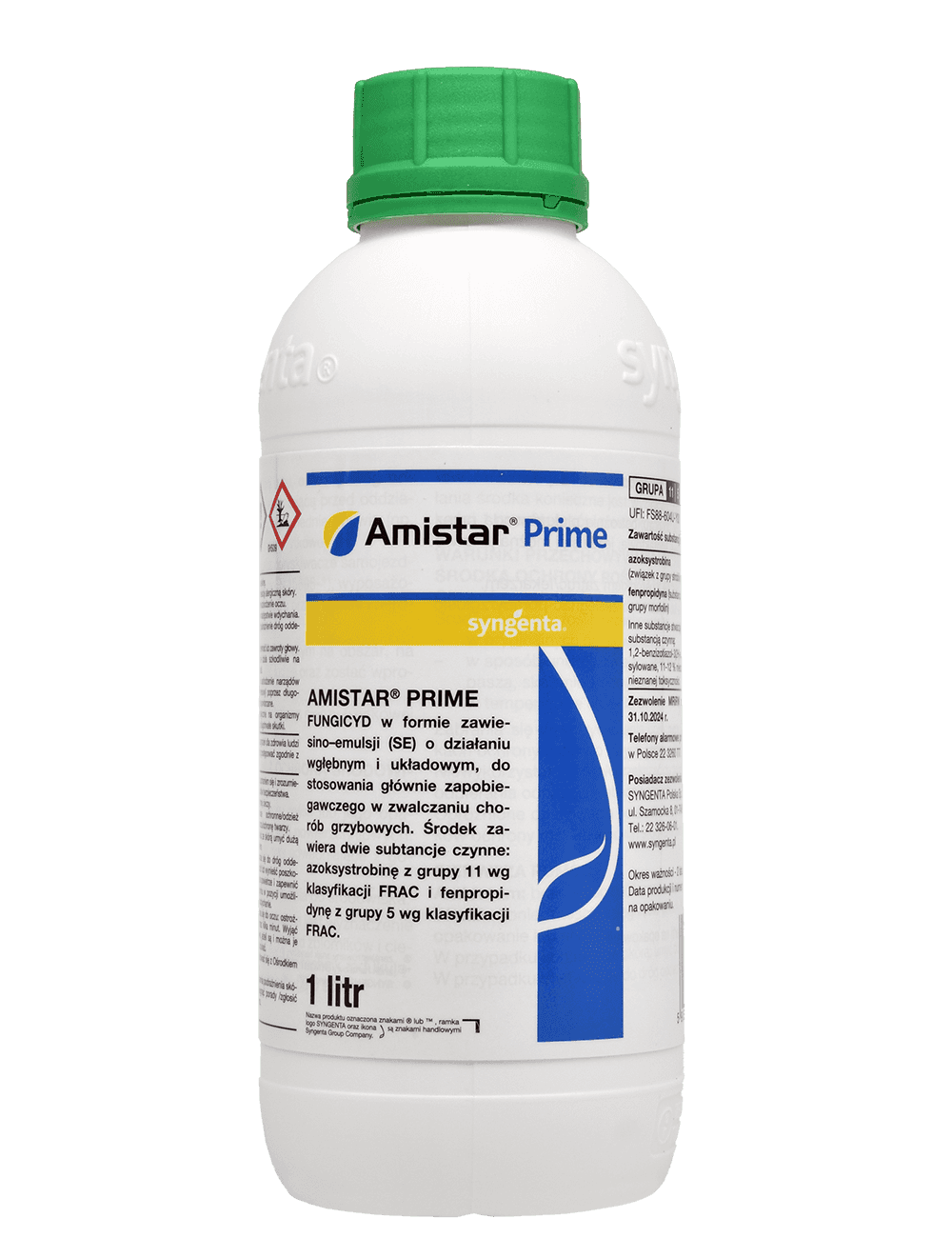
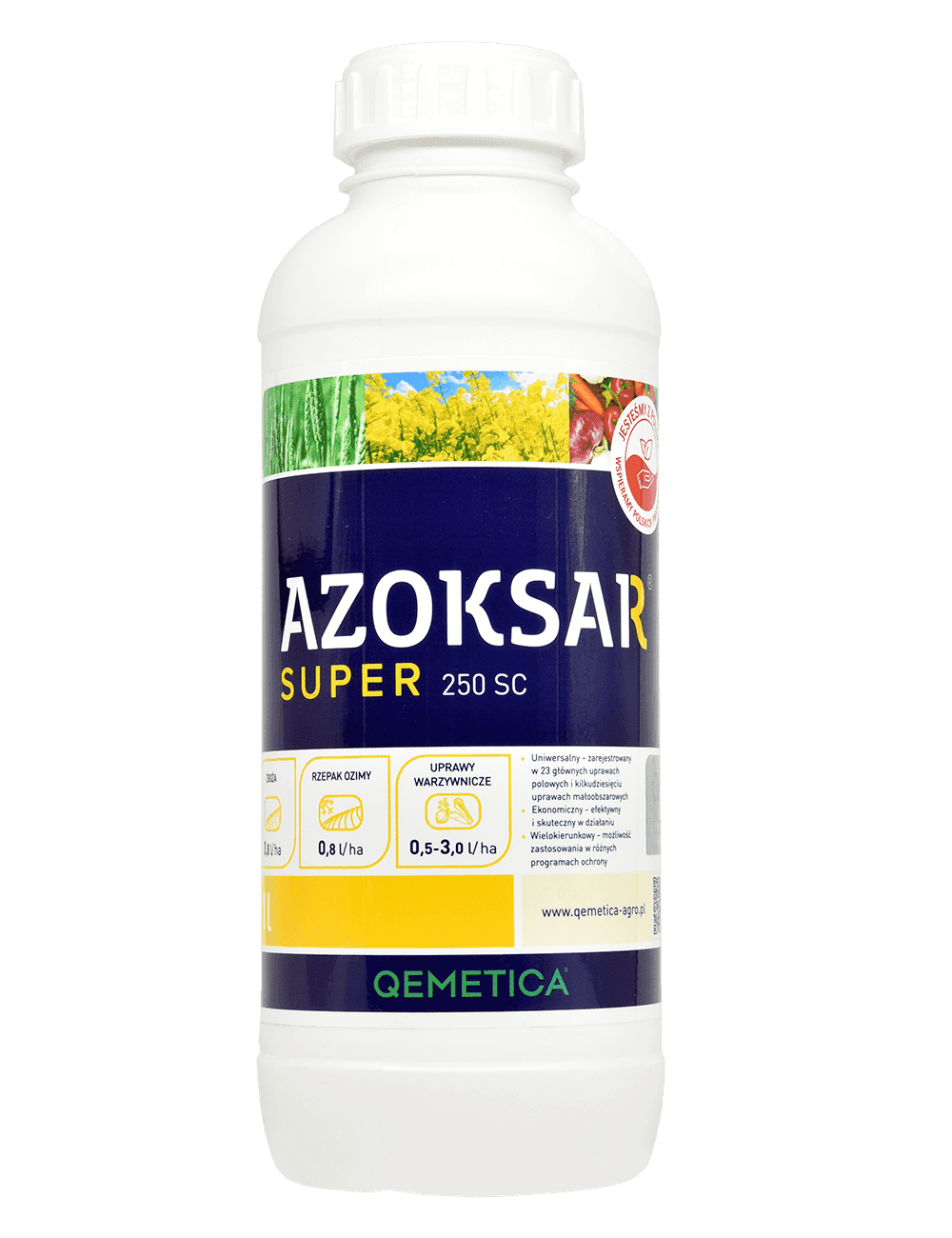
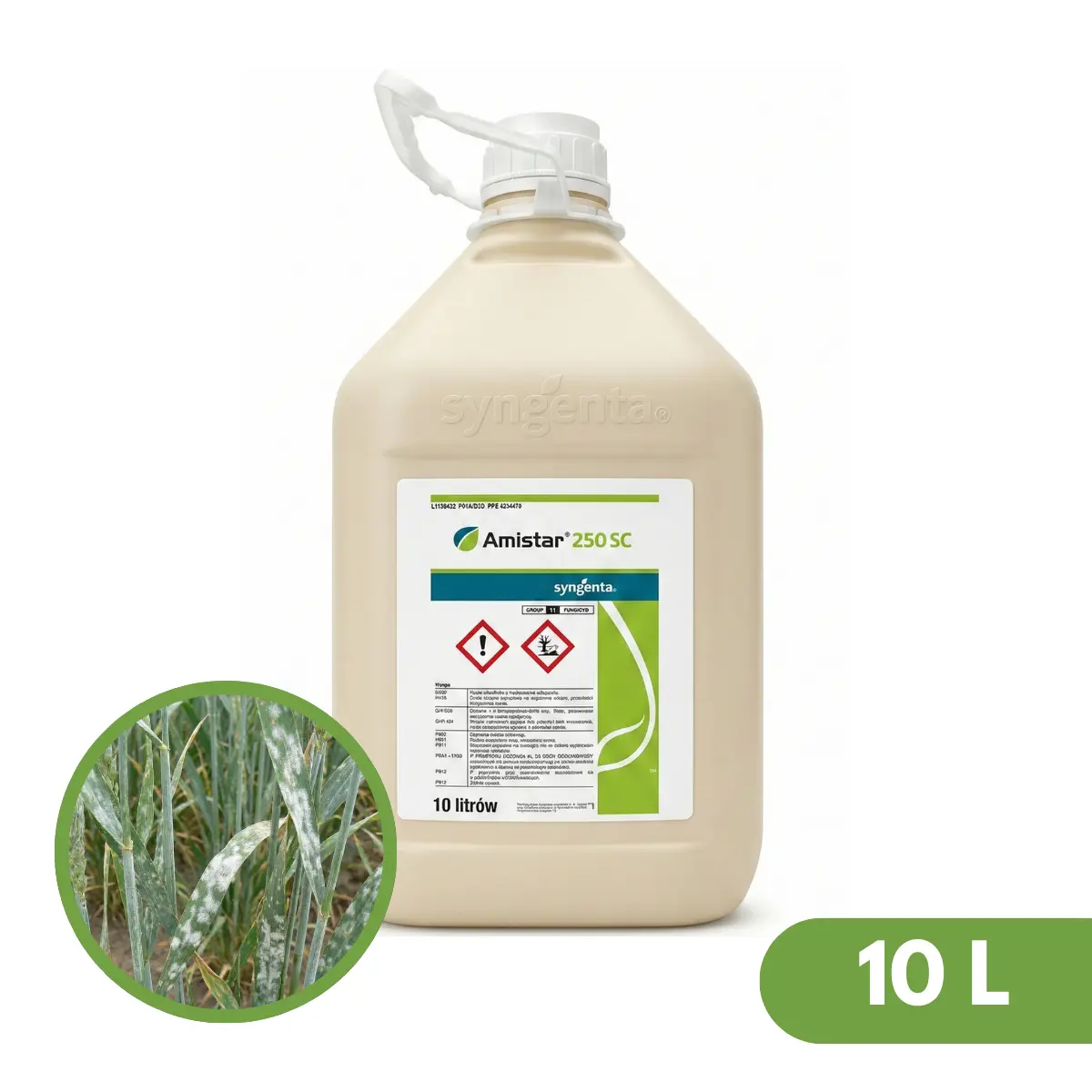
Amistar
Amistar is a fungicide intended for preventive use in the cultivation of agricultural and vegetable crops. Amistar technology is proven quality that guarantees time savings, increased effectiveness, and safety.
- Pack
- 10 l
Description
ACTION OF AMISTAR 250 SC:
Amistar is a fungicide in the form of a concentrate as a concentrated suspension for dilution with water. The product acts deeply and systemically and is mainly intended for preventive use in the control of fungal diseases in the cultivation of agricultural and vegetable crops.
Advantages of using Amistar 250 SC:
- wide range of applications in agricultural and vegetable crops,
- time savings,
- guaranteed effectiveness,
- increased safety for the operator and the natural environment.
AMISTAR 250 EC ACTIVE SUBSTANCE CONTENT:
azoxystrobin (compound from the strobilurin group) – 250 g/l (22.81%).
SCOPE OF USE, TIMING AND DOSES:
The product is intended for use with field sprayers, field sprayers mounted on planters, and handheld sprayers.
How to use Amistar 250 EC :
Winter wheat, spring wheat
powdery mildew of cereals and grasses, brown leaf spot, brown rust of wheat, septoria leaf blotch, septoria glume blotch, fusarium head blight, black grain mould
Maximum dose for single application: 1 l/ha
Recommended dose for single application: 0.8 - 1 l/ha
Use the higher recommended dose under conditions of greater disease pressure.
Application timing: The product should be applied mainly preventively or immediately after the first symptoms of diseases are observed, from the beginning of stem elongation to the end of heading stage.
Number of treatments: 1
Recommended water volume: 200-300 l/ha
Adjust water volume to plant size and density.
Recommended spraying: fine droplet
Rye
brown rust, cereal rhynchosporium
Maximum dose for single application: 1 l/ha
Recommended dose for single application: 0.8 - 1 l/ha
Use the higher recommended dose under conditions of greater disease pressure.
Application timing: The product should be applied mainly preventively or immediately after the first symptoms of diseases are observed, from the beginning of stem elongation to the end of heading stage.
Number of treatments: 1
Recommended water volume: 200-300 l/ha
Adjust water volume to plant size and density.
Recommended spraying: fine droplet
COMBINED USE:
Winter wheat, spring wheat.
powdery mildew of cereals and grasses, brown leaf spot, brown rust of wheat, septoria leaf blotch, septoria glume blotch, fusarium head blight, black grain mould
Maximum/recommended dose for single application: Amistar 250 SC – 0.6 l/ha + Artea 330 EC – 0.4 l/ha
Application timing: Apply the mixture from the beginning of stem elongation to the end of heading stage.
Amistar 250 SC in mixture with Artea 330 EC acts preventively, interventively, and curatively.
Number of treatments: 1
Recommended water volume: 200-300 l/ha
Adjust water volume to plant size and density.
Recommended spraying: fine droplet
Winter barley, spring barley
powdery mildew of cereals and grasses, net blotch, cereal rhynchosporium, barley rust, fusarium head blight
Maximum/recommended dose for single application: Amistar 250 SC – 0.6 l/ha + Artea 330 EC – 0.4 l/ha
Application timing: Apply the mixture from the end of tillering to the end of heading stage. Amistar 250 SC in mixture with Artea 330 EC acts preventively, interventively, and curatively.
Number of treatments: 1
Recommended water volume: 200-300 l/ha
Adjust water volume to plant size and density.
Recommended spraying: fine droplet
Winter triticale, spring triticale
powdery mildew of cereals and grasses, brown rust of wheat, cereal rhynchosporium, brown leaf spot, septoria leaf blotch, septoria glume blotch, fusarium head blight.
Maximum/recommended dose for single application: Amistar 250 SC – 0.6 l/ha + Artea 330 EC – 0.4 l/ha.
Application timing: Apply the mixture from the end of tillering to the end of heading stage. Amistar 250 SC in mixture with Artea 330 EC acts preventively, interventively, and curatively.
Number of treatments: 1
Recommended water volume: 200-300 l/ha
Adjust water volume to plant size and density.
Recommended spraying: fine droplet
Note: Under conditions favourable for the development of septoria glume blotch on wheat and triticale, the recommended spraying timing may be extended to the milk ripeness stage of the grain.
Maximum number of treatments per growing season in cereal cultivation: 1
Winter oilseed rape
blackleg, grey mould
Maximum dose for single application: 1 l/ha
Recommended dose for single application: 0.8-1 l/ha
Use the higher recommended dose under conditions of greater disease pressure.
Application timing: Apply preventively or immediately after the first symptoms of diseases appear, from the petal fall stage to the formation of the first pods of oilseed rape.
Recommended water volume: 200-300 l/ha
Adjust water volume to plant size and density.
Recommended spraying: fine droplet
Number of treatments:1
sclerotinia stem rot
Maximum/recommended dose for single application: 1 l/ha
Application timing: Apply preventively or immediately after the first symptoms of diseases appear, from the beginning of flowering to the end of flowering stage of oilseed rape.
Number of treatments: 1
Recommended water volume: 300 l/ha
Recommended spraying: fine droplet
Maximum number of treatments per growing season in winter oilseed rape cultivation: 1
Potato
potato rhizoctonia
Maximum dose for single application: 3.0 l/ha
Recommended dose for single application: 2.0 - 3.0 l/ha
(band spraying of soil).
Use the higher recommended dose under higher risk of disease occurrence, e.g. due to frequent potato cultivation on the same field.
Application timing: Apply as band spraying of soil during spring tuber planting, using planter-mounted devices equipped with two spraying nozzles.
Avoid direct spraying of tubers to prevent delaying germination and emergence.
Recommended water volume: 100-200 l/ha.
alternaria leaf spot
Maximum/recommended dose for single application: 0.5 l/ha
Application timing: Apply preventively under risk and occurrence of disease, up to 3 times per season, at intervals of 10-14 days.
To reduce the risk of resistance development, if more than two fungicide treatments are necessary in potatoes, it is recommended to alternate fungicides with different modes of action.
The pre-harvest interval is 7 days.
Recommended water volume: 300-400 l/ha.
Adjust water volume to plant size and density.
Recommended spraying: fine droplet.
Number of treatments: 3.
Interval between treatments: at least 10 days.
Maximum number of treatments per growing season in potato cultivation: 4
Onion
downy mildew, grey mould (neck rot), alternaria leaf spot
Maximum/recommended dose for single application: 0.8 l/ha
Application timing: Spray preventively from the 3-leaf stage, according to monitoring or immediately after the first symptoms appear on seed onion, sets or winter-sown onion in the region. Subsequent treatments every 7-10 days, alternating fungicides with different modes of action.
To ensure even coverage of plants with spray liquid, it is recommended to add an adhesion agent.
Recommended water volume: 700 l/ha
Maximum number of treatments per growing season: 3
Interval between treatments: at least 7 days
Green bean
bean anthracnose, grey mould, sclerotinia stem rot
Maximum/recommended dose for single application: 0.8 l/ha
Application timing: Apply Amistar 250 SC preventively or at the first symptoms of diseases during flowering and pod setting of beans. Treatments every 7–10 days, alternating fungicides with different modes of action.
Maximum 2 treatments per growing season are recommended.
Recommended water volume: 700 l/ha
Maximum number of treatments per growing season: 2
Interval between treatments: at least 7 days
Pea for green seeds
pea ascochyta blight, downy mildew
Maximum/recommended dose for single application: 0.8 l/ha
Application timing: First treatment at the beginning of pea flowering stage.
Treatments every 7–10 days, alternating fungicides with different modes of action.
Recommended water volume: 700 l/ha
Maximum number of treatments per growing season: 2
Interval between treatments: at least 7 days
Heading cabbage (for long-term storage)
blackleg (alternaria leaf spot), grey mould
Maximum/recommended dose for single application: 0.8 l/ha
Application timing: First treatment preventively from BBCH 41 stage (beginning of head formation) or immediately after first symptoms appear. Subsequent treatments as needed every 7-10 days, alternating fungicides with different modes of action.
To ensure even coverage of plants with spray liquid, it is recommended to add an adhesion agent.
Recommended water volume: 700 l/ha
Maximum number of treatments per growing season: 3
Interval between treatments: at least 7 days
Chinese cabbage (for long-term storage)
blackleg (alternaria leaf spot), grey mould
Maximum/recommended dose for single application: 0.8 l/ha
Application timing: First treatment preventively from BBCH 41 stage (beginning of head formation) or immediately after first symptoms appear.
Subsequent treatments as needed every 7-10 days, alternating fungicides with different modes of action.
To ensure even coverage of plants with spray liquid, it is recommended to add an adhesion agent.
Recommended water volume: 700 l/ha
Maximum number of treatments per growing season: 3
Interval between treatments: at least 7 days
Cauliflower
blackleg (alternaria leaf spot)
Maximum/recommended dose for single application: 0.8 l/ha
Application timing: First treatment preventively from BBCH 41 stage (beginning of cauliflower curd development) or immediately after first symptoms appear.
Subsequent treatments as needed every 7-10 days, alternating fungicides with different modes of action.
To ensure even coverage of plants with spray liquid, it is recommended to add an adhesion agent.
Recommended water volume: 700 l/ha
Maximum number of treatments per growing season: 2
Interval between treatments: at least 7 days
Carrot
alternaria leaf spot, powdery mildew
Maximum/recommended dose for single application: 0.8 l/ha
Application timing: Apply preventively from BBCH 41 stage (beginning of development of harvestable parts – roots start to widen) or immediately after first symptoms appear on leaves. Subsequent treatments every 7-10 days, alternating fungicides with different modes of action.
Recommended water volume: 700 l/ha
Maximum number of treatments per growing season: 3
Interval between treatments: at least 7 days
Lettuce in field cultivation
powdery mildew, downy mildew, grey mould, sclerotinia stem rot
Maximum/recommended dose for single application: 0.8 l/ha
Application timing: Apply preventively from BBCH 41 stage (beginning of development of harvestable parts) or immediately after first symptoms appear on plants. Subsequent treatments every 7–10 days, alternating fungicides with different modes of action.
Recommended water volume: 600 l/ha
Maximum number of treatments per growing season: 2
Interval between treatments: at least 7 days
Tomato in field cultivation
potato late blight, alternaria leaf spot
Maximum dose for single application: 1 l/ha
Recommended dose for single application: 0.8 - 1 l/ha
Use the higher dose under greater disease pressure.
Application timing: For control of potato late blight, first treatment should be preventive, from BBCH 21 stage (beginning of side shoot development), according to monitoring, before first symptoms appear or after first symptoms appear on early potato varieties in the region.
Subsequent treatments every 7-10 days, alternating fungicides with different modes of action.
Note:
Do not apply the product in the early growth stage of field-grown tomato (up to 4 weeks after planting or up to 5 weeks after sowing) and not on wet plants or immediately after rainfall.
Recommended water volume: 800 l/ha
Recommended spraying: fine droplet
Maximum number of treatments per growing season: 3
Interval between treatments: at least 7 days
Leek
leek rust, alternaria leaf spot of leek
Maximum/recommended dose for single application: 0.8 l/ha
Application timing: Apply preventively from BBCH 13 stage (3-leaf stage) or immediately after first symptoms appear on plants. Subsequent treatments every 7–10 days, alternating fungicides with different modes of action.
Recommended water volume: 700 l/ha
Maximum number of treatments per growing season: 3
Interval between treatments: at least 7 days
Celery
celery septoria
Maximum/recommended dose for single application: 0.8 l/ha
Application timing: Apply preventively from BBCH 13 stage (3-leaf stage) or immediately after first symptoms appear on plants. Subsequent treatments every 7–10 days, alternating fungicides with different modes of action.
Recommended water volume: 700 l/ha
Maximum number of treatments per growing season: 3
Interval between treatments: at least 7 days
Sweet pepper in tunnel cultivation
grey mould, sclerotinia stem rot
Maximum/recommended concentration for single application: 0.1% (100 ml product in 100 litres of water).
Application timing: Apply preventively or immediately after first symptoms appear on plants. Subsequent treatments every 7–10 days, alternating fungicides with different modes of action.
Recommended spray liquid dose: 80 l /1000 m2
Maximum number of treatments per growing season: 3
Interval between treatments: at least 7 days
Lettuce in protected cultivation
grey mould, powdery mildew, downy mildew, sclerotinia stem rot.
Maximum/recommended concentration for single application: 0.1% (100 ml product in 100 litres of water).
Application timing: Apply preventively or immediately after first symptoms appear on plants. Subsequent treatments every 7–10 days, alternating fungicides with different modes of action.
Recommended spray liquid dose: 60 l /1000 m2
Maximum number of treatments per growing season: 2
Interval between treatments: at least 7 days
Pre-harvest interval of Amistar 250 EC:
cereals – 35 days,
oilseed rape – 35 days,
leek – 20 days,
onion – 14 days,
heading and Chinese cabbage – 14 days,
cauliflower – 14 days,
pea for green seeds – 14 days,
celery – 14 days,
lettuce – 14 days,
carrot – 10 days,
potato (foliar spray, alternaria leaf spot) – 7 days,
green bean – 7 days,
sweet pepper – 3 days,
tomato – 3 days.