 SKU CH-12801
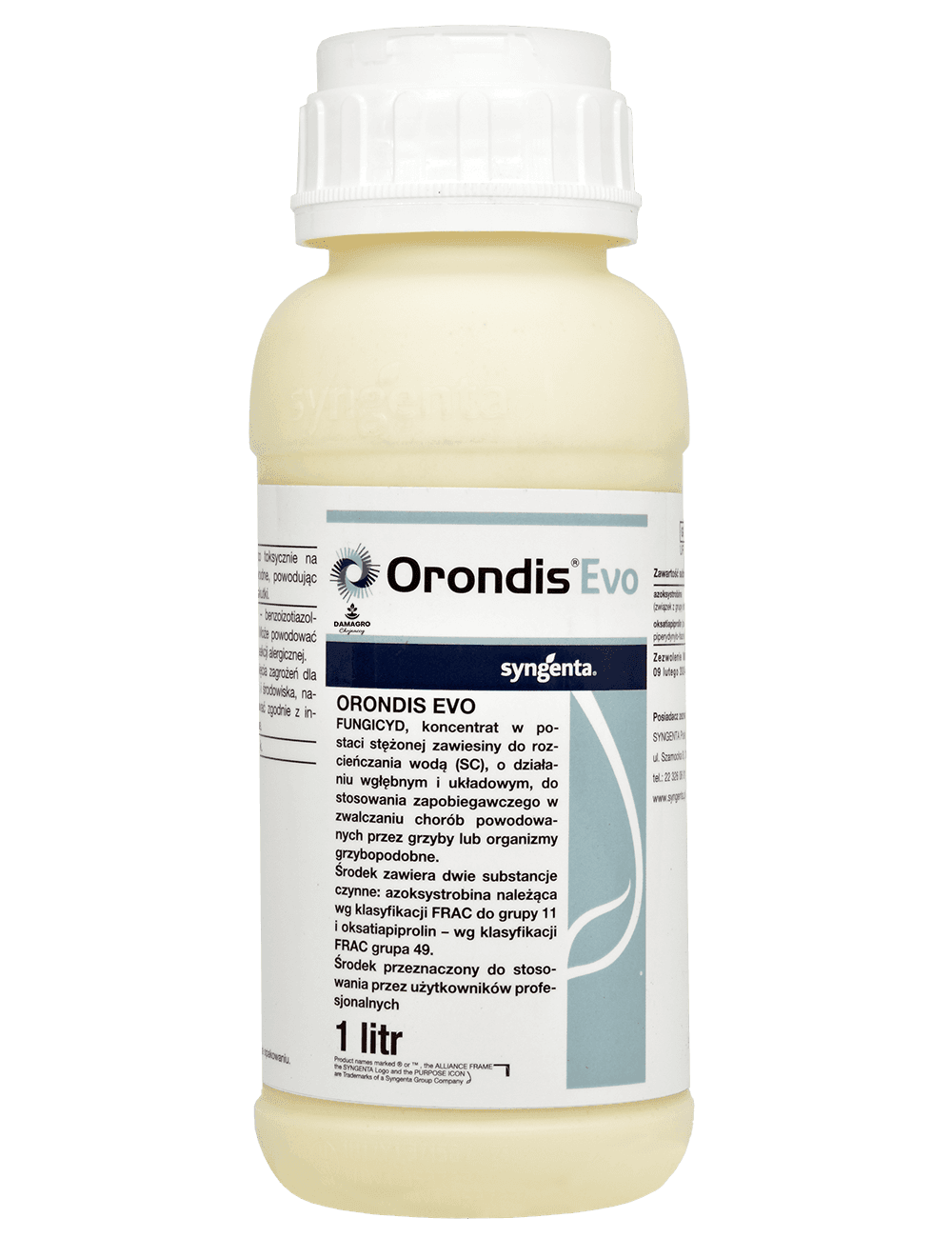
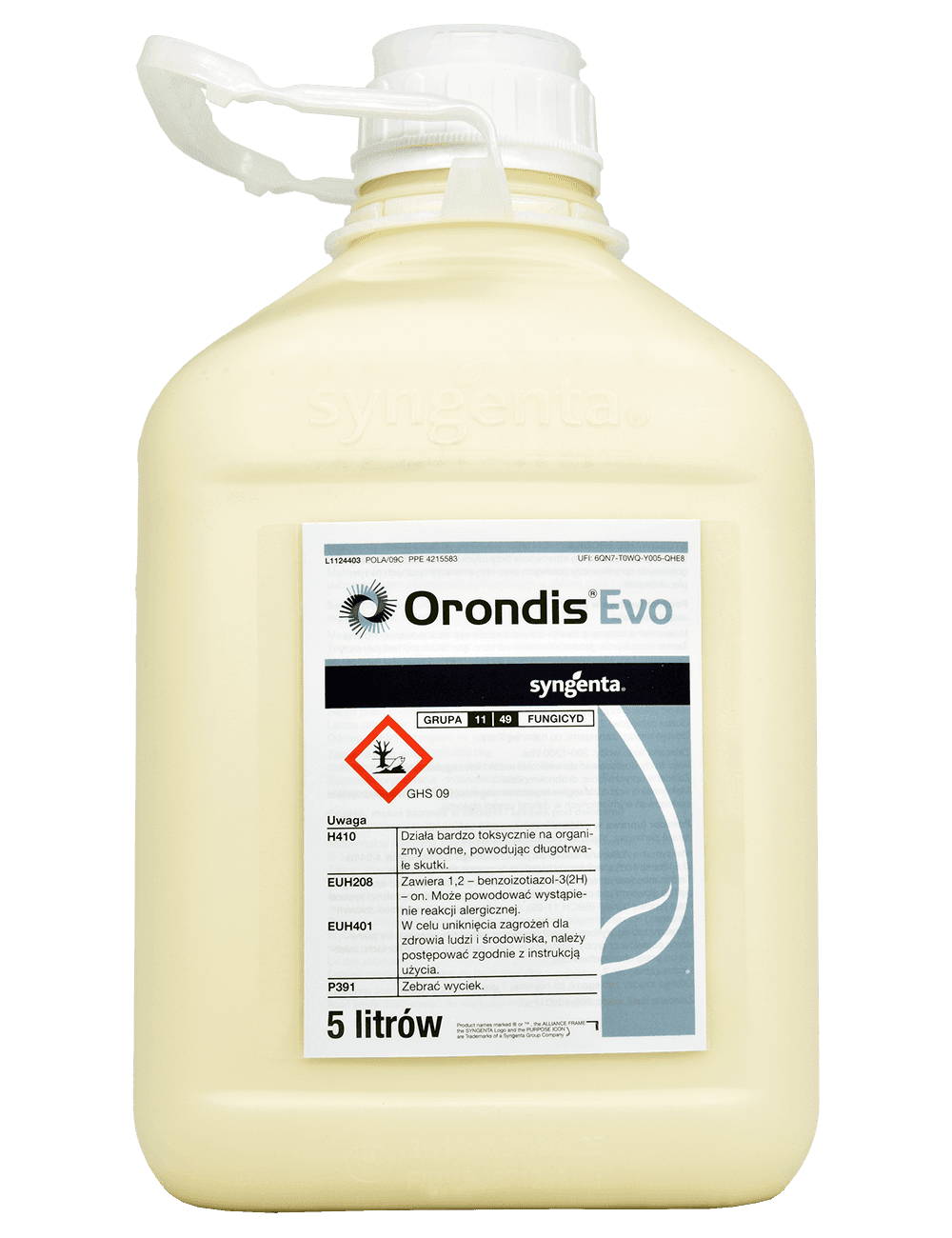
Orondis Evo
Orondis Evo is a complete fungicide with penetrating and systemic action that effectively controls a wide range of fungal diseases in various crops.
Description
ORONDIS EVO ACTION:
Orondis Evo is a complete fungicide thanks to the combination of oxathiapiprolin and Amistar technology - previously the product could be purchased as Orondis Evo Pak combined with Amistar.
Orondis Evo is an innovative fungicide in the form of a concentrated suspension for dilution with water (SC). The product has penetrating and systemic action and is intended for preventive use in the control of diseases caused by fungi or fungus-like organisms. The product is characterised by a broad spectrum of activity and high efficacy.
Advantages of using Orondis Evo:
- broad spectrum of controlled pathogens,
- highly effective in controlling downy mildew, potato late blight and leaf spot,
- rainfast,
- provides long-lasting protective action,
- compatible in mixtures with other plant protection products,
- suitable for use in various crops.
ORONDIS EVO ACTIVE SUBSTANCE CONTENT:
azoxystrobin (compound from the strobilurin group) – 250 g/l (22.79%),
oxathiapiprolin (compound from the piperidinyl-thiazolo-isoxazoline group) – 12 g/l (1.09%).
ORONDIS EVO SCOPE OF USE, TIMING AND DOSES:
The product is intended for use with self-propelled or tractor-mounted field sprayers and hand sprayers (including backpack sprayers).
How to use Orondis EVO:
Tomato (field cultivation)
potato late blight
Maximum / recommended dose for single application: 1.0 l/ha.
Application timing: apply from the stage when the first inflorescence is visible (first raised bud) to full maturity (fruits have typical colour) (BBCH 51-89); no later than 3 days before harvest.
First treatment should be preventive, before the first symptoms of the disease appear, the next as needed after 7–10 days, depending on disease pressure.
Number of treatments: 2.
Interval between treatments: at least 7 days.
Recommended water volume: 200-1200 l/ha.
Adjust water volume to plant size and density.
Recommended spraying: fine droplet.
Maximum number of treatments per growing season: 2 (including uses mentioned later on the label).
Tomato (greenhouse and protected cultivation)
potato late blight, tomato powdery mildew
Maximum / recommended dose for single application: 1.0 l/ha (0.5 l/ha per 10,000 m2 leaf wall (fruiting wall) – LWA).
Application timing: apply from the stage when the first true leaf on the main shoot is fully developed to full maturity (fruits have typical colour) (BBCH 11-89); no later than 3 days before crop harvest.
First treatment should be preventive, before the first symptoms of the disease appear, the next as needed after 7–10 days, depending on disease pressure.
Number of treatments: 2.
Interval between treatments: at least 7 days.
Recommended water volume: 200-1050 l/ha.
Adjust water volume to plant size and density.
Recommended spraying: fine droplet.
Maximum number of treatments per growing season (crop cycle): 2 (including uses mentioned later on the label).
Lettuce (field cultivation)
lettuce downy mildew
Maximum / recommended dose for single application: 1.0 l/ha.
Application timing: apply from the stage when the first true leaf is visible to the stage when the head reaches typical size and shape (BBCH 11-49); no later than 14 days before harvest.
First treatment should be preventive, before the first symptoms of the disease appear, the next as needed after 7–10 days, depending on disease pressure.
Number of treatments: 2.
Interval between treatments: at least 7 days.
Recommended water volume: 300-600 l/ha.
Adjust water volume to plant size and density.
Recommended spraying: fine droplet.
Maximum number of treatments per growing season: 2.
Cucumber, melon (greenhouse and protected cultivation)
black rot of cucurbit fruit and shoots
Maximum / recommended dose for single application: 1.0 l/ha (0.5 l/ha per 10,000 m2 leaf wall (fruiting wall) – LWA).
Application timing: apply from the stage when the first true leaf on the main shoot is fully developed to full maturity (all fruits have typical colour) (BBCH 11-89); no later than 3 days before harvest.
First treatment should be preventive, before the first symptoms of diseases appear, the next as needed after 7–10 days, depending on disease pressure.
Number of treatments: 2.
Interval between treatments: at least 7 days.
Recommended water volume: 200–1000 l/ha.
Adjust water volume to plant size and density.
Recommended spraying: fine droplet.
Maximum number of treatments per growing season (crop cycle): 2 (including uses mentioned later on the label).
USE OF THE PLANT PROTECTION PRODUCT IN SMALL-AREA CROPS AND APPLICATIONS
The user alone is responsible for the efficacy and phytotoxicity of the plant protection product used in small-area crops
Hop
hop downy mildew
Maximum / recommended dose for single application: 1.0 l/ha.
Application timing: apply from the stage of lateral shoot development to the stage when cones are mature for harvest (BBCH 21-89); no later than 28 days before harvest.
First treatment should be preventive, before the first symptoms of the disease appear, the next as needed after 12–16 days, depending on disease pressure.
Number of treatments: 2.
Interval between treatments: at least 12 days.
Recommended water volume: 700-3300 l/ha.
Recommended spraying: fine droplet.
Maximum number of treatments per growing season: 2.
Tomato (field cultivation)
tomato alternaria leaf spot, tomato powdery mildew
Maximum / recommended dose for single application: 1.0 l/ha.
Application timing: apply from the stage when the first inflorescence is visible (first raised bud) to full maturity (fruits have typical colour) (BBCH 51-89); no later than 3 days before crop harvest.
First treatment should be preventive, before the first symptoms of diseases appear, the next
as needed after 7–10 days, depending on disease pressure.
Number of treatments: 2.
Interval between treatments: at least 7 days.
Recommended water volume: 200-1200 l/ha.
Adjust water volume to plant size and density.
Recommended spraying: fine droplet.
Maximum number of treatments per growing season: 2 (including uses mentioned earlier on the label).
Tomato (greenhouse and protected cultivation)
tomato alternaria leaf spot
Maximum / recommended dose for single application: 1.0 l/ha (0.5 l/ha per 10,000 m2 leaf wall (fruiting wall) – LWA).
Application timing: apply from the stage when the first true leaf on the main shoot is fully developed to full maturity (fruits have typical colour) (BBCH 11-89); no later than 3 days before crop harvest.
First treatment should be preventive, before the first symptoms of the disease appear, the next as needed after 7–10 days, depending on disease pressure.
Number of treatments: 2.
Interval between treatments: at least 7 days.
Recommended water volume: 200-1500 l/ha.
Adjust water volume to plant size and density.
Recommended spraying: fine droplet.
Maximum number of treatments per growing season (crop cycle): 2 (including uses mentioned earlier on the label).
Sweet pepper, eggplant (field cultivation)
sweet pepper phytophthora, powdery mildew, sweet pepper alternaria leaf spot
Maximum / recommended dose for single application: 1.0 l/ha.
Application timing: apply from the stage when the first flower bud is visible to full maturity (fruits have typical colour) (BBCH 51-89); no later than 3 days before harvest.
First treatment should be preventive, before the first symptoms of diseases appear, the next as needed after 7–10 days, depending on disease pressure.
Number of treatments: 2.
Interval between treatments: at least 7 days.
Recommended water volume: 200-1200 l/ha.
Adjust water volume to plant size and density.
Recommended spraying: fine droplet.
Maximum number of treatments per growing season: 2.
Sweet pepper, eggplant (greenhouse and protected cultivation)
sweet pepper phytophthora, powdery mildew, sweet pepper alternaria leaf spot
Maximum / recommended dose for single application: 1.0 l/ha (0.5 l/ha per 10,000 m2 leaf wall (fruiting wall) – LWA).
Application timing: apply from the stage when the first true leaf on the main shoot is fully developed to full maturity (fruits have typical colour) (BBCH 11-89); no later than 3 days before harvest.
First treatment should be preventive, before the first symptoms of diseases appear, the next as needed after 7–10 days, depending on disease pressure.
Number of treatments: 2.
Interval between treatments: at least 7 days.
Recommended water volume: 200-1500 l/ha.
Adjust water volume to plant size and density.
Recommended spraying: fine droplet.
Maximum number of treatments per growing season (crop cycle): 2.
Cucumber, melon, courgette, pumpkin, marrow, pattypan squash, watermelon (field cultivation)
cucurbit downy mildew, cucurbit scab, black rot of cucurbit fruit and shoots, cucurbit alternaria leaf spot
Maximum / recommended dose for single application: 1.0 l/ha.
Application timing: apply from the stage when the first flower bud is visible on the main shoot to full maturity (all fruits have typical colour) (BBCH 51-89); no later than 3 days before harvest.
First treatment should be preventive, before the first symptoms of diseases appear, the next as needed after 7–10 days, depending on disease pressure.
Number of treatments: 2.
Interval between treatments: at least 7 days.
Recommended water volume: 200-1000 l/ha.
Adjust water volume to plant size and density.
Recommended spraying: fine droplet.
Maximum number of treatments per growing season: 2.
Cucumber, melon (greenhouse and protected cultivation)
cucurbit downy mildew, cucurbit scab, cucurbit alternaria leaf spot
Maximum / recommended dose for single application: 1.0 l/ha (0.5 l/ha per 10,000 m2 leaf wall (fruiting wall) – LWA).
Application timing: apply from the stage when the first true leaf on the main shoot is fully developed to full maturity (all fruits have typical colour) (BBCH 11-89); no later than 3 days before harvest.
First treatment should be preventive, before the first symptoms of diseases appear, the next as needed after 7–10 days, depending on disease pressure.
Number of treatments: 2.
Interval between treatments: at least 7 days.
Recommended water volume: 200-1000 l/ha.
Adjust water volume to plant size and density.
Recommended spraying: fine droplet.
Maximum number of treatments per growing season (crop cycle): 2 (including uses mentioned earlier on the label).
Courgette, pumpkin, marrow, pattypan squash, watermelon (greenhouse and protected cultivation)
cucurbit downy mildew, cucurbit scab, black rot of cucurbit fruit and shoots, cucurbit alternaria leaf spot
Maximum / recommended dose for single application: 1.0 l/ha (0.5 l/ha per 10,000 m2 leaf wall (fruiting wall) – LWA).
Application timing: apply from the stage when the first true leaf on the main shoot is fully developed to full maturity (all fruits have typical colour) (BBCH 11-89); no later than 3 days before harvest.
First treatment should be preventive, before the first symptoms of diseases appear, the next as needed after 7–10 days, depending on disease pressure.
Number of treatments: 2.
Interval between treatments: at least 7 days.
Recommended water volume: 200-1000 l/ha.
Adjust water volume to plant size and density.
Recommended spraying: fine droplet.
Maximum number of treatments per growing season (crop cycle): 2.
Leek, onion (only for green onion production) (field cultivation)
leek rust, leek phytophthora, alternaria, onion downy mildew
Maximum / recommended dose for single application: 1.0 l/ha.
Application timing: apply from the stage when the first leaf is visible (>3 cm) to the stage when growth is complete (length and diameter of the stem typical for the variety) (BBCH 11-49); no later than 7 days before harvest.
First treatment should be preventive, before the first symptoms of diseases appear, the next as needed after 12–14 days, depending on disease pressure.
Number of treatments: 2.
Interval between treatments: at least 12 days.
Recommended water volume: 200-800 l/ha.
Adjust water volume to plant size and density.
Recommended spraying: fine droplet.
Maximum number of treatments per season: 2.
Lettuce, endive, spinach, leaf beet (chard), basil, purslane, lamb's lettuce, rocket (garden cress) (field, greenhouse and protected cultivation)
downy mildews, grey mould, rhizoctonia, sclerotinia stem rot, powdery mildews
Maximum / recommended dose for single application: 1.0 l/ha.
Application timing: apply from the stage when the first true leaf is visible to the stage when heads or other vegetative parts intended for harvest reach typical size and shape (BBCH 11-49); no later than 14 days before harvest.
First treatment should be preventive, before the first symptoms of diseases appear, the next as needed after 7–10 days, depending on disease pressure.
Number of treatments: 2.
Interval between treatments: at least 7 days.
Recommended water volume: 200-800 l/ha.
Adjust water volume to plant size and density.
Recommended spraying: fine droplet.
Maximum number of treatments per growing season (crop cycle): 2.
Vegetable plants grown for young leaves (field, greenhouse and protected cultivation)
downy mildews, grey mould, rhizoctonia, sclerotinia stem rot, powdery mildews
Maximum / recommended dose for single application: 1.0 l/ha.
Application timing: apply from the stage when the first true leaf is visible to the stage of the 9th true leaf (BBCH 11-19), no later than 14 days before harvest.
First treatment should be preventive, before the first symptoms of diseases appear, the next as needed after 7–10 days, depending on disease pressure.
Number of treatments: 2.
Interval between treatments: at least 7 days.
Recommended water volume: 200-800 l/ha.
Adjust water volume to plant size and density.
Recommended spraying: fine droplet.
Maximum number of treatments per growing season (crop cycle): 2.
Ornamental plants (up to 150 cm height – field, greenhouse and protected cultivation)
downy mildews, phytophthora, alternaria leaf spot, powdery mildews
Maximum / recommended dose for single application: 1.0 l/ha.
Application timing: apply in spring from the start of vegetation (first leaf development stages) on the plant to full maturity of fruits/seeds (BBCH 11-89).
First treatment should be preventive, before the first symptoms of diseases appear, the next as needed after at least 7 days.
Number of treatments: 2.
Interval between treatments: at least 7 days.
Recommended water volume: 200-1000 l/ha.
Adjust water volume to plant size and density.
Recommended spraying: fine droplet.
Maximum number of treatments per growing season (development cycle): 2.
Ornamental plants (above 150 cm height – field cultivation), afforestation, forest tree seed plantations, regeneration
downy mildews, phytophthora, alternaria leaf spot, powdery mildews
Maximum / recommended dose for single application: 1.0 l/ha.
Application timing: apply in spring from the beginning of lateral branching or shoot development (or from the beginning of shoot elongation) to full maturity of fruits/seeds (BBCH 21(31)-89).
First treatment should be preventive, before the first symptoms of diseases appear, the next as needed after 12–16 days.
Number of treatments: 2.
Interval between treatments: at least 12 days.
Recommended water volume: 700-1200 l/ha.
Adjust water volume to plant size and density.
Recommended spraying: fine droplet.
Maximum number of treatments per growing season: 2.
ORONDIS EVO PRE-HARVEST INTERVAL:
tomato, sweet pepper, eggplant, cucumber, courgette, melon, pumpkin, marrow, pattypan squash, watermelon – 3 days,
leek, onion (only for green onion production) – 7 days,
lettuce, endive, spinach, leaf beet (chard), basil, purslane, lamb's lettuce, rocket (garden cress), vegetable plants grown for young leaves – 14 days,
hop – 28 days,
ornamental plants, forest tree plantations – not applicable.