Biocal
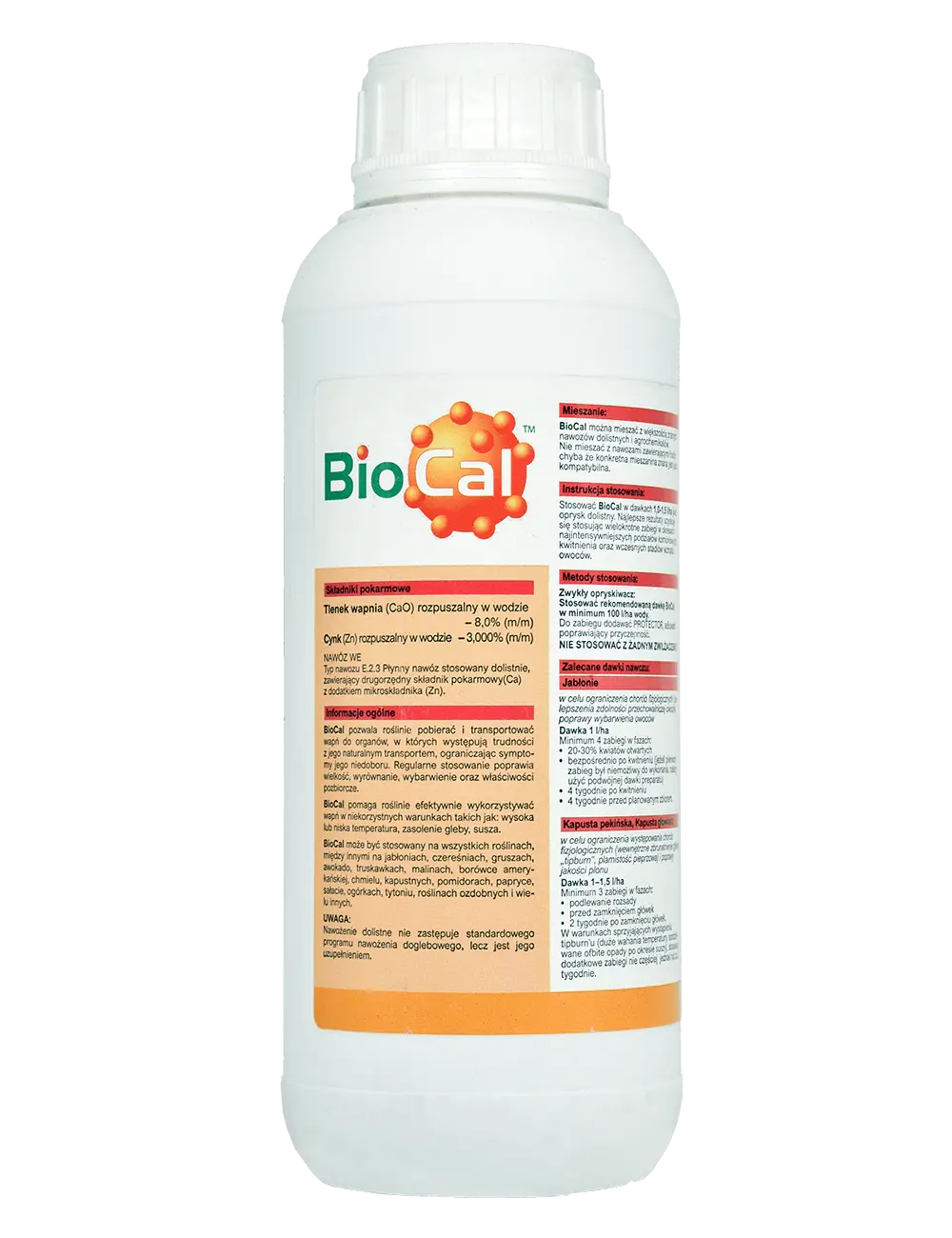
BioCal is a foliar fertiliser that reduces symptoms related to calcium deficiencies in all plants including apple trees, sweet cherries, pear trees, strawberries, raspberries, hops, blueberry, sweet pepper, lettuce, cabbage, cucumbers…
- Pack
- 1 l
Description
ACTION OF BIOCAL
BioCal is a foliar fertiliser that enables the plant to absorb and transport calcium to those organs where natural transport is difficult, thereby reducing symptoms related to calcium deficiencies.
CONTENT OF NUTRIENTS:
Calcium oxide (CaO) water soluble – 8% (w/w)
Zinc (Zn) water soluble – 3 % (w/w)
SCOPE OF APPLICATION, TIMING AND DOSES:
Standard sprayer: Use the recommended dose of BioCal in at least 100 litres/ha of water.
Add the adjuvant PROTECTOR to the treatment to improve adhesion
DO NOT USE WITH ANY WETTING AGENT!
BIOCAL can be mixed with most known foliar fertilisers and agrochemicals.
Do not mix with fertilisers containing phosphorus unless the specific mixture is known to be compatible.
How to use BioCal?
Apple trees:
To reduce physiological disorders and improve fruit storage ability, enhance fruit colouring
Dose 1 litre/ha
At least 4 treatments at stages:
1. 20 – 30 % flowers open
2. Immediately after flowering (if the first treatment was not possible, use a double dose of the product)
3. 4 weeks after flowering
4. 4 weeks before planned harvest
Chinese cabbage, Head cabbage:
To reduce the occurrence of physiological disorders (internal browning of heads “tipburn”, pepper spot) and improve yield quality
Dose 1 – 1.5 litres/ha
At least 3 treatments at stages:
1. Watering seedlings
2. Before head closure
3. 2 weeks after head closure
If conditions favouring tipburn occur (large temperature fluctuations, expected heavy rainfall after a dry period), apply additional treatments but no more often than every 2 weeks
Lettuce:
To reduce the occurrence of physiological disorders and improve yield quality
Dose 1 – 1.5 litres/ha
At least 3 treatments
1. Watering seedlings
2. 10 – 14 days after planting out
3. Just before head closure
If conditions favouring tipburn occur (large temperature fluctuations, expected heavy rainfall after a dry period, large humidity fluctuations), apply additional treatments but no more often than every 2 weeks from the previous one
Sweet cherries and sour cherries:
To improve yield quality and reduce fruit cracking
Dose 1 litre/ha
At least 4 treatments
1. At white bud stage
2. During petal fall
3. At fruit set stage
4. 3 weeks before harvest
Tomato, Sweet pepper, Cucumber:
To reduce physiological disorders (blossom end rot) and improve yield quality (higher extract content, firmer cucumbers)
Dose 1 litre/ha
First treatment at the beginning of flowering, subsequent treatments every 3 weeks
If conditions favouring physiological disorders occur, apply additional treatments but no more often than every 2 weeks from the previous one
Strawberries and berries:
To reduce physiological disorders and improve yield quality
Dose 1 litre/ha
Start treatments just after flowering begins and repeat every 10 - 14 days (more frequent treatments under stress conditions)