 SKU 44476-c
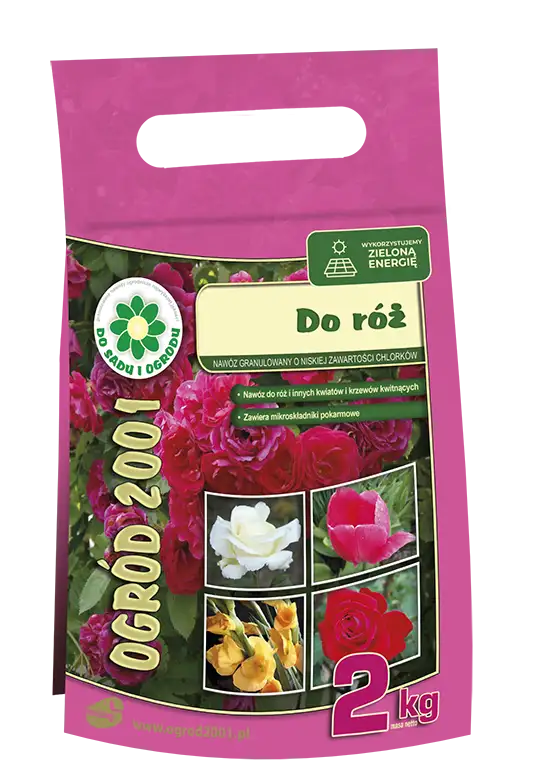
Fertiliser for roses and other flowering plants FruktoVit Plus
Fertiliser for roses and other flowering plants FruktoVit Plus ensures proper and rapid growth of flowering shrubs, perennials, long-lived plants and flowerbeds. Its main advantages are fast action and high efficiency - 5kg of fertiliser is enough for up to 335 plants.
Description
Fertiliser for roses and other flowering plants FruktoVit Plus - beautiful and lush flowers, long flowering period
- Fast acting,
- High efficiency - 5kg of fertiliser is enough for up to 335 plants,
- Ensures proper and rapid growth of flowering shrubs, perennials, long-lived plants and flowerbeds,
- Nourishes plants, causing intense flowering,
- Convenient packaging: carton or bag (depending on the package weight).
FruktoVit fertiliser for roses and other flowering plants contains a properly selected set of nutrients that ensures proper growth and development of roses and other flowering plants. It can be used on all soil types, both for new plantings and for feeding already growing plants (top dressing).
Fertiliser for roses and other flowering plants FruktoVit Plus - composition:
- 8.0 % (N) total nitrogen;
- 8.0 % (N) amide nitrogen;
- 6.0 % (P2O5) phosphorus pentoxide soluble in mineral acids;
- 7.8 % (K2O) potassium oxide soluble in water;
- 0.18 % (Fe) total iron;
- 0.10 % (Mn) total manganese.
- NPK fertiliser containing soft phosphorite.
Fertiliser for roses and other flowering plants FruktoVit Plus - application guidelines:
- Do not apply fertiliser during strong wind or intense sunlight.
Detailed information on dosing can be found in the "dosage" table.
Application and dosage
|
Crop |
How to apply? Dosage |
When to apply? |
|---|---|---|
|
Roses growing singly - young plants - growing medium preparation |
During planting, mix soil from the hole or special garden growing medium with about 20 g of fertiliser, water abundantly. Use a dose of 15–25 g/plant. It is beneficial to lightly mix the fertiliser with the topsoil layer. Regular watering increases fertilisation effectiveness. |
From spring to mid-August at 4-week intervals |
|
Roses growing singly - older plants - growing medium preparation |
During planting, mix soil from the hole or special garden growing medium with about 20 g of fertiliser, water abundantly. Use a dose of 30–50 g/plant. It is beneficial to lightly mix the fertiliser with the topsoil layer. Regular watering increases fertilisation effectiveness. |
From spring to mid-August at 4-week intervals |
|
Roses growing in groups - young plants - growing medium preparation |
During planting, mix soil from the hole or special garden growing medium with about 20 g of fertiliser, water abundantly. Use a dose of 10–20 g/plant. It is beneficial to lightly mix the fertiliser with the topsoil layer. Regular watering increases fertilisation effectiveness. |
From spring to mid-August at 4-week intervals |
|
Roses growing in groups - older plants - growing medium preparation |
During planting, mix soil from the hole or special garden growing medium with about 20 g of fertiliser, water abundantly. Use a dose of 20–40 g/plant. It is beneficial to lightly mix the fertiliser with the topsoil layer. Regular watering increases fertilisation effectiveness. |
From spring to mid-August at 4-week intervals |
|
Roses - dense plantings (flowerbeds) - young plants - growing medium preparation |
During planting, mix soil from the hole or special garden growing medium with about 20 g of fertiliser, water abundantly. Use a dose of 50–80 g/m2. It is beneficial to lightly mix the fertiliser with the topsoil layer. Regular watering increases fertilisation effectiveness. |
From spring to mid-August at 4-week intervals |
|
Roses - dense plantings (flowerbeds) - older plants - growing medium preparation |
During planting, mix soil from the hole or special garden growing medium with about 20 g of fertiliser, water abundantly. Use a dose of 70–100 g/m2. It is beneficial to lightly mix the fertiliser with the topsoil layer. Regular watering increases fertilisation effectiveness. |
From spring to mid-August at 4-week intervals |
|
Flowering shrubs - Buddleia, forsythia, wisteria, hydrangea, jasmine, viburnum, weigela, lilac, magnolia, trumpet vine, ornamental and red currant, clematis, spirea etc. - new plantings |
Mix soil from the hole or special garden growing medium with about 20 g of fertiliser, cover the plant roots with the resulting growing medium, water abundantly. Then fertilise 3 times (at monthly intervals), using a total of 60–160 g of fertiliser per 1 m2 per season (depending on the plant's age and nutritional requirements), at the following timings and doses: mid-May 40–80 g/m2, mid-June 10–20 g/m2, mid-July 10–20 g/m2. |
In spring (mid-April) during planting, then in May, June and July. |
|
Flowering shrubs - Buddleia, forsythia, wisteria, hydrangea, jasmine, viburnum, weigela, lilac, magnolia, trumpet vine, ornamental and red currant, clematis, spirea etc. - established plantings |
Feeding already growing plants (top dressing) should be carried out 4 times, using a total of 120–190 g of fertiliser per 1 m2 per season, at the following timings and doses: early spring 40–60 g/m2, mid-May 40–60 g/m2, mid-June 20–35 g/m2, mid-July 20–35 g/m2. |
4 times: early spring, mid-May, mid-June, mid-July. |
|
Perennials and long-lived plants - Geranium, pansy, hellebore, cyclamen, dahlia, violet, phlox, hosta, carnation, iris, lily of the valley, lavender, lily, thyme, hollyhock, columbine, peony, sedum, pasque flower, daisy etc. |
Plants should be fertilised 4 times, using a total of 270–330 g of fertiliser per 1 m2 per season, at the following timings and doses: early spring 80–100 g/m2, mid-May 80–100 g/m2, mid-June 60–70 g/m2, mid-July 50–65 g/m2. |
4 times: early spring, mid-May, mid-June, mid-July. |
|
Flowerbed plants grown in the ground - Marigold, aster, cornflower, zinnia, stock, wallflower, nasturtium, pelargonium, sage, amaranth etc. |
In spring, during soil preparation (before planting), apply 150–200 g of fertiliser per 1 m2 once. Evenly scatter the granulate on the fertilised surface, then mix with the topsoil layer 10–20 cm thick. For summer-flowering plants, the treatment can be repeated at the end of May, applying 70–100 g of fertiliser per 1 m2. The fertiliser can be effectively used in early spring before sowing or planting (pre-vegetative), as well as for feeding already growing plants (top dressing). When top dressing, avoid spreading fertiliser on wet plants and, if possible, mix the fertiliser with the topsoil layer to avoid root damage. Fertilisation should be completed no later than mid-August. |
In spring, during soil preparation (before planting). For summer-flowering plants, the treatment can be repeated at the end of May. The fertiliser can also be used in early spring before sowing or planting (pre-vegetative) and for feeding already growing plants (top dressing). Fertilisation should be completed no later than mid-August. |