 SKU 604-c
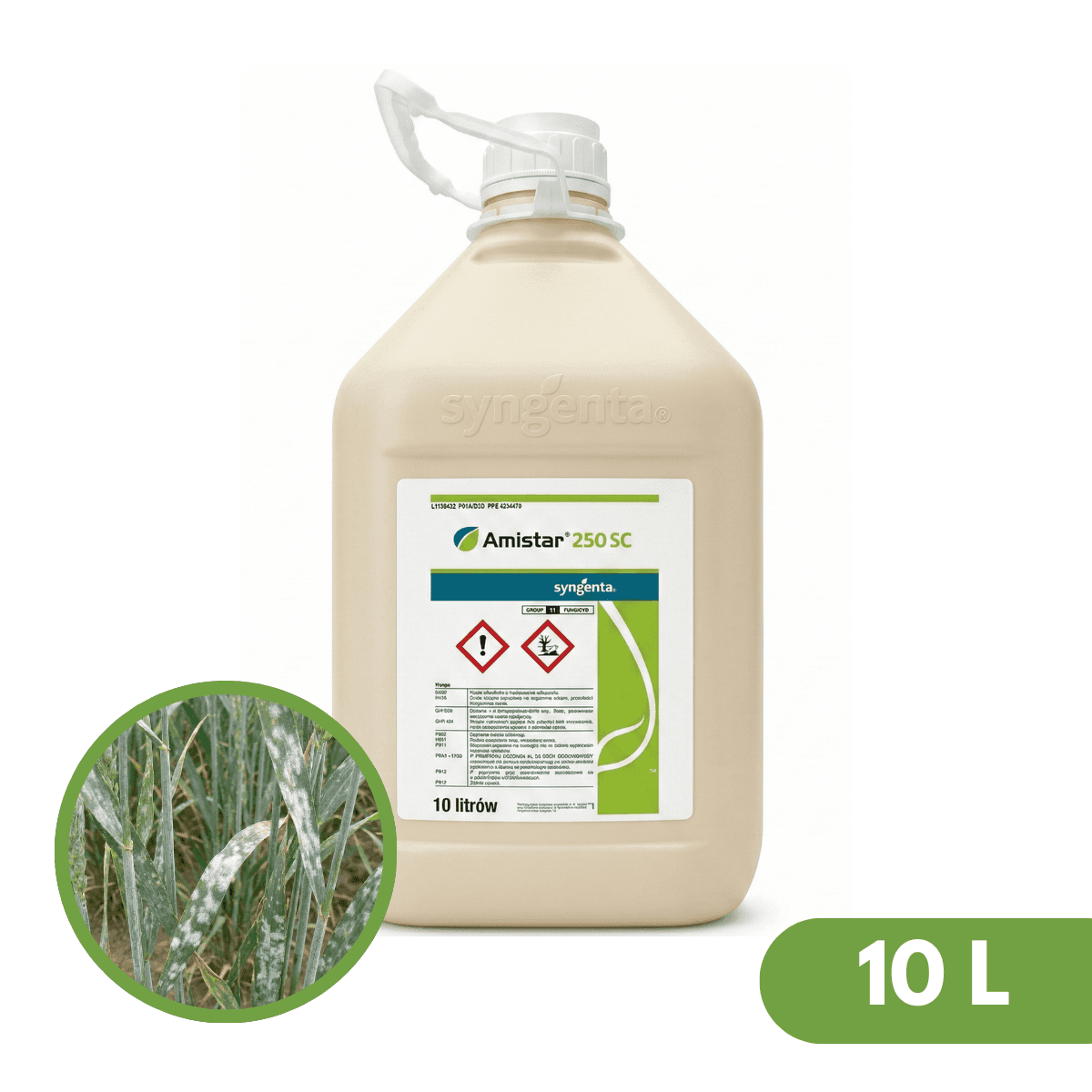
Amistar 250 SC (azoxystrobin) - fungicide
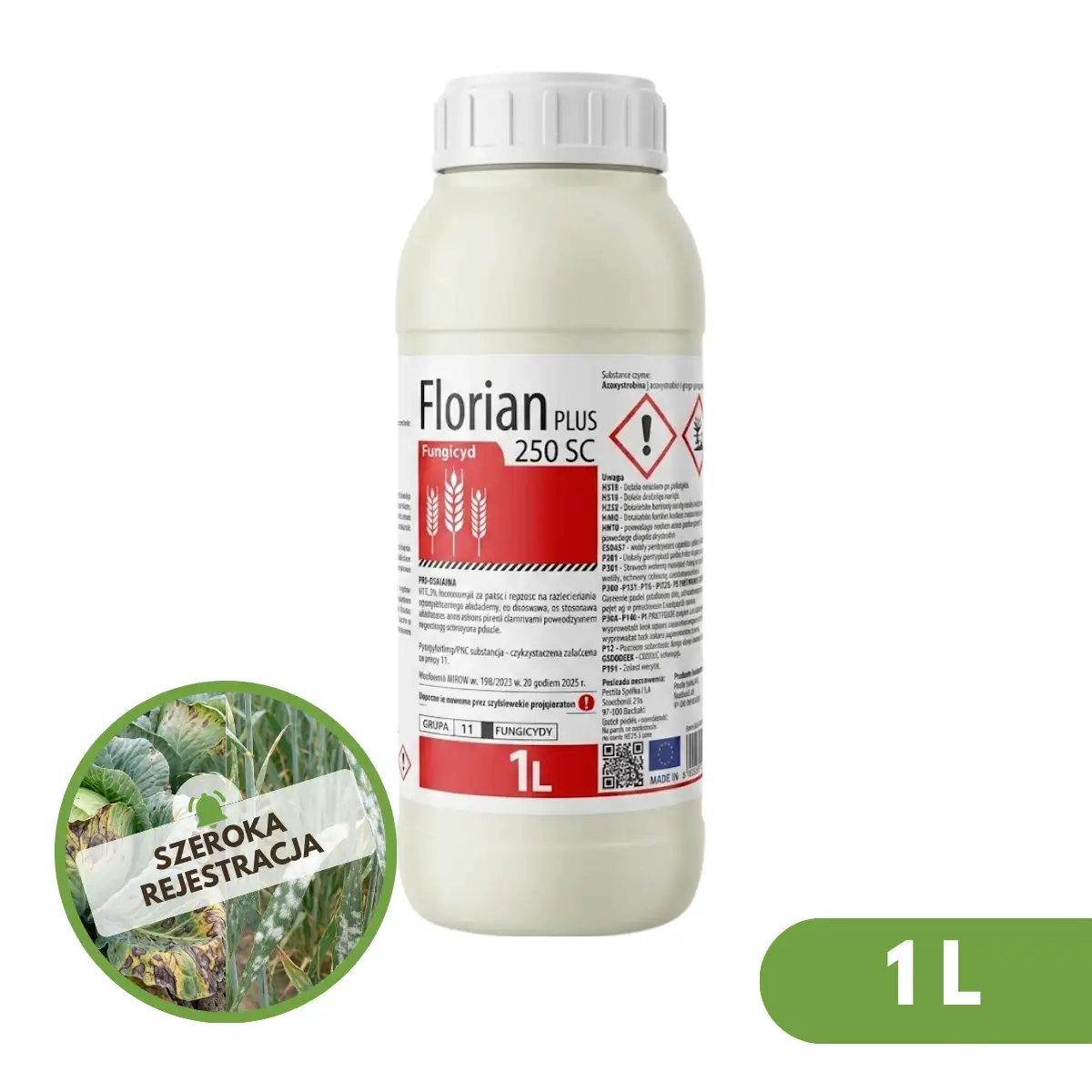
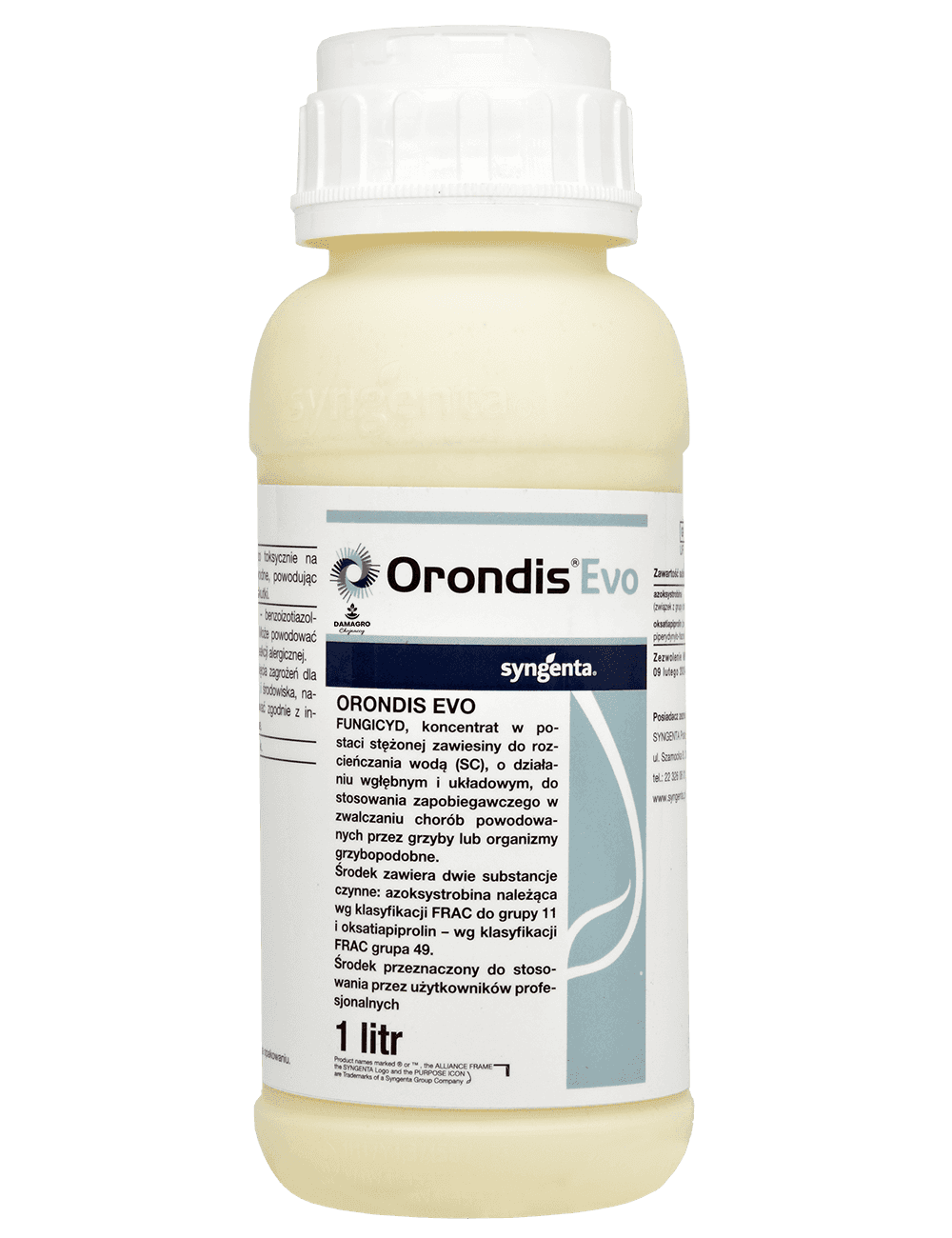
Amistar 250 SC is a fungicidal plant protection product in the form of a concentrated suspension for dilution with water. It contains azoxystrobin (250 g/l), a compound from the strobilurin group.
Description
Amistar 250 SC is a fungicide, a concentrate in the form of a concentrated suspension for dilution with water, with local systemic and systemic action, intended mainly for preventive use in the control of fungal diseases of agricultural and vegetable crops.
Amistar 250 SC - active substance content:
azoxystrobin (compound from the strobilurin group) – 250 g/l (22.81%).
The product is intended for use with field sprayers, field sprayers mounted on planters, and handheld sprayers.
Amistar 250 SC - application in crops:
- potato,
- hop,
- onion,
- garlic,
- shallot,
- green bean,
- pea,
- green pea,
- sugar pea,
- field pea,
- fodder pea,
- lentil,
- soybean,
- seed plantations,
- broad bean,
- common vetch,
- lupin,
- vetch,
- sainfoin,
- bird's-foot trefoil,
- clover,
- alfalfa,
- sweet clover,
- seradella,
- chickpea,
- cabbage,
- Chinese cabbage,
- cauliflower,
- carrot,
- tomato,
- leek,
- broad bean,
- celeriac,
- sweet pepper,
- lettuce,
- herbal plants,
- bush bean,
- winter wheat,
- spring wheat,
- winter rye,
- spring barley,
- winter barley,
- winter triticale,
- winter oilseed rape,
- seed plantations of grasses,
- ornamental grasses.
Amistar 250 SC - controlled fungal diseases:
- alternaria leaf spot,
- stem alternaria,
- powdery mildew of umbellifers,
- downy mildew,
- rust of leek,
- sclerotinia stem rot,
- leaf spot,
- stemphylium,
- rust,
- white rust of crucifers,
- powdery mildew of tomato,
- phytophthora,
- rhizoctonia,
- brown spot,
- brown rust,
- septoria leaf blotch,
- septoria glume blotch,
- fusarium head blight,
- black chaff,
- black rot of crucifers,
- grey mould,
- rhizoctonia,
- ascochyta,
- chocolate spot,
- fusarium,
- rust,
- dry rot leaf spot.
Amistar 250 SC - pre-harvest interval:
- cereals – 35 days,
- oilseed rape – 35 days,
- leek – 20 days,
- onion – 14 days,
- cabbage and Chinese cabbage – 14 days,
- cauliflower – 14 days,
- pea for green seeds – 14 days,
- celeriac – 14 days,
- lettuce – 14 days,
- carrot – 10 days,
- potato (foliar spray, alternaria) – 7 days,
- green bean – 7 days,
- sweet pepper – 3 days,
- tomato – 3 days.
Warning! Plant protection products must be used safely. Before each use, read the information on the label and product information.
The buyer declares that they meet the conditions specified in Article 25 paragraph 3 point 5 of the Act of 8 March 2013 on plant protection products and has training in the use of plant protection products in the case of products for professional users. Before each use, read the information on the label and product information. Pay attention to detailed risk indications. Follow the safety rules contained on the label. Plant protection products may only be purchased by adults and persons who have completed training and have the qualifications required for persons purchasing plant protection products (Article 28 of the Act on plant protection products of 8 March 2013 as amended). Plant protection products must be used in a way that does not pose a threat to human health, animals, or the environment. The buyer of plant protection products must be sober. By using this offer, you declare that you meet the above conditions.
Application and dosage
|
Crop |
Control of Pest |
How to apply? Dosage |
When to apply? |
|---|---|---|---|
|
potato |
Potato alternaria leaf spot |
Maximum/recommended dose for single application: 0.5 l/ha. |
Apply preventively or immediately after the first symptoms of the disease appear, from the beginning of inflorescence development to the fruit and seed ripening stage (first fruit berries turn brown) (BBCH 51-85). |
|
hop (small area crops) |
Hop downy mildew (prevention of secondary infections) |
Maximum/recommended dose for single application: 1.6 l/ha. |
Apply preventively or immediately after the first symptoms of the disease appear, from the end of inflorescence development phase (BBCH 55). |
|
onion, garlic, shallot |
Onion downy mildew, onion alternaria leaf spot, grey mould (neck rot) |
Maximum/recommended dose for single application: 0.8 l/ha. |
Apply preventively or immediately after the first symptoms of the disease appear, from the 4-leaf stage to the end of bulb formation for harvest (visible drying of the onion tip) (BBCH 14-48). |
|
green bean |
Bean anthracnose, grey mould, sclerotinia stem rot, ascochyta |
Maximum/recommended dose for single application: 0.8 l/ha. |
Apply preventively or immediately after the first symptoms of the disease appear, from the beginning of flowering to pod development stage (20% of pods reach typical length) (BBCH 60-72). |
|
cabbage, Chinese cabbage, cauliflower (small area crops) |
White rust of crucifers |
Maximum/recommended dose for single application: 0.8 l/ha. |
Apply preventively or immediately after the first symptoms of the disease appear, from the 6-leaf stage to the end of development of the harvestable plant part (heads reach typical size and shape) (BBCH 16-49). |
|
tomato (field cultivation), small area crops |
Powdery mildew of tomato |
Maximum/recommended dose for single application: 0.8 l/ha. |
Apply preventively or immediately after the first symptoms of the disease appear, from the beginning of side shoot development to the end of fruit and seed ripening (fruits reach full maturity) (BBCH 21-89). |
|
leek (small area crops) |
Phytophthora, leaf spots caused by Stemphylium vericarium and Cladosporium allii-cepa |
Maximum/recommended dose for single application: 0.8 l/ha. |
Apply preventively or immediately after the first symptoms of the disease appear, from the 6-leaf stage to the end of leek growth (BBCH 16-48). |
|
lettuce (field and protected cultivation, small area crops) |
Rhizoctonia |
-field cultivation: maximum/recommended dose for single application: 0.8 l/ha, -protected cultivation: maximum/recommended concentration for single application: 0.08-0.1% (80-100 ml product in 100 litres of water). |
Apply preventively or immediately after the first symptoms of the disease appear, from the 4-leaf stage to the end of development of the harvestable plant part (head reaches typical size and shape) (BBCH 14-49). |
|
winter wheat, spring wheat |
Powdery mildew of cereals and grasses, brown leaf spot, brown rust of wheat, septoria leaf blotch, septoria glume blotch, fusarium head blight, black chaff. |
Maximum/recommended dose for single application: 0.8 l/ha. |
Apply mainly preventively or immediately after the first symptoms of diseases are observed, from the beginning of stem elongation to the end of heading (BBCH 30-59). |
|
winter rye |
Brown rust of rye, cereal rhynchosporium |
Maximum/recommended dose for single application: 0.8 l/ha. |
Apply mainly preventively or immediately after the first symptoms of diseases are observed, from the beginning of stem elongation to the end of heading (BBCH 30-59). |
|
spring barley, winter barley |
Cereal rhynchosporium (medium control level) |
Maximum/recommended dose for single application: 0.8 l/ha. |
Apply mainly preventively or immediately after the first symptoms of diseases are observed, from the beginning of stem elongation to the end of heading (BBCH 30-59). |
|
winter triticale |
Septoria glume blotch, brown rust. |
Maximum/recommended dose for single application: 0.8 l/ha. |
Apply mainly preventively or immediately after the first symptoms of diseases are observed, from the beginning of stem elongation to the end of heading (BBCH 30-59). |
|
winter oilseed rape |
Black rot of crucifers, grey mould, sclerotinia stem rot |
Maximum/recommended dose for single application: 0.8 l/ha. |
Apply preventively or immediately after the first symptoms of diseases appear, during oilseed rape flowering (BBCH 60-69). |
|
potato |
Potato rhizoctonia |
Maximum dose for single application: 3.0 l/ha. |
Apply as a band spray to soil during spring tuber planting (BBCH 00), using planter-mounted devices equipped with two spraying nozzles. |
|
onion, garlic, shallot (small area crops) |
Leek rust (on onion), sclerotinia stem rot, leaf spots caused by Stemphylium vericarium and Cladosporium allii-cepa |
Maximum/recommended dose for single application: 0.8 l/ha |
Apply preventively or immediately after the first symptoms of the disease appear, from the 4-leaf stage to the end of bulb formation for harvest (visible drying of the onion tip) (BBCH 14-48). |
|
green bean (small area crops) |
Bean rust |
Maximum/recommended dose for single application: 0.8 l/ha |
Apply preventively or immediately after the first symptoms of the disease appear, from the developed 7th true leaf stage to pod development stage (20% of pods reach typical length) (BBCH 17-72). |
|
pea grown for green seeds |
Pea ascochyta (dry rot leaf spot), pea downy mildew |
Maximum/recommended dose for single application: 0.8 l/ha |
Apply preventively or immediately after the first symptoms of the disease appear, from the beginning of inflorescence development to the end of flowering (BBCH 51-69). |
|
cabbage, Chinese cabbage, cauliflower |
Black rot of crucifers (alternaria), grey mould |
Maximum/recommended dose for single application: 0.8 l/ha |
Apply preventively or immediately after the first symptoms of the disease appear, from the 6-leaf stage to the end of development of the harvestable plant part (heads reach typical size and shape) (BBCH 16-49). |
|
carrot |
Carrot alternaria leaf spot, powdery mildew of umbellifers |
Maximum/recommended dose for single application: 0.8 l/ha |
Apply preventively or immediately after the first symptoms of the disease appear, from the 6-leaf stage to the end of development of the harvestable plant part (root reaches typical size and shape) (BBCH 16-49). |
|
lettuce (field cultivation) |
Lettuce downy mildew, grey mould, sclerotinia stem rot, powdery mildew. |
Maximum/recommended dose for single application: 0.8 l/ha |
Apply preventively or immediately after the first symptoms of the disease appear, from the beginning of development of the harvestable plant part to the end of development of the harvestable plant part (head reaches typical size and shape) (BBCH 41-49). |
|
tomato (field cultivation) |
Tomato alternaria leaf spot |
Maximum/recommended dose for single application: 0.8 l/ha. |
Apply preventively or immediately after the first symptoms of the disease appear, from the beginning of side shoot development to the end of fruit and seed ripening (fruits reach full maturity) (BBCH 21-89). |
|
leek |
Leek rust, leek alternaria leaf spot |
Maximum/recommended dose for single application: 0.8 l/ha |
Apply preventively or immediately after the first symptoms of the disease appear, from the 6-leaf stage to the end of leek growth (BBCH 16-48). |
|
celeriac |
Celeriac septoria |
Maximum/recommended dose for single application: 0.8 l/ha |
Apply preventively or immediately after the first symptoms of the disease appear, from the 6-leaf stage to the end of development of the harvestable plant part (root reaches typical size and shape) (BBCH 16-49). |
|
sweet pepper (protected cultivation – greenhouses) |
Grey mould, sclerotinia stem rot, powdery mildew, sweet pepper alternaria leaf spot |
Maximum concentration for single application: 0.1% (100 ml product in 100 litres of water). |
Apply preventively or immediately after the first symptoms of the disease appear, from the 6-leaf stage to the end of fruit and seed ripening (fruits reach full maturity) (BBCH 16-89). |
|
lettuce (protected cultivation) |
Grey mould, powdery mildew, lettuce downy mildew, sclerotinia stem rot, rhizoctonia |
Maximum concentration for single application: 0.1% (100 ml product in 100 litres of water). |
Apply preventively or immediately after the first symptoms of the disease appear, from the 4-leaf stage to the end of development of the harvestable plant part (head reaches typical size and shape) (BBCH 14-49). |
|
broad bean (small area crops) |
Ascochyta (dry rot leaf spot), chocolate spot of broad bean, fusarium of broad bean, rust of broad bean |
Maximum/recommended dose for single application: 0.8 l/ha. |
Apply preventively or immediately after the first symptoms of the disease appear, from the emergence of the first flower buds from leaves to the end of flowering (BBCH 51-69). |
|
herbal plants (small area crops) |
Grey mould, powdery mildew, downy mildew, sclerotinia stem rot, rhizoctonia |
-field cultivation: maximum/recommended dose for single application: 0.8 l/ha. |
Apply preventively or immediately after the first symptoms of the disease appear, from the 4-leaf stage to the end of development of the harvestable plant part (head reaches typical size and shape) (BBCH 14-49). |
|
bush bean, green pea, sugar pea (small area crops) |
Bean anthracnose, grey mould, sclerotinia stem rot, bean rust, pea ascochyta (dry rot leaf spot), pea downy mildew |
Maximum/recommended dose for single application: 0.8 l/ha. |
Apply preventively or immediately after the first symptoms of the disease appear, from the developed 7th true leaf stage to pod development stage (20% of pods reach typical length) (BBCH 17-72). |
|
common chickpea, common field pea, edible lentil, soybean grown for dry seeds (small area crops) |
Anthracnose, grey mould, sclerotinia stem rot, rust, ascochyta (dry rot leaf spot) |
Maximum/recommended dose for single application: 0.8 l/ha. |
Apply preventively or immediately after the first symptoms of the disease appear, from the developed 7th true leaf stage to pod development stage (20% of pods reach typical length) (BBCH 17-72). |
|
Seed plantations of broad bean, common chickpea, fodder field pea, common field pea, common vetch, lupin, edible lentil, soybean, vetch, sainfoin, bird's-foot trefoil, clover, alfalfa, sweet clover, seradella (small area crops) |
Anthracnose, grey mould, sclerotinia stem rot, rust, ascochyta (dry rot leaf spot) |
Maximum/recommended dose for single application: 0.8 l/ha. |
Apply preventively or immediately after the first symptoms of the disease appear, from the developed 7th true leaf stage to pod development stage (20% of pods reach typical length) (BBCH 17-72). |
|
Seed plantations of grasses, ornamental grasses (small area crops) |
Powdery mildew of cereals and grasses, leaf spots and rusts, sclerotinia stem rot |
Maximum/recommended dose for single application: 0.8 l/ha. |
Apply mainly preventively or immediately after the first symptoms of diseases are observed, from the beginning of stem elongation to the end of heading (BBCH 30-59). |