 SKU 5483-c
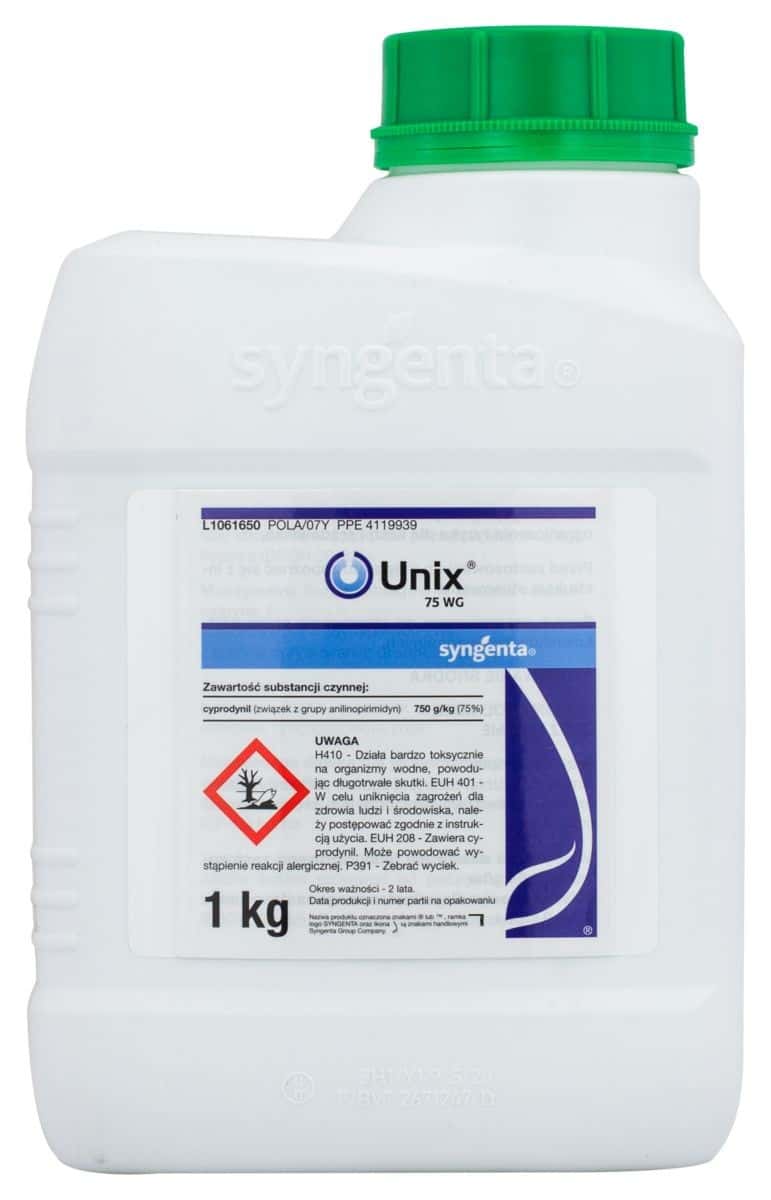
Switch 62.5 WG (cyprodinil, fludioxonil)
Switch 62.5 WG Syngenta is a fungicide designed for the professional protection of vegetable and fruit tree crops. It is a fungicide in granule form for preparing a water suspension with systemic and contact action.
Description
Switch 62.5 WG Syngenta - fungicide
- Product for professional protection of vegetable crops.
- Short pre-harvest interval.
- Broad spectrum of activity in controlling storage diseases: grey mould, alternaria leaf spot, sclerotinia stem rot.
Switch 62.5 WG 250g is a fungicide (fungicide), a concentrate in granule form for preparing a water suspension, with systemic and contact action, for preventive and curative use in controlling diseases in fruit tree and vegetable crops.
Switch 62.5 WG is intended for use with self-propelled or tractor-mounted field sprayers, orchard sprayers, and hand sprayers.
Switch 62.5 WG - active substance content:
- cyprodinil (compound from the anilinopyrimidine group) – 375 g/kg of product (37.5%),
- fludioxonil (compound from the phenylpyrrole group) – 250 g/kg of product (25%).
Switch 62.5 WG fungicide - application in crops:
Fruit trees:
- Apple tree,
- Strawberry,
- Raspberry.
Vegetable crops:
- Green bean,
- Common pea for fresh seeds,
- Tomato (in greenhouse cultivation).
Small-scale - fruit trees:
- Sweet cherry,
- Sour cherry,
- Pear tree,
- Quince,
- Plum tree,
- Apricot,
- Peach,
- Nectarine,
- Strawberry,
- Raspberry,
- Blackberry,
- Black currant,
- Red currant,
- White currant,
- Blueberry,
- Cranberry,
- Grapevine.
Small-scale - vegetable crops:
- Sugar pea (for pods),
- Common pea grown for fresh seeds,
- Bean grown for fresh (green) seeds,
- Broad bean,
- Bean grown for dry seeds,
- Common pea grown for dry seeds,
- White lupin,
- Yellow lupin,
- Narrow-leafed lupin,
- Carrot,
- Root parsley,
- Parsnip,
- Sugar beet,
- Horseradish,
- Rutabaga,
- Turnip,
- Salsify,
- Root celery (field cultivation),
- Celery stalk (field cultivation, under covers, in greenhouse),
- Onion (field cultivation),
- Shallot (field cultivation),
- Garlic (field cultivation),
- Onion sets (field cultivation),
- Chives (field cultivation),
- Tomato (greenhouse cultivation),
- Tomato grown under covers,
- Sweet pepper grown under covers, in greenhouse,
- Eggplant grown under covers, in greenhouse,
- Cucumber grown under covers, in greenhouse,
- Zucchini grown under covers, in greenhouse,
- Head and leaf lettuce, salad chicory (white and red varieties, including Radicchio), endive, beet leaves, spinach, herbs (field cultivation, under covers, in greenhouse),
- Asparagus,
- Tobacco,
- Ornamental plants (field cultivation, under covers, in greenhouse),
- Fruit and ornamental tree nurseries,
- Seed plantations of vegetable, herb and ornamental plants,
- Seedlings and saplings of forest coniferous and deciduous tree species - nurseries and forest crops.
Switch 62.5 WG fungicide - controlled fungal diseases:
- Sclerotinia stem rot,
- Brown rot,
- Grey mould,
- Bitter rot,
- Wet rot,
- Anthracnose,
- Dieback of shoots,
- Grapevine bark necrosis,
- Blight spot,
- Powdery mildew,
- Alternaria leaf spot,
- Neck rot of onion,
- Ascochyta blight.
Warning! Plant protection products must be used safely. Before each use, read the information on the label and product information.
The buyer declares that they meet the conditions specified in Article 25 paragraph 3 point 5 of the Act of 8 March 2013 on plant protection products and has training in the use of plant protection products in the case of products for professional users. Before each use, read the information on the label and product information. Pay attention to detailed risk indications. Follow the safety rules contained on the label. Plant protection products may only be purchased by adults and persons who have completed training and have the qualifications required for persons acquiring plant protection products (Article 28 of the Act on plant protection products of 8 March 2013 as amended). Plant protection products must be used in a way that does not pose a threat to human health, animals or the environment. The buyer of plant protection products must be sober. By using this offer, you declare that you meet the above conditions.
Application and dosage
|
Crop |
Control of Pest |
How to apply? Dosage |
When to apply? |
|---|---|---|---|
|
tobacco |
sclerotinia stem rot |
Maximum / recommended dose for single application: 0.6 kg/ha. Maximum number of treatments per growing season: 2. |
Apply preventively or at the first symptoms of the disease, usually from June. |
|
sweet cherry, sour cherry |
brown rot |
Maximum dose for single application: 10 g/100 m2 Maximum number of treatments per growing season: 2. |
Apply preventively or at the first symptoms of the disease. |
|
pear tree |
grey mould, bitter rot, wet rot, brown rot |
Maximum dose for single application: 10.0 g/100 m2 / 1.0 kg/ha Maximum number of treatments per growing season: 2. |
Apply preventively or at the first symptoms of the disease before harvest: – single application (4 days before harvest) or – twice (14 and 4 days before harvest), depending on disease severity. |
|
plum tree |
brown rot |
Maximum dose for single application: 10.0 g/100 m2 / 1.0 kg/ha Maximum number of treatments per growing season: 3. |
Apply preventively or at the first symptoms of the disease. |
|
apricot, peach, nectarine |
brown rot |
Maximum dose for single application: 9.0 g/100 m2 / 0.9 kg/ha. |
Use higher dose under higher disease pressure. |
|
strawberry |
anthracnose |
Maximum / recommended dose for single application: 8.0 g/100 m2 / 0.8 kg/ha Number of treatments: 3. |
Apply preventively or at the first symptoms of the disease, from the beginning to the end of the strawberry flowering phase |
|
raspberry |
anthracnose |
Maximum dose for single application: 10 g/100 m2 / 1.0 kg/ha. Number of treatments: 2. |
First treatment before flowering, when new shoots reach 10-20 cm height, subsequent treatments every 10 days – during flowering (beginning, full bloom, and end) and after fruit harvest and cutting of old fruiting shoots, depending on disease occurrence and severity. |
|
blackberry |
anthracnose |
Maximum dose for single application: 10 g/100 m2 / 1.0 kg/ha Maximum number of treatments per growing season: 2. |
Apply preventively or at the first symptoms of diseases, from early June: – against grey mould – every 10 days during flowering, from 10% flower appearance, – against anthracnose and dieback of shoots – first treatment before flowering, when new shoots reach 10-20 cm height, subsequent treatments every 10 days – during flowering (beginning, full bloom, and end) and after fruit harvest and cutting of old fruiting shoots, depending on disease occurrence and severity. |
|
black currant, red currant, white currant |
grey mould, dieback of shoots, anthracnose |
Maximum dose for single application: 10.0 g/100 m2 / 1.0 kg/ha Maximum number of treatments per growing season: 3. Recommended water volume: 5-20 l/100 m2 / 500-2000 /ha |
Apply preventively or at the first symptoms of diseases, from early June: – against grey mould – every 10 days during flowering, from 10% flower appearance, – against anthracnose and dieback of shoots – first treatment before flowering, when new shoots reach 10-20 cm height, subsequent treatments every 10 days (beginning, full bloom, and end of flowering) and after fruit harvest and cutting of old fruiting shoots, depending on disease occurrence and severity. |
|
blueberry, cranberry |
grey mould, anthracnose, dieback of shoots |
Maximum dose for single application: 10.0 g/100 m2 / 1.0 kg/ha. Maximum number of treatments per growing season: 3. |
Apply preventively or at the first symptoms of the disease. |
|
grapevine |
grey mould, prevention of secondary pathogen infections (contamination with Aspergillus spp. spores), grapevine bark necrosis (Phomopsis viticola) |
Maximum dose for single application: 12.0 g/100 m2 / 1.2 kg/ha |
Apply preventively or at the first symptoms of the disease. |
|
mini-kiwi |
grey mould |
Maximum / recommended dose for single application: 0.8 kg/ha Maximum number of treatments per growing season: 1. |
Apply preventively or at the first symptoms of the disease from the beginning of flowering to the end of fruit maturity phase (BBCH 60-88). |
|
sugar pea (for pods) |
grey mould, sclerotinia stem rot, anthracnose, blight spot, powdery mildew |
Maximum dose for single application:10.0 g/100 m2 / 1.0 kg/ha. Maximum number of treatments per growing season: 2. |
Apply preventively or at the first symptoms of diseases on plants. |
|
common pea grown for fresh (green) seeds |
pea blight spot, powdery mildew |
Maximum dose for single application: 10.0 g/100 m2 / 1.0 kg/ha Number of treatments: 2. |
Apply preventively or at the first symptoms of diseases on plants. |
|
bean grown for fresh (green) seeds, broad bean |
grey mould, sclerotinia stem rot, ascochyta blight, blight spot, powdery mildew |
Maximum dose for single application: 10.0 g/100 m2 / 1.0 kg/ha Maximum number of treatments per growing season: 2. |
Apply preventively or at the first symptoms of diseases on plants. |
|
bean grown for dry seeds, common pea grown for dry seeds, |
grey mould, sclerotinia stem rot, ascochyta blight, blight spot, powdery mildew |
Maximum / recommended dose for single application: 10.0 g/100 m2 Maximum number of treatments per growing season: 2. |
Apply preventively or at the first symptoms of diseases on plants. |
|
carrot |
grey mould, sclerotinia stem rot, alternaria leaf spot |
Maximum / recommended dose for single application: 8.0 g/100 m2 / 0.8 kg/ha Maximum number of treatments per growing season: 2. Recommended water volume: 3–10 l/100 m2 / 300-1000 l/ha |
Apply preventively or at the first symptoms of the disease |
|
root parsley, parsnip, sugar beet, horseradish, rutabaga, turnip, salsify |
grey mould, sclerotinia stem rot, alternaria leaf spot |
Maximum dose for single application: 8.0 g/100 m2. / 0.8 kg/ha |
Apply preventively or at the first symptoms of the disease. |
|
root celery (field cultivation) |
grey mould, sclerotinia stem rot |
Maximum / recommended dose for single application: 10.0 g/100 m2 / 1.0 kg/ha |
Apply preventively or at the first symptoms of the disease. |
|
celery stalk (field cultivation, under covers, in greenhouse) |
grey mould, sclerotinia stem rot |
Maximum / recommended dose for single application: 8.0 g/100 m2 / 0.8 kg/ha Maximum number of treatments per growing season: 2. |
Apply preventively or at the first symptoms of the disease. |
|
onion, shallot, garlic (field cultivation) |
neck rot of onion, sclerotinia stem rot, grey mould |
Maximum dose for single application: 10.0 g/100 m2. |
Apply preventively or at the first symptoms of the disease. |
|
onion sets (field cultivation) |
neck rot of onion, sclerotinia stem rot, grey mould |
Maximum / recommended dose for single application: 10.0 g/100 m2 / 1.0 kg/ha Maximum number of treatments per growing season: 3. |
Apply preventively or at the first symptoms of the disease. |
|
chives (field cultivation) |
sclerotinia stem rot, grey mould |
Maximum / recommended dose for single application: 8.0 g/100 m2 / 0.8 kg/ha Maximum number of treatments per growing season: 2. |
Apply preventively or at the first symptoms of the disease |
|
tomato (greenhouse cultivation) |
sclerotinia stem rot |
Maximum / recommended dose for single application: 10.0 g/100 m2 / 1.0 kg/ha Number of treatments: 3. |
Apply preventively or at the first symptoms of the disease. |
|
tomato grown under covers |
grey mould, sclerotinia stem rot |
Maximum / recommended dose for single application: 10.0 g/100 m2 / 1.0 kg/ha Maximum number of treatments per growing season: 3. Recommended water volume: 10–12 l/100 m2 / 1000-1200 l/ha |
Apply preventively or at the first symptoms of the disease |
|
sweet pepper (grown under covers, in greenhouse) |
grey mould, sclerotinia stem rot |
Maximum / recommended dose for single application: 10.0 g/100 m2 / 1.0 kg/ha Maximum number of treatments per growing season: 3. |
Apply preventively or at the first symptoms of the disease. |
|
eggplant (grown under covers, in greenhouse) |
grey mould, sclerotinia stem rot |
Maximum / recommended dose for single application: 10.0 g/100 m2 / 1.0 kg/ha Maximum number of treatments per growing season: 3. |
Apply preventively or at the first symptoms of the disease. |
|
head and leaf lettuce, salad chicory (white and red varieties, including |
grey mould, sclerotinia stem rot |
Maximum dose for single application: 6.0 g/100 m2. / 0.6 kg/ha Maximum number of treatments per growing season: 2. Recommended water volume: 3–10 l/100 m2 / 300-1000 l/ha |
Apply preventively or at the first symptoms of the disease. |
|
asparagus |
grey mould, purple stem spot |
Maximum / recommended dose for single application: 1.0 kg/ha. Maximum number of treatments per growing season: 3. |
Apply preventively or at the first symptoms of the disease. |
|
ornamental plants (field cultivation, under covers, in greenhouse) |
grey mould, prevention of secondary pathogen infections, dieback of shoots and flowers caused by brown rot of stone fruit trees |
Maximum dose for single application: 10.0 g/100 m2. / 1.0 kg/ha. |
Apply preventively or at the first symptoms of the disease |
|
nurseries, fruit tree and shrub nurseries |
grey mould, prevention of secondary pathogen infections |
Maximum dose for single application: 1.0 kg/ha. Recommended water volume: 500-1200 l/ha. |
Apply preventively or at the first symptoms of the disease. |
|
seed plantations of vegetable, herb and ornamental plants |
sclerotinia stem rot |
Maximum/recommended dose for single application: 0.8 kg/ha Maximum number of treatments per growing season: 2. |
Apply preventively or at the first symptoms of the disease. |
|
seedlings and saplings of forest coniferous and deciduous tree species - nurseries |
grey mould, rusts, damping-off fungi, e.g. seedling parasitic damping-off, prevention of secondary pathogen infections |
Maximum dose for single application: 1.0 kg/ha. Number of treatments: 3. |
Apply preventively or at the first symptoms of the disease, usually from April to September. |
|
seedlings and saplings of forest coniferous tree species - nurseries and forest crops |
ascochyta blight |
Maximum dose for single application: 1.0 kg/ha. Use higher dose under higher disease pressure. Maximum number of treatments per growing season: 2. |
Apply preventively or at the first symptoms of the disease, usually from April to October. |
|
seedlings and saplings of forest deciduous tree species - nurseries and forest crops |
powdery mildew, anthracnose |
Maximum dose for single application: 1.0 kg/ha. Maximum number of treatments per growing season: 3. |
Apply preventively or at the first symptoms of the disease, usually from May to August. |
|
seedlings and saplings of forest deciduous tree species - nurseries and forest crops |
leaf gall rust of deciduous trees, verticillium wilt |
Maximum dose for single application: 1.0 kg/ha. Maximum number of treatments per growing season: 3. |
Apply preventively or at the first symptoms of the disease, usually from May to September. |
|
apple tree |
bitter rot, grey mould |
Recommended spraying: fine droplets. |
For apple protection, apply from early June: |
|
strawberry |
grey mould |
Maximum dose for single application: 0.8 kg/ha / 8.0 g/100 m2 |
Apply preventively or at the first symptoms of the disease, from the beginning to the end of the strawberry flowering phase. |
|
raspberry |
grey mould, dieback of shoots |
Maximum dose for single application: 10.0 g/100 m2 / 1.0 kg/ha Number of treatments: 2. |
Apply preventively or at the first symptoms of diseases, from |
|
green bean |
grey mould, sclerotinia stem rot, anthracnose |
Maximum dose for single application: 10.0 g/100 m2 / 1.0 kg/ha |
Apply preventively or at the first symptoms of diseases, from early June: |
|
common pea grown for fresh seeds |
grey mould, sclerotinia stem rot, ascochyta blight |
Maximum dose for single application: 10.0 g/100 m2 / 1.0 kg/ha |
Apply at the first symptoms of diseases on plants, from the beginning of pea flowering. |
|
tomato (in greenhouse cultivation) |
grey mould |
Maximum / recommended dose for single application: 0.1% (100 g product in 100 l water). Number of treatments: 3. Recommended spray volume: 10 l /100 m2 |
Apply at the first symptoms of disease on plants. |