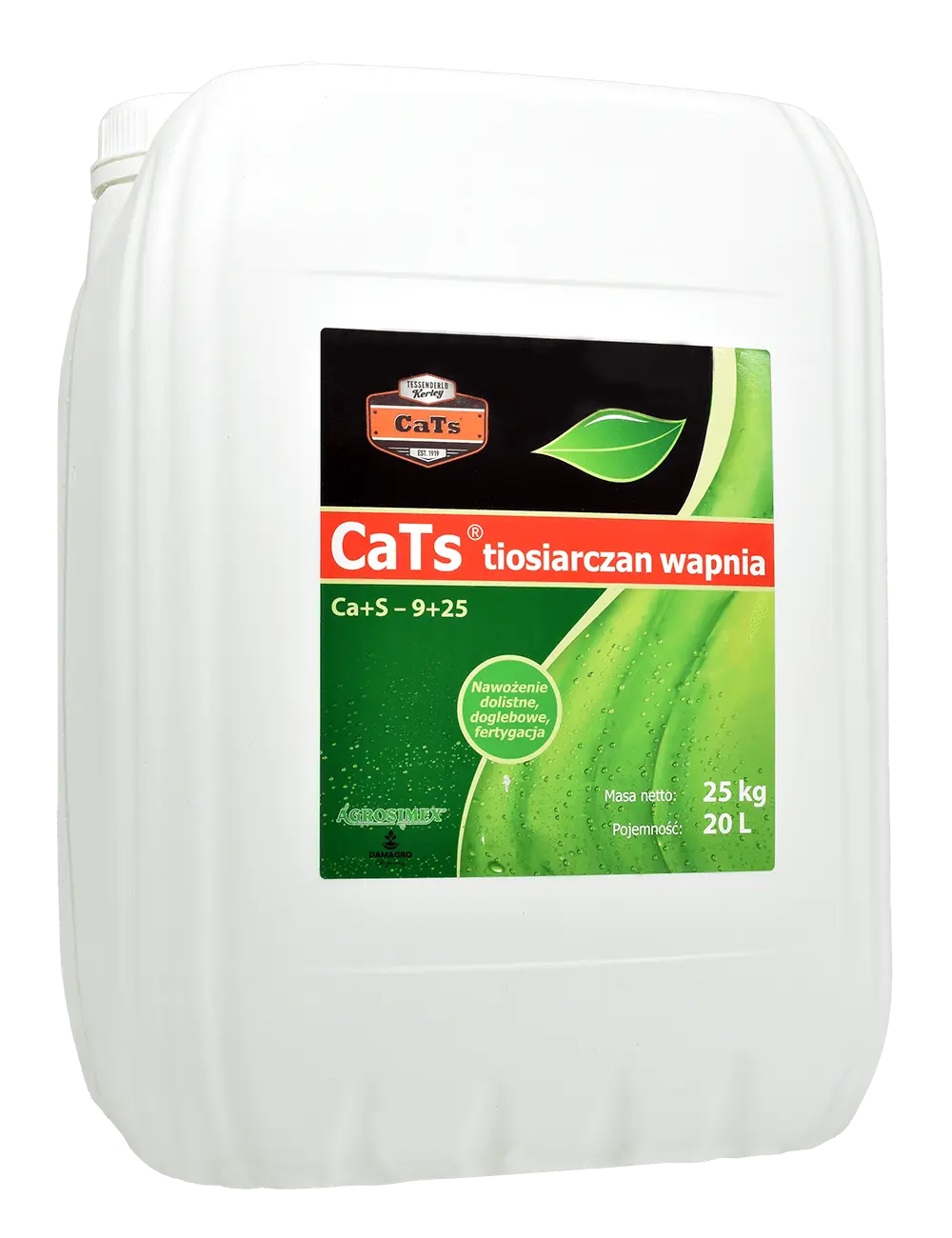
 SKU CH-13407
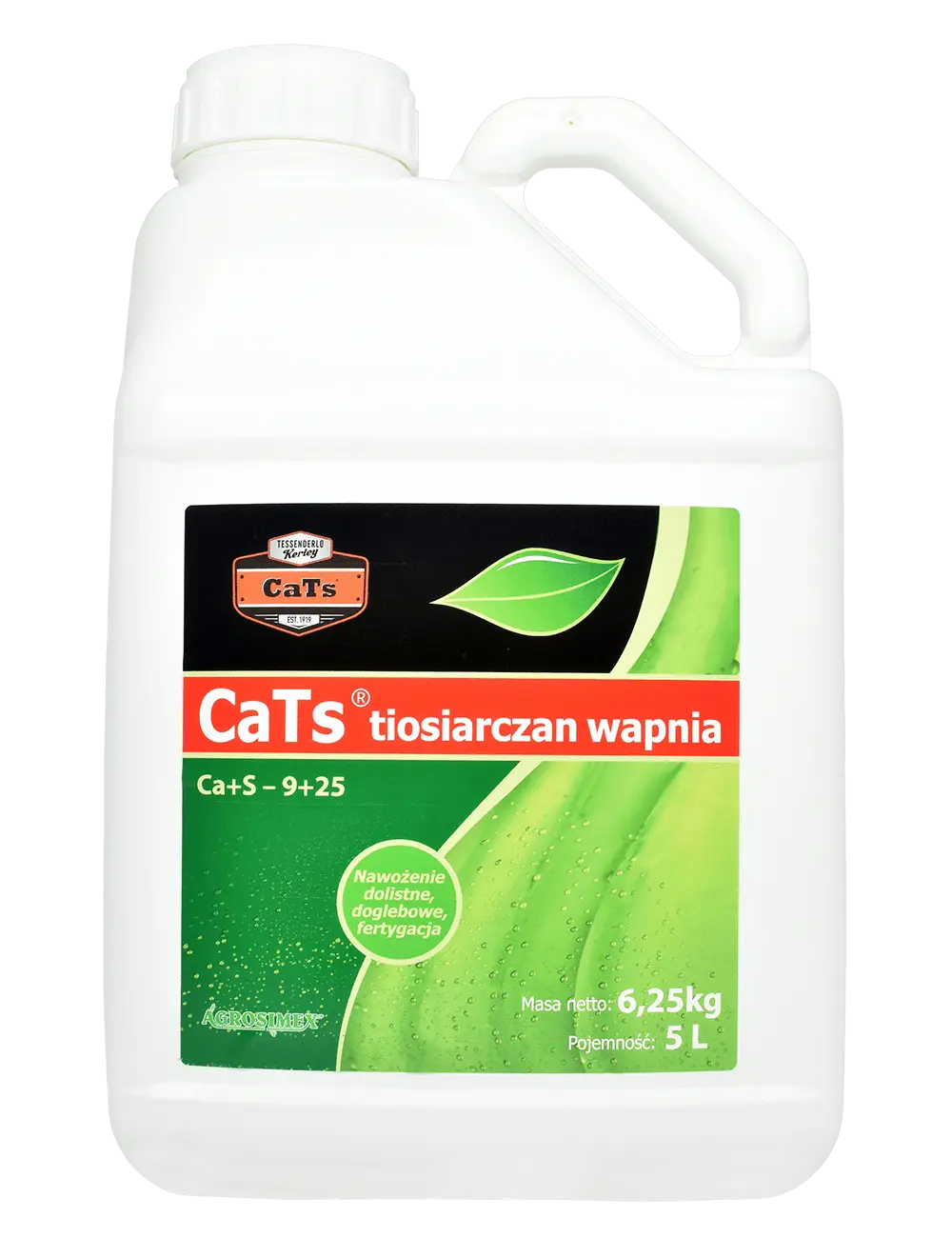
Asx Cats Calcium Thiosulphate
ASX CaTs Calcium Thiosulphate is a liquid calcium-sulphur fertiliser used to supplement deficiencies of these nutrients in various crops through soil fertilisation, top dressing (with RSM), foliar feeding, irrigation and fertigation.
Description
ACTION OF ASX CATS CALCIUM THIOSULPHATE:
Asx CaTs Calcium Thiosulphate is a liquid calcium fertiliser with sulphur designed to supplement calcium and sulphur deficiencies in agricultural, vegetable and fruit crops, as well as for soil fertilisation, top dressing together with ammonium nitrate-urea solution, foliar feeding, irrigation and fertigation.
ASX CaTs is characterised by high efficiency in delivering calcium. Moreover, the application of this fertiliser in combination with RSM (ammonium nitrate-urea solution) results in an increase in nitrogen fertilisation efficiency by up to 30%, due to its stabilising effect on nitrogen in the soil and urease inhibition. ASX CaTs also contributes to improving soil structure and increasing the availability of key nutrients such as potassium, magnesium, manganese and iron (K, Mg, Mn, Fe). The calcium contained in the fertiliser releases potassium and magnesium from the soil clay complex, making them more readily available to plants. Another important advantage of the fertiliser is that sulphur is present in the form of thiosulphate, which is the fastest assimilable source of this element for plants.
ASX CATS CALCIUM THIOSULPHATE - NUTRIENT CONTENT AND PROPERTIES:
calcium oxide (CaO) – 9%
sulphur trioxide (SO3) – 25%
solubility: 100%
soluble Ca content in g/kg of fertiliser - 60g/kg
ASX CALCIUM THIOSULPHATE APPLICATION RANGE, TIMINGS AND DOSES:
How to use Asx Calcium Thiosulphate?
SOIL FERTILISATION
FRUIT TREES AND BUSHES, GRAPEVINE
Application timing: early spring and after flowering, dose 15-20 l/ha.
Dose: 15 - 20 l/ha
TOP DRESSING TOGETHER WITH RSM
OILSEED RAPE:
Application timing: after the start of spring vegetation and 10-14 days later
Dose: 15 - 20 l/ha
WINTER CEREALS:
Application timing: after the start of spring vegetation and until stem elongation
Dose 5-10 l/ha.
MAIZE:
Application timing: at 6-8 leaf stage and before row closure
Dose 5-10 l/ha.
FRUIT TREES AND BUSHES:
Application timing: before and after flowering
Dose: 5-10 l/ha.
FOLIAR FERTILISATION
OILSEED RAPE
Application timing: in autumn at 6 leaf stage, after the start of spring vegetation and after stem formation,
Dose 5-10 l/ha.
WINTER CEREALS
Application timing: in autumn at 3-6 leaf stage, after the start of spring vegetation and at the beginning of stem elongation,
Dose 5-10 l/ha.
SPRING CEREALS
Application timing: at flowering and stem elongation,
Dose 5-10 l/ha.
POTATOES:
Application timing: after row closure, at the beginning of tuber setting and when tubers are about 40 mm,
Dose 6-10 l/ha.
LEGUMINOUS PLANTS:
Application timing: from rosette to flowering,
Dose 5-10 l/ha.
SUGAR BEET:
Application timing: at 6-8 leaf stage and before row closure,
Dose 5-10 l/ha.
TOMATO, SWEET PEPPER:
Application timing: from fruit formation every 7-14 days,
Dose 5-10 l/ha.
CABBAGE VEGETABLES:
Application timing: 3 weeks after transplanting seedlings, then every 10-14 days,
Dose 5-10 l/ha.
ONION:
Application timing: during intensive growth period,
Dose 5-10 l/ha.
CURRANTS:
Application timing: 1-2 times after flowering every 7-10 days,
Dose 5-10 l/ha.
STRAWBERRIES, RASPBERRIES:
Application timing: after the start of vegetation and during intensive growth,
Dose 5-10 l/ha.
APPLE TREES, PEAR TREES, SOUR CHERRIES, SWEET CHERRIES:
Application timing: after the formation of first leaves, then after flowering,
Dose 5-10 l/ha.
IRRIGATION - FERTILISATION WITH SPRINKLING
VEGETABLES (CARROT, PARSLEY, ONION, BEETS):
Application timing: from 3-4 leaf stage, every 10-14 days, irrigate abundantly after application,
Dose 30-80 l/ha.
POTATOES:
Application timing: from bush formation every 10-14 days, irrigate abundantly after application,
Dose 30-50 l/ha.
FERTIGATION
FRUIT TREES AND BUSHES:
Application timing: during intensive growth of trees, bushes and fruit development,
Dose 15-20 l/ha.