 SKU 43760-c
Clap (chlopyralid) Sharda - herbicide
Clap Sharda is a selective herbicide in concentrate form designed for the control of dicotyledonous weeds in various crops such as oilseed rape, rye, flax, mustard, beet, strawberry and others. It is applied foliarly using field sprayers.
Description
Clap Sharda - herbicide for dicotyledonous weeds
- Effectively controls dicotyledonous weeds.
- Wide spectrum of activity - dedicated among others to controlling weeds in oilseed rape cultivation, as well as: rye, flax, mustard, beet, turnip, strawberry and others.
- In a convenient and efficient concentrate form.
Clap is a selective herbicide in concentrate form for preparing an aqueous solution. Used to control dicotyledonous weeds in the cultivation of: winter oilseed rape, as well as spring oilseed rape, spring rye, beet, flax, mustard, turnip, rutabaga, fibre flax, poppy, strawberry, fruit tree nurseries, daffodils and lilies. A systemic acting agent. For foliar application.
The product is intended for use with self-propelled or tractor-mounted field sprayers.
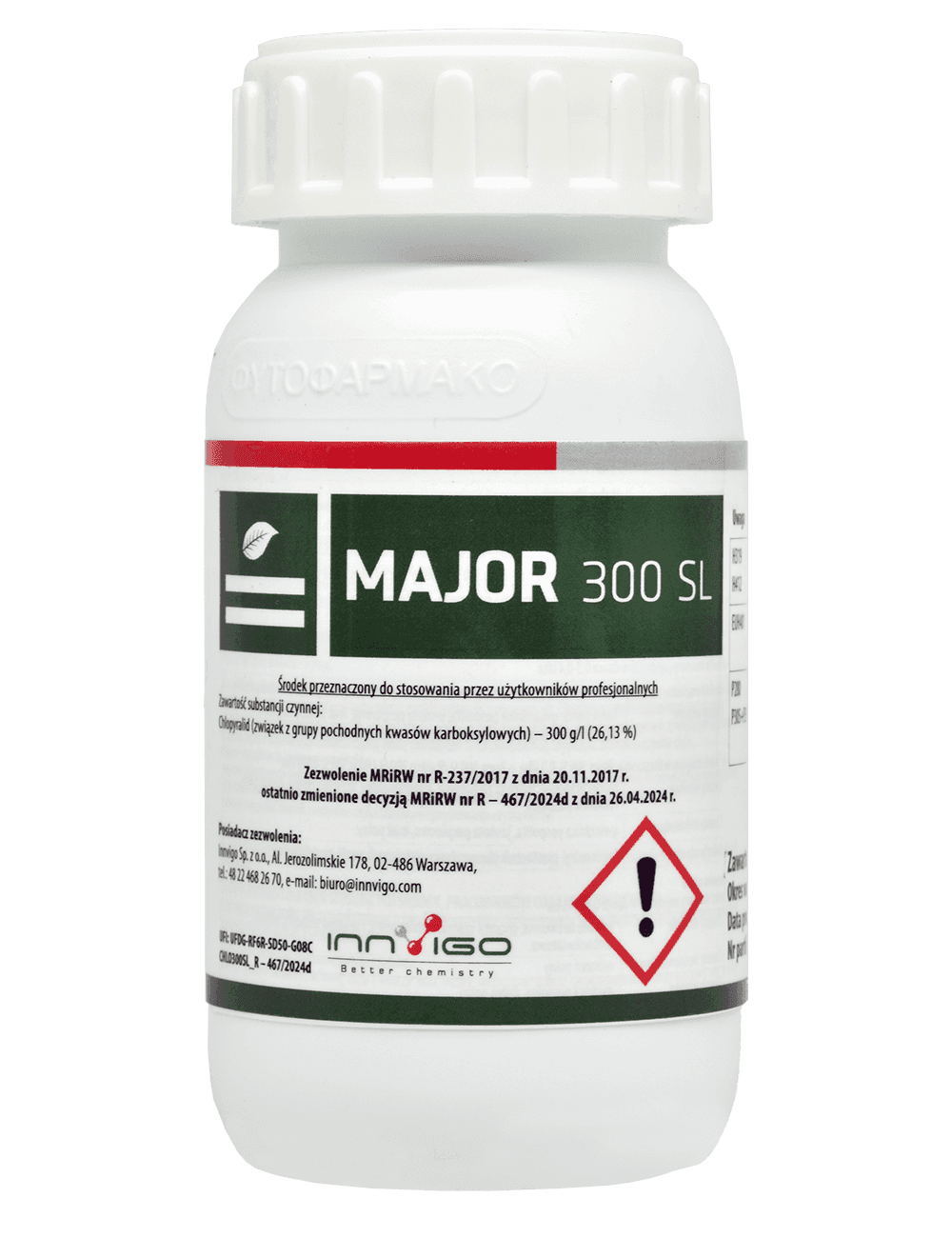
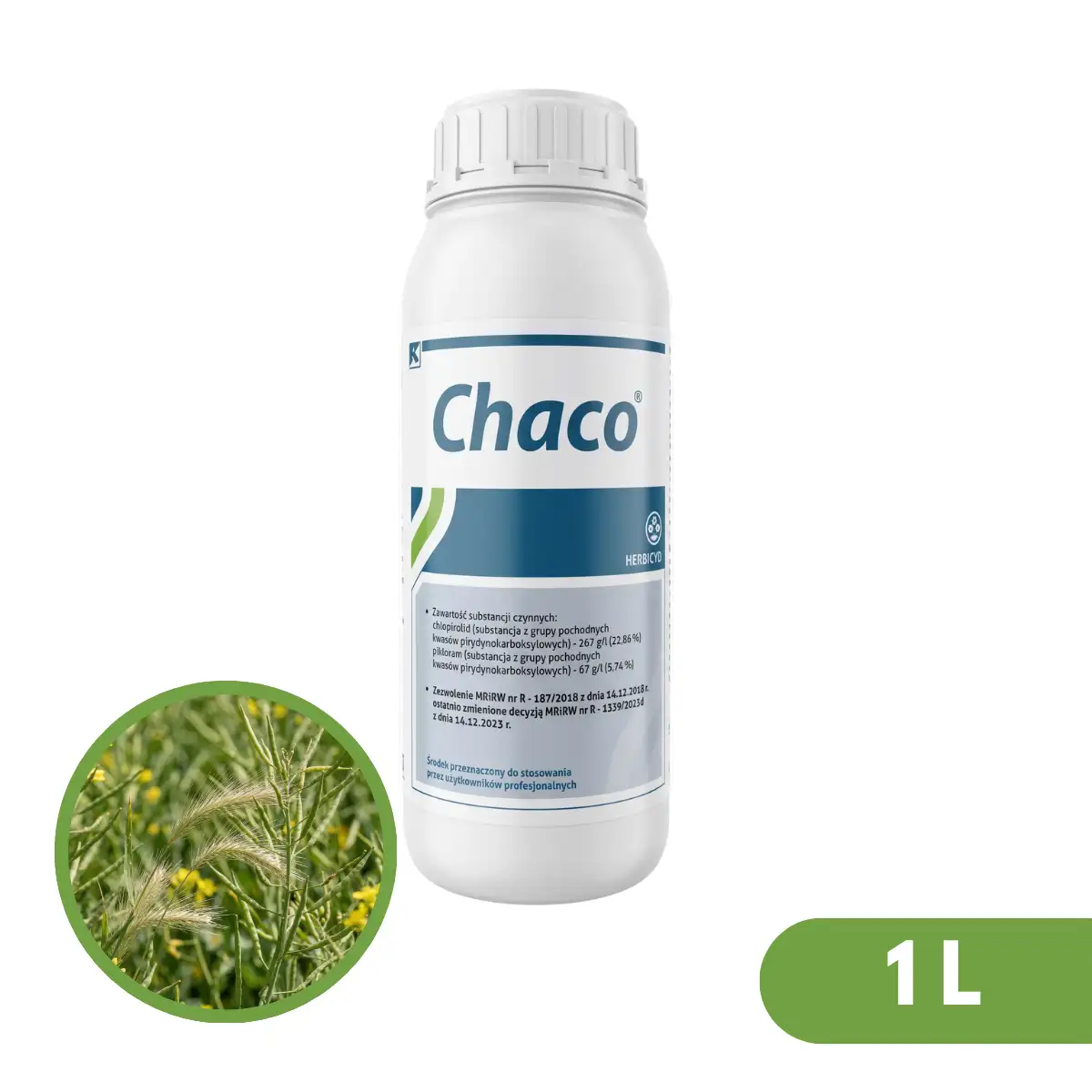
Clap herbicide - active substance content:
- chlopyralid (a substance from the pyridine carboxylic acid derivatives group) – 300 g/l (26.27%).
According to HRAC classification, the active substance belongs to group O.
Clap Sharda - mode of action:
The product is absorbed through the leaves of weeds. It is most effective against young, vigorously growing weeds from the cotyledon stage to the rosette stage.
Which weeds does Clap herbicide control?
Sensitive weeds:
- cornflower,
- mayweed,
- field thistle.
Resistant weeds:
- cleavers,
- shepherd's purse.
Clap - use in crops:
- Spring oilseed rape
Small area use:
- Spring oilseed rape,
- Spring rye,
- Flax grown for seed,
- White mustard,
- Brown mustard,
- Fibre flax,
- Poppy grown for seed,
- Fodder beet,
- Table beet,
- Swede,
- White turnip,
- Black turnip,
- Fodder turnip,
- Strawberry,
- Lilies (Asian hybrids),
- Daffodils,
- Fruit tree nurseries.
Clap herbicide - crop rotation:
The product degrades in the soil (microbiological degradation) during the growing season without posing a threat to subsequent crops. If earlier destruction of the treated crop is necessary, spring oilseed rape can be grown on the same field. Do not use any parts of plants previously treated with CLAP for composting or mulching. Do not compost manure from animals fed with plants previously treated with CLAP. Residues of the active substance in plant residues (including in manure) that have not fully decomposed may negatively affect the growth and development of sensitive crops grown as subsequent plants. If it is suspected that post-harvest residues have not fully decomposed before sowing subsequent crops, do not grow: peas, beans and other legumes, carrot and other Apiaceae (umbellifers), lettuce and other Asteraceae (composites), potato and other Solanaceae, and crops under cover.
Clap herbicide for dicotyledonous weeds - pre-harvest interval and re-entry period:
Pre-harvest interval - time from last application to crop harvest:
- Not applicable.
Re-entry period - time from application until people and animals can enter the treated area:
- Do not enter until the spray liquid on the plant surfaces has completely dried.
Clap - preparation of spray liquid:
Before preparing the spray liquid, accurately determine the required amount. To eliminate accidental contamination with other plant protection products, wash the sprayer with a 10% soda or activated carbon solution. When preparing the spray liquid, pour the measured amount of product into the sprayer tank (filled with a small amount of water), then fill up with water to the required volume, mixing thoroughly. Insert the water supply hose to the bottom of the tank. Rinse empty containers three times with water and pour rinsate into the sprayer tank with the spray liquid. When using the product in mixtures with other agents, strictly follow the preparation instructions for those products. In case of interruptions during spraying, mix the spray liquid thoroughly before resuming work. It is best to spray dry plants during warm and humid weather, at least 6 hours before expected rain – always with the agitator on.
Clap Sharda herbicide - usage recommendations:
- Spray only between rows, avoiding direct application of spray liquid on crop plants.
- CLAP and other products containing chlopyralid can be used only in one of three consecutive growing seasons on the same field.
- Before applying on seed production plantations, consultation with the authorisation holder or their representative regarding possible effects on seeds is recommended.
- Do not apply:
– on crops weakened or damaged by pests,
– on wet plants,
– at air temperatures (measured near the ground) below 12°C or above 25°C,
– during expected frosts,
– in windy conditions that may cause spray drift onto neighbouring crops. - During application, avoid:
– spray drift onto neighbouring crop plantations,
– overlapping spray on treatment strip edges and headlands. - Do not eat, drink or smoke while using the product.
- Wear protective gloves and work clothing during preparation and application of the spray liquid.
Warning! Plant protection products must be used safely. Read the label and product information before each use.
The buyer declares that they meet the conditions specified in Article 25 paragraph 3 point 5 of the Act of 8 March 2013 on plant protection products and have training in the use of plant protection products in the case of products for professional users. Read the label and product information before each use. Pay attention to detailed risk indications. Follow safety rules contained in the label. Plant protection products may only be purchased by adults and persons who have completed training and have qualifications required for persons purchasing plant protection products (Article 28 of the Act on plant protection products of 8 March 2013 as amended). Plant protection products must be used in a way that does not pose a threat to human health, animals or the environment. The buyer must be sober. By using this offer, you declare that you meet the above conditions.
Application and dosage
|
Crop |
Target pests |
How to apply? Dosage |
When to apply? |
|---|---|---|---|
|
Spring oilseed rape |
cornflower, mayweed, field thistle |
Maximum / recommended dose for single application: 0.4 l/ha. Recommended water volume: 200-400 l/ha. Recommended spraying: medium droplet size. |
Application timing: apply in spring from the second leaf stage but no later than the green bud stage (BBCH 12 - 51). Maximum number of treatments per growing season: 1 |
|
Spring rye |
cornflower, mayweed, field thistle |
Maximum / recommended dose for single application: 0.4 l/ha. Recommended water volume: 200-400 l/ha. Recommended spraying: medium droplet size. |
Application timing: apply in spring from the end of leaf development (no tillering) to the fully developed flag leaf stage (BBCH 20 - 39). Maximum number of treatments per growing season: 1 |
|
Flax grown for seed |
cornflower, mayweed, field thistle |
Maximum / recommended dose for single application: 0.4 l/ha. Recommended water volume: 200-400 l/ha. Recommended spraying: medium droplet size. |
Application timing: apply when plants reach 6-12 cm in height (BBCH 12 - 14). Maximum number of treatments per growing season: 1. |
|
White mustard, brown mustard |
cornflower, mayweed, field thistle |
Maximum / recommended dose for single application: 0.4 l/ha. Recommended water volume: 200-400 l/ha. Recommended spraying: medium droplet size. |
Application timing: apply from the 2 to 6 leaf stage (BBCH 12 - 16). Maximum number of treatments per growing season: 1. |
|
Fibre flax, poppy grown for seed |
cornflower, mayweed, field thistle |
Maximum /recommended dose for single application: 0.4 l/ha. Recommended water volume: 200-400 l/ha. Recommended spraying: medium droplet size. |
Application timing: apply from the two leaf stage to the four leaf stage (BBCH 12 - 14). Maximum number of treatments per growing season: 1. |
|
Fodder beet, table beet |
cornflower, mayweed, field thistle |
Maximum / recommended dose for single application: 0.4 l/ha. Recommended water volume: 200-400 l/ha. Recommended spraying: medium droplet size. |
Application timing: apply from the two leaf stage to the four leaf stage (BBCH 12 - 14). Maximum number of treatments per growing season: 1. |
|
Swede, white turnip, black turnip, fodder turnip |
cornflower, mayweed, field thistle |
Maximum /recommended dose for single application: 0.4 l/ha. Recommended water volume: 200-400 l/ha. Recommended spraying: medium droplet size. |
Application timing: apply from the two leaf stage to the four leaf stage (BBCH 12 - 14). Maximum number of treatments per growing season: 1. |
|
Strawberry |
cornflower, mayweed, field thistle |
Maximum /recommended dose for single application: 0.4 l/ha. Recommended water volume: 200-400 l/ha. Recommended spraying: medium droplet size. |
Application timing: apply after fruit harvest (BBCH > 91). Maximum number of treatments per growing season: 1. |
|
Lilies (Asian hybrids) |
cornflower, mayweed, field thistle |
Maximum / recommended dose for single application: 0.3 l/ha. Recommended water volume: 200-400 l/ha. Recommended spraying: medium droplet size. |
Application timing: apply in spring when plants reach 10 to 15 cm in height. Maximum number of treatments per growing season: 1. |
|
Daffodils |
cornflower, mayweed, field thistle |
Maximum /recommended dose for single application: 0.3 l/ha. Recommended water volume: 200-400 l/ha. Recommended spraying: medium droplet size. |
Application timing: apply in spring, 7 days after flower harvest. Maximum number of treatments per growing season: 1. |
|
Fruit tree nurseries |
cornflower, mayweed, field thistle |
Maximum / recommended dose for single application: 0.4 l/ha. Recommended water volume: 200-400 l/ha. Recommended spraying: medium droplet size. |
Application timing: apply in spring after weeds appear. Maximum number of treatments per growing season: 1. |